Simple Ways to Save on Gas and Improve Fuel Efficiency
Did you know that the average commuter burns through nearly $2,500 a year at the pump, yet up to 30% of that fuel is wasted due to entirely preventable driving habits? When people look for ways to achieve financial freedom, they immediately jump to searching for a new side hustle or complex online earnings. However, they completely ignore the “leaky bucket” sitting right in their driveway.
If you want to increase your personal profit margins, discovering effective ways to save on gas is the ultimate first step. A penny saved on fuel is a tax-free penny earned. By optimizing your vehicle’s fuel efficiency, you are essentially creating a foundational revenue stream that requires zero extra hours of labor. Whether you are driving for a gig economy job or simply want to free up capital to fund your dream business, mastering your gas mileage is a required pillar of modern financial strategy.
Quick Answer:
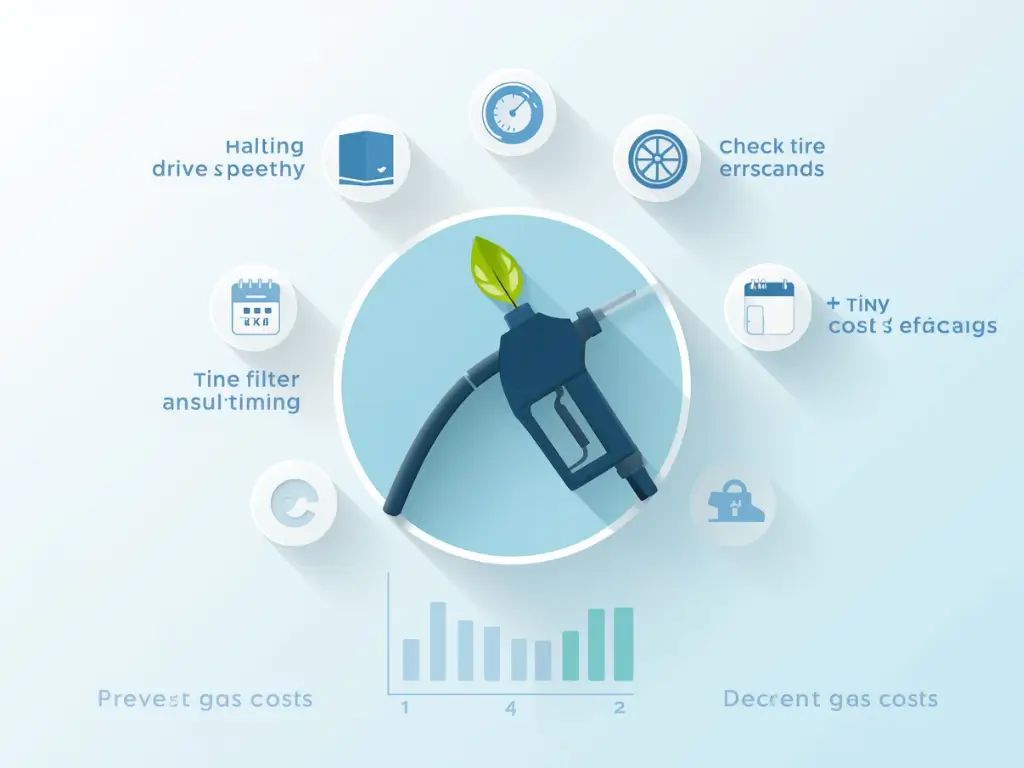
The fastest ways to save on gas are to maintain proper tire pressure, eliminate aggressive driving habits (rapid acceleration and hard braking), and use cashback fuel apps like Upside. Implementing these three simple changes can immediately improve your fuel economy by 15% to 30%, keeping hundreds of dollars in your pocket every year.
What You’ll Need to Get Started
Optimizing your fuel efficiency doesn’t require a mechanic’s degree or a massive upfront investment. To transform your daily commute into an optimized financial operation, you only need a few basic tools.
- Required Tools: A digital tire pressure gauge, smartphone navigation apps (Google Maps, Waze), and dedicated fuel cashback applications (Upside, GasBuddy).
- Initial Investment: $10 to $30. A highly accurate digital tire pressure gauge costs around $10, and an optional OBD2 scanner for tracking engine health costs roughly $20.
- Skill Requirements: Absolutely beginner-friendly. You only need basic smartphone proficiency and the discipline to adjust a few daily habits.
- Free Alternatives: Almost every gas station offers free air pumps with built-in gauges (though they are slightly less accurate than having your own). Furthermore, all the recommended fuel-saving and route-planning apps are 100% free to download.
Time Investment
Unlike launching a digital income business from scratch, optimizing your fuel economy takes almost zero active time once the initial habits are built.
- Setup Time Required: 15 to 20 minutes. This gives you enough time to download cash-back apps, check your tire pressure, and clear heavy, unnecessary items out of your trunk.
- Daily/Weekly Time Commitment: 0 extra minutes. You are simply driving smarter during the commute you already take.
- Timeline to First Earnings (Savings): Immediate. You will see an improved MPG (Miles Per Gallon) and lower costs on your very next trip to the pump. Most beginners see tangible, measurable financial results within 30 days of consistent effort.
- Comparison: Building passive income streams can take months of upfront work. Fuel optimization acts as an instant raise at your current job.
Step-by-Step Implementation Guide
1. Optimize Your Driving Habits (The “Egg” Method)
Aggressive driving—speeding, rapid acceleration, and hard braking—can lower your gas mileage by 15% to 30% at highway speeds and 10% to 40% in stop-and-go traffic.
- Action Step: Pretend there is a fragile egg sitting between your foot and the gas pedal. Accelerate smoothly, and when you see a red light ahead, take your foot off the gas early to coast to a halt.
- Pro Tip: Use cruise control on the highway whenever it is safe to do so. Maintaining a steady speed prevents the micro-accelerations that secretly drain your tank.
2. Maintain Optimal Tire Pressure
Under-inflated tires increase rolling resistance, making your engine work harder and burn more fuel just to push the car forward.
- Action Step: Check your tire pressure at least once a month. Inflate them to the exact PSI recommended on the sticker inside your driver’s side door jamb—not the maximum pressure printed on the side of the tire itself.
- Insider Trick: Check your pressure in the morning when the tires are “cold.” Driving heats up the air inside the tires, which will give you an inaccurately high reading.
3. Leverage Technology for Route Planning
Idling in traffic gets you exactly 0 MPG. By avoiding traffic jams, you preserve your fuel for actual forward momentum.
- Action Step: Always use an app like Waze or Google Maps, even if you know the way. These apps calculate the most fuel-efficient routes by factoring in real-time traffic and stoplights.
- Pro Tip: Combine your errands into one continuous loop. A cold engine burns much more fuel than a warm one. Doing all your shopping in one trip keeps the engine at its optimal operating temperature.
4. Utilize Cashback Apps and Rewards
Treat buying gas the same way you would treat finding monetization strategies online—never pay retail if you don’t have to.
- Action Step: Before you fill up, open GasBuddy to locate the cheapest station within a 2-mile radius. Then, use the Upside app to claim a cash-back offer for that specific station.
- Insider Trick: Stack your savings! Pay for that gas using a rewards credit card (if you pay it off monthly) and scan your grocery store loyalty card (like Kroger or Safeway) at the pump.
Income Potential & Earnings Breakdown
When you aggressively reduce your living expenses, you directly increase your monthly profit margins. If you drive for Uber, DoorDash, or Instacart, optimizing your gas usage is quite literally how you increase your hourly income potential.
Annual Savings Potential (Based on a $2,500 average annual fuel spend):
| Fuel Saving Strategy | Efficiency Gain | Estimated Annual Savings |
|---|---|---|
| Eliminating Aggressive Driving | Up to 30% | $450 – $750 |
| Maintaining Correct Tire Pressure | Up to 3% | $50 – $75 |
| Using Fuel Cashback Apps | 10-25 cents/gallon | $60 – $120 |
| Combining Errands & Less Idling | Up to 10% | $150 – $250 |
| Total Potential “Earnings” | Cumulative | **$710 – $1,195+** |
Disclaimer: Individual results vary based on vehicle type, local gas prices, and total miles driven per year.
Alternative Methods & Variations
If you want to scale your savings even further, consider these alternative approaches to transportation:
- The Work From Home Pivot: The absolute best way to save on gas is to not use it at all. Negotiating just one or two remote work days per week instantly cuts your commuting fuel costs by 20% to 40%.
- The EV/Hybrid Transition: For those looking at long-term savings, upgrading to a hybrid or Electric Vehicle (EV) dramatically lowers the cost-per-mile, insulating you from fluctuating global oil prices.
- Carpooling and Public Transit: Combine forces with your coworkers. Splitting the commute halves your fuel costs, depreciation, and wear-and-tear instantly.
Best Practices & Optimization Tips
To squeeze every last drop of efficiency out of your vehicle and maximize your savings, keep these advanced techniques in mind:
- Master Aerodynamics: At highway speeds (over 50 MPH), open windows create massive aerodynamic drag, which burns more fuel than running the AC. Rule of thumb: Windows down in the city, AC on for the highway.
- Shed the Dead Weight: For every 100 pounds of extra weight in your car, your MPG drops by about 1%. Clean those golf clubs, heavy tools, and donations out of your trunk today.
- Track Your Data: Use apps like Fuelio or a simple spreadsheet to track your MPG manually. Tracking your data is exactly how successful businesses optimize their profit margins. What gets measured gets managed.
Common Mistakes to Avoid
Even smart savers fall into costly traps. Protect your wallet by avoiding these common pitfalls:
- The Idling Myth: Many drivers believe it takes more gas to restart a car than to let it idle. This is false. If you are waiting in a drive-thru or parked for more than 10 seconds, turn the engine off. Idling wastes a quarter to a half-gallon of fuel per hour.
- Buying Premium Gas Unnecessarily: Unless your vehicle’s owner’s manual specifically requires premium fuel, you are wasting your money. Regular unleaded is perfectly fine and provides the exact same mileage for standard engines.
- Ignoring the Check Engine Light: A faulty oxygen sensor or bad spark plug can quietly reduce your gas mileage by up to 40%. Ignoring basic maintenance is the fastest way to drain your wallet.
Long-Term Sustainability & Growth
Finding ways to save on gas shouldn’t be a one-time trick to get through a tight month; it should be part of a broader, sustainable financial strategy. What you do with the saved money dictates your long-term wealth.
Take the $700 to $1,000+ you save annually through fuel efficiency and create an automated reinvestment strategy. Channel these freed-up funds into a high-yield savings account, use them to buy software for a digital business, or invest them in dividend-paying index funds. By transforming your reduced expenses into active investments, you turn a simple daily driving habit into a powerful engine for generating passive income.
Conclusion
Discovering effective ways to save on gas is one of the most immediate and accessible methods for boosting your personal finances. By checking your tire pressure, smoothing out your acceleration, and leveraging modern cashback apps, you can effortlessly reclaim hundreds of dollars a year without taking on a second job. It’s time to stop leaving money on the table and start funding your financial future.
Ready to start your journey toward maximum financial efficiency? Drop your favorite gas-saving hacks in the comments below! Subscribe for our weekly money-making strategies, and be sure to share your progress with our community.
FAQs
1. How much money can I realistically save by changing my driving habits?
By eliminating aggressive driving, speeding, and rapid braking, the EPA estimates you can improve your gas mileage by roughly 15% to 30% at highway speeds, which equates to hundreds of dollars in savings per year for the average driver.
2. Do fuel additives and “gas-saving” gadgets actually work?
No. The EPA has tested over 100 so-called “gas-saving” devices and liquid additives and found that very few provide any measurable benefit. In some cases, they can actually damage your engine. Stick to proper, routine maintenance.
3. Does using the air conditioning really waste that much gas?
At lower city speeds, running the AC does decrease fuel efficiency. However, at highway speeds, open windows create aerodynamic drag that uses more fuel than the AC system. So, use the AC on the highway and roll down the windows in the city.
5. Are ways to save on gas still relevant in2026 with the rise of EVs?
Absolutely. The vast majority of vehicles on the road are still internal combustion engines or hybrids. Furthermore, gig economy drivers rely heavily on fuel optimization to maintain viable income potential regardless of the year.
6. Does premium gas give you better mileage?
No. If your car’s manual specifies “Regular” fuel, putting “Premium” in the tank will not improve your gas mileage, engine life, or performance. It is simply throwing money away at the pump.
Before you go, tap those stars!
Straightforward, no gimmicks, just solid banking advice
I clicked on this article expecting it to push some specific bank or financial product with referral links. I was pleasantly surprised. The advice was unbiased, focused on principles rather than promoting any particular institution, and gave me a clear framework to evaluate my own options. I appreciated that the article addressed the importance of FDIC insurance, automatic transfers, and goal-setting — things that seem obvious but that most people (including me) overlook. The writing was clear and concise, without the usual fluff or overly complex financial jargon. The only reason I’m giving four stars instead of five is that I would have liked even more detail on how to balance saving with paying down debt. Still, this was one of the most practical and trustworthy articles on saving I’ve read in a long time. Highly recommend.
Solid advice that cuts through the noise
I’ve been saving for years, but I kept wondering if my money was actually working as hard as it could be. There’s so much conflicting information out there — regular savings accounts, money market accounts, CDs, high-yield options — it gets confusing fast. This article did an excellent job comparing the options side by side, explaining the pros and cons of each, and helping me figure out which strategy made sense for my situation. I especially appreciated the section on the importance of emergency funds versus long-term savings, and the breakdown of how compound interest really adds up over time. I ended up moving my savings to a high-yield account and setting clearer goals. Practical, well-researched, and genuinely helpful.
Small changes, noticeable results
I’ll be honest — I clicked on this article expecting generic advice like “drive less” (thanks, captain obvious). But I was genuinely impressed. The article breaks down the actual science behind why certain habits affect fuel economy, with real numbers to back it up. I learned that my lead-foot acceleration and speeding were costing me way more than I realized. The section on vehicle maintenance was especially valuable — I didn’t know a dirty air filter could impact mileage that much. The tone was straightforward, no fluff, no upselling expensive products. Just solid, practical advice that actually works. My fuel expenses dropped by about 15% last month without me changing my overall driving needs.
Finally, practical advice that doesn’t require buying a new car
As someone who drives over 400 miles a week for work, gas expenses have been crushing my budget. I’ve read countless articles that basically just say “buy an electric vehicle” — which isn’t helpful when that’s not in my budget. This article was a game-changer. The tips were immediately actionable: combining trips, checking tire pressure (I didn’t realize how much that affects mileage!), and using gas price apps. I started implementing these suggestions last month, and I’ve already saved about $40. The writing was clear, well-organized, and respected that not everyone can just trade in their car. Highly recommend for anyone feeling the pain at the pump.
Perfect for renters who can’t install solar panels
As someone who rents an apartment, I often feel limited when it comes to making my home more energy-efficient. I can’t just install new appliances or add insulation to the walls. This article was a lifesaver because it focused on renter-friendly solutions—things like weatherstripping for doors, smart power strips, and optimizing how I use my existing appliances. The writing was straightforward and didn’t assume I owned a home. My only small critique is that I would have loved even more rent-specific examples, but overall, this was incredibly helpful. My electric bill dropped by about $15 last month!