Proven Strategies: The Best Way to Save on Groceries
Did you know that the average household of four spends nearly $15,000 annually on food, yet up to 40% of that investment—approximately $6,000—ends up in the trash due to poor planning and spoilage? In the world of wealth-building, most people focus entirely on how to generate more online earnings or launch a new side hustle, completely ignoring the “leaky bucket” in their own kitchen.
If you want to achieve true financial freedom, you must treat your household budget like a business. Every dollar you don’t spend at the supermarket is a dollar added directly to your profit margins. Finding the best way to save on groceries isn’t just about cutting coupons; it is a high-level monetization strategy for your existing income. By reclaiming this lost capital, you create the necessary “seed money” to invest in digital income opportunities or scale your personal revenue streams.
Quick Answer:
The best way to save on groceries is a three-pillar system: performing a weekly “pantry inventory” to avoid duplicates, meal planning around seasonal sales, and stacking digital cashback rewards. By automating your list and sticking to unit-price comparisons, the average shopper can slash their food bill by 25% to 40% immediately.
What You’ll Need to Get Started
Building a grocery-saving system is low-cost and high-yield. You don’t need a degree in finance, just a few essential tools:
- Digital Inventory & Meal Planning Apps: Free versions of apps like AnyList, Mealime, or even a simple Google Sheet.
- Cashback & Loyalty Platforms: Ibotta, Fetch Rewards, and your local grocer’s digital app.
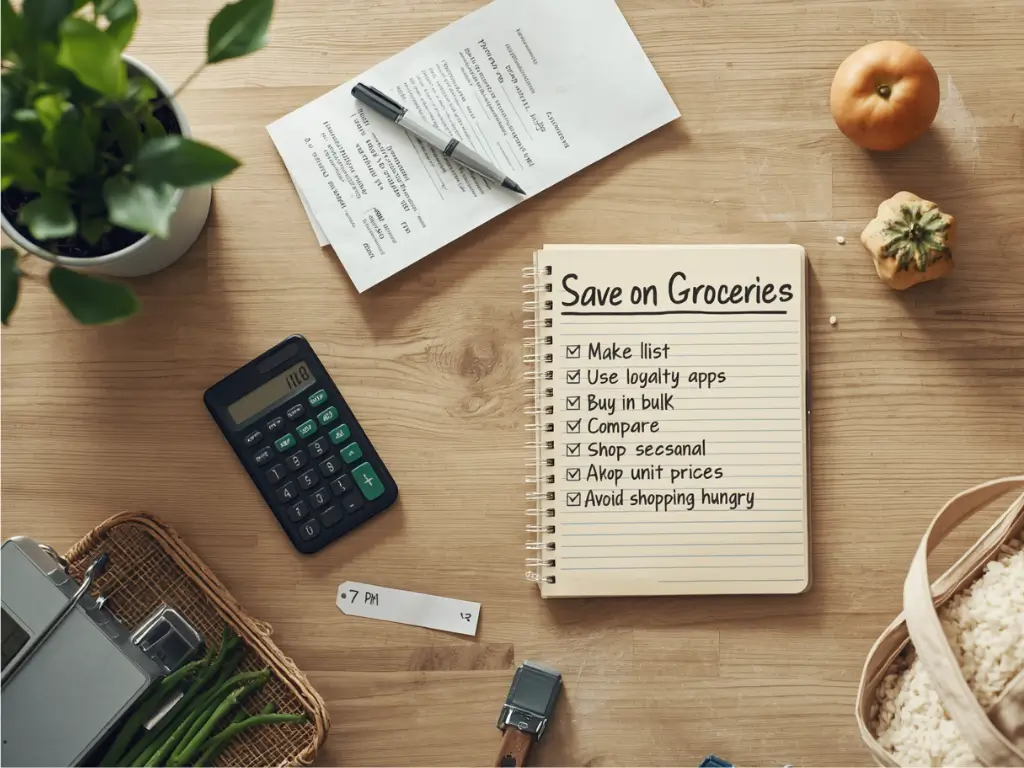
- A “Unit Price” Mindset: Understanding how to look at the small price-per-ounce labels rather than the shelf price.
- Initial Investment: $0. Most of the best tools are free. If you choose to invest in a vacuum sealer ($50-$100) to extend food life, you will typically break even within 60 days.
- Skill Requirements: Basic organization and the discipline to avoid impulse buys.
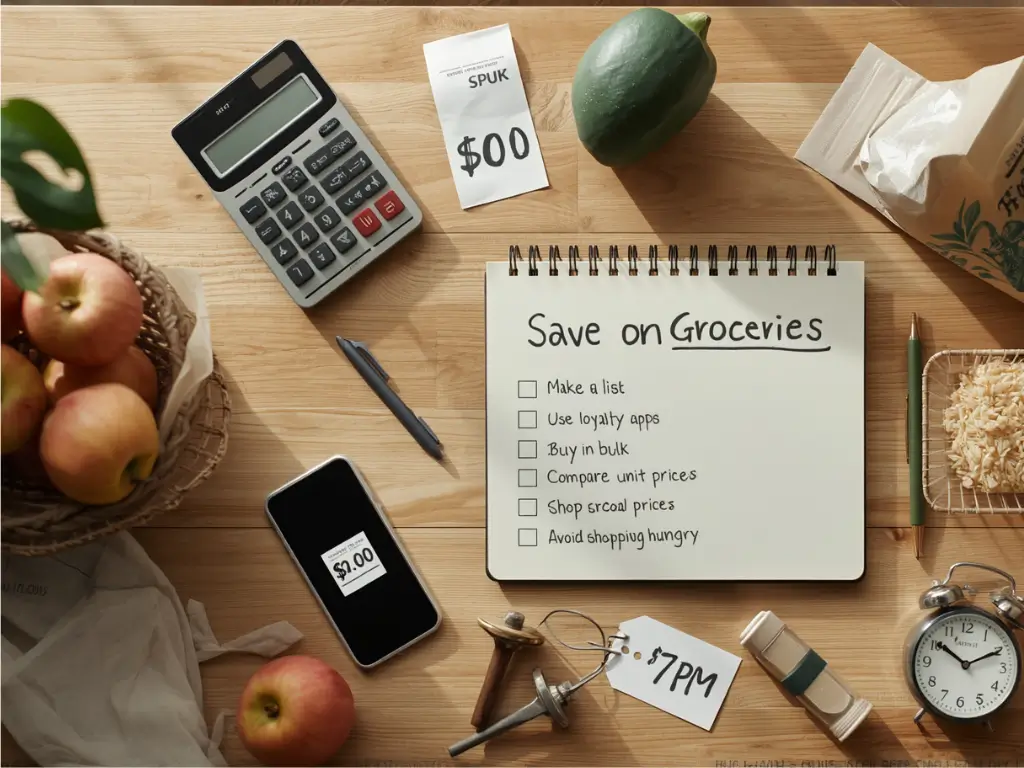
Time Investment
Many people view grocery saving as a time-sink. However, when compared to a traditional side hustle, the “hourly rate” of saving money is often much higher.
- Initial Setup: 1–2 hours to download apps, clear out your pantry, and organize your fridge.
- Weekly Commitment: 30–45 minutes for meal planning and list building.
- Timeline to Results: You will see a lower receipt total on your very first trip. Most practitioners see a significant impact on their income potential within 30 days.
- Comparison: A side hustle might pay $20/hour after taxes. Saving $100 a week on groceries for 1 hour of planning is effectively earning $100/hour tax-free.
Step-by-Step Implementation Guide
1. Perform a Ruthless Pantry Audit
Before you buy anything new, you must know what you already own. Most households have $100+ of “hidden” meals in the back of their cupboards.
- Action: List everything in your freezer and pantry. Use these items as the foundation for next week’s meals.
- Pro Tip: Label your “Open Date” on jars to prevent spoilage and unnecessary waste.
2. Meal Plan Around the Circular
The best way to save on groceries is to let the store tell you what to eat. Check the front page of the weekly digital circular—these are “loss leaders” meant to get you in the door.
- Action: If chicken breast is on sale for $1.99/lb, plan three meals around chicken.
- Insider Trick: Double the recipe and freeze half. This creates a “store-bought” convenience meal for nights you’re too tired to cook, preventing expensive takeout orders.
3. Master the “Unit Price” Comparison
The largest box isn’t always the cheapest. Stores often trick consumers into buying bulk items that actually cost more per ounce.
- Action: Always look at the small orange or white tag on the shelf that shows “Price per 100ct” or “Price per Oz.”
- Common Question: “Is the store brand always better?” Not always. Store brands are usually cheaper, but a name-brand item on sale with a coupon can sometimes beat the generic price.
4. Stack Digital Monetization Strategies
Turn your shopping trips into online earnings by using cashback apps.
- Action: After shopping, scan your receipt into Fetch Rewards and check Ibotta for specific brand rebates.
- Pro Tip: Link your store loyalty card to the app so coupons are applied automatically at checkout, removing the need for physical clipping.
Income Potential & Earnings Breakdown
How does this impact your path to financial freedom? Let’s look at the data for a typical household spending $800 a month on groceries.
| Strategy | Estimated Monthly Savings | 1-Year Impact | 5-Year Impact (Invested at 7%) |
|---|---|---|---|
| Meal Planning/Audit | $150 | $1,800 | $10,800 |
| Unit Pricing/Store Brands | $80 | $960 | $5,760 |
| Cashback/Rebate Stacking | $40 | $480 | $2,880 |
| Total “Passive Income” | **$270** | $3,240 | $19,440 |
By optimizing your grocery spend, you effectively generate a $3,240 annual “bonus.” If you take that saved money and put it into a passive income vehicle, it can grow into nearly $20,000 in just five years.
Alternative Methods & Variations
Depending on your lifestyle and location, you can scale these strategies:
- The “Aldi” Switch: Switching from a premium grocer to a discount grocer like Aldi or Lidl can slash bills by 30% without changing what you eat.
- Bulk Buying (The Warehouse Method): Use Costco or Sam’s Club for non-perishables and household goods, but beware of “bulk buy” traps on perishables you can’t finish.
- The “Work From Home” Garden: Use a small space to grow high-value herbs like basil or cilantro, which often cost $3-4 a bunch at the store but pennies to grow.
Best Practices & Optimization Tips
- Never Shop Hungry: Data shows impulse spending increases by 20-30% when the shopper is hungry.
- The “Bottom Shelf” Rule: Grocers place the most expensive items at eye level. Look down for the best deals and generic alternatives.
- Frozen Over Fresh: For smoothies or stews, frozen fruits and vegetables are often more nutritious (frozen at peak ripeness) and significantly cheaper.
- Digital Income Stacking: Use a credit card that offers 3-6% cashback on groceries (only if you pay it off monthly).
Common Mistakes to Avoid
Statistics show that 60% of shoppers abandon their lists within 15 minutes of entering the store.
- Brand Loyalty: Being loyal to a brand is a tax on your profit margins. Be loyal to the price.
- Buying Pre-Cut: Pre-cut onions or “salad kits” can cost 400% more than the raw ingredients. You are paying a high “tax” for 5 minutes of labor.
- The “Sale” Trap: It’s not a deal if you weren’t going to buy it anyway. Avoid “10 for $10” deals if you only need two.
Long-Term Sustainability & Growth
To ensure these money-saving schemes lead to long-term wealth:
- Reinvest the Savings: Immediately move the “saved” money from your checking account to a High-Yield Savings Account or a brokerage account.
- Automation: Use grocery pickup services. While there is sometimes a small fee, it prevents impulse buys and keeps you strictly to your list and budget.
- Future-Proofing: Learn to preserve food through canning or freezing. This allows you to buy in bulk during seasonal lows and eat for “free” during price hikes.
Conclusion
Finding the best way to save on groceries is the most immediate way to increase your personal profit margins. By treating your kitchen like a business, you stop the waste and start the wealth-building process. Every dollar saved is a step closer to financial freedom.
Ready to start your journey? Drop your questions in the comments!
- Subscribe for weekly money-making strategies.
- Try our Wealth Builder Quiz below to find your saver persona!
- Download our free “Pantry Inventory Template.”
FAQs
How much can I realistically save on groceries?
The average household can save between $200 and $500 per month by switching to store brands, meal planning, and utilizing discount grocers.
Do I need prior experience?
No. Start small by just tracking your spending for one week. The data will reveal exactly where you are overspending.
What is the initial investment?
Practically zero. All major cashback and list-making apps are free.
How long until I see results?
You will see a lower total on your very first receipt using these strategies.
Is this method still working in 2026?
Yes. As food prices fluctuate, the ability to plan and audit remains the most powerful tool in your financial arsenal.
What are the risks?
The only risk is “stockpile waste”—buying too much of a sale item that you don’t actually like or can’t finish before it expires.