
Did you know that 82% of aspiring digital entrepreneurs fail because they lack the initial capital to start, completely ignoring the thousands of dollars leaking from their own households every single year? It is a harsh reality: people spend hours researching monetization strategies while leaving the lights on in empty rooms and paying for subscriptions they haven’t touched in months.
If you want to achieve true financial freedom, mastering how to save money at home is your mandatory first step. Think of your household as your very first business. If you cannot manage the overhead costs of your living room, how will you manage the profit margins of a lucrative digital side hustle? Whether you are looking to work from home full-time or simply want to build a reliable emergency fund, the money you need is already in your paycheck—you just have to stop letting it slip through the cracks of your home.
In this comprehensive guide, we will walk you through exactly how to optimize your household expenses, slash your bills, and redirect those “found” funds into powerful online earnings.
Quick Answer
Learning how to save money at home requires systematically auditing your household utilities, groceries, and digital subscriptions to eliminate waste. By cutting these unnecessary domestic expenses, you instantly free up cash flow that can be automatically redirected into high-yield savings accounts or used as seed capital to fund income-generating digital side hustles.
What You’ll Need to Get Started
Before you can start redirecting your household savings into passive income streams, you need a clear picture of your domestic finances. You do not need expensive software or a financial advisor to do this.
Here is the breakdown of what you need to successfully execute your at-home savings strategy:
- Household Financial Audit Tools: Your last three months of bank statements, credit card bills, and utility invoices. (Cost: Free)
- Budget Tracking Software: A free app like YNAB, Rocket Money, or a simple Google Sheets template to monitor your monthly household overhead. (Cost: Free to $10/month)
- Energy-Efficiency Starter Kit: Optional but recommended—LED light bulbs, a smart power strip, and weather stripping. (Estimated Cost: $30-$50, pays for itself in months)
- A “Digital Income” Fund: A separate, free, high-yield savings account where all your at-home savings will be deposited.
- The Right Mindset: The understanding that every dollar saved on electricity or groceries is a dollar added to your future revenue streams.
Time Investment
Transforming your home into a highly efficient, money-saving machine requires some upfront effort, but the ongoing maintenance is minimal.
- Initial Setup Time: 3 to 4 hours. You will spend this time auditing your bills, canceling subscriptions, and making small physical changes around your home (like swapping lightbulbs or programming your thermostat).
- Daily/Weekly Time Commitment: 15 minutes per week to review your grocery budget and verify utility usage.
- Timeline to First “Earnings”: Most beginners see tangible results in their bank accounts within 30 to 45 days (typically when the next billing cycle hits).
- Long-Term Outlook: Within 6 to 12 months, the money saved at home can snowball into enough capital to fully fund an online business venture.
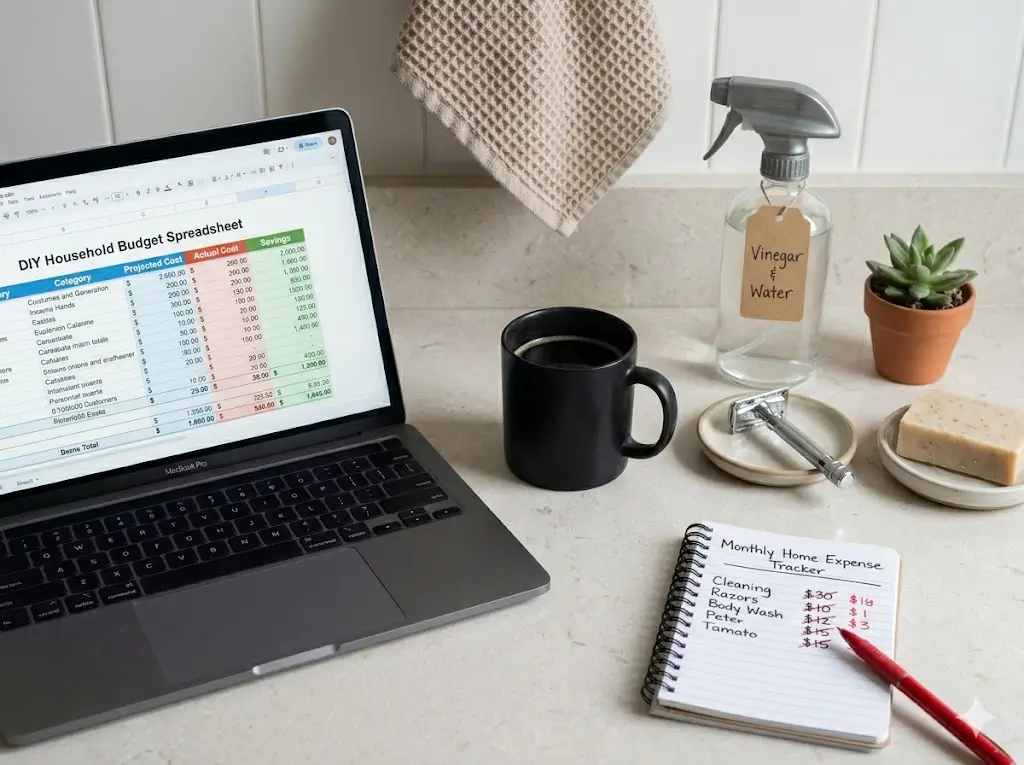
Step-by-Step Implementation Guide
Follow these actionable steps to plug the financial leaks in your house and boost your income potential.
Step 1: The Great Subscription & Service Purge
Your home is likely filled with invisible expenses draining your profit margins.
- Actionable Step: Comb through your bank statements. Cancel the streaming services you rarely watch, the premium app subscriptions, and the forgotten gym memberships.
- Pro Tip: Call your internet and cable providers. Inform them you are considering switching to a competitor. In many cases, the retention department will offer you a lower promotional rate, saving you $20-$50 instantly.
Step 2: Optimize Home Energy & Utilities
Treat your utility bills like adjustable expenses, not fixed costs.
- Actionable Step: Lower your water heater temperature to 120°F (49°C). Install a programmable thermostat to ensure you aren’t paying to heat or cool an empty house while you are away.
- Insider Trick: Unplug “vampire” appliances. Devices like gaming consoles, microwaves, and desktop computers drain energy even when turned off. Plug them into smart power strips that cut the current completely.
Step 3: Strategic Grocery & Meal Planning
Food is often the largest variable expense in a household.
- Actionable Step: Implement strict meal planning. Base your weekly meals around what is already in your pantry and what is on sale at your local market.
- Common Question: Do I have to stop eating out? No, but limit it. By replacing just two $30 restaurant meals a week with home-cooked dinners, you save over $3,000 a year—perfect capital for starting an online side hustle.
Step 4: Automate the “Found” Money
This is where domestic frugality meets financial freedom. If you save $150 on utilities and groceries but leave it in your checking account, you will accidentally spend it.
- Actionable Step: Set up an automatic transfer. Every time you negotiate a bill down or skip a takeout meal, immediately transfer that exact dollar amount into your dedicated “Digital Income Fund.”

Income Potential & Earnings Breakdown
When you learn how to save money at home, you aren’t just hoarding pennies—you are generating the seed money required to build substantial online earnings. Here is a realistic look at how domestic savings translate to income potential:
| Savings Action | Estimated Monthly Savings | 1-Year Capital Generated | Side Hustle Application |
|---|---|---|---|
| Cutting 3 subscriptions | $45.00 | $540.00 | Covers domain hosting & premium WordPress themes for a year. |
| Negotiating Wi-Fi/Insurance | $60.00 | $720.00 | Funds targeted social media ads or freelance design work. |
| Reducing Energy/Utility waste | $40.00 | $480.00 | Pays for SEO tools or digital marketing courses. |
| Meal planning / less takeout | $200.00 | $2,400.00 | Provides significant inventory capital for e-commerce. |
| Total Projected Capital | **$345.00** | $4,140.00 | A powerful launchpad for work-from-home ventures. |
Disclaimer: These figures are estimates based on average household data. Your specific savings and subsequent business returns will vary based on your location, habits, and execution.
Alternative Methods & Variations
If you have already trimmed your budget to the bone, try these alternative, lower-investment methods to maximize your household efficiency:
- The “No-Spend” Month: Challenge yourself to spend absolutely zero dollars on non-essential items (no clothes, no dining out, no entertainment) for 30 days. It is a rapid way to stockpile cash for a new monetization strategy.
- House Hacking / Renting Space: If you have an empty garage, driveway, or spare bedroom, rent it out. Platforms exist to rent out everything from your attic space to your backyard pool, creating immediate passive income.
- DIY Household Maintenance: Instead of paying $100 for a plumber to fix a simple leaky faucet, use free YouTube tutorials to learn basic household repairs.
Best Practices & Optimization Tips
To make your at-home savings as efficient as possible, incorporate these best practices into your routine:
- Use Cashback Portals for Household Goods: When buying necessary household items (toilet paper, cleaning supplies), use cashback browser extensions like Rakuten or Honey. It’s free money back on items you were going to buy anyway.
- Run Appliances During Off-Peak Hours: Many utility companies charge less for electricity used late at night or early in the morning. Run your dishwasher and laundry during these off-peak windows.
- Audit Annually: Make it a yearly tradition to sit down every January to re-evaluate your household overhead. Complacency is the enemy of profit margins.
Common Mistakes to Avoid
Even highly motivated individuals make critical errors when trying to optimize their home finances. Watch out for these pitfalls:
- The “Gadget Trap”: * The Mistake: Spending $500 on a high-tech smart home system to save $5 a month on electricity.
- The Solution: Always calculate the ROI. If an energy-saving device takes 10 years to pay for itself, it is not a wise investment.
- Succumbing to Lifestyle Creep: * The Mistake: You get a raise at work, so you immediately upgrade your apartment, buy a bigger TV, and increase your grocery budget.
- The Solution: Maintain your baseline living expenses even as your income grows. Channel all new revenue streams into investments.
- Depriving Yourself Completely: * The Mistake: Cutting out everything you enjoy (coffee, hobbies) leading to burnout and a massive spending binge.
- The Solution: Save ruthlessly on things you don’t care about (utilities, interest rates) so you can spend intentionally on things you love.
Long-Term Sustainability & Growth
Saving money at home is not a temporary fix; it is a permanent lifestyle designed to support your long-term growth.
Reinvestment Strategies As your household savings begin to accumulate, transition your focus. Take that saved $3,000 and reinvest it. Buy equipment to start a freelance business, invest in dividend-paying stocks, or fund an e-commerce store.
Future-Proofing Advice Inflation will inevitably cause household costs to rise. To future-proof your finances, you must eventually shift from just saving money to making money. Use the capital you saved at home to build digital revenue streams that outpace inflation, ensuring your financial freedom remains intact regardless of the economy.
Conclusion
Understanding how to save money at home is the vital bridge between living paycheck-to-paycheck and launching a successful digital business. By auditing your utilities, cutting subscription waste, and strategically managing your groceries, you manufacture your own seed capital. Stop waiting for a massive windfall to start your side hustle; the money you need is waiting to be uncovered in your own living room.
Ready to start your journey? Drop your biggest household budgeting challenge in the comments below! Be sure to subscribe for weekly money-making strategies, and share your progress in our community forums.
Frequently Asked Questions (FAQs)
How much money can I realistically make or save?
By aggressively optimizing home utilities, groceries, and subscriptions, the average household can realistically save between $2,000 and $5,000 annually. If invested into a successful online side hustle, the earning potential of that saved capital becomes uncapped.
Do I need prior experience to start saving this way?
No prior financial experience is necessary. Simply gathering your bills, looking at what you spend, and making phone calls to negotiate rates are beginner-friendly actions anyone can take today.
What’s the initial investment to start optimizing my home?
The required initial investment is practically zero. Aside from optionally purchasing a few LED bulbs or weather stripping, optimizing your home is about changing habits and canceling services, which costs nothing.
How long until I see results?
You will see immediate results on your very next billing cycle—typically 30 to 45 days—after you cancel unused subscriptions and negotiate your utility and internet rates.
Is this method still working in 2026?
Yes. In fact, with the rise of subscription-based models for everything from software to food delivery, auditing domestic expenses is more crucial and effective in 2026 than ever before.
What are the risks involved?
There are virtually zero financial risks involved with saving money at home. The only risk comes after you save the money—if you choose to invest your newly found capital into a high-risk, unverified online business venture. Always research before deploying your savings.
Before you go, tap those stars!
Straightforward, no gimmicks, just solid banking advice
I clicked on this article expecting it to push some specific bank or financial product with referral links. I was pleasantly surprised. The advice was unbiased, focused on principles rather than promoting any particular institution, and gave me a clear framework to evaluate my own options. I appreciated that the article addressed the importance of FDIC insurance, automatic transfers, and goal-setting — things that seem obvious but that most people (including me) overlook. The writing was clear and concise, without the usual fluff or overly complex financial jargon. The only reason I’m giving four stars instead of five is that I would have liked even more detail on how to balance saving with paying down debt. Still, this was one of the most practical and trustworthy articles on saving I’ve read in a long time. Highly recommend.
Solid advice that cuts through the noise
I’ve been saving for years, but I kept wondering if my money was actually working as hard as it could be. There’s so much conflicting information out there — regular savings accounts, money market accounts, CDs, high-yield options — it gets confusing fast. This article did an excellent job comparing the options side by side, explaining the pros and cons of each, and helping me figure out which strategy made sense for my situation. I especially appreciated the section on the importance of emergency funds versus long-term savings, and the breakdown of how compound interest really adds up over time. I ended up moving my savings to a high-yield account and setting clearer goals. Practical, well-researched, and genuinely helpful.
Small changes, noticeable results
I’ll be honest — I clicked on this article expecting generic advice like “drive less” (thanks, captain obvious). But I was genuinely impressed. The article breaks down the actual science behind why certain habits affect fuel economy, with real numbers to back it up. I learned that my lead-foot acceleration and speeding were costing me way more than I realized. The section on vehicle maintenance was especially valuable — I didn’t know a dirty air filter could impact mileage that much. The tone was straightforward, no fluff, no upselling expensive products. Just solid, practical advice that actually works. My fuel expenses dropped by about 15% last month without me changing my overall driving needs.
Finally, practical advice that doesn’t require buying a new car
As someone who drives over 400 miles a week for work, gas expenses have been crushing my budget. I’ve read countless articles that basically just say “buy an electric vehicle” — which isn’t helpful when that’s not in my budget. This article was a game-changer. The tips were immediately actionable: combining trips, checking tire pressure (I didn’t realize how much that affects mileage!), and using gas price apps. I started implementing these suggestions last month, and I’ve already saved about $40. The writing was clear, well-organized, and respected that not everyone can just trade in their car. Highly recommend for anyone feeling the pain at the pump.
Perfect for renters who can’t install solar panels
As someone who rents an apartment, I often feel limited when it comes to making my home more energy-efficient. I can’t just install new appliances or add insulation to the walls. This article was a lifesaver because it focused on renter-friendly solutions—things like weatherstripping for doors, smart power strips, and optimizing how I use my existing appliances. The writing was straightforward and didn’t assume I owned a home. My only small critique is that I would have loved even more rent-specific examples, but overall, this was incredibly helpful. My electric bill dropped by about $15 last month!