
Smart Strategies to Build and Manage Your Cash Savings
Did you know that nearly 56% of adults lack the liquidity to cover a surprise $1,000 expense without going into debt? This staggering statistic highlights a critical vulnerability in personal finance. Countless individuals chase complex investment strategies or the next big financial trend, yet they fail because they skip one foundational step: building a robust foundation of cash savings.
Whether your goal is to cushion against unexpected life events, prepare for a major purchase, or lay the groundwork for ultimate financial freedom, mastering your liquidity is non-negotiable. Without a strategic approach to saving, you leave yourself exposed to financial stress and high-interest debt that can derail your long-term goals.
Quick Answer:
To effectively build and manage your cash savings, start by auditing your monthly expenses to find a realistic savings margin. Automate your deposits directly into a High-Yield Savings Account (HYSA) to ensure consistency, and view this fund as your stepping stone toward generating passive income and achieving complete financial stability.
What You’ll Need to Get Started
Building a healthy reserve of cash savings doesn’t require a background in finance or massive upfront capital. You can start with exactly what you have right now.
Required Tools and Resources:
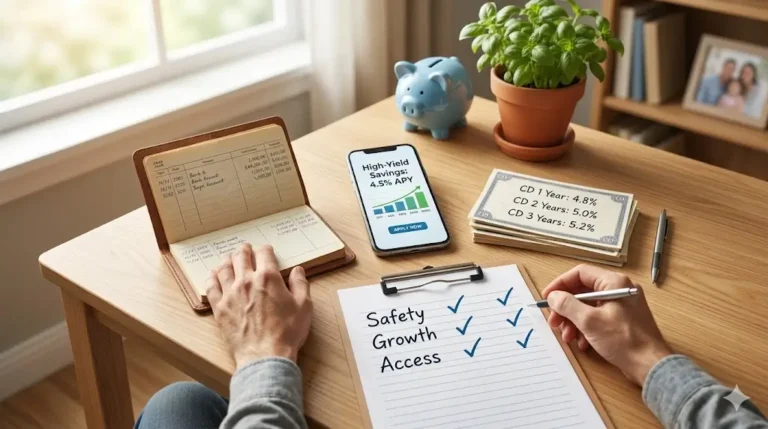
- A High-Yield Savings Account (HYSA): Traditional banks offer around 0.01% APY, while HYSAs offer significantly more.
- Budgeting Software: Apps like EveryDollar, YNAB (You Need A Budget), or a simple, well-organized Excel spreadsheet.
- Automation Tools: Automatic transfer features provided by your bank or employer’s direct deposit system.
Initial Investment:
- Financial: $0 to start. Many digital banks require no minimum deposit to open an account.
- Skill Requirements: Basic addition and subtraction, consistency, and financial discipline.
- Free Alternatives: If you don’t want to pay for premium budgeting apps, Google Sheets provides excellent free budgeting templates.

Time Investment
Growing your cash savings is a marathon, not a sprint. The beauty of this process is that the initial setup is incredibly fast, while the execution requires minimal daily effort.
- Setup Time Required: 1 to 2 hours (to audit your expenses, open an HYSA, and set up automated transfers).
- Weekly Time Commitment: 15–30 minutes to review your budget and track your progress.
- Timeline to First Results: Most beginners see a tangible, motivating buffer within 60-90 days of consistent effort.
- Comparison: Unlike building a complex business from scratch, automating your cash savings provides guaranteed progression with near-zero active time investment once established.
Step-by-Step Implementation Guide
1. Audit Your Income and Expenses
Before you can save, you need to know your profit margins—the difference between what you earn and what you spend. Print out your last three months of bank statements. Categorize your spending into needs (rent, groceries) and wants (dining out, entertainment). Identify areas where you can trim the fat.
2. Define Clear, Actionable Goals
Don’t just save blindly. Categorize your cash savings into specific “buckets.”
- Emergency Fund: 3 to 6 months of basic living expenses.
- Sinking Funds: Savings for expected future expenses (e.g., car maintenance, annual insurance premiums).
- Opportunity Fund: Seed money for a future side hustle, digital income project, or online earnings venture.
3. Automate the Process
Pro Tip: Pay yourself first. Set up your employer’s direct deposit to send a specific percentage of your paycheck directly to your savings account before it ever touches your checking account. If you never see the money, you won’t be tempted to spend it.
4. Optimize Your Account Selection
Keep your emergency cash savings liquid, but ensure it’s working for you. Move your funds from a traditional brick-and-mortar bank to an online-only bank offering a competitive APY. This is the simplest form of passive income you can generate.
5. Leverage Savings for Growth
Once your emergency fund is fully funded, use your surplus cash savings to explore new revenue streams. Having a financial safety net gives you the confidence to invest in a work from home setup, fund a digital marketing course, or test different monetization strategies without risking your livelihood.

Income Potential & Earnings Breakdown
While cash savings aren’t designed to make you rich overnight, optimizing where you store them dictates your baseline income potential. Here is a realistic look at how optimizing your savings generates passive returns.
Earnings Breakdown (Example on $10,000 over 1 Year):
| Account Type | Average APY | Passive Income Generated | Risk Level |
|---|---|---|---|
| Traditional Bank | 0.01% | $1.00 | Zero |
| High-Yield Savings (HYSA) | 4.30% | $430.00 | Zero |
| Certificate of Deposit (CD) | 5.00% | $500.00 | Zero (Locks funds) |
Note: Interest rates fluctuate based on federal policies. The figures above are estimates. By simply moving your cash savings to an optimized account, your money generates its own online earnings effortlessly. Over time, thanks to compound interest, these earnings multiply.
Alternative Methods & Variations
If traditional saving feels too restrictive, there are numerous alternative methods to adapt to your lifestyle:
- The 50/30/20 Rule: Allocate 50% of your income to needs, 30% to wants, and a strict 20% to cash savings and investments.
- The Envelope Method (Digital or Physical): Give every dollar a job. This hyper-focused variation is excellent for beginners who struggle with overspending.
- Income Boosting: Instead of just cutting expenses, focus on increasing your top line. Start a low-cost side hustle or take on freelance work from home. Direct 100% of these secondary revenue streams directly into your savings account.
Best Practices & Optimization Tips
To maximize your results and reach your financial goals faster, implement these proven strategies:
- Use Round-Up Apps: Connect apps that round up your daily purchases to the nearest dollar and automatically deposit the spare change into your savings.
- Negotiate Your Bills: Annually call your internet, insurance, and phone providers to negotiate better rates. Redirect the saved money straight into your savings.
- Bank Hopping (Advanced): Experienced savers occasionally move their funds to take advantage of lucrative bank sign-up bonuses, essentially creating a new income stream just for parking their cash.
- Reinvestment: Leave the interest you earn inside the account so it can compound over time.
Common Mistakes to Avoid
Even well-intentioned individuals fall into traps when managing their cash savings. Avoid these critical errors:
- Waiting Until You “Have Enough” to Save: A staggering number of people delay saving because they feel $10 or $20 a week won’t make a difference. Prevention: Start with $5 a week. The habit is more important than the amount initially.
- Keeping Too Much in Cash: While cash savings are vital for emergencies, keeping all your wealth in cash exposes you to inflation risk. Once your 6-month emergency fund is full, pivot to investing.
- Dipping into Savings for Non-Emergencies: Using your emergency fund for a vacation defeats its purpose. Prevention: Create separate “sinking funds” for fun expenses so your emergency cash remains untouched.
- Chasing Get-Rich-Quick Schemes: Don’t risk your hard-earned cash savings on unverified crypto tips or sketchy online businesses. Protect your capital.
Long-Term Sustainability & Growth
Maintaining your cash savings is an ongoing journey towards financial freedom. As your life circumstances change, your savings strategy must adapt.
Diversification and Future-Proofing: Once you hit your optimal cash reserve number (typically 3 to 6 months of expenses), it’s time to pivot. Use excess cash to fund long-term investments like index funds, real estate, or building an online business. This shifts your wealth-building strategy from mere preservation to aggressive growth. By continually evaluating your monetization strategies, you transform a simple savings habit into a comprehensive wealth-generation machine that outpaces inflation and builds generational wealth.
Conclusion
Building and managing your cash savings is the undisputed bedrock of personal finance. By auditing your expenses, automating your deposits, and utilizing high-yield accounts, you protect yourself from emergencies and create a launchpad for future investments. Remember, wealth is built through consistent, strategic actions over time.
Ready to start your journey toward financial freedom? Drop your questions about budgeting or HYSAs in the comments below! Don’t forget to subscribe for our weekly money-making strategies, and share your progress in our community.
FAQs
1. How much money do I actually need in my cash savings?
Financial experts universally recommend saving enough to cover 3 to 6 months of essential living expenses. If your bare-minimum monthly expenses are $3,000, your target should be $9,000 to $18,000.
2. Where is the safest place to keep my cash savings?
The safest and most efficient place is an FDIC-insured High-Yield Savings Account (HYSA). These accounts protect your money up to $250,000 while offering competitive interest rates.
3. Do I need prior experience in finance to manage my savings?
Not at all! You only need the discipline to spend less than you earn and the willingness to automate your banking. Modern budgeting apps make the math incredibly simple.
4. How long until I see results?
If you automate a set amount every payday, you will see a noticeable, motivating safety net form within 60 to 90 days. The psychological relief of having emergency funds often happens even faster.
5. Should I pay off debt or build cash savings first?
A hybrid approach is usually best. Save a starter emergency fund of $1,000 to prevent you from taking on new debt when emergencies arise, then aggressively pay down high-interest debt (like credit cards) before fully funding your 6-month reserve.
6. Is keeping money in a savings account still a good idea in 2026?
Yes. While inflation is a factor, cash savings provide essential liquidity that stocks or real estate cannot offer instantly. Your emergency fund is insurance, not an investment designed to beat the stock market.
7. What are the risks involved with cash savings?
The primary risk is inflation risk—the slow loss of purchasing power over time. This is why you should only keep what you need for emergencies and short-term goals in cash, and invest the rest for long-term growth.
Before you go, tap those stars!
Straightforward, no gimmicks, just solid banking advice
I clicked on this article expecting it to push some specific bank or financial product with referral links. I was pleasantly surprised. The advice was unbiased, focused on principles rather than promoting any particular institution, and gave me a clear framework to evaluate my own options. I appreciated that the article addressed the importance of FDIC insurance, automatic transfers, and goal-setting — things that seem obvious but that most people (including me) overlook. The writing was clear and concise, without the usual fluff or overly complex financial jargon. The only reason I’m giving four stars instead of five is that I would have liked even more detail on how to balance saving with paying down debt. Still, this was one of the most practical and trustworthy articles on saving I’ve read in a long time. Highly recommend.
Solid advice that cuts through the noise
I’ve been saving for years, but I kept wondering if my money was actually working as hard as it could be. There’s so much conflicting information out there — regular savings accounts, money market accounts, CDs, high-yield options — it gets confusing fast. This article did an excellent job comparing the options side by side, explaining the pros and cons of each, and helping me figure out which strategy made sense for my situation. I especially appreciated the section on the importance of emergency funds versus long-term savings, and the breakdown of how compound interest really adds up over time. I ended up moving my savings to a high-yield account and setting clearer goals. Practical, well-researched, and genuinely helpful.
Small changes, noticeable results
I’ll be honest — I clicked on this article expecting generic advice like “drive less” (thanks, captain obvious). But I was genuinely impressed. The article breaks down the actual science behind why certain habits affect fuel economy, with real numbers to back it up. I learned that my lead-foot acceleration and speeding were costing me way more than I realized. The section on vehicle maintenance was especially valuable — I didn’t know a dirty air filter could impact mileage that much. The tone was straightforward, no fluff, no upselling expensive products. Just solid, practical advice that actually works. My fuel expenses dropped by about 15% last month without me changing my overall driving needs.
Finally, practical advice that doesn’t require buying a new car
As someone who drives over 400 miles a week for work, gas expenses have been crushing my budget. I’ve read countless articles that basically just say “buy an electric vehicle” — which isn’t helpful when that’s not in my budget. This article was a game-changer. The tips were immediately actionable: combining trips, checking tire pressure (I didn’t realize how much that affects mileage!), and using gas price apps. I started implementing these suggestions last month, and I’ve already saved about $40. The writing was clear, well-organized, and respected that not everyone can just trade in their car. Highly recommend for anyone feeling the pain at the pump.
Perfect for renters who can’t install solar panels
As someone who rents an apartment, I often feel limited when it comes to making my home more energy-efficient. I can’t just install new appliances or add insulation to the walls. This article was a lifesaver because it focused on renter-friendly solutions—things like weatherstripping for doors, smart power strips, and optimizing how I use my existing appliances. The writing was straightforward and didn’t assume I owned a home. My only small critique is that I would have loved even more rent-specific examples, but overall, this was incredibly helpful. My electric bill dropped by about $15 last month!