
Did you know that 71% of aspiring online entrepreneurs fail because they claim they lack the initial seed capital, while simultaneously burning an average of $10,000 a year just getting to and from a day job? It is one of the greatest ironies in personal finance: people desperately search for complex monetization strategies and passive income ideas, yet they completely ignore the massive cash leak sitting right in their driveway.
If you want to transition to a work from home lifestyle and achieve true financial freedom, mastering how to save money on transportation is a mandatory first step. Transportation is typically the second-largest expense in a household budget, right behind housing. If you cannot optimize your daily commute, you are literally driving away the profit margins that could be funding your future digital income. By drastically cutting your transit costs, you instantly create a cash surplus that can be redirected into building powerful online revenue streams.
In this comprehensive, data-driven guide, we will break down the exact strategies you need to slash your vehicle and transit overhead, stop the cash bleed, and redirect your newfound money into a profitable online side hustle.
Quick Answer
Learning how to save money on transportation requires auditing your daily commute, aggressively negotiating vehicle overhead (like insurance), and substituting expensive driving miles with public transit, carpooling, or remote work days. By redirecting the hundreds of dollars saved monthly into a dedicated investment fund, you instantly generate the seed capital required to build lasting online earnings.
What You’ll Need to Get Started
Before you can start redirecting your commuting savings into passive income streams, you need to analyze your current transit habits. You don’t need to sell your car today or buy a $3,000 e-bike to get started.
Here is the breakdown of what you need to execute this transportation savings strategy:
- Mileage & Fuel Tracking App: A free app like Fuelio or Drivvo, or a simple Google Sheets template to monitor your exact cost-per-mile. (Cost: Free)
- Transit Maps & Schedules: The local transit app for your city to explore alternative routes. (Cost: Free)
- A “Side Hustle” Bank Account: A separate, free, high-yield savings account (HYSA) where your unspent gas and insurance money will be deposited automatically. (Cost: Free)
- Negotiation Script: A simple email or script to negotiate remote work days with your employer. (Cost: Free)
- Initial Capital: $0. You are optimizing the money you already spend on survival and transit.
Time Investment
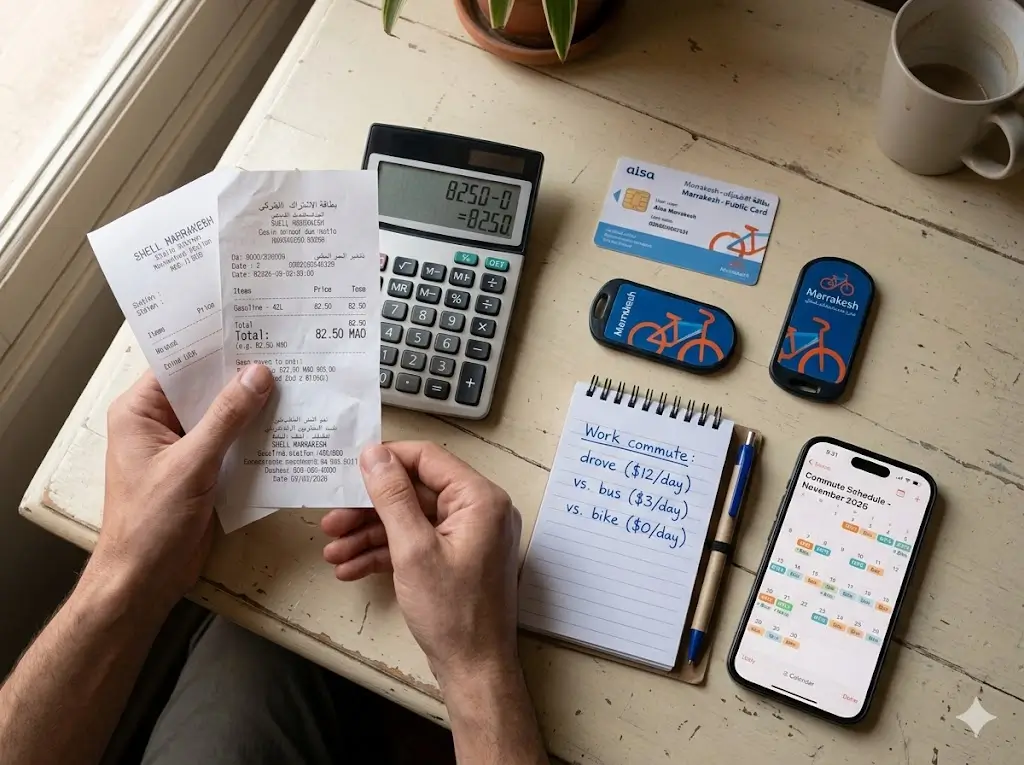
Optimizing your transit budget requires an initial strategic overhaul, but the ongoing maintenance actually saves you time, especially if you successfully negotiate telecommuting.
- Initial Setup Time: 2 to 3 hours to calculate your true vehicle costs, call your insurance provider, and map out alternative transit routes.
- Daily/Weekly Time Commitment: Depending on your choices, taking public transit might add 15–20 minutes to your day, but this is offset by the ability to reclaim that time (e.g., listening to digital marketing podcasts or answering emails on the train).
- Timeline to First “Earnings”: Immediate. You will see savings the very first week you skip the gas pump or lower your insurance premium.
- Timeline to Side Hustle Capital: Most beginners free up $150 to $300 in their first 30 to 60 days of consistent effort.
Step-by-Step Implementation Guide
Follow these actionable, sequential steps to plug the financial leaks in your commute and boost your income potential.
Step 1: Calculate Your True Commute Profit Margins
You cannot manage what you do not measure. Most people only count gas, but driving costs include depreciation, maintenance, and insurance.
- Actionable Step: Use the IRS standard mileage rate (currently around 67 cents per mile) and multiply it by your total monthly miles. If you drive 1,000 miles a month, your car is costing you roughly $670. Seeing this real number is the psychological wake-up call needed to change habits.
Step 2: Negotiate “Work From Home” Days
The absolute best way to save on transportation is to simply not transport yourself.
- Actionable Step: Approach your manager with a proposal to work remotely just two days a week. Highlight how it will increase your productivity.
- Insider Trick: Cutting a 5-day commute to a 3-day commute instantly slashes your transportation variable costs by 40%, funneling massive cash flow back into your pocket.
Step 3: Implement the “Micro-Mobility” Rule
For trips under two miles, the car engine should not turn on.
- Actionable Step: Commit to walking, biking, or taking a scooter for short errands like picking up a few groceries or going to the gym. Short trips are notoriously terrible for a car’s fuel efficiency and engine wear.
- Pro Tip: Invest in a sturdy backpack or a bike basket to make errand-running easier and more sustainable.
Step 4: Ruthlessly Optimize Vehicle Overhead
If you must drive, lower the fixed costs of ownership.
- Actionable Step: Call your auto insurance provider today. Ask them to recalculate your premium based on your newly reduced mileage (from Step 2 and 3). Shop your rate with three other competitors. Ensure your tires are perfectly inflated to maximize your miles per gallon (MPG).
Step 5: Automate Your Transit Savings
Saving $150 on gas means nothing if you accidentally spend it on dining out.
- Actionable Step: Calculate your new monthly transportation savings. Set up an automatic transfer on the 1st of every month to move that exact dollar amount into your dedicated side hustle or digital income fund.
Income Potential & Earnings Breakdown
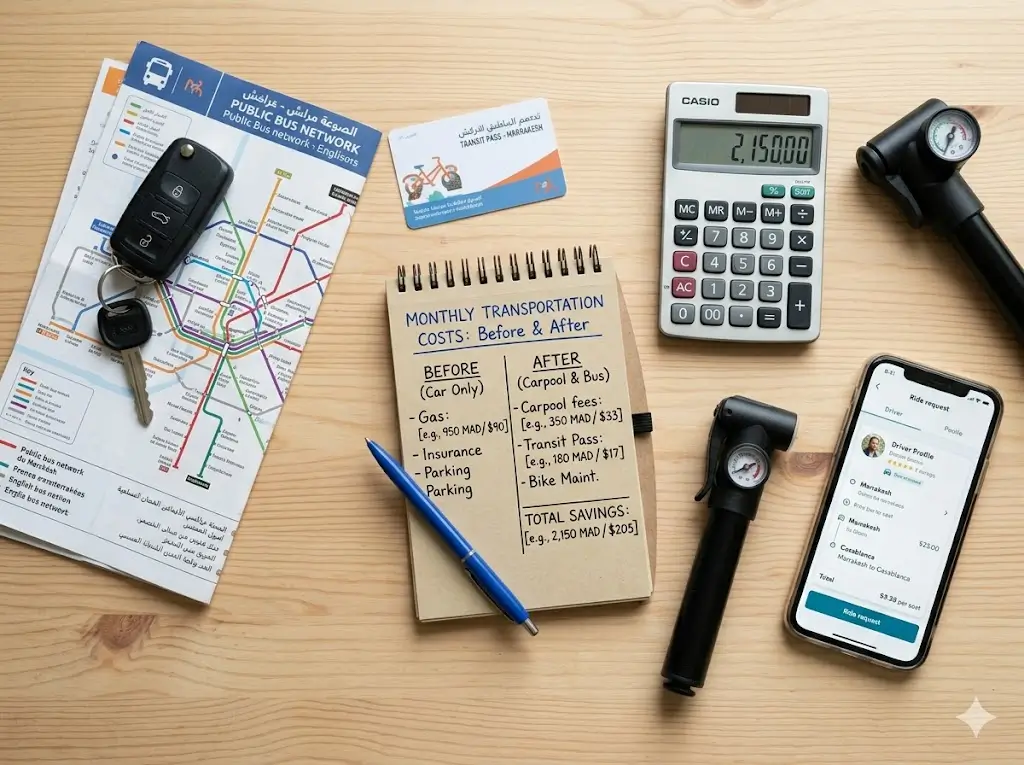
How does skipping a drive translate to financial freedom? In personal finance, capital saved is capital earned. Here is a realistic look at how optimizing your transit budget generates the seed money for your online earnings:
| Transit Savings Action | Estimated Monthly Savings | 1-Year Capital Generated | Digital Income Application |
|---|---|---|---|
| WFH 2 Days a Week (Gas + Wear) | $120.00 | $1,440.00 | Covers premium web hosting and advanced SEO software for a year. |
| Negotiating Auto Insurance | $40.00 | $480.00 | Funds targeted social media ads or freelance graphic design. |
| Biking for Short Errands | $30.00 | $360.00 | Provides initial inventory capital for e-commerce testing. |
| DIY Basic Maintenance (Oil/Air filters) | $35.00 | $420.00 | Pays for premium digital marketing or coding courses. |
| Total Projected Capital | **$225.00** | $2,700.00 | A completely debt-free launchpad for online revenue streams. |
Disclaimer: These figures are estimates based on average commuter data. Your specific savings will vary based on your vehicle type, commute distance, and location.
Alternative Methods & Variations
If traditional car ownership is bleeding you dry, consider these alternative, structural changes to your transportation setup:
- Going “Car-Lite” (One-Car Household): If you are a two-car household, try living with just one car for 30 days. Coordinate schedules, use public transit, or occasionally use a ride-share. Selling the second car immediately frees up thousands in equity and hundreds in monthly fixed costs.
- Geo-Arbitrage: While extreme, moving closer to your job (or moving to a more walkable neighborhood) can eliminate the need for a car entirely. The higher rent is often completely offset by the elimination of car payments, insurance, and gas.
- Car-Sharing Programs: If you only need a car occasionally for weekend trips or large grocery runs, selling your car and using services like Zipcar or Turo on-demand can save thousands annually.
Best Practices & Optimization Tips
To squeeze maximum efficiency out of your transportation and accelerate your journey toward passive income, keep these best practices in mind:
- Stack Your Errands: Never leave the house for just one item. Batch your errands geographically. Going to the pharmacy, grocery store, and post office in one continuous, planned loop saves significant gas and time.
- Use Cashback Gas Apps: If you have to buy gas, use apps like Upside or a dedicated 3-5% cashback credit card. Route all cashback rewards directly to your business fund.
- Turn Transit into “University” Time: If you switch from driving to taking the bus or train, do not waste that time scrolling social media. Reclaim that hour by reading business books, taking online courses, or writing content for your digital side hustle.
Common Mistakes to Avoid
Even highly motivated individuals fall into traps that derail their transportation savings. Watch out for these pitfalls:
- The “New Hybrid” Math Trap: * The Mistake: Selling a reliable, paid-off used car to buy a brand new $35,000 electric or hybrid vehicle “to save money on gas.”
- The Prevention Strategy: The math almost never works out. The monthly car payment and higher insurance premium on a new car will wildly outpace the $80 a month you save on fuel. Drive your paid-off car until it dies.
- Ignoring Preventative Maintenance: * The Mistake: Skipping a $50 oil change to save money this month.
- The Prevention Strategy: This leads to a $3,000 engine replacement next year. Always perform required maintenance; it is the ultimate form of asset protection.
- Failing to Redirect the Surplus:
- The Mistake: Saving $100 on gas but accidentally absorbing that money into your grocery or entertainment budget (lifestyle creep).
- The Prevention Strategy: Treat your transit savings as an immediate expense owed to your future self. Transfer it immediately.
Long-Term Sustainability & Growth
Learning how to save money on transportation is an excellent financial sprint, but building lasting wealth requires a marathon mindset.
The Ultimate Goal: Eliminate the Commute The long-term strategy of cutting transit costs is to eventually fund a business that makes transportation optional. As your side hustle begins generating real online earnings, your goal should be to scale those revenue streams until they replace your day job salary.
Reinvestment & Future-Proofing Once your online income allows you to work from home permanently, your transportation costs will drop to near zero. Take the profits from your side hustle—and your permanently reduced transit budget—and reinvest them into diverse assets like index funds or real estate. This creates true passive income, future-proofing your finances against inflation and economic shifts.
Conclusion
Understanding how to save money on transportation is the secret weapon of successful digital entrepreneurs. By auditing your commute, negotiating work-from-home days, and aggressively avoiding vehicle bloat, you manufacture your own seed capital in real time. Stop using the excuse that you don’t have the money to start a business; the cash you need is waiting for you in your gas tank and insurance premiums.
Ready to start your journey? Drop your biggest commuting challenge in the comments below! Be sure to subscribe for weekly money-making strategies, share your progress in our community forums, and download our free side-hustle starter guide.
Frequently Asked Questions (FAQs)
How much money can I realistically make or save with these strategies? By aggressively optimizing your commute, negotiating insurance, and implementing micro-mobility for short trips, an average commuter can realistically free up $150 to $400 a month. If directed into a digital side hustle, the income potential of that saved capital becomes uncapped.
Do I need prior experience to optimize my transit budget? No prior experience is necessary. Basic math, a willingness to plan your errands, and the courage to make a phone call to your insurance provider or boss are the only requirements.
What is the initial investment required? Zero dollars. Optimizing transportation is entirely about modifying the cash flow you already spend to get around. Your only investment is the time it takes to plan your routes and negotiate.
How long until I see results? You will see immediate financial results the very next time you fill up your gas tank or receive your new, lowered insurance bill. By the end of your first 30 days, you should have measurable capital ready to transfer into your side hustle fund.
Is this method still working in 2026? Yes. In fact, with remote work infrastructure more robust than ever in 2026, negotiating telecommute days and optimizing high fuel and insurance costs is more realistic and financially impactful than in previous decades.
What are the risks involved with this strategy? There are virtually zero financial risks involved with optimizing your transportation budget. The only risk comes after you save the money—if you choose to invest your newly freed-up capital into an unverified or high-risk “get rich quick” scheme instead of a legitimate digital business.
<!– Schema Markup for FAQs to ensure rich snippet eligibility –>
<script type=”application/ld+json”> { “@context”: “https://schema.org”, “@type”: “FAQPage”, “mainEntity”: [ { “@type”: “Question”, “name”: “How much money can I realistically make or save with these strategies?”, “acceptedAnswer”: { “@type”: “Answer”, “text”: “By aggressively optimizing your commute, negotiating insurance, and implementing micro-mobility for short trips, an average commuter can realistically free up $150 to $400 a month. If directed into a digital side hustle, the income potential of that saved capital becomes uncapped.” } }, { “@type”: “Question”, “name”: “Do I need prior experience to optimize my transit budget?”, “acceptedAnswer”: { “@type”: “Answer”, “text”: “No prior experience is necessary. Basic math, a willingness to plan your errands, and the courage to make a phone call to your insurance provider or boss are the only requirements.” } }, { “@type”: “Question”, “name”: “What is the initial investment required?”, “acceptedAnswer”: { “@type”: “Answer”, “text”: “Zero dollars. Optimizing transportation is entirely about modifying the cash flow you already spend to get around. Your only investment is the time it takes to plan your routes and negotiate.” } }, { “@type”: “Question”, “name”: “How long until I see results?”, “acceptedAnswer”: { “@type”: “Answer”, “text”: “You will see immediate financial results the very next time you fill up your gas tank or receive your new, lowered insurance bill. By the end of your first 30 days, you should have measurable capital ready to transfer into your side hustle fund.” } }, { “@type”: “Question”, “name”: “Is this method still working in 2026?”, “acceptedAnswer”: { “@type”: “Answer”, “text”: “Yes. In fact, with remote work infrastructure more robust than ever in 2026, negotiating telecommute days and optimizing high fuel and insurance costs is more realistic and financially impactful than in previous decades.” } }, { “@type”: “Question”, “name”: “What are the risks involved with this strategy?”, “acceptedAnswer”: { “@type”: “Answer”, “text”: “There are virtually zero financial risks involved with optimizing your transportation budget. The only risk comes after you save the money—if you choose to invest your newly freed-up capital into an unverified or high-risk ‘get rich quick’ scheme instead of a legitimate digital business.” } } ] } </script>