How to Choose the Safest Place to Keep Cash at Home
Introduction
Did you know that over 2.5 million burglaries happen annually, yet 43% of digital entrepreneurs still hide their hard-earned side hustle profits in obvious places like sock drawers or under mattresses? When you are working tirelessly to build online earnings, the last thing you want is to lose your emergency physical liquidity to theft, fire, or water damage. Protecting your assets is just as critical as generating them. If you want to achieve true financial freedom, you must learn how to choose the safest place to keep cash at home.
Whether you are cashing out profits from a work from home business or keeping emergency funds on hand, treating your physical cash security like a professional monetization strategy is non-negotiable.
Quick Answer
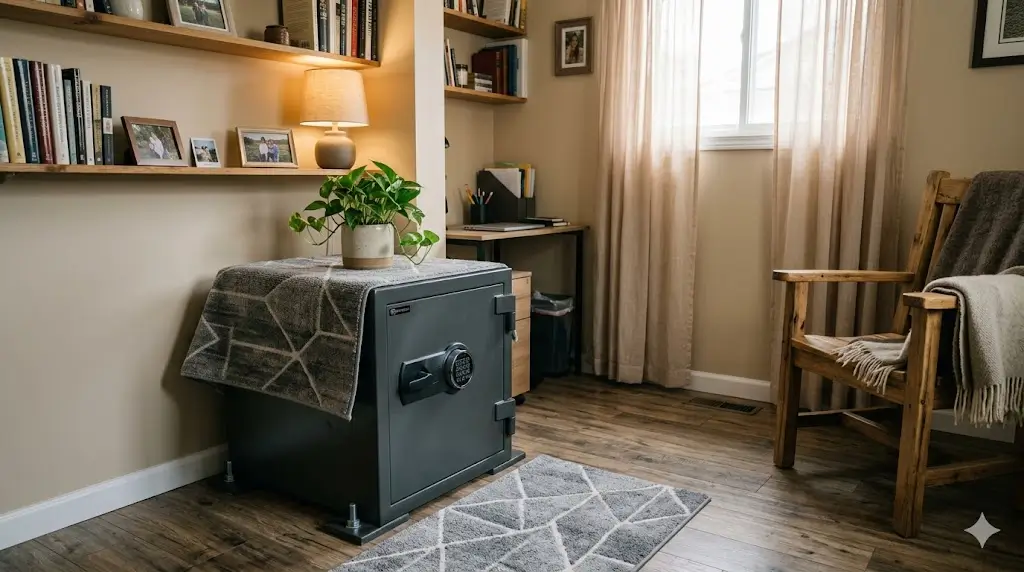
The absolute safest place to keep cash at home is inside a heavy, TL-15 rated fireproof and waterproof safe that is permanently bolted to the concrete foundation in a basement or utility room. Avoid master bedrooms entirely, as this is the first place intruders look.
What You’ll Need to Get Started
Securing your revenue streams in physical form doesn’t require a bank vault, but it does require a small upfront investment to do it correctly. Here is what you will need:
- A High-Quality Safe: ($150 – $600) Look for UL-rated fireproof and waterproof models. Skip the cheap tin lockboxes.
- Concrete Anchors & Power Drill: ($20 – $50) A safe is useless if a thief can simply carry it out the front door.
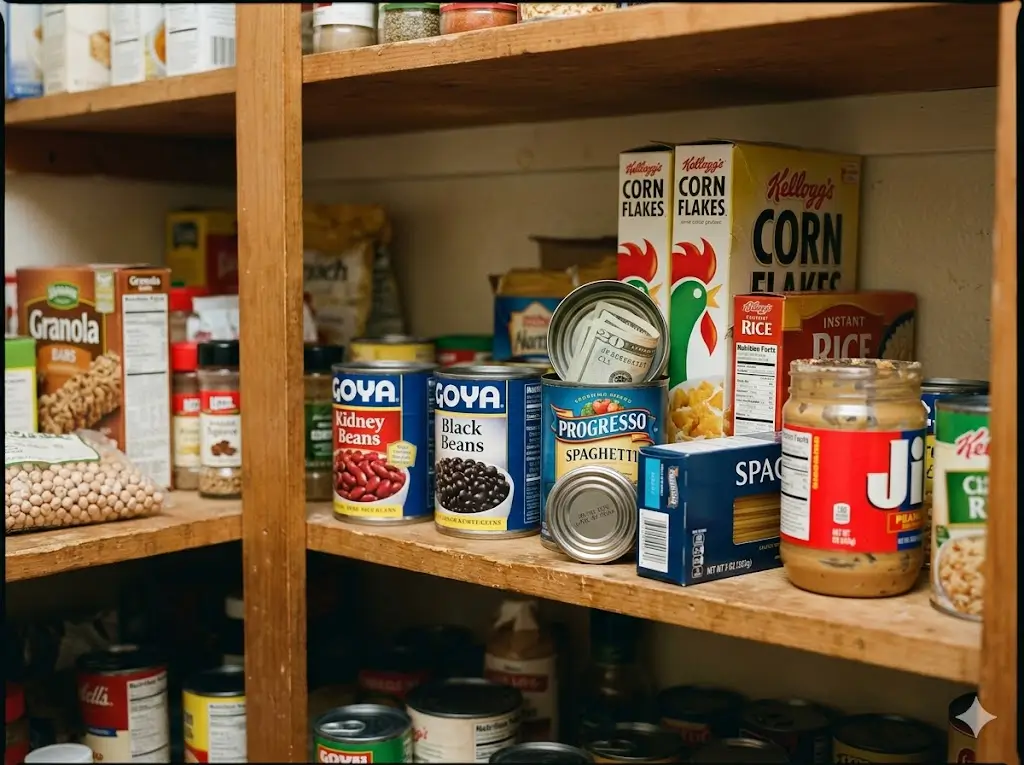
- Diversion Safes (Decoys): ($15 – $30) Fake cans of soup, hollowed-out books, or faux electrical outlets.
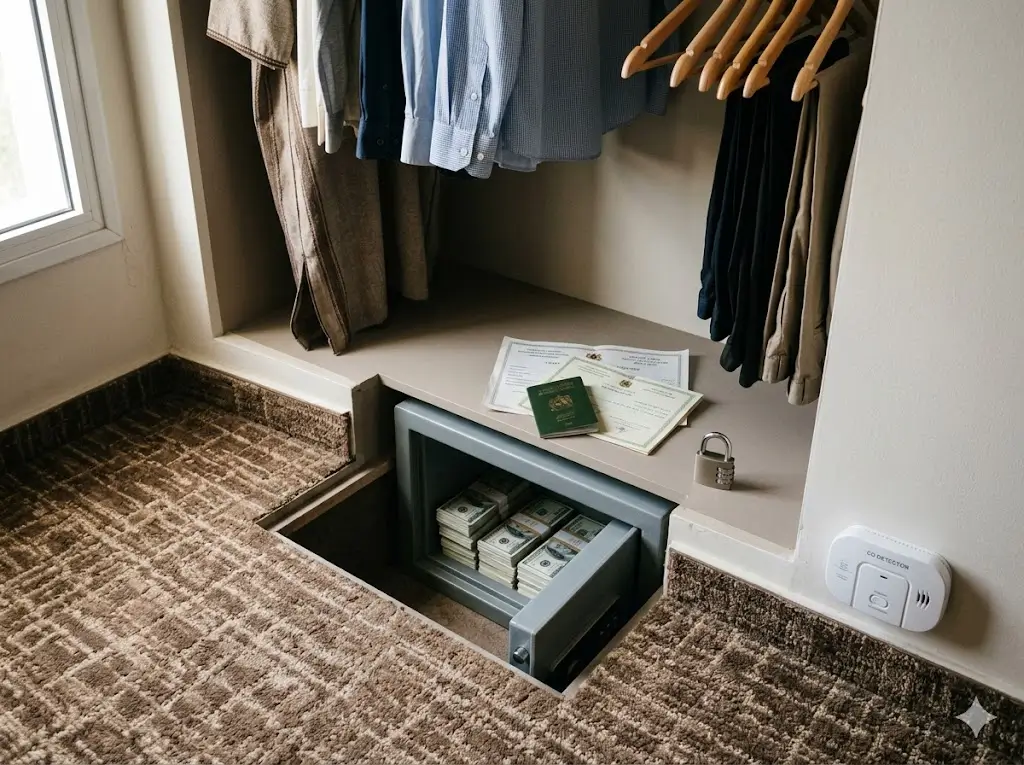
- Vacuum Sealer Bags: ($20) Essential for protecting paper currency from moisture and mildew.
- Silica Gel Packets: ($5) To place inside your safe to absorb any residual humidity.
Time Investment
Unlike building complex digital income streams, securing your physical cash yields an immediate return on your time in the form of absolute peace of mind.
- Setup Time Required: 2 to 4 hours to research the right safe, purchase it, and physically bolt it to your floor or wall studs.
- Daily/Weekly Time Commitment: 0 minutes. Once your cash is secured, the protection is entirely passive.
- Timeline to “Results”: Immediate. Compare a 2-hour installation to the devastating reality of losing months of online earnings in a 10-minute break-in. Most beginners feel a massive reduction in financial anxiety the exact same day they secure their funds.
Step-by-Step Implementation Guide
Follow these actionable steps to establish the safest place to keep cash at home and protect your profit margins.
1. Avoid the “Big Three” Cliché Hiding Spots
Thieves want to be in and out in under 8 minutes. They will immediately go to the master bedroom, the home office, and the living room.
- Action Step: Never hide cash in dresser drawers, under mattresses, in unmounted lockboxes, or inside toilet tanks. These are the first places criminals (and moisture) will destroy your money.
2. Invest in and Mount a Heavy-Duty Safe
Your primary emergency fund should be in a dedicated safe.
- Action Step: Purchase a safe that weighs at least 100 lbs and is rated for both fire and water protection.
- Pro Tip: Bolt the safe directly to the concrete floor in your basement, garage, or a discreet utility closet. If you live in an apartment, bolt it to the structural wall studs in a guest room closet.
3. Vacuum-Seal Your Currency
Paper money is incredibly susceptible to environmental damage. A flood or a humid environment can literally rot your income potential away.
- Action Step: Divide your cash into manageable stacks and run them through a kitchen vacuum sealer. Drop a silica gel packet into the bag before sealing to eliminate moisture.
4. Utilize the “Decoy” Strategy
Thieves usually stop looking once they find something of value.
- Action Step: Buy a cheap, portable firebox. Put $100 in small bills and some fake jewelry inside, and leave it in a semi-obvious place (like your bedroom closet). The thief will grab the decoy and run, leaving your actual bolted safe undisturbed.
5. Use Strategic Diversion Safes
For smaller amounts of cash that you need quick access to, diversion safes are excellent.
- Action Step: Install a fake air vent safe in a hallway, or use a hollowed-out shaving cream can tucked in the back of a messy bathroom cabinet.
Income Potential & Earnings Breakdown (Capital Preservation)
In the world of finance, capital preservation is income. If you lose $5,000 in physical cash, you don’t just lose $5,000. Because of taxes and business expenses, you might have to generate $7,500 in gross digital income just to replace it!
Here is how to look at the “earnings” of proper cash security:
| Threat | Average Financial Loss | “Return on Investment” of a Proper Safe |
|---|---|---|
| Home Burglary | $2,800 average loss | Preserves 100% of physical capital |
| House Fire | Total loss of paper assets | Preserves 100% (with proper UL fire rating) |
| Flooding/Moisture | Total loss / mold damage | Preserves 100% (via vacuum sealing) |
By investing $250 in a proper safe today, you are actively insuring your future profit margins against total disaster.
Alternative Methods & Variations
If keeping large amounts of cash at home makes you nervous, consider these alternative methods for securing your wealth:
- Bank Safety Deposit Box: The traditional, highly secure method. However, you cannot access your funds outside of banking hours, which defeats the purpose of an emergency stash.
- High-Yield Savings Accounts (HYSA): Instead of keeping cash idle, put 80% of your emergency fund in a HYSA. This turns physical cash into a vehicle for passive income, earning you 4-5% APY while remaining highly liquid.
- Digital Wallets & Crypto: For advanced digital entrepreneurs, keeping a portion of wealth in cold-storage hardware wallets provides excellent security without physical bulk.
Best Practices & Optimization Tips
To maximize the security of your hidden assets, follow these insider tips:
- Keep Your Mouth Shut: The biggest threat to your cash isn’t a random burglar; it’s someone who knows you have it. Never brag about your cash side hustle or physical money on social media.
- Layered Security: The safest place to keep cash at home is inside a home that is hard to break into. Add motion-sensor lights, security cameras, and reinforced door strike plates to your property.
- Document Everything: Keep a secure digital ledger (using an encrypted app) of exactly how much cash you have hidden and where it is. If something happens to you, your trusted loved ones need to know how to find it.
Common Mistakes to Avoid
Even smart entrepreneurs make devastating mistakes when hiding cash. Avoid these pitfalls:
- Burying Cash in the Yard: Unless you are using industrial-grade PVC pipes and waterproof seals, ground moisture and insects will destroy your money. Plus, neighbors might see you digging.
- Hiding Money in Clothes: Stashing cash in the pocket of a winter coat sounds clever until you accidentally donate that coat to a thrift store next spring.
- Forgetting the Combo: Relying entirely on your memory for a safe combination or the location of a diversion safe often leads to permanent loss. Use a secure password manager to store safe codes.
Long-Term Sustainability & Growth
While keeping a physical cash reserve is smart, holding too much cash is a flawed long-term strategy. Due to inflation, money sitting in a safe loses purchasing power every single year.
To ensure long-term sustainability, limit your physical cash at home to 1 to 2 months of living expenses. Take the rest of your online earnings and reinvest them into diversified monetization strategies. Funnel your excess capital into index funds, real estate, or back into scaling your side hustle to build massive, future-proof wealth.
Conclusion
Finding the safest place to keep cash at home is the ultimate defensive strategy for anyone building wealth. By avoiding obvious hiding spots, investing in a bolted, fireproof safe, and utilizing clever decoys, you can completely protect your hard-earned profit margins.
Ready to start securing your financial journey? Drop your questions about home security or asset protection in the comments below! Subscribe for weekly money-making (and money-saving) strategies, and share your progress in our community. Don’t forget to download our free wealth-protection starter guide!
FAQs
How much money should I realistically keep at home?
Financial experts recommend keeping enough cash to cover 2 to 4 weeks of essential living expenses (groceries, gas, emergency repairs) in case of a natural disaster or extended power grid failure.
Is a fireproof safe enough?
No. A safe must be both fireproof and waterproof. When firefighters put out a house fire, they will flood your home with thousands of gallons of water. Your safe must protect against both elements.
Do I need prior DIY experience to bolt a safe?
Not necessarily. Bolting a safe to a wood floor requires only a basic power drill and lag bolts. Bolting to concrete requires a masonry bit and concrete anchors, which you can easily learn via a 5-minute YouTube tutorial.
What’s the initial investment for proper cash security?
You can start with a basic diversion safe for $20. However, for true peace of mind, expect to spend $150 to $300 on a quality, heavy-duty floor safe.
Is hiding cash at home still viable in 2026?
Yes. While digital income is the future, physical cash remains the ultimate failsafe during digital outages, banking freezes, or natural disasters.
What are the risks involved with keeping cash at home?
The primary risks are theft, fire, water damage, and inflation. You mitigate the first three with a proper bolted safe and vacuum sealing, and you mitigate inflation by not hoarding excess cash that should be invested.
Before you go, tap those stars!
Straightforward, no gimmicks, just solid banking advice
I clicked on this article expecting it to push some specific bank or financial product with referral links. I was pleasantly surprised. The advice was unbiased, focused on principles rather than promoting any particular institution, and gave me a clear framework to evaluate my own options. I appreciated that the article addressed the importance of FDIC insurance, automatic transfers, and goal-setting — things that seem obvious but that most people (including me) overlook. The writing was clear and concise, without the usual fluff or overly complex financial jargon. The only reason I’m giving four stars instead of five is that I would have liked even more detail on how to balance saving with paying down debt. Still, this was one of the most practical and trustworthy articles on saving I’ve read in a long time. Highly recommend.
Solid advice that cuts through the noise
I’ve been saving for years, but I kept wondering if my money was actually working as hard as it could be. There’s so much conflicting information out there — regular savings accounts, money market accounts, CDs, high-yield options — it gets confusing fast. This article did an excellent job comparing the options side by side, explaining the pros and cons of each, and helping me figure out which strategy made sense for my situation. I especially appreciated the section on the importance of emergency funds versus long-term savings, and the breakdown of how compound interest really adds up over time. I ended up moving my savings to a high-yield account and setting clearer goals. Practical, well-researched, and genuinely helpful.
Small changes, noticeable results
I’ll be honest — I clicked on this article expecting generic advice like “drive less” (thanks, captain obvious). But I was genuinely impressed. The article breaks down the actual science behind why certain habits affect fuel economy, with real numbers to back it up. I learned that my lead-foot acceleration and speeding were costing me way more than I realized. The section on vehicle maintenance was especially valuable — I didn’t know a dirty air filter could impact mileage that much. The tone was straightforward, no fluff, no upselling expensive products. Just solid, practical advice that actually works. My fuel expenses dropped by about 15% last month without me changing my overall driving needs.
Finally, practical advice that doesn’t require buying a new car
As someone who drives over 400 miles a week for work, gas expenses have been crushing my budget. I’ve read countless articles that basically just say “buy an electric vehicle” — which isn’t helpful when that’s not in my budget. This article was a game-changer. The tips were immediately actionable: combining trips, checking tire pressure (I didn’t realize how much that affects mileage!), and using gas price apps. I started implementing these suggestions last month, and I’ve already saved about $40. The writing was clear, well-organized, and respected that not everyone can just trade in their car. Highly recommend for anyone feeling the pain at the pump.
Perfect for renters who can’t install solar panels
As someone who rents an apartment, I often feel limited when it comes to making my home more energy-efficient. I can’t just install new appliances or add insulation to the walls. This article was a lifesaver because it focused on renter-friendly solutions—things like weatherstripping for doors, smart power strips, and optimizing how I use my existing appliances. The writing was straightforward and didn’t assume I owned a home. My only small critique is that I would have loved even more rent-specific examples, but overall, this was incredibly helpful. My electric bill dropped by about $15 last month!