
7 Best Money Saving Apps 2026 to Boost Your Budget
Did you know that 82% of aspiring entrepreneurs who try to build a side hustle fail simply because they bleed cash through untracked daily expenses? We live in an era where everyone is hyper-focused on making more money, but if you don’t control where your cash is going, even massive online earnings will slip right through your fingers. If you want to dramatically improve your personal profit margins, you need to leverage the technology sitting right in your pocket. Using the best money saving apps 2026 has to offer is the ultimate prerequisite for achieving true financial freedom.
By automating your budget, these tools eliminate the human error of overspending. Every dollar you recover is a dollar you can redirect toward building passive income or funding a new business venture. In this comprehensive guide, we will break down the exact applications you need to plug the holes in your budget, centralize your revenue streams, and automate your path to wealth.
Quick Answer
The best money saving apps 2026 include TrackThrift for comprehensive budget tracking, Rakuten for automated cash-back on necessities, Rocket Money for canceling ghost subscriptions, and Acorns for micro-investing. By combining these tools, you can automate your savings and effortlessly increase your monthly retained income by 10% to 20%.
2. What You’ll Need to Get Started
Turning your smartphone into a wealth-building machine requires virtually no upfront capital. Here are the tools and resources you need to implement these apps effectively:
- A Smartphone & Secure Internet Connection: (Free) Essential for downloading and linking your financial apps securely.
- Your Primary Checking Account Login: (Free) Most of the best money saving apps 2026 require read-only access to your bank via secure protocols like Plaid to track your spending.
- A Dedicated Tracking App: We highly recommend TrackThrift for monitoring your overall financial health.
- Initial Investment: $0. Almost all the apps on this list offer robust free versions.
- Skill Requirements: Beginner-friendly. If you know how to download an app and log into your bank, you are ready to start.
3. Time Investment
Unlike complex monetization strategies or building a work from home business from scratch, setting up a suite of money-saving apps offers an immediate, guaranteed return on a very small time investment.
- Setup Time Required: 20 to 30 minutes total. This is the time it takes to download the apps, create your accounts, and securely link your bank details.
- Daily/Weekly Time Commitment: 2 to 5 minutes daily to review push notifications and quickly categorize your spending.
- Timeline to First Earnings (Savings): Immediate. The moment Rocket Money finds and cancels a $15 unused subscription, or Rakuten gives you $5 cash-back on groceries, you have generated retained capital.
- Realistic Data: Most beginners who implement a suite of financial apps see a reduction in wasted spending within their first 30 days of consistent use.
4. Step-by-Step Implementation Guide
To maximize your income potential, you need a specific app for each major financial category. Here is the step-by-step tech stack you should build:
Step 1: Centralize Your Budget (TrackThrift)
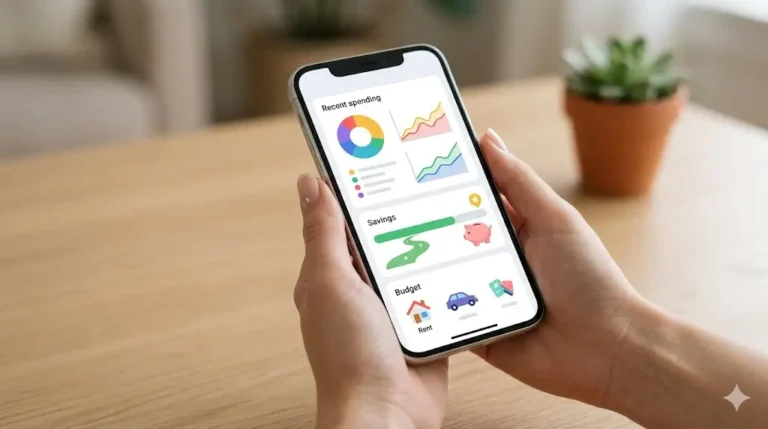
You cannot manage what you do not measure. Start by downloading a holistic tracking app like TrackThrift (or alternatives like YNAB/EveryDollar). Connect all your checking accounts and credit cards. This gives you a bird’s-eye view of your exact profit margins at the end of every month.
Step 2: Cancel “Ghost Subscriptions” (Rocket Money)
The average adult wastes over $130 a month on subscriptions they forgot about. Download Rocket Money. It uses AI to scan your linked accounts, identify recurring charges, and allows you to cancel them with a single tap.
Step 3: Automate Your Savings (Oportun / Digit)
Do not rely on willpower to save. Apps like Oportun (formerly Digit) analyze your checking account balance and daily spending habits, automatically moving small, safe amounts of money into a savings account before you even realize it’s gone.
Step 4: Earn Cash-Back on Necessities (Rakuten & Fetch)
If you have to buy groceries or household supplies, you should be getting paid for it. Link your cards to Rakuten for online purchases, and use Fetch Rewards to scan your physical receipts. These act as mini revenue streams paying you in digital gift cards or PayPal deposits.
Step 5: Start Micro-Investing (Acorns)
Turn your spare change into passive income. Acorns rounds up your daily purchases to the nearest dollar and automatically invests the difference into diversified ETFs. It is the ultimate “set it and forget it” wealth builder.
Step 6: Avoid High-Interest Debt (Tally)
If credit card debt is eating your cash flow, use Tally. It acts as an automated debt manager, calculating the mathematically fastest way to pay down your balances to save you money on interest.
Step 7: Monitor Your Net Worth (Empower)
Formerly Personal Capital, Empower allows you to track your overall net worth, monitor your investment portfolios, and analyze your retirement trajectory all in one place.
5. Income Potential & Earnings Breakdown
When you combine the best money saving apps 2026, you create a synchronized system that acts as a powerful new revenue stream. Here is a realistic breakdown of what optimizing your digital finances can yield:
| App Category / Action | Estimated Monthly Savings | Annual Impact | Best Way to Utilize the Capital |
|---|---|---|---|
| Budgeting (TrackThrift) | $100 – $200 | $1,200 – $2,400 | Build a starter emergency fund. |
| Canceling Subs (Rocket Money) | $50 – $100 | $600 – $1,200 | Pay down high-interest debt. |
| Cash-Back (Rakuten/Fetch) | $20 – $50 | $240 – $600 | Fund start-up costs for digital income. |
| Micro-Investing (Acorns) | $30 – $60 | $360 – $720 | Long-term passive income generation. |
6. Alternative Methods & Variations
If giving third-party apps read-only access to your bank accounts makes you uncomfortable, there are analog alternatives to generating income potential:
- The Work From Home Spreadsheet: Build a custom Google Sheet. Export your bank data manually as a CSV file once a month and categorize it yourself. It takes more time, but gives you absolute privacy.
- The Cash Envelope System: Delete all shopping apps from your phone and move strictly to cash for discretionary spending. When the physical envelope is empty, your spending stops.
- Banking Built-in Tools: Many modern banks (like Ally or SoFi) now offer built-in “buckets” and tracking features that mimic the best money saving apps 2026 without requiring third-party connections.
7. Best Practices & Optimization Tips
To squeeze every drop of efficiency out of these applications, follow these optimization strategies:
- Stack Your Apps: Don’t just use one. Use Rakuten to get cash back online, pay with a rewards credit card, and let Acorns round up the spare change. App-stacking drastically increases your revenue streams.
- Enable Two-Factor Authentication (2FA): Always secure your financial apps with biometric logins (FaceID/Fingerprint) and SMS/Authenticator 2FA to protect your sensitive financial data.
- Set Weekly Push Notifications: Let the apps do the heavy lifting. Set up push notifications to alert you if you are within $50 of your dining-out budget for the week.
8. Common Mistakes to Avoid
Even with the smartest technology, users fall into traps. Avoid these costly pitfalls:
- App Overload: Downloading 15 different financial apps will lead to notification fatigue. Stick to the core 4 or 5 apps mentioned above to keep your systems clean and actionable.
- Spending Money to Save Money: Avoid the trap of buying an item on Rakuten just because it offers 10% cash back. Spending $90 to save $10 still leaves you $90 poorer.
- Ignoring the Data: An app like TrackThrift will tell you exactly where you are overspending, but it cannot fix the behavior for you. You must act on the data the apps provide.
9. Long-Term Sustainability & Growth
Saving money is just phase one; wealth building is phase two. To ensure long-term sustainability:
- Pivot to the Offensive: Once your automated apps have leaned out your budget, pivot your energy. Take the $300 you are now saving every month and invest it, or use it to buy software for a high-value side hustle.
- Prevent Lifestyle Creep: As your primary salary or online earnings grow, don’t increase your app budget limits. Keep your daily expenses exactly the same and funnel 100% of the new income into your investment accounts.
10. Conclusion
By integrating the best money saving apps 2026 into your daily routine, you transition from playing financial defense to playing financial offense. Tools like TrackThrift, Rocket Money, and Rakuten do the heavy lifting, automating your savings and revealing exactly how you can boost your profit margins.
Ready to start your journey? Which financial app is your absolute favorite right now? Drop your answers in the comments below! Don’t forget to subscribe for our weekly monetization strategies, share your progress in our community, and download our free financial starter guide to build your wealth today!
11. FAQs
How much money can I realistically make or save using these apps?
Most beginners who actively link their accounts to budgeting and subscription-canceling apps realistically save between $150 and $300 in their very first month by identifying and eliminating hidden waste.
Do I need prior experience to use the best money saving apps 2026?
No prior financial or technical experience is necessary. Modern financial apps are designed with highly intuitive interfaces. If you can navigate a basic social media app, you can use these tools.
What’s the initial investment to start using these apps?
The initial investment is $0. Almost every app on this list (like TrackThrift, Rakuten, and Fetch) is completely free to use or offers a robust free tier.
How long until I see results from these money-saving apps?
You will see immediate results. The moment an app identifies an unused subscription and cancels it, or the moment you earn your first $5 in cash-back, you have successfully increased your retained capital.
Are financial apps safe to link to my bank account in 2026?
Yes. Top-tier financial apps use bank-level 256-bit encryption and third-party integrators like Plaid. They receive “read-only” access to your data, meaning no one (not even the app developers) can move your money without authorization.
What are the risks involved with using automated saving apps?
The main risk is an overdraft fee if an automated savings app miscalculates your balance and pulls money before a large bill hits. To prevent this, always ensure your chosen apps have strict overdraft protection guarantees turned on.
Disclaimer: The information provided in this article is for educational purposes only and does not constitute financial advice. Always read the terms and conditions and privacy policies before linking your banking information to third-party applications.
Before you go, tap those stars!
Straightforward, no gimmicks, just solid banking advice
I clicked on this article expecting it to push some specific bank or financial product with referral links. I was pleasantly surprised. The advice was unbiased, focused on principles rather than promoting any particular institution, and gave me a clear framework to evaluate my own options. I appreciated that the article addressed the importance of FDIC insurance, automatic transfers, and goal-setting — things that seem obvious but that most people (including me) overlook. The writing was clear and concise, without the usual fluff or overly complex financial jargon. The only reason I’m giving four stars instead of five is that I would have liked even more detail on how to balance saving with paying down debt. Still, this was one of the most practical and trustworthy articles on saving I’ve read in a long time. Highly recommend.
Solid advice that cuts through the noise
I’ve been saving for years, but I kept wondering if my money was actually working as hard as it could be. There’s so much conflicting information out there — regular savings accounts, money market accounts, CDs, high-yield options — it gets confusing fast. This article did an excellent job comparing the options side by side, explaining the pros and cons of each, and helping me figure out which strategy made sense for my situation. I especially appreciated the section on the importance of emergency funds versus long-term savings, and the breakdown of how compound interest really adds up over time. I ended up moving my savings to a high-yield account and setting clearer goals. Practical, well-researched, and genuinely helpful.
Small changes, noticeable results
I’ll be honest — I clicked on this article expecting generic advice like “drive less” (thanks, captain obvious). But I was genuinely impressed. The article breaks down the actual science behind why certain habits affect fuel economy, with real numbers to back it up. I learned that my lead-foot acceleration and speeding were costing me way more than I realized. The section on vehicle maintenance was especially valuable — I didn’t know a dirty air filter could impact mileage that much. The tone was straightforward, no fluff, no upselling expensive products. Just solid, practical advice that actually works. My fuel expenses dropped by about 15% last month without me changing my overall driving needs.
Finally, practical advice that doesn’t require buying a new car
As someone who drives over 400 miles a week for work, gas expenses have been crushing my budget. I’ve read countless articles that basically just say “buy an electric vehicle” — which isn’t helpful when that’s not in my budget. This article was a game-changer. The tips were immediately actionable: combining trips, checking tire pressure (I didn’t realize how much that affects mileage!), and using gas price apps. I started implementing these suggestions last month, and I’ve already saved about $40. The writing was clear, well-organized, and respected that not everyone can just trade in their car. Highly recommend for anyone feeling the pain at the pump.
Perfect for renters who can’t install solar panels
As someone who rents an apartment, I often feel limited when it comes to making my home more energy-efficient. I can’t just install new appliances or add insulation to the walls. This article was a lifesaver because it focused on renter-friendly solutions—things like weatherstripping for doors, smart power strips, and optimizing how I use my existing appliances. The writing was straightforward and didn’t assume I owned a home. My only small critique is that I would have loved even more rent-specific examples, but overall, this was incredibly helpful. My electric bill dropped by about $15 last month!