
10 Practical Ways to Save Money on Your Electric Bill
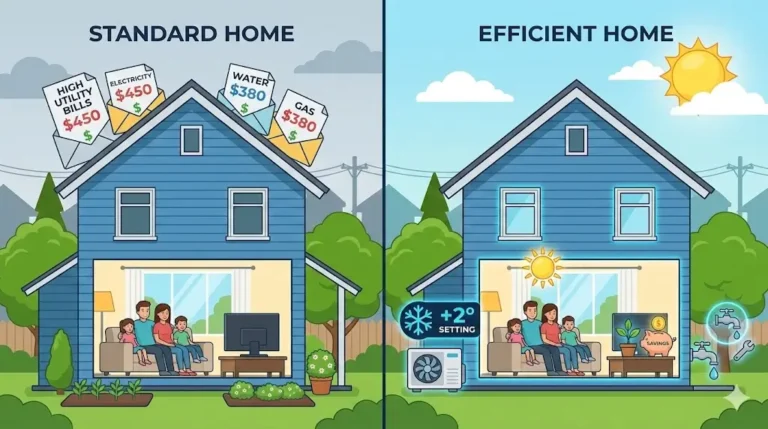
Did you know that the average household wastes up to 30% of its energy consumption, literally burning through potential passive income every single month? While many people scour the web looking for the next big side hustle, they often ignore the easiest money-making opportunity right in their own homes: cost reduction. If you are looking for effective ways to save money on your electric bill, you aren’t alone. Treating your household utilities like a business operation is the ultimate step toward financial freedom.
By optimizing your energy use, you are essentially creating untaxed revenue streams. Every dollar you cut from your utility bill is a dollar added directly to your monthly profit margins.
Quick Answer
The fastest way to lower your electric bill is to address “vampire” electronics by plugging them into smart power strips, replacing outdated incandescent bulbs with LEDs, and adjusting your thermostat by just 2-3 degrees. These simple tweaks can instantly cut your monthly energy costs by up to 15%.
What You’ll Need to Get Started
You don’t need a massive initial investment to start seeing real income potential from energy savings. Here is a breakdown of the tools and resources required to turn your home into an efficient, money-saving machine:
- Smart Power Strips: ($15 – $30) Automatically cuts off power to devices in standby mode.
- LED Light Bulbs: ($10 – $20 for a starter pack) Uses 75% less energy than standard bulbs.
- Smart Thermostat (Optional but recommended): ($100 – $250) Automates your HVAC system for maximum efficiency.
- Weatherstripping & Caulk: ($10 – $20) Seals air leaks around windows and doors.
- A Smartphone or Tablet: (Free/Already own) For managing smart home apps—a genuine “work from home” digital income strategy.
Time Investment
Unlike a traditional side hustle that requires hours of daily grinding, optimizing your home’s energy consumption is incredibly time-efficient.
- Setup Time Required: 2 to 4 hours for a complete home audit and basic installations (like swapping bulbs and installing power strips).
- Daily/Weekly Time Commitment: 0 to 5 minutes. Once automated, the savings accrue completely passively.
- Timeline to First Earnings: You will see a measurable difference in your profit margins within your very next 30-day billing cycle. Most beginners see compounding results in 60-90 days.
Step-by-Step Implementation Guide
Here are 10 highly practical ways to save money on your electric bill, broken down into actionable steps.
1. Conduct a DIY Home Energy Audit
Before you can optimize, you need to track. Walk through your home and identify drafts, old appliances, and lights left on.
- Pro Tip: Check your local utility company’s website; many offer free professional energy audits or digital tracking tools.
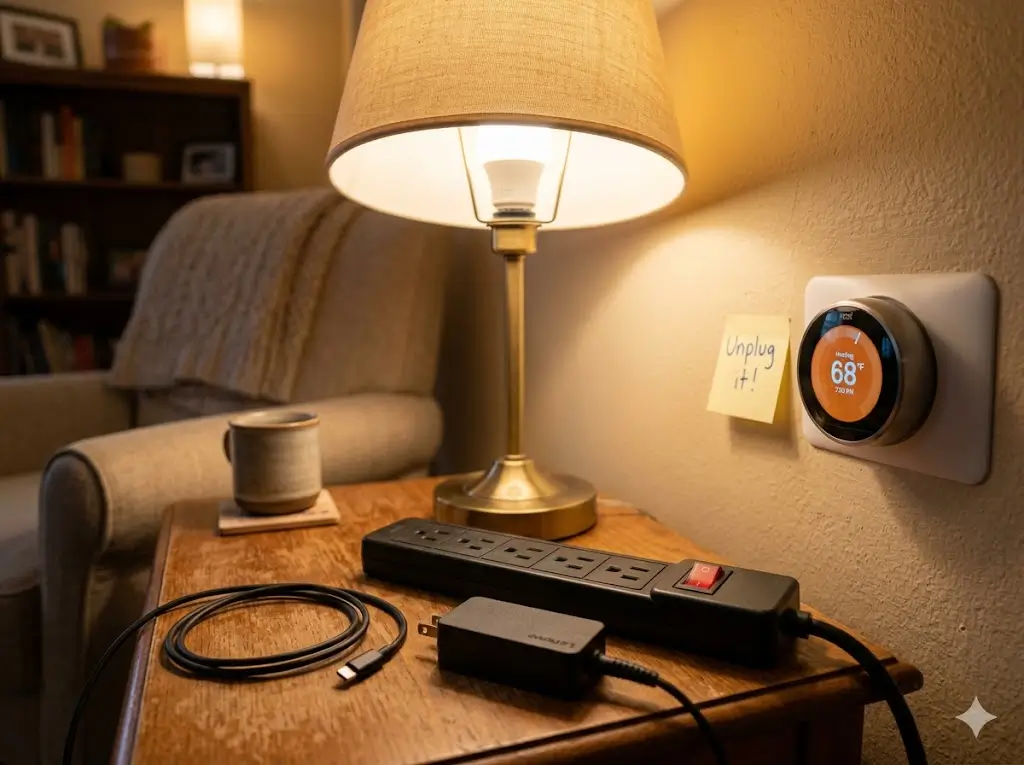
2. Slay Vampire Energy (Phantom Loads)
Electronics like TVs, gaming consoles, and microwaves draw power even when turned off.
- Action Step: Group entertainment or home office devices onto a smart power strip that cuts power entirely when the main device is turned off.
3. Optimize Heating and Cooling (HVAC)
Your HVAC system is the biggest energy drain in your home.
- Action Step: Set your thermostat 2-3 degrees higher in the summer and lower in the winter. Install a programmable thermostat to automatically adjust temperatures when you are asleep or away.
4. Upgrade to Energy-Efficient Lighting
If you haven’t switched to LEDs, you are leaving online earnings on the table.
- Action Step: Replace your 5 most-used light bulbs with LEDs. This single step can save you up to $75 a year.
5. Shift Energy Usage to Off-Peak Hours
Many utility companies charge “Time-of-Use” rates, meaning electricity is more expensive during high-demand hours (usually 4 PM to 9 PM).
- Action Step: Run your dishwasher, washing machine, and dryer late at night or early in the morning to capitalize on cheaper rates.
6. Maintain Your Appliances
An inefficient refrigerator works twice as hard to keep food cold.
- Action Step: Clean the coils behind your fridge every 6 months. Clean your dryer’s lint trap after every load to improve airflow and drying time.
7. Weatherproof Your Home
Don’t pay to heat or cool the neighborhood.
- Action Step: Apply weatherstripping around doors and use caulk to seal drafty windows.
8. Utilize Smart Plugs and Apps
Turn your smartphone into a monetization strategy tool.
- Action Step: Use smart plugs for lamps and space heaters. Schedule them via an app to ensure they never run unnecessarily.
9. Wash Clothes in Cold Water
Up to 90% of the energy used by a washing machine goes toward heating the water.
- Action Step: Switch to cold water washing. Modern detergents are specifically formulated to clean perfectly in cold temperatures.
10. Leverage Natural Light and Ventilation
Nature is free.
- Action Step: Open blinds during winter days to let sunlight naturally warm your home. In summer, close curtains facing the sun to reduce the load on your AC.
Income Potential & Earnings Breakdown
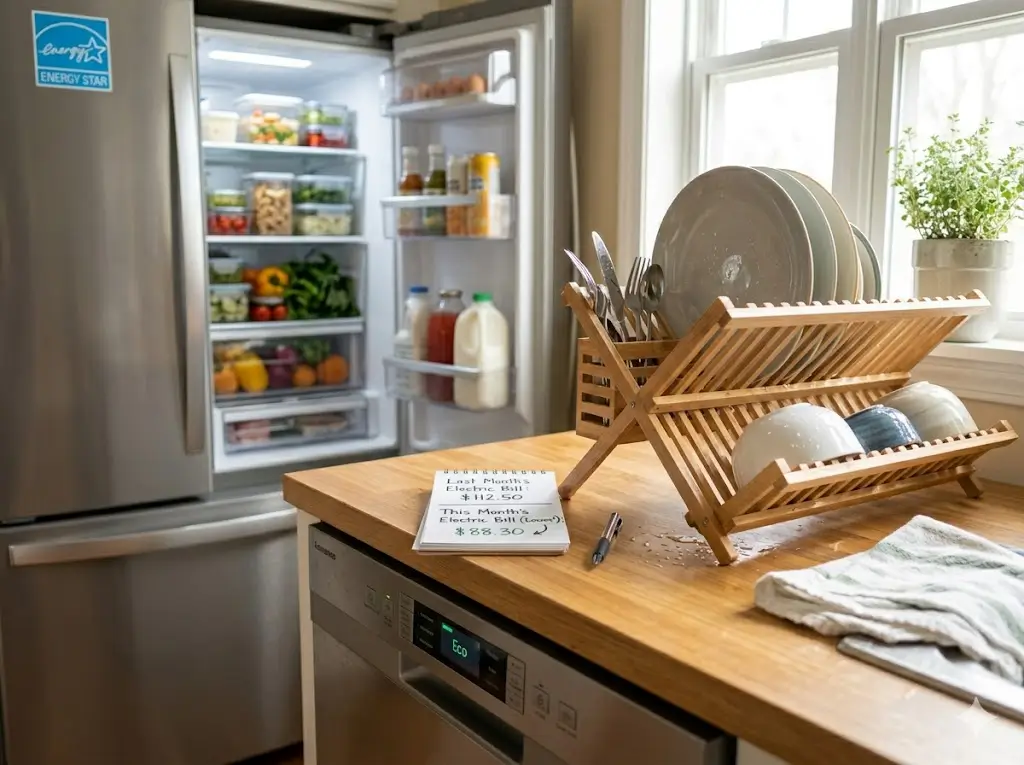
Think of these savings as tax-free online earnings. Here is a realistic breakdown of your income potential when implementing these strategies:
| Strategy | Estimated Monthly Savings | Annual “Passive Income” |
|---|---|---|
| Slaying Vampire Energy | $10 – $20 | $120 – $240 |
| HVAC & Thermostat Tweaks | $15 – $30 | $180 – $360 |
| LED Bulb Upgrades | $5 – $15 | $60 – $180 |
| Cold Water Laundry | $5 – $10 | $60 – $120 |
| Total Potential | $35 – $75+ | $420 – $900+ |
Disclaimer: Earnings and savings are variable based on your local utility rates, the size of your home, and current usage habits.
Alternative Methods & Variations
If you want to scale your energy-saving “side hustle” to the next level, consider these advanced variations:
- Solar Panel Installation: A higher upfront investment, but scaling to solar can completely wipe out your electric bill, essentially turning your roof into a massive passive income generator.
- Energy Cooperatives: In deregulated markets, you can shop around for alternative energy suppliers to secure a lower rate per kWh.
- Government Rebates: Look into local and federal grants or tax credits that pay you to upgrade to energy-efficient appliances or insulation.
Best Practices & Optimization Tips
To maximize your results and lock in your financial freedom, follow these efficiency hacks:
- Use a Kill-A-Watt Meter: This cheap device plugs into any outlet and tells you exactly how much energy an appliance is drawing, helping you identify the biggest culprits.
- Routine Maintenance: Set a calendar reminder on your phone every 3 months to change HVAC filters. A clogged filter forces the system to use more energy.
- Automate Everything: The best passive income requires no daily input. Let smart thermostats and timed plugs do the heavy lifting for you.
Common Mistakes to Avoid
Even the best-laid plans can fail. Here are common pitfalls to avoid when trying to lower your utility bills:
- Leaving the AC on “Hold”: Keeping your AC running at a constant temperature while you are at work for 8 hours wastes massive amounts of money. Always use scheduling.
- Buying Cheap, Inefficient Appliances: Saving $50 upfront on an off-brand, non-Energy Star appliance will cost you hundreds in electricity over its lifespan. Look at the long-term profit margins.
- Closing Vents in Unused Rooms: Closing too many vents alters the pressure in your HVAC system, causing duct leaks and forcing the system to work harder. Keep them open!
Long-Term Sustainability & Growth
To maintain and grow this form of digital income over time, you need a reinvestment strategy. Take the first $100 you save from your newly lowered electric bills and reinvest it directly into your home’s infrastructure. Buy a better smart thermostat, add more insulation to your attic, or start a sinking fund for a highly efficient heat pump.
By continuously future-proofing your home, you insulate yourself against rising global energy costs and guarantee a sustainable, long-term reduction in your living expenses.
Conclusion
Finding ways to save money on your electric bill doesn’t have to mean sitting in the dark shivering. By treating your home energy use like a side hustle, making smart upgrades, and slaying phantom power loads, you can generate hundreds of dollars in untaxed passive income every year.
Ready to start your journey toward lower bills and higher profit margins? Drop your questions in the comments below! Don’t forget to subscribe for more weekly money-making and money-saving strategies, and share your progress in our community.
FAQs
How much money can I realistically make/save by doing this?
Depending on your starting point, most households can realistically shave 10% to 20% off their monthly bill. Annually, this translates to anywhere from $200 to over $1,000 in saved capital.
Do I need prior DIY experience to do this?
Not at all. 90% of these strategies—like washing in cold water, changing lightbulbs, or using smart plugs—require zero technical skills and are incredibly beginner-friendly.
What’s the initial investment?
You can start for $0 simply by changing your daily habits (unplugging devices, adjusting the thermostat). A basic optimization package (LEDs, power strips) will cost around $30 to $50.
How long until I see results?
You will see exact results on your very next utility billing cycle. The timeline to ROI (Return on Investment) for small purchases like LED bulbs is typically just a few months.
Are these methods still working in 2026?
Yes. In fact, with energy prices fluctuating globally, these optimization strategies are more valuable and profitable today than they have ever been.
What are the risks involved?
The financial risk is practically zero. The only mistake you can make is investing in high-end “smart” gadgets that cost more than the energy they actually save. Stick to the basics first to ensure high profit margins.
Before you go, tap those stars!
Straightforward, no gimmicks, just solid banking advice
I clicked on this article expecting it to push some specific bank or financial product with referral links. I was pleasantly surprised. The advice was unbiased, focused on principles rather than promoting any particular institution, and gave me a clear framework to evaluate my own options. I appreciated that the article addressed the importance of FDIC insurance, automatic transfers, and goal-setting — things that seem obvious but that most people (including me) overlook. The writing was clear and concise, without the usual fluff or overly complex financial jargon. The only reason I’m giving four stars instead of five is that I would have liked even more detail on how to balance saving with paying down debt. Still, this was one of the most practical and trustworthy articles on saving I’ve read in a long time. Highly recommend.
Solid advice that cuts through the noise
I’ve been saving for years, but I kept wondering if my money was actually working as hard as it could be. There’s so much conflicting information out there — regular savings accounts, money market accounts, CDs, high-yield options — it gets confusing fast. This article did an excellent job comparing the options side by side, explaining the pros and cons of each, and helping me figure out which strategy made sense for my situation. I especially appreciated the section on the importance of emergency funds versus long-term savings, and the breakdown of how compound interest really adds up over time. I ended up moving my savings to a high-yield account and setting clearer goals. Practical, well-researched, and genuinely helpful.
Small changes, noticeable results
I’ll be honest — I clicked on this article expecting generic advice like “drive less” (thanks, captain obvious). But I was genuinely impressed. The article breaks down the actual science behind why certain habits affect fuel economy, with real numbers to back it up. I learned that my lead-foot acceleration and speeding were costing me way more than I realized. The section on vehicle maintenance was especially valuable — I didn’t know a dirty air filter could impact mileage that much. The tone was straightforward, no fluff, no upselling expensive products. Just solid, practical advice that actually works. My fuel expenses dropped by about 15% last month without me changing my overall driving needs.
Finally, practical advice that doesn’t require buying a new car
As someone who drives over 400 miles a week for work, gas expenses have been crushing my budget. I’ve read countless articles that basically just say “buy an electric vehicle” — which isn’t helpful when that’s not in my budget. This article was a game-changer. The tips were immediately actionable: combining trips, checking tire pressure (I didn’t realize how much that affects mileage!), and using gas price apps. I started implementing these suggestions last month, and I’ve already saved about $40. The writing was clear, well-organized, and respected that not everyone can just trade in their car. Highly recommend for anyone feeling the pain at the pump.
Perfect for renters who can’t install solar panels
As someone who rents an apartment, I often feel limited when it comes to making my home more energy-efficient. I can’t just install new appliances or add insulation to the walls. This article was a lifesaver because it focused on renter-friendly solutions—things like weatherstripping for doors, smart power strips, and optimizing how I use my existing appliances. The writing was straightforward and didn’t assume I owned a home. My only small critique is that I would have loved even more rent-specific examples, but overall, this was incredibly helpful. My electric bill dropped by about $15 last month!