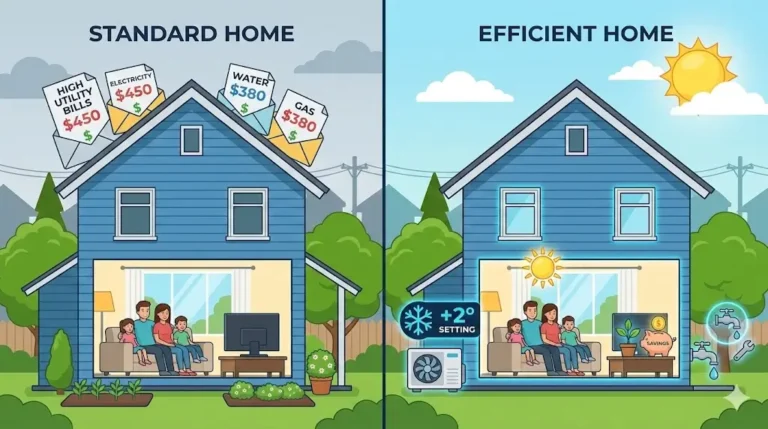
12 Martin Lewis Energy Saving Tips to Reduce Your Bills
Did you know that up to 40% of entrepreneurs who work from home fail to reach true financial freedom simply because they ignore their massive household overheads? When you are busy building your online earnings and figuring out new monetization strategies, letting energy companies quietly drain your bank account is the ultimate profit killer.
If you want to maximize your digital income, learning the best Martin Lewis energy saving tips is practically a requirement. These aren’t just frugal living hacks; every pound saved acts as a reliable stream of passive income for your household. In this guide, we will break down exactly how to implement these top martin lewis energy saving tips to help you lower your bills, boost your profit margins, and treat your home like a highly optimized business.
Quick Answer
By executing the core Martin Lewis strategy—turning down your thermostat by one degree, eliminating “vampire” appliances, tweaking your boiler flow temperature, and locking in a cheaper fixed tariff—you can reduce your energy overheads by hundreds of pounds a year. This instantly increases your net profit without requiring extra hours of work.
2. What You’ll Need to Get Started
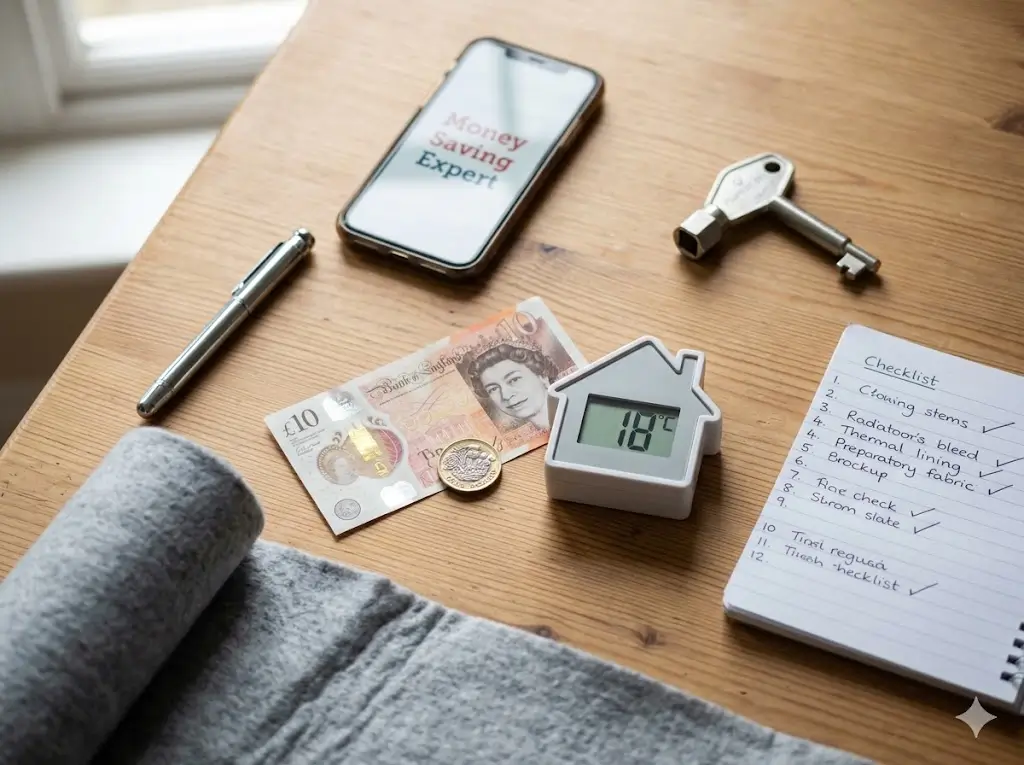
Before diving into these money-saving tactics, you need to gather a few essential resources. Treating your energy efficiency like a side hustle requires minimal upfront capital. Here is your beginner-friendly toolkit:
- Access to a Comparison Site: Specifically, the MSE Cheap Energy Club (Free).
- Recent Energy Bills: You need your exact usage data (in kWh) to accurately compare tariffs.
- Basic Insulation Materials: Radiator reflector foil and basic draft excluders (Estimated cost: £10 – £20).
- Smart Meter or Energy Monitor: To track appliance usage in real-time (Often installed for free by your supplier).
- Warm Base Layers: Items like thermals or a heated throw for the “heat the human” strategy (£15 – £40).
3. Time Investment
One of the best parts about applying martin lewis energy saving tips is the incredibly high return on your time.
- Setup Time Required: 1 to 2 hours total to audit your home, tweak settings, and run a tariff comparison.
- Daily/Weekly Time Commitment: Less than 5 minutes a day (simply turning off switches and drawing curtains).
- Timeline to First Earnings (Savings): Most beginners see results in 30 to 60 days, reflecting on their next monthly billing cycle. Compared to traditional revenue streams that take months to build, this yields instant, guaranteed returns on your existing household budget.
4. Step-by-Step Implementation Guide
Follow these 12 actionable martin lewis energy saving tips sequentially to start maximizing your household’s income potential today.
Step 1: The One-Degree Challenge
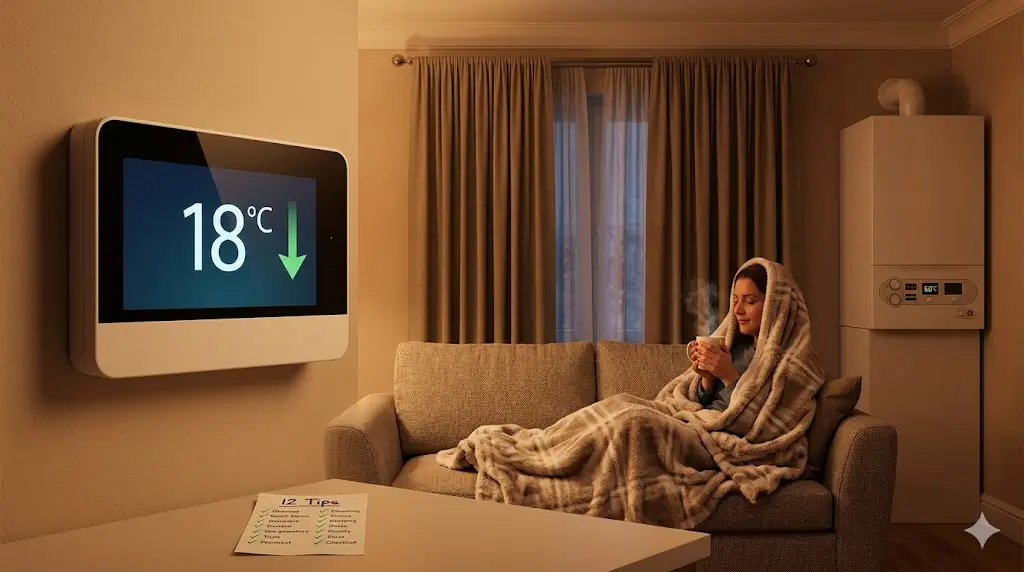
Turn your thermostat down by just 1°C. If you currently heat your home to 21°C, dropping it to 20°C can save you 10% on your heating bill (roughly £90 a year). Pro Tip: Your body will adjust within a few days, and your wallet will thank you.
Step 2: Fix Your Energy Tariff
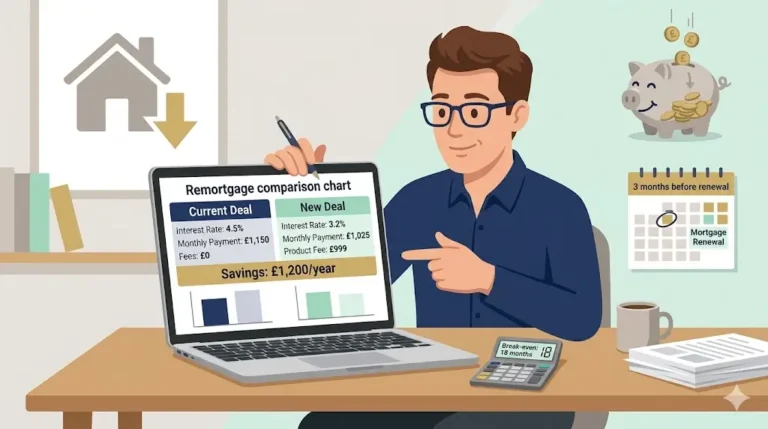
With the Energy Price Cap fluctuating, Martin Lewis frequently advises using a whole-of-market comparison site to lock in a fixed deal. If you can find a fix that is 10% to 15% cheaper than the current standard variable tariff, lock it in to protect your profit margins against future spikes.
Step 3: Tweak Your Boiler Flow Temperature
If you have a combi boiler, lower the flow temperature to 50°C – 55°C. This doesn’t change the temperature of your room, but it makes the boiler run much more efficiently, potentially saving you 6-8% on gas bills.
Step 4: The Tumble Dryer Diet
Tumble dryers are massive energy hogs, costing around £1 per cycle. Hang clothes on a drying rack or an outdoor line. If you must use a dryer, ensure it is a full load and clean the lint filter regularly for maximum efficiency.
Step 5: Install Radiator Reflector Foil
Place specialized foil behind the radiators on your exterior walls. Instead of your heat leaking outside, the foil reflects it back into the room. This stops up to 50% of heat loss in those specific areas.
Step 6: Become a Draught Detective
Use old towels or buy cheap draught excluders to block gaps under doors and around window frames. Keeping the heat trapped inside ensures your boiler doesn’t have to work overtime.
Step 7: Optimise Fridge and Freezer Temps
Your fridge and freezer run 24/7. Ensure your fridge is set to exactly 5°C and your freezer to -18°C. Anything colder simply wastes electricity. Insider Trick: Defrost your freezer regularly; heavy ice buildup forces the motor to use more energy.
Step 8: Banish “Vampire” Standby Power
Turn off your TVs, gaming consoles, and soundbars at the wall. Devices left on standby continue to sip power, potentially costing you up to £45 a year.
Step 9: “Heat the Human, Not the Home”
When you work from home, heating an entire empty house is a massive waste. Instead, invest in thermals, thick socks, or a cheap-to-run heated throw blanket for your desk chair. You stay warm for pennies a day.
Step 10: Switch to Monthly Direct Debit
Suppliers routinely charge less if you pay by monthly Direct Debit compared to paying on receipt of a bill. This simple billing tweak can save you around £100 annually.
Step 11: Claim Free Water-Saving Gadgets
Check websites like SaveWaterSaveMoney. Many UK water companies give out free eco-showerheads that aerate the water. Less hot water used means less energy burned by your boiler to heat it.
Step 12: Tactical Curtain Management
Use the sun to your advantage. Open your curtains wide during the day to let natural solar heat in. As soon as dusk hits, draw thick or fleece-lined curtains to lock that warmth inside for the night.

5. Income Potential & Earnings Breakdown
By applying these martin lewis energy saving tips, you are effectively paying yourself. Here is a realistic look at the annual savings (your new “tax-free income”) based on varying levels of implementation:
- Beginner (Basic Habits): ~ £100 – £150/year (Turning off standby, washing at 30°C, tactical curtains).
- Intermediate (Optimization): ~ £300 – £400/year (One-degree challenge, boiler flow tweaking, radiator foil).
- Advanced (Full Overhaul): ~ £700 – £1,000+/year (Switching to a top-tier fixed tariff, utilizing the “heat the human” strategy while working from home, ending tumble dryer use).
Payment Structure: Unlike a traditional side hustle, this “income” is realized by money not leaving your bank account via your monthly Direct Debit.
6. Alternative Methods & Variations
If you want to scale your energy-saving monetization strategies, consider these alternative, higher-investment variations:
- Smart Thermostats: Installing a Nest or Hive system allows you to control heating from your phone, ensuring you never heat an empty house.
- Time-of-Use Tariffs: Tariffs like Octopus Agile track wholesale prices. If you can shift your heavy electricity use (like running the washing machine) to off-peak nighttime hours, your rates plummet.
- Solar & Battery Storage: A massive upfront investment, but generating your own power is the ultimate way to secure absolute financial freedom from grid price hikes.
7. Best Practices & Optimization Tips
To squeeze maximum efficiency out of your home, follow these optimization strategies:
- Submit Regular Meter Readings: Do not rely on estimated bills. Submit readings monthly to ensure your supplier isn’t hoarding your cash in a massive credit balance.
- Use Eco Settings: Always default your washing machine and dishwasher to their “Eco” cycles. They take longer but use significantly less heated water.
- Check the Standing Charge: When comparing tariffs, don’t just look at the unit rate. If you are a low user, a tariff with a high standing charge will ruin your profit margins.
8. Common Mistakes to Avoid
When attempting to cut overheads, avoid these common pitfalls that can actually cost you more:
- The “Leaving the Heating on Low All Day” Myth: Martin Lewis’s experts confirm that for most homes, it is cheaper to only heat your house when you need it. Leaving it on all day increases total heat loss.
- Blocking Radiators: Putting your sofa right in front of a radiator, or drying wet clothes directly on it, blocks the heat from circulating, forcing your boiler to work harder.
- Ignoring Condensation & Damp: Slashing your heating too much can cause damp and mould, leading to thousands of pounds in structural damage—wiping out any savings you made.
9. Long-Term Sustainability & Growth
Finding the best martin lewis energy saving tips is the foundation of household financial management. To grow this impact over time, you must practice reinvestment strategies.
Take the £500+ you save on energy this year and reinvest it back into your property or your business. You could use those savings to buy extra loft insulation, fund Facebook ads for your side hustle, or invest in index funds. By turning your reduced overheads into working capital, you future-proof your finances and ensure your money compounds over time.
10. Conclusion
Mastering these martin lewis energy saving tips is a non-negotiable step for anyone serious about growing their online earnings and surviving the cost-of-living crisis. By fixing your tariff, turning down the thermostat, and hunting down draughts, you transform wasted energy into retained profit. Stop letting utility providers eat into your bottom line and start managing your home like the business it is.
Ready to start your journey? Drop your biggest energy-saving questions in the comments below! Don’t forget to subscribe for weekly financial freedom strategies, and share your progress in our community.
11. FAQs
1. How much money can I realistically save using Martin Lewis tips?
Depending on your current usage and which tips you apply, savings can range from £100 a year for minor behavioural changes up to £800+ if you combine tariff switching, boiler optimization, and strict heating management.
2. Do I need prior DIY experience to implement these hacks?
Not at all. Most of these tips—like tweaking a thermostat, bleeding radiators, or sticking foil behind a heater—require zero prior experience and take just minutes to execute.
3. What’s the initial investment required?
The barrier to entry is practically zero. You can start with £0 by simply changing your habits (washing at 30°C, lowering boiler flow). For physical items like draft excluders or thick curtains, you might spend £20 to £50.
4. How long until I see results on my bill?
If you submit accurate meter readings, you will notice the drop in your energy usage on your very next monthly or quarterly statement.
5. Is the “Heat the Human” strategy actually effective?
Yes. For those who work from home, using a heated throw blanket costs pennies an hour, whereas heating a whole house with central heating can cost dollars an hour. It is a highly efficient micro-heating strategy.
6. Is it cheaper to leave the heating on low all day?
According to the Energy Saving Trust and Martin Lewis, no. For the vast majority of standard homes, it is cheaper to only turn the heating on when you actually need it, as houses constantly leak heat.
7. Should I fix my energy tariff right now?
If you can find a fixed rate on a whole-of-market comparison site that is priced notably below the current standard variable Price Cap, locking it in is generally considered a smart move for budget certainty.
Before you go, tap those stars!
Straightforward, no gimmicks, just solid banking advice
I clicked on this article expecting it to push some specific bank or financial product with referral links. I was pleasantly surprised. The advice was unbiased, focused on principles rather than promoting any particular institution, and gave me a clear framework to evaluate my own options. I appreciated that the article addressed the importance of FDIC insurance, automatic transfers, and goal-setting — things that seem obvious but that most people (including me) overlook. The writing was clear and concise, without the usual fluff or overly complex financial jargon. The only reason I’m giving four stars instead of five is that I would have liked even more detail on how to balance saving with paying down debt. Still, this was one of the most practical and trustworthy articles on saving I’ve read in a long time. Highly recommend.
Solid advice that cuts through the noise
I’ve been saving for years, but I kept wondering if my money was actually working as hard as it could be. There’s so much conflicting information out there — regular savings accounts, money market accounts, CDs, high-yield options — it gets confusing fast. This article did an excellent job comparing the options side by side, explaining the pros and cons of each, and helping me figure out which strategy made sense for my situation. I especially appreciated the section on the importance of emergency funds versus long-term savings, and the breakdown of how compound interest really adds up over time. I ended up moving my savings to a high-yield account and setting clearer goals. Practical, well-researched, and genuinely helpful.
Small changes, noticeable results
I’ll be honest — I clicked on this article expecting generic advice like “drive less” (thanks, captain obvious). But I was genuinely impressed. The article breaks down the actual science behind why certain habits affect fuel economy, with real numbers to back it up. I learned that my lead-foot acceleration and speeding were costing me way more than I realized. The section on vehicle maintenance was especially valuable — I didn’t know a dirty air filter could impact mileage that much. The tone was straightforward, no fluff, no upselling expensive products. Just solid, practical advice that actually works. My fuel expenses dropped by about 15% last month without me changing my overall driving needs.
Finally, practical advice that doesn’t require buying a new car
As someone who drives over 400 miles a week for work, gas expenses have been crushing my budget. I’ve read countless articles that basically just say “buy an electric vehicle” — which isn’t helpful when that’s not in my budget. This article was a game-changer. The tips were immediately actionable: combining trips, checking tire pressure (I didn’t realize how much that affects mileage!), and using gas price apps. I started implementing these suggestions last month, and I’ve already saved about $40. The writing was clear, well-organized, and respected that not everyone can just trade in their car. Highly recommend for anyone feeling the pain at the pump.
Perfect for renters who can’t install solar panels
As someone who rents an apartment, I often feel limited when it comes to making my home more energy-efficient. I can’t just install new appliances or add insulation to the walls. This article was a lifesaver because it focused on renter-friendly solutions—things like weatherstripping for doors, smart power strips, and optimizing how I use my existing appliances. The writing was straightforward and didn’t assume I owned a home. My only small critique is that I would have loved even more rent-specific examples, but overall, this was incredibly helpful. My electric bill dropped by about $15 last month!