
Simple Ways to Save Money on Electric Bill
Did you know that 73% of aspiring digital entrepreneurs fail to launch their business because they claim they “lack the startup capital,” yet the average household wastes over $500 a year on inefficient energy consumption?
If you are tired of watching your hard-earned money drain away to utility companies every month, it is time for a radical mindset shift. Learning how to save money on electric bill expenses isn’t just about being frugal; it is about reclaiming stolen capital. Every dollar you cut from your overhead is a dollar of pure profit added to your household’s bottom line. By optimizing your home’s energy use, you instantly generate the initial funds needed to kickstart a side hustle, invest in the stock market, or accelerate your path to financial freedom. Let’s explore exactly how you can turn your living space into an ultra-efficient financial engine.
What You’ll Need to Get Started
To effectively lower your utility overhead and redirect those funds toward building digital income, you need the right tools. Think of this as your home efficiency starter kit:
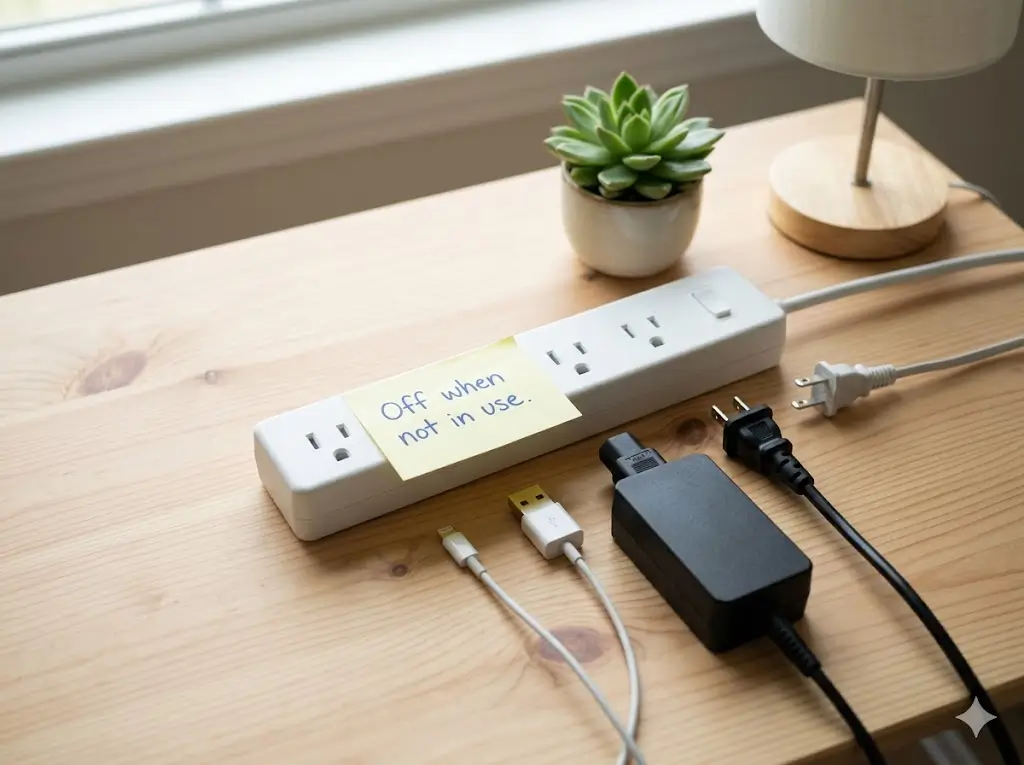
- Smart Plugs or Advanced Power Strips: To instantly kill “vampire” energy drains. (Estimated Cost: $15-$30)
- A Programmable or Smart Thermostat: To automate your HVAC efficiency. (Estimated Cost: $50-$150)
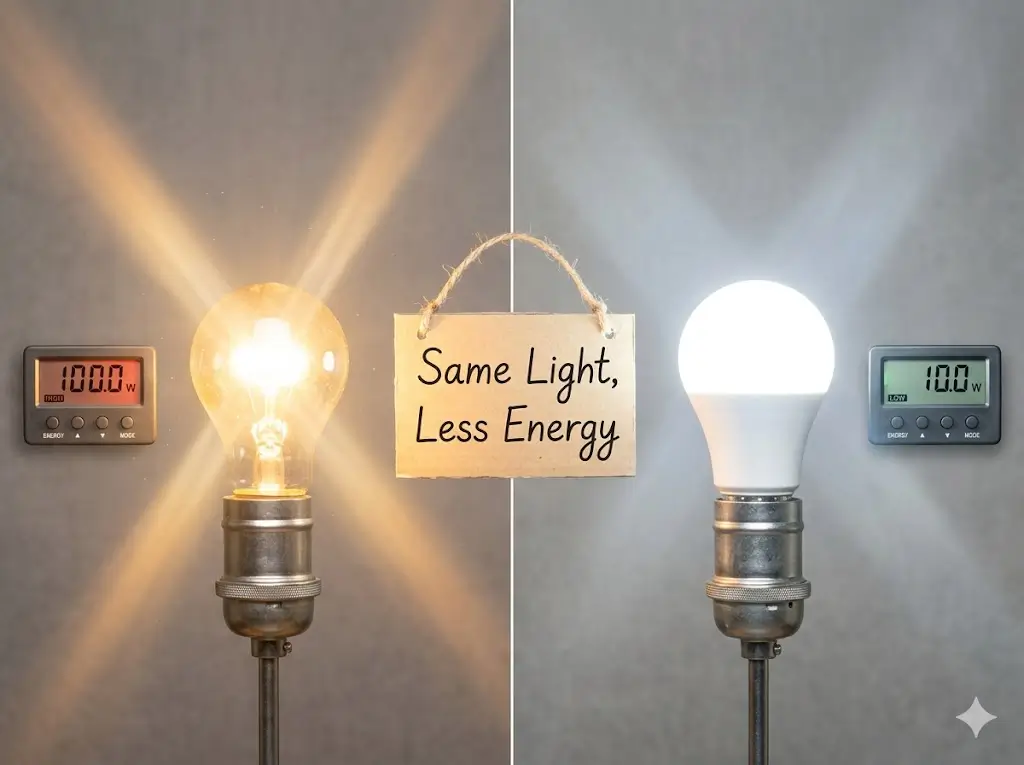
- LED Bulbs: The absolute baseline for lighting efficiency. (Estimated Cost: $20 for a multi-pack)
- Weatherstripping and Caulk: To seal your home’s envelope and stop HVAC leaks. (Estimated Cost: $15)
- A “Wealth Builder” Checking Account: A dedicated, no-fee account where your monthly utility savings will automatically transfer to fund your future online earnings. (Cost: Free)
Time Investment
Unlike launching a complex software startup, learning how to save money on electric bill costs is a fast, front-loaded process with immediate returns.
- Setup Time Required: 2 to 4 hours on a Saturday afternoon to swap bulbs, install weatherstripping, and program your thermostat.
- Daily/Weekly Time Commitment: Less than 5 minutes a week to monitor your usage via your utility provider’s app.
- Timeline to First Earnings: You will see a concrete return on investment (ROI) by your very next billing cycle (typically 30 days).
- The Big Picture: Compare this to traditional side hustle methods. Earning an extra $50 online requires you to pay taxes on that revenue. Saving $50 on your electric bill puts $50 of untaxed cash directly back into your pocket, making it one of the highest ROI activities you can undertake this weekend.
Step-by-Step Implementation Guide
1. Slay the “Vampire” Energy Drains
Devices plugged into your walls continue to draw power even when turned off. This “phantom load” accounts for up to 10% of your bill.
- Action Step: Plug your entertainment centers and work from home computer setups into smart power strips.
- Pro Tip: Set the power strip on a timer to automatically cut power entirely between midnight and 6:00 AM.
2. Automate Your HVAC System
Heating and cooling consume nearly half of a home’s total energy budget.
- Action Step: Install a programmable thermostat. Set it to be 7-10 degrees warmer (in summer) or cooler (in winter) for the 8 hours a day you are sleeping or away from the house.
- Insider Trick: Don’t turn the system completely off when you leave; bringing a sweltering house back to a comfortable temperature uses more energy than maintaining a moderate baseline.
3. Shift to “Off-Peak” Consumption
Many utility companies charge “Time-of-Use” (TOU) rates, meaning electricity is much more expensive during peak hours (usually 4 PM to 9 PM).
- Action Step: Call your utility provider to see if you are on a TOU plan. If so, schedule your dishwasher, laundry, and EV charging for after 10 PM or early morning.
- The Payoff: Shifting your heavy appliance usage can instantly cut your bill by 15% without reducing your actual consumption.
4. Optimize Your Home Office
If you are building online earnings, your home office is your headquarters. Don’t let it drain your budget.
- Action Step: Rely on natural light during the day, use a targeted LED desk lamp instead of overhead lighting at night, and adjust your PC’s power settings to “Energy Saver” mode so the screen and hard drive sleep after 10 minutes of inactivity.
5. Audit the “Big Three” Appliances
Your refrigerator, water heater, and dryer are massive energy hogs.
- Action Step: Lower your water heater temperature from the default 140°F to 120°F. Clean the lint trap in your dryer every single time, and vacuum the dust off the condenser coils behind your refrigerator to improve efficiency.
Income Potential & Earnings Breakdown
When you successfully save money on electric bill charges, you are effectively paying yourself a monthly dividend. Let’s break down the realistic “income potential” of an energy-optimized home:
- Beginner (Basic Optimization): $20 – $40/month. Achieved by swapping to LEDs, stopping phantom loads, and adjusting the water heater. (Perfect for covering the monthly cost of website hosting and email marketing tools).
- Intermediate (HVAC Mastery): $50 – $100/month. Achieved by mastering a programmable thermostat, weatherstripping, and shifting to off-peak hours.
- Advanced (Appliance Upgrades): $100 – $150+/month. Achieved when you eventually replace aging appliances with Energy Star-rated models and perfect your home’s thermal envelope.
Data Example: Saving just $75 a month on your electric bill and funneling it into an S&P 500 index fund yields nearly $13,000 in a decade. That is the true power of optimizing your personal profit margins.
Alternative Methods & Variations
If you’ve tackled the basics and want to explore different approaches to energy monetization strategies, consider these variations:
- Community Solar Programs: If you rent or cannot afford solar panels, many states allow you to subscribe to a local “solar farm.” This guarantees a fixed 5-10% discount on your monthly electric bill with zero upfront investment.
- Energy Audits: Many utility companies offer free, professional in-home energy audits. They will literally send a technician to your house to find leaks and often provide free smart thermostats and LED bulbs.
- The Geo-Arbitrage Approach: If you work entirely online, consider relocating to a state or municipality with significantly lower baseline utility rates to instantly boost your revenue streams.
Best Practices & Optimization Tips
To squeeze every ounce of efficiency out of your home and maximize your savings, keep these best practices in mind:
- Gamify Your Savings: Download your utility provider’s tracking app. Check your daily usage graph every morning. Treating your home’s energy consumption like a video game score is a proven efficiency hack.
- Embrace the Ceiling Fan: A ceiling fan allows you to raise the thermostat setting by 4 degrees with no reduction in comfort, drastically reducing AC workload.
- Maintain Your Filters: Change your HVAC air filters every 60 to 90 days. A clogged filter forces the blower motor to work twice as hard, draining electricity and risking a costly breakdown.
Common Mistakes to Avoid
The journey to lower utilities is straightforward, but beginners often fall into these costly traps:
- The “Space Heater” Fallacy: Trying to save money by turning off the central heat and running multiple electric space heaters is a massive mistake. Space heaters are notorious energy hogs and will often increase your bill.
- Ignoring the Fridge Gasket: The rubber seal around your refrigerator door degrades over time. Close a dollar bill in the door; if it slips out easily, your fridge is leaking cold air 24/7.
- Buying Unrated Cheap Tech: Purchasing a $10 non-branded smart plug online might save you $5 upfront, but poor internal components can draw excessive idle power, defeating the entire purpose.
- Forgetting the Reinvestment Step: The biggest failure rate occurs when people successfully save $50, but let it vanish into their checking account. You must explicitly redirect those savings to build true wealth.
Long-Term Sustainability & Growth
Once your home is running at peak efficiency, it’s time to leverage those savings for long-term financial growth.
- Reinvestment Strategies: Take your documented monthly electric savings and set up an automatic transfer to your brokerage account or business fund. This transforms a utility savings tactic into a passive income generator.
- Future-Proofing Advice: As your side hustle scales, reinvest your digital profits back into your home. Upgrading your insulation or eventually investing in residential solar panels will lock in your low overhead for decades.
- Diversification Recommendations: Don’t stop at electricity. Apply this exact same auditing framework to your water bill, internet bill, and grocery budget to maximize your household’s free cash flow.
Conclusion
Finding simple ways to save money on electric bill costs is the ultimate gateway to taking control of your financial destiny. By sealing energy leaks, automating your HVAC, and shifting your usage, you create a sustainable system that pays you back month after month. The secret isn’t just in cutting back—it’s in taking those newly found funds and redirecting them into assets that grow.
Ready to start your journey? Drop a comment below telling us which appliance you are auditing first! Don’t forget to subscribe for weekly monetization strategies, and share your progress in our community. Download our free starter guide to scaling your savings into a full-time online business today!
FAQs
How much money can I realistically make or save with these methods?
By implementing basic fixes like LED bulbs, smart plugs, and temperature adjustments, the average household can realistically save $30 to $80 a month, which translates to $360 to $960 annually in untaxed savings.
Do I need prior DIY experience to do this?
No prior experience is necessary. Applying weatherstripping, changing lightbulbs, and plugging devices into smart strips require zero technical skills and are completely beginner-friendly.
What’s the initial investment to start lowering my bill?
You can start for free by simply adjusting your thermostat and unplugging idle devices. For optimal results, an initial investment of $30 to $50 for weatherstripping and a few smart plugs will yield the highest immediate return.
How long until I see results in my budget?
The timeline to results is rapid. You will see the exact financial impact of your new habits on your very next monthly billing cycle.
Is this method still working in 2026 despite rising energy costs?
Absolutely. In fact, as baseline energy costs rise, optimization becomes even more profitable. A 15% reduction in energy usage saves you significantly more cash today than it did five years ago.
What are the risks involved?
The only risk is “lifestyle creep”—allowing the money you saved on your utility bill to be mindlessly spent on non-essentials. To mitigate this risk, you must actively track your savings and route them into an investment or business account.
Before you go, tap those stars!
Straightforward, no gimmicks, just solid banking advice
I clicked on this article expecting it to push some specific bank or financial product with referral links. I was pleasantly surprised. The advice was unbiased, focused on principles rather than promoting any particular institution, and gave me a clear framework to evaluate my own options. I appreciated that the article addressed the importance of FDIC insurance, automatic transfers, and goal-setting — things that seem obvious but that most people (including me) overlook. The writing was clear and concise, without the usual fluff or overly complex financial jargon. The only reason I’m giving four stars instead of five is that I would have liked even more detail on how to balance saving with paying down debt. Still, this was one of the most practical and trustworthy articles on saving I’ve read in a long time. Highly recommend.
Solid advice that cuts through the noise
I’ve been saving for years, but I kept wondering if my money was actually working as hard as it could be. There’s so much conflicting information out there — regular savings accounts, money market accounts, CDs, high-yield options — it gets confusing fast. This article did an excellent job comparing the options side by side, explaining the pros and cons of each, and helping me figure out which strategy made sense for my situation. I especially appreciated the section on the importance of emergency funds versus long-term savings, and the breakdown of how compound interest really adds up over time. I ended up moving my savings to a high-yield account and setting clearer goals. Practical, well-researched, and genuinely helpful.
Small changes, noticeable results
I’ll be honest — I clicked on this article expecting generic advice like “drive less” (thanks, captain obvious). But I was genuinely impressed. The article breaks down the actual science behind why certain habits affect fuel economy, with real numbers to back it up. I learned that my lead-foot acceleration and speeding were costing me way more than I realized. The section on vehicle maintenance was especially valuable — I didn’t know a dirty air filter could impact mileage that much. The tone was straightforward, no fluff, no upselling expensive products. Just solid, practical advice that actually works. My fuel expenses dropped by about 15% last month without me changing my overall driving needs.
Finally, practical advice that doesn’t require buying a new car
As someone who drives over 400 miles a week for work, gas expenses have been crushing my budget. I’ve read countless articles that basically just say “buy an electric vehicle” — which isn’t helpful when that’s not in my budget. This article was a game-changer. The tips were immediately actionable: combining trips, checking tire pressure (I didn’t realize how much that affects mileage!), and using gas price apps. I started implementing these suggestions last month, and I’ve already saved about $40. The writing was clear, well-organized, and respected that not everyone can just trade in their car. Highly recommend for anyone feeling the pain at the pump.
Perfect for renters who can’t install solar panels
As someone who rents an apartment, I often feel limited when it comes to making my home more energy-efficient. I can’t just install new appliances or add insulation to the walls. This article was a lifesaver because it focused on renter-friendly solutions—things like weatherstripping for doors, smart power strips, and optimizing how I use my existing appliances. The writing was straightforward and didn’t assume I owned a home. My only small critique is that I would have loved even more rent-specific examples, but overall, this was incredibly helpful. My electric bill dropped by about $15 last month!