
The Best Way to Save Money for a House: Accelerate Your Down Payment
Did you know that 73% of aspiring homeowners delay their purchases by three to five years simply because they rely exclusively on their 9-to-5 salaries to build their down payment? In today’s shifting economy, trying to save tens of thousands of dollars by just skipping your morning coffee is a recipe for burnout.
If you are tired of renting and want to unlock true financial freedom, discovering the best way to save money for a house is your ultimate priority. The secret? It’s not just about spending less; it is about treating your household like a highly profitable business. By optimizing your current cash flow and strategically adding new revenue streams, you can collapse your timeline to homeownership.
In this comprehensive guide, we will break down exactly how to maximize your household profit margins, leverage modern online earnings, and fast-track your way to the closing table.
What You’ll Need to Get Started
Before you start aggressively stashing away cash, you need the proper financial command center. The barrier to entry for setting up a bulletproof home-buying fund is practically zero.
- Required Tools: A dedicated High-Yield Savings Account (HYSA), a reliable budgeting web app (like TrackThrift or a Google Sheet), and a laptop/internet connection.
- Initial Investment: $0. You can open high-yield accounts and use basic budgeting software completely free.
- Skill Requirements: Basic financial organization, consistency, and a willingness to explore beginner-friendly work from home opportunities.
- Mindset Shift: You must stop viewing your down payment as a “savings goal” and start viewing it as a “capital generation project.”

Time Investment
Building a down payment requires time, but optimizing the system takes surprisingly little effort.
- Setup Time Required: 2 to 3 hours. This involves calculating your exact down payment goal, setting up your HYSA, and auditing your current budget.
- Daily/Weekly Time Commitment: 1-2 hours per week for budget maintenance, plus 5-10 hours a week if you add a side hustle to accelerate your savings.
- Timeline to First Results: Most beginners see a massive shift in their savings velocity within 60-90 days with consistent effort.
- The Reality Check: While a traditional 20% down payment might take 5 years on a standard salary, combining strict budgeting with digital income can cut that timeline in half.
Step-by-Step Implementation Guide
Here is the exact blueprint to accelerate your home savings without completely depriving yourself of the things you love.
1. Calculate Your Exact “Magic Number”
You cannot hit a target you haven’t set. Determine the average price of homes in your desired area. Decide if you are aiming for a traditional 20% down payment (to avoid PMI) or leveraging a 3.5% FHA loan.
- Pro Tip: Don’t forget to add an extra 3-5% of the purchase price to your goal to cover closing costs and moving expenses.
2. Audit and Optimize Household Profit Margins
To save effectively, you must increase the gap between what you earn and what you spend. Print out your last 90 days of bank statements. Ruthlessly cut unused subscriptions, negotiate your car insurance, and implement the 72-hour rule for impulse purchases. Every dollar saved here is a dollar added to your house fund.
3. Automate the “House Fund” Funnel
The best way to save money for a house is to never let the money hit your checking account. Set up a direct deposit so that 10%, 15%, or 20% of your paycheck routes immediately into a separate High-Yield Savings Account (HYSA). This account should only be used for your future home.
4. Launch a Down-Payment Side Hustle
You can only cut your budget so much; your income potential, however, is limitless. Launch a low-overhead work from home business—such as freelance writing, virtual assistance, or digital marketing. Direct 100% of these online earnings straight into your house fund.
5. Bank Your Windfalls
Did you get a tax refund? A year-end bonus? Cash for your birthday? Instead of inflating your lifestyle, instantly transfer 100% of unexpected windfalls into your down payment account.
Income Potential & Savings Breakdown
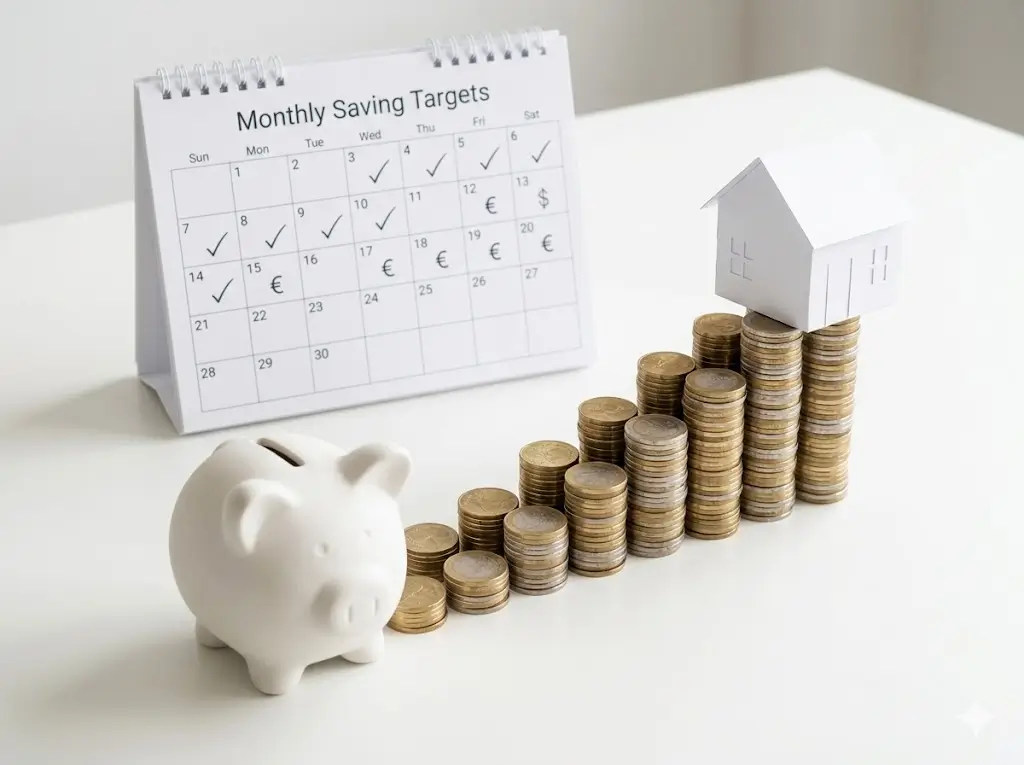
How much faster can you buy a house by combining optimized savings with digital income? Let’s look at the numbers for a $40,000 down payment goal:
- Traditional Savings Only ($500/mo): Takes roughly 6.5 years to reach $40k.
- Intermediate (Optimized Budget = $800/mo): By cutting expenses and negotiating bills, you drop the timeline to just over 4 years.
- Advanced Accelerator (Budget + Side Hustle = $1,800/mo): By saving $800 from your day job and generating $1,000/month from monetization strategies online, you hit your $40,000 goal in under 2 years.
Alternative Methods & Variations
If the standard savings route feels too slow, consider these highly effective alternative strategies:
- House Hacking: Buy a duplex or a home with a basement apartment using a low down-payment loan (like an FHA 3.5% loan). Rent out the other unit to generate passive income that pays your mortgage.
- Down Payment Assistance Programs: Research local and state grants. Many states offer first-time homebuyer programs that provide 3% to 5% of the purchase price in forgivable grants.
- Zero-Based Budgeting: Give every single dollar a “job” at the start of the month. If you have $200 left over after bills and standard savings, assign it directly to the house fund.
Best Practices & Optimization Tips
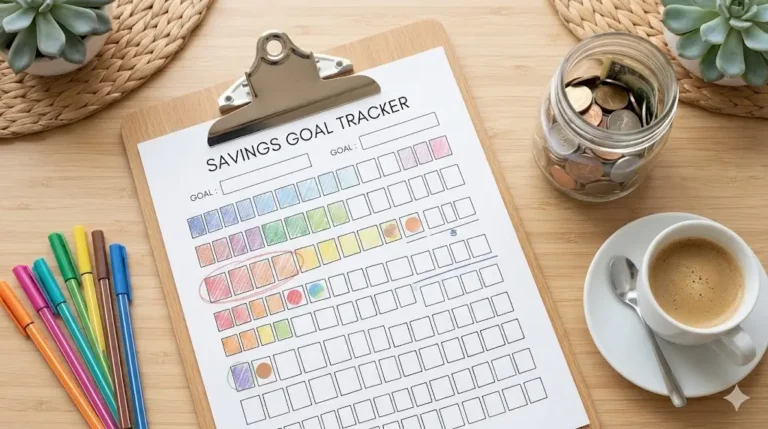
- Use Visual Trackers: Print out a thermometer graphic representing your $40,000 goal. Color it in every time you deposit $500. Visual gamification is incredibly powerful.
- Keep the Money Liquid but Inaccessible: Your house fund shouldn’t be locked in a 5-year CD or exposed to high-risk stock market volatility if you plan to buy in 1-2 years. An HYSA is the perfect balance of yield and safety.
- Leverage High-Income Skills: When choosing a side hustle, focus on skills that pay premium rates (like SEO consulting, web design, or copywriting) to maximize your hourly earnings.
Common Mistakes to Avoid
Saving for a house is a marathon. Avoid these common pitfalls that derail future homeowners:
- Pausing All Retirement Contributions: While it is tempting to stop your 401(k) to save for a house faster, you are leaving free money on the table. Always contribute enough to get your employer match.
- Taking on New Debt: Do not finance a new car or open multiple credit cards while saving for a house. This drastically hurts your Debt-to-Income (DTI) ratio, which mortgage lenders scrutinize closely.
- Underestimating Hidden Costs: Many buyers save exactly 20% and forget about property taxes, homeowners insurance, appraisal fees, and emergency home repairs. Always over-save.
Long-Term Sustainability & Growth
Buying the house is not the finish line; it is the starting line for building generational wealth.
Once you secure your home, you will suddenly have a massive amount of cash flow freed up (since you are no longer aggressively saving for a down payment). Do not let lifestyle creep consume this money. Redirect that same financial discipline into funding your retirement, investing in index funds, or saving for a second investment property to build true, lasting passive income.
Conclusion
The best way to save money for a house isn’t a secret formula—it is the aggressive combination of disciplined budgeting, automated high-yield savings, and the creation of targeted online earnings. By maximizing your profit margins today, you unlock the doors to your dream home tomorrow.
Ready to start your journey? Drop your target down-payment goal in the comments below! Subscribe for weekly money-making strategies, share your progress in our community, and download our free side-hustle starter guide to accelerate your savings today!
FAQs
How much money can I realistically save in a year?
It depends on your income and expenses. However, by optimizing your budget to save an extra $300/month and starting a side hustle that brings in $1,000/month, you can realistically bank over $15,000 in a single year.
Do I need prior experience to start an online side hustle?
No prior experience is necessary for many side hustles. Virtual assistance, freelance writing, and basic social media management are excellent beginner-friendly ways to generate digital income for your house fund.
What’s the initial investment to start saving?
Zero dollars. Opening a High-Yield Savings Account (HYSA) is completely free, and many top-tier online banks have no minimum deposit requirements.
How long until I see results?
If you set up automated transfers and cut unnecessary subscriptions today, you will see a noticeable increase in your house fund balance within your very first 30-day budget cycle.
Is this method still working in 2026?
Absolutely. In fact, with interest rates fluctuating, having a larger down payment built through aggressive savings and side hustling is the safest way to secure a favorable mortgage rate in today’s market.
What are the risks involved?
The primary risk is “burnout” from saving too aggressively. To avoid this, ensure you still allocate a small portion of your budget to guilt-free spending so the process remains sustainable over the 1-3 years it takes to save.
Disclaimer: The information provided in this article is for educational purposes only and does not constitute financial or real estate advice. Always perform your own research and consult with a certified financial professional or licensed loan officer before making major financial decisions.
Before you go, tap those stars!
Straightforward, no gimmicks, just solid banking advice
I clicked on this article expecting it to push some specific bank or financial product with referral links. I was pleasantly surprised. The advice was unbiased, focused on principles rather than promoting any particular institution, and gave me a clear framework to evaluate my own options. I appreciated that the article addressed the importance of FDIC insurance, automatic transfers, and goal-setting — things that seem obvious but that most people (including me) overlook. The writing was clear and concise, without the usual fluff or overly complex financial jargon. The only reason I’m giving four stars instead of five is that I would have liked even more detail on how to balance saving with paying down debt. Still, this was one of the most practical and trustworthy articles on saving I’ve read in a long time. Highly recommend.
Solid advice that cuts through the noise
I’ve been saving for years, but I kept wondering if my money was actually working as hard as it could be. There’s so much conflicting information out there — regular savings accounts, money market accounts, CDs, high-yield options — it gets confusing fast. This article did an excellent job comparing the options side by side, explaining the pros and cons of each, and helping me figure out which strategy made sense for my situation. I especially appreciated the section on the importance of emergency funds versus long-term savings, and the breakdown of how compound interest really adds up over time. I ended up moving my savings to a high-yield account and setting clearer goals. Practical, well-researched, and genuinely helpful.
Small changes, noticeable results
I’ll be honest — I clicked on this article expecting generic advice like “drive less” (thanks, captain obvious). But I was genuinely impressed. The article breaks down the actual science behind why certain habits affect fuel economy, with real numbers to back it up. I learned that my lead-foot acceleration and speeding were costing me way more than I realized. The section on vehicle maintenance was especially valuable — I didn’t know a dirty air filter could impact mileage that much. The tone was straightforward, no fluff, no upselling expensive products. Just solid, practical advice that actually works. My fuel expenses dropped by about 15% last month without me changing my overall driving needs.
Finally, practical advice that doesn’t require buying a new car
As someone who drives over 400 miles a week for work, gas expenses have been crushing my budget. I’ve read countless articles that basically just say “buy an electric vehicle” — which isn’t helpful when that’s not in my budget. This article was a game-changer. The tips were immediately actionable: combining trips, checking tire pressure (I didn’t realize how much that affects mileage!), and using gas price apps. I started implementing these suggestions last month, and I’ve already saved about $40. The writing was clear, well-organized, and respected that not everyone can just trade in their car. Highly recommend for anyone feeling the pain at the pump.
Perfect for renters who can’t install solar panels
As someone who rents an apartment, I often feel limited when it comes to making my home more energy-efficient. I can’t just install new appliances or add insulation to the walls. This article was a lifesaver because it focused on renter-friendly solutions—things like weatherstripping for doors, smart power strips, and optimizing how I use my existing appliances. The writing was straightforward and didn’t assume I owned a home. My only small critique is that I would have loved even more rent-specific examples, but overall, this was incredibly helpful. My electric bill dropped by about $15 last month!