
54 Smart Money Saving Ideas to Boost Your Savings
Did you know that an estimated 67% of aspiring online entrepreneurs fail to launch their dream business simply because they run out of seed capital before they even begin? They spend countless hours researching how to build online earnings and launch a side hustle, but completely neglect the easiest way to generate upfront cash: optimizing their current spending.
If you want to achieve genuine financial freedom, you cannot just focus on earning more; you must also master the art of keeping what you already make. Implementing actionable money saving ideas is the absolute fastest way to plug the leaks in your budget and generate the capital needed to fund your next big digital venture.
In this comprehensive guide, we will break down 15 highly effective money saving ideas that actually work. We’ll show you exactly how to transform your everyday expenses into powerful, future revenue streams.
What You’ll Need to Get Started
You do not need an accounting degree or expensive financial software to master your personal finances. Here is exactly what you need to build a rock-solid savings foundation:
- A Reliable Tracking Tool: A digital app (like TrackThrift, YNAB, or Rocket Money) or a free Google Sheets template to monitor your daily spending. (Cost: $0 – $15/month).
- A High-Yield Savings Account (HYSA): A separate bank account to hold your saved funds so they earn 4-5% APY instead of losing value to inflation. (Cost: Free).
- A Financial Audit Session: 1-2 hours of uninterrupted time to review your past 90 days of bank statements.
- Initial Investment: $0. This method focuses entirely on optimizing the cash flow you already have.
- Skill Requirements: Basic addition, subtraction, and the willingness to honestly evaluate your lifestyle choices.

Time Investment
Building wealth is a process of compound interest and compound habits. Fortunately, optimizing your budget requires very little time once the initial foundation is laid:
- Setup Time Required: 1 to 2 hours for your initial financial audit and to set up automated transfers.
- Daily/Weekly Time Commitment: 3-5 minutes a day to log expenses, plus a dedicated 15-minute “Money Date” every Sunday to review the week.
- Timeline to First Results: Most beginners see a tangible “snowball effect” in their bank accounts within 60-90 days of consistent effort.
- Compared to Traditional Income: Building sustainable passive income or a profitable blog can take 6 to 12 months. In contrast, utilizing these money saving ideas to cut a $50 expense puts $50 back into your pocket today, instantly widening your personal profit margins.
Step-by-Step Implementation Guide
Follow these sequential steps to establish a routine that naturally boosts your savings without causing burnout.
1. Automate Your Savings Transfers
Do not rely on willpower. Set up an automatic transfer with your bank so that 10% of your income moves directly into your savings account the morning you get paid. If you never see the money in your checking account, you won’t spend it.
2. Audit and Slash Phantom Subscriptions
Pull up your credit card statements. Cancel that unused gym membership, the streaming service you haven’t watched in three months, and the premium app upgrades you forgot about.
3. Implement the 48-Hour Rule for Impulse Buys
Whenever you want to buy a non-essential item over $50, force yourself to wait 48 hours. This cooling-off period kills the dopamine rush of impulse shopping and saves you thousands annually.
4. Negotiate Your Utility and Internet Bills
Call your internet provider, cell phone company, and insurance agents once a year. Ask for retention department promotions or threaten to switch to a competitor. You can easily shave $20-$50 off your monthly bills.
5. Embrace Meal Prepping
Stop funding the local takeout economy. Dedicate two hours on Sunday to prep your lunches for the workweek. This single habit can save an individual over $200 a month.
6. Switch to Generic Brands
Store-brand groceries and medications are often manufactured in the exact same facilities as name brands. Making this simple swap reduces your grocery bill by 15-20% without sacrificing quality.
7. Refinance High-Interest Debts
Carrying credit card debt at 24% APR destroys your income potential. Use a balance transfer card to get a 0% introductory rate, allowing you to attack the principal balance aggressively.
8. Optimize Your Home Energy Usage
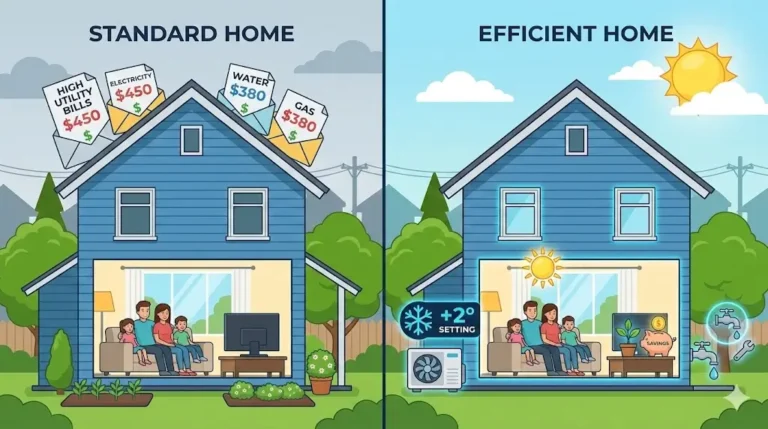
Install a smart thermostat, switch to LED bulbs, and wash your clothes in cold water. These micro-adjustments drastically lower your monthly utility overhead.
9. Utilize Cash-Back Apps and Extensions
Never shop online without a browser extension like Rakuten or Honey. If you have to buy something, you might as well get 2-5% cash back on the purchase.
10. Buy Secondhand and Refurbished
Let someone else take the depreciation hit. Buy your cars used, and opt for certified refurbished laptops and smartphones to save 30-40% off retail prices.
11. Use the 50/30/20 Budgeting Framework
Allocate 50% of your income to needs, 30% to wants, and a strict 20% to savings and debt payoff. This prevents you from over-restricting your lifestyle.
12. Challenge Yourself to a “No-Spend” Weekend
Once a month, commit to spending absolutely zero dollars from Friday evening to Monday morning. Rely on food already in your pantry and seek out free local entertainment.
13. Switch to a Fee-Free Bank Account
Are you paying a $12 monthly maintenance fee just to hold your money? Switch to an online bank that charges zero fees and offers better interest rates.
14. Buy Non-Perishables in Bulk
Purchase toilet paper, rice, beans, and cleaning supplies at warehouse clubs like Costco. Always check the “price per ounce” to ensure you are actually getting a deal.
15. Sell Unused Household Items
Declutter your home and sell unused electronics, clothes, and furniture on Facebook Marketplace or eBay. Use this immediate cash injection to fund your initial emergency buffer.

Income Potential & Earnings Breakdown
When you aggressively implement these money saving ideas, you are actively creating capital that can be used to dramatically increase your ultimate wealth. Here is a realistic breakdown of what optimizing your lifestyle can yield over a year:
| Savings Strategy Applied | Monthly Capital Freed | 1-Year Capital Created | Potential Reinvestment Opportunity |
|---|---|---|---|
| Cutting Unused Subscriptions | $40 – $80 | $480 – $960 | Web hosting for a work from home blog |
| Meal Prepping / No Takeout | $150 – $300 | $1,800 – $3,600 | Inventory for an e-commerce side hustle |
| Negotiating Bills & Insurance | $50 – $100 | $600 – $1,200 | High-yield dividend portfolio investments |
| Total Potential Capital: | $240 – $480/mo | **$2,880 – $5,760/yr** | Your wealth foundation! |
Disclaimer: Results vary significantly based on individual income, fixed expenses, and geographic location. These figures are illustrative projections meant to showcase the power of expense optimization.
Alternative Methods & Variations
If a strict numerical budget feels too constraining, try these highly effective variations to boost your savings rate:
- The Cash Envelope System: Withdraw your weekly discretionary allowance in physical cash. When the cash is gone, your spending stops until next week.
- The “Zero-Based” Budget: Every single dollar of your income is assigned a specific “job” at the beginning of the month, so your income minus your expenses equals exactly zero.
- The “Income-Focused” Variation: If you have already cut expenses to the bone, shift your goal. Use the time you used to spend tracking pennies to focus entirely on monetization strategies and building digital income.
Best Practices & Optimization Tips
To guarantee the success of your new financial routine, implement these optimization hacks:
- Habit Stacking: Tie your daily expense tracking to an existing habit. For example, log your receipts every morning while your coffee is brewing.
- Use Visual Trackers: Print out a savings thermometer to color in your progress. Visual progress triggers dopamine, which reinforces the saving habit.
- Buffer Your Account: Leave a $100 “cushion” in your checking account to prevent accidental overdraft fees when unexpected small bills process.
- Find a Community: Join Reddit forums or Facebook groups dedicated to financial independence to share tips and stay motivated.
Common Mistakes to Avoid
Even highly motivated savers fall into common traps. Protect your progress by avoiding these pitfalls:
- Deprivation Fatigue: Cutting out everything you enjoy (like your favorite coffee or all entertainment) will lead to a massive spending binge by week three. Always budget a modest amount for “fun money.”
- Ignoring High-Interest Debt: Saving money in an account earning 4% while carrying a credit card balance charging 25% is mathematically backward. Attack the toxic debt first.
- Lifestyle Creep: When you get a raise at work, immediately route the extra money into savings or investments rather than upgrading your apartment or car.
- Tracking Without Acting: Logging a $50 impulse buy does not refund your money. You must actively use the data to change your behavior next week.
Long-Term Sustainability & Growth
Saving money is just the launching pad. Long-term financial sustainability requires shifting from a “saving” mindset to a wealth-building mindset.
Once your money saving ideas help you establish a solid 3-to-6-month emergency fund, you should pivot your strategy. Take the monthly surplus cash you are generating and begin directing it toward assets that generate true passive income. Invest in index funds, real estate, or tools that scale your digital income. By consistently reinvesting your saved capital, you transition from simply living paycheck-to-paycheck to actively building an automated, future-proof financial fortress.
Conclusion
Taking control of your personal finances is the single most critical step toward building the life you want. By implementing these 15 money saving ideas, you remove the overwhelm, quickly plug your budget leaks, and build the capital required to fund your dream side hustle.
Ready to start your journey? Drop a comment below telling us which of the 15 ideas you are going to implement first! Be sure to subscribe to our newsletter for weekly money-making strategies, and download our free starter guide to launch your financial freedom journey today.
FAQs
How much money can I realistically make or save with these ideas?
While you aren’t “earning” new money, optimizing your expenses typically frees up $150 to $500 a month for the average household, acting as a massive tax-free raise.
Do I need prior experience to start budgeting?
Not at all. Basic expense tracking is highly accessible for beginners. Breaking the math down into daily or weekly windows removes the complexity.
What’s the initial investment?
Zero dollars. In fact, reviewing your spending often reveals unused subscriptions that you can cancel immediately, putting money back into your pocket on day one.
How long until I see results?
You will gain immense clarity on your spending habits by the end of week one. Noticeable compound growth in your savings account usually becomes highly motivating within 60 to 90 days.
Are these methods still working in the current economy?
Absolutely. During times of inflation and economic shifting, having granular control over your personal cash flow and protecting your profit margins is more vital than ever.
What are the risks involved?
There is zero financial risk. The only minor risk is burnout if you set your monthly savings target too high. Always leave room in your budget for basic entertainment and unexpected minor costs.
Before you go, tap those stars!
Straightforward, no gimmicks, just solid banking advice
I clicked on this article expecting it to push some specific bank or financial product with referral links. I was pleasantly surprised. The advice was unbiased, focused on principles rather than promoting any particular institution, and gave me a clear framework to evaluate my own options. I appreciated that the article addressed the importance of FDIC insurance, automatic transfers, and goal-setting — things that seem obvious but that most people (including me) overlook. The writing was clear and concise, without the usual fluff or overly complex financial jargon. The only reason I’m giving four stars instead of five is that I would have liked even more detail on how to balance saving with paying down debt. Still, this was one of the most practical and trustworthy articles on saving I’ve read in a long time. Highly recommend.
Solid advice that cuts through the noise
I’ve been saving for years, but I kept wondering if my money was actually working as hard as it could be. There’s so much conflicting information out there — regular savings accounts, money market accounts, CDs, high-yield options — it gets confusing fast. This article did an excellent job comparing the options side by side, explaining the pros and cons of each, and helping me figure out which strategy made sense for my situation. I especially appreciated the section on the importance of emergency funds versus long-term savings, and the breakdown of how compound interest really adds up over time. I ended up moving my savings to a high-yield account and setting clearer goals. Practical, well-researched, and genuinely helpful.
Small changes, noticeable results
I’ll be honest — I clicked on this article expecting generic advice like “drive less” (thanks, captain obvious). But I was genuinely impressed. The article breaks down the actual science behind why certain habits affect fuel economy, with real numbers to back it up. I learned that my lead-foot acceleration and speeding were costing me way more than I realized. The section on vehicle maintenance was especially valuable — I didn’t know a dirty air filter could impact mileage that much. The tone was straightforward, no fluff, no upselling expensive products. Just solid, practical advice that actually works. My fuel expenses dropped by about 15% last month without me changing my overall driving needs.
Finally, practical advice that doesn’t require buying a new car
As someone who drives over 400 miles a week for work, gas expenses have been crushing my budget. I’ve read countless articles that basically just say “buy an electric vehicle” — which isn’t helpful when that’s not in my budget. This article was a game-changer. The tips were immediately actionable: combining trips, checking tire pressure (I didn’t realize how much that affects mileage!), and using gas price apps. I started implementing these suggestions last month, and I’ve already saved about $40. The writing was clear, well-organized, and respected that not everyone can just trade in their car. Highly recommend for anyone feeling the pain at the pump.
Perfect for renters who can’t install solar panels
As someone who rents an apartment, I often feel limited when it comes to making my home more energy-efficient. I can’t just install new appliances or add insulation to the walls. This article was a lifesaver because it focused on renter-friendly solutions—things like weatherstripping for doors, smart power strips, and optimizing how I use my existing appliances. The writing was straightforward and didn’t assume I owned a home. My only small critique is that I would have loved even more rent-specific examples, but overall, this was incredibly helpful. My electric bill dropped by about $15 last month!