The Best Way to Save Money in Bank Accounts for Your Future
Did you know that over 60% of Americans are currently losing hundreds of dollars every year simply by keeping their funds in the wrong type of account? While many beginners in the “Make Money Online” space are hunting for the next big side hustle or online earnings breakthrough, they often overlook the most powerful tool for financial freedom already at their disposal: their bank account. Finding the best way to save money in bank accounts isn’t just about hoarding cash; it is about optimizing your personal profit margins so your money works as hard as you do.
In the world of digital income and monetization strategies, capital is your greatest asset. If your money is sitting in a traditional big-box bank earning 0.01% interest, you aren’t just saving—you are actually losing purchasing power to inflation. To build sustainable revenue streams, you must first master the art of the High-Yield Savings Account (HYSA). In this guide, we will break down the data-driven steps to turn your bank into a source of passive income that fuels your future ventures.
What You’ll Need to Get Started
You don’t need to be a Wall Street expert to begin. To implement the best way to save money in bank systems, you only need a few digital tools and a strategic mindset.
- A High-Yield Savings Account (HYSA): Look for online-only banks (like Ally, SoFi, or Marcus) that offer 4.00% APY or higher.
- A Budgeting App: Tools like YNAB (You Need A Budget) or Mint to track your income potential.
- Automatic Transfer Capability: Most modern banking apps allow you to set “Rules” for your money.
- Initial Investment: $0 to $100. Many high-yield accounts have no minimum balance requirements.
- Free Alternatives: If you aren’t ready to switch banks, use “Digit” or “Acorns” to automate small transfers from your current checking account.
Time Investment
Mastering your bank savings is a “set it and forget it” strategy. While active revenue streams require daily maintenance, an optimized bank account is a true form of passive income.
- Setup Time: 30–60 minutes to research and open a new online account.
- Daily Commitment: 0 minutes (fully automated).
- Weekly Commitment: 5 minutes to review your “buckets” or categories.
- Timeline to Results: You will see your first interest payment within 30 days.
- Comparison: Unlike a traditional side hustle that might take months to pay out, an HYSA begins “earning” for you the second your first deposit clears. Most beginners see significant compounding effects within 6-12 months.
Step-by-Step Implementation Guide (H3 for each step)
1. Identify and Eliminate “Hidden Fees”
The first step in finding the best way to save money in bank accounts is to stop the bleeding. Many traditional banks charge “Maintenance Fees” or “Overdraft Protection Fees.”
- The Action: Audit your last three statements. If you see any fee that isn’t a direct transaction you made, call the bank to waive it or move your money immediately.
- Pro Tip: Choose a bank with “No-Fee” structures to protect your profit margins.
2. Move to a High-Yield Digital Infrastructure
Digital-only banks have lower overhead than physical branches, allowing them to pass those savings to you in the form of higher interest rates.
- The Action: Open an account with an APY that is at least 10x the national average.
- Visual Description: Imagine two buckets. One has a tiny hole (low interest), and the other is being filled by a steady faucet (high interest). Switching banks is simply moving your water to the better bucket.
3. Implement the “Pay Yourself First” Automation
The biggest mistake people make is saving what is “left over” at the end of the month. In the MMO world, we treat savings as a business expense.
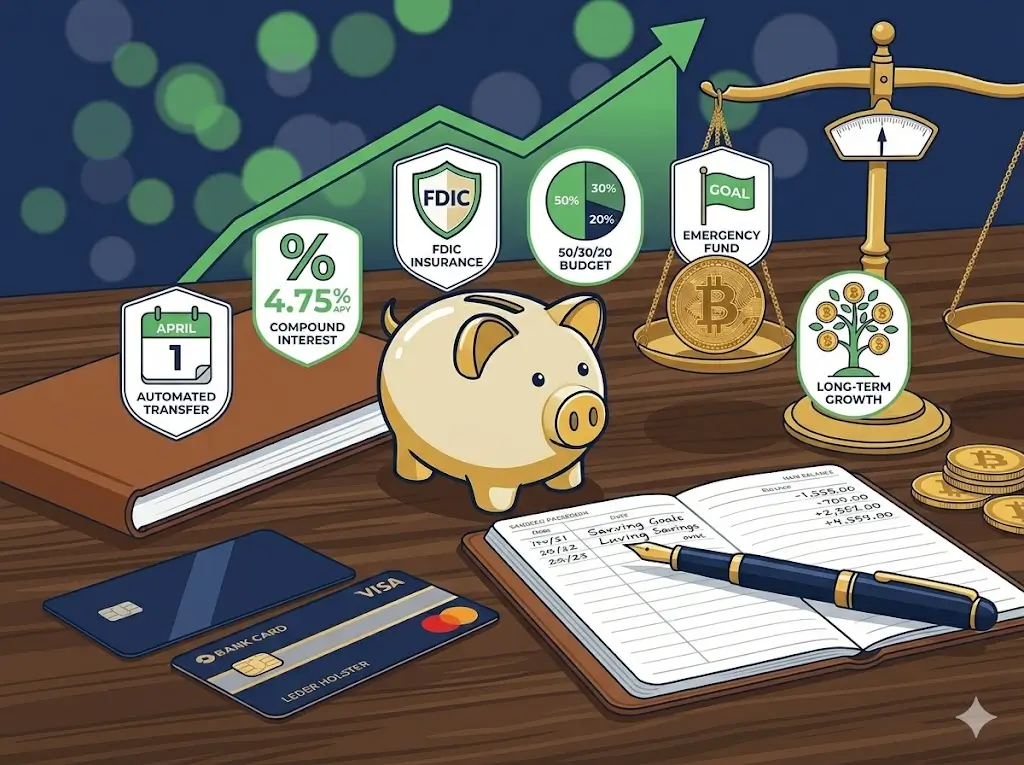
- The Action: Set an automatic transfer to occur the same day your paycheck or online earnings hit your account.
- Insider Trick: Even $10 a week matters. Automation removes the “decision fatigue” that leads to overspending.
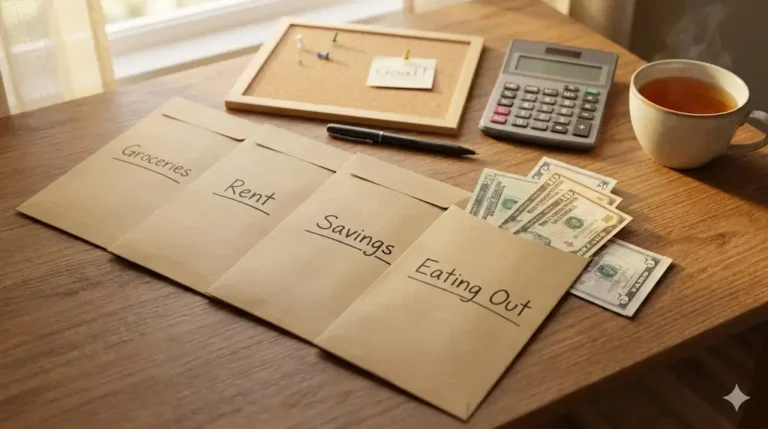
4. Utilize “Savings Buckets” for Different Revenue Goals
Many online banks now offer “Buckets” or “Vaults.”
- The Action: Categorize your savings into:
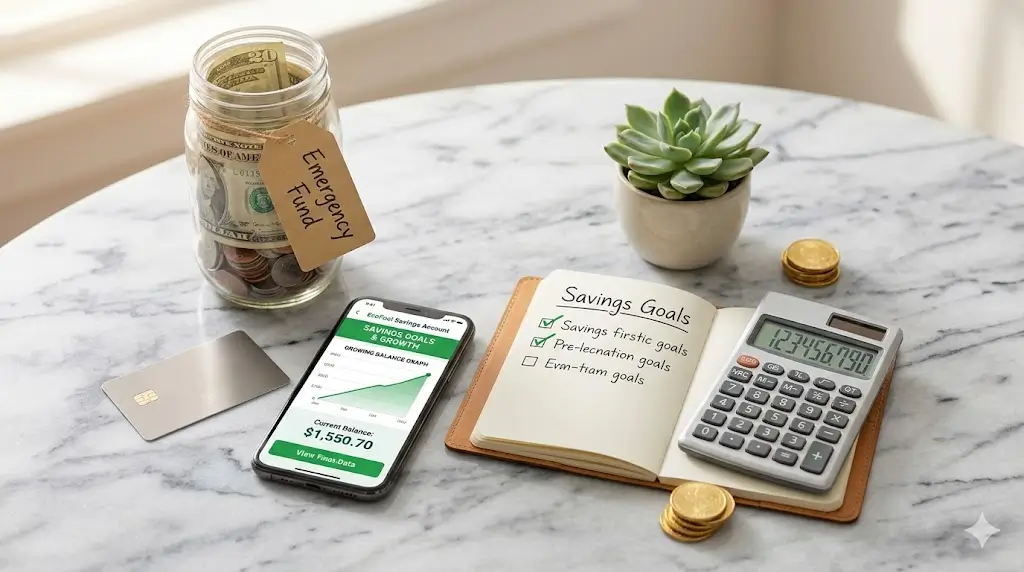
- Emergency Fund (3-6 months of expenses)
- Taxes (Essential for side hustle owners)
- Business Reinvestment (To buy your next domain or course)
Income Potential & Earnings Breakdown
Let’s look at the actual data. If you have $10,000 in a standard savings account vs. a High-Yield Savings Account, the difference in your digital income is staggering.
| Account Type | Average APY | Monthly Earnings | 5-Year Growth (Compounded) |
|---|---|---|---|
| Traditional Big Bank | 0.01% | $0.08 | $10,005 |
| High-Yield Savings | 4.50% | $37.50 | $12,520 |
| The Difference | +4.49% | +$37.42 | +$2,515 |
By simply choosing the best way to save money in bank accounts, you earn an extra $2,500 over five years for doing nothing. That is the purest form of passive income available to any entrepreneur.
Alternative Methods & Variations
- CD Ladders (Certificate of Deposits): If you don’t need immediate access to your cash, locking money in a CD can sometimes fetch even higher rates. By “laddering” them (opening one every few months), you ensure you always have cash becoming available.
- Money Market Accounts (MMAs): These often provide the high rates of a savings account with the check-writing ability of a checking account—ideal for those with fluctuating revenue streams.
- Brokerage Cash Sweeps: If you already trade stocks, many brokers offer “cash sweep” programs that pay high interest on uninvested cash.
Best Practices & Optimization Tips
- The “Round-Up” Hack: Use apps that round up your purchases to the nearest dollar and invest the change. This is a micro-side hustle for your spare change.
- Review APY Monthly: Interest rates fluctuate with the Federal Reserve. Make sure your bank stays competitive.
- Keep Your “Operating Expenses” Separate: Never keep your grocery money in your high-yield account. This prevents accidental “dipping” into your future wealth.
Common Mistakes to Avoid
- Ignoring the “Fine Print”: Some banks offer a high “Introductory Rate” that drops after 3 months. Always look for a consistent, long-term high APY.
- Over-complicating the System: If you have 15 different bank accounts, you will lose track of your financial freedom goals. Keep it simple: One checking, one high-yield savings.
- Chasing 0.1%: Don’t move your money every week to chase a slightly higher rate. The “transfer time” often costs you more in lost interest than the 0.1% gain.
Long-Term Sustainability & Growth
The best way to save money in bank accounts is to view it as the “fuel” for your larger engines.
- Reinvestment Strategy: Once your emergency fund is full, redirect your monthly savings into a brokerage account or a new digital income project.
- Diversification: Don’t put all your eggs in one basket. Once you hit the FDIC insurance limit ($250,000), open an account at a second institution.
- Future-Proofing: Inflation is the enemy. Always ensure your savings rate is outperforming the current inflation data to maintain your income potential.
Conclusion
Mastering your bank account is the first step toward true financial freedom. By choosing high-yield options and automating your transfers, you create a foundation of passive income that supports all your other side hustle efforts. Remember, it’s not just about how much you earn from your online earnings—it’s about how much you keep and grow.
Ready to start your journey? Drop your questions about HYSAs in the comments! Subscribe for weekly money-making strategies. Download our free “Savings Maximizer” starter guide.
FAQs
How much money can I realistically make from bank interest?
While it depends on your balance, at current rates of 4.5%, a $10,000 balance generates $450 a year in pure passive income.
What’s the initial investment?
Most online banks allow you to open an account with as little as $1 to $100.
How long until I see results?
Interest is usually calculated daily and paid monthly. You will see your first “dividend” at the end of your first full month.
Is this method still working in 2026?
Yes. High-yield savings remain the safest and most effective “base layer” for any financial strategy.
What are the risks involved?
As long as your bank is FDIC-insured, your deposits are protected by the government up to $250,000. The only “risk” is the interest rate fluctuating over time.
Before you go, tap those stars!
Straightforward, no gimmicks, just solid banking advice
I clicked on this article expecting it to push some specific bank or financial product with referral links. I was pleasantly surprised. The advice was unbiased, focused on principles rather than promoting any particular institution, and gave me a clear framework to evaluate my own options. I appreciated that the article addressed the importance of FDIC insurance, automatic transfers, and goal-setting — things that seem obvious but that most people (including me) overlook. The writing was clear and concise, without the usual fluff or overly complex financial jargon. The only reason I’m giving four stars instead of five is that I would have liked even more detail on how to balance saving with paying down debt. Still, this was one of the most practical and trustworthy articles on saving I’ve read in a long time. Highly recommend.
Solid advice that cuts through the noise
I’ve been saving for years, but I kept wondering if my money was actually working as hard as it could be. There’s so much conflicting information out there — regular savings accounts, money market accounts, CDs, high-yield options — it gets confusing fast. This article did an excellent job comparing the options side by side, explaining the pros and cons of each, and helping me figure out which strategy made sense for my situation. I especially appreciated the section on the importance of emergency funds versus long-term savings, and the breakdown of how compound interest really adds up over time. I ended up moving my savings to a high-yield account and setting clearer goals. Practical, well-researched, and genuinely helpful.
Small changes, noticeable results
I’ll be honest — I clicked on this article expecting generic advice like “drive less” (thanks, captain obvious). But I was genuinely impressed. The article breaks down the actual science behind why certain habits affect fuel economy, with real numbers to back it up. I learned that my lead-foot acceleration and speeding were costing me way more than I realized. The section on vehicle maintenance was especially valuable — I didn’t know a dirty air filter could impact mileage that much. The tone was straightforward, no fluff, no upselling expensive products. Just solid, practical advice that actually works. My fuel expenses dropped by about 15% last month without me changing my overall driving needs.
Finally, practical advice that doesn’t require buying a new car
As someone who drives over 400 miles a week for work, gas expenses have been crushing my budget. I’ve read countless articles that basically just say “buy an electric vehicle” — which isn’t helpful when that’s not in my budget. This article was a game-changer. The tips were immediately actionable: combining trips, checking tire pressure (I didn’t realize how much that affects mileage!), and using gas price apps. I started implementing these suggestions last month, and I’ve already saved about $40. The writing was clear, well-organized, and respected that not everyone can just trade in their car. Highly recommend for anyone feeling the pain at the pump.
Perfect for renters who can’t install solar panels
As someone who rents an apartment, I often feel limited when it comes to making my home more energy-efficient. I can’t just install new appliances or add insulation to the walls. This article was a lifesaver because it focused on renter-friendly solutions—things like weatherstripping for doors, smart power strips, and optimizing how I use my existing appliances. The writing was straightforward and didn’t assume I owned a home. My only small critique is that I would have loved even more rent-specific examples, but overall, this was incredibly helpful. My electric bill dropped by about $15 last month!