What is the Best Way to Budget Money? A Practical Guide
Did you know that 67% of online entrepreneurs and side-hustlers fail because they skip the ONE crucial step of masterfully managing their cash flow? We often obsess over the latest monetization strategies or hunting for new revenue streams, yet we ignore the foundation that holds it all together. The truth is, the best way to budget money isn’t about restriction; it’s about intentionality.
If you’ve ever felt like your online earnings vanish as quickly as they appear, you aren’t alone. Many people struggle to find a balance between their current lifestyle and their dreams of financial freedom. In this guide, we’re going to challenge the belief that budgeting is a “financial diet” and show you how it is actually the ultimate tool for scaling your profit margins in life. Whether you work from home or are building a massive digital income, this practical guide will help you reclaim your time and your bank account.
What You’ll Need to Get Started
Before you can optimize your income potential, you need to assemble a basic “budgeting toolkit.” You don’t need expensive software to begin.
- Income Tracking: Access to your bank accounts, PayPal, or Stripe to see your total online earnings.
- Expense Audit: A list of your last 30 days of spending (use bank statements or credit card apps).
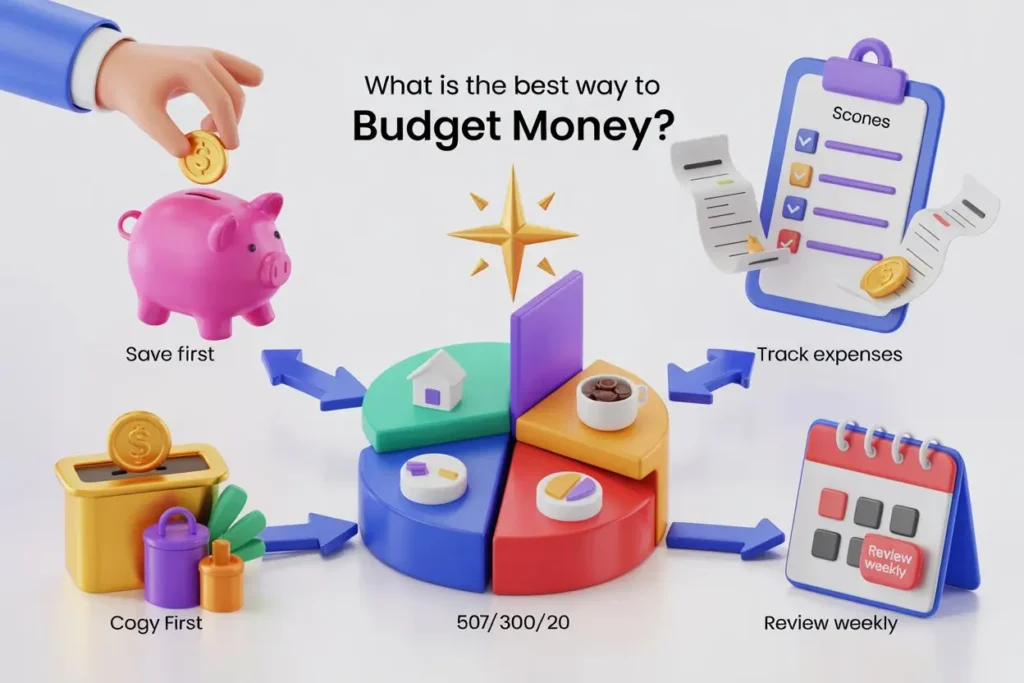
- A Budgeting Framework: We recommend the 50/30/20 rule or Zero-Based Budgeting.
- Tools: * Free Option: Google Sheets or a simple physical notebook.
- Automated Option: Apps like You Need A Budget (YNAB) or Mint.
- Skill Requirements: Basic math and approximately 60 minutes of uninterrupted focus.
Time Investment
Managing your money is one of the highest-leverage activities you can do. Unlike a side hustle that might take months to pay off, budgeting provides immediate clarity.
- Initial Setup: 1 to 2 hours for the first comprehensive audit and category setup.
- Weekly Maintenance: 10 to 15 minutes to reconcile transactions and ensure you’re on track.
- Monthly Review: 30 minutes to adjust for the upcoming month’s unique expenses.
- Timeline to Results: Most beginners see a significant change in their “spending awareness” within 30 days. You can realistically see an increase in your available cash flow within 60–90 days with consistent effort.
Step-by-Step Implementation Guide
Finding the best way to budget money requires a systematic approach. Follow these steps to build a bulletproof financial plan.
Step 1: Identify Your Total Monthly Net Income
You cannot manage what you don’t measure. Calculate your “take-home” pay. If you have multiple revenue streams, ensure you are accounting for taxes before you count the money as spendable.
- Pro Tip: If your digital income is variable, use your lowest-earning month of the last year as your “baseline” budget to ensure you never overspend.
Step 2: Categorize Every Expense
Divide your spending into three buckets: Needs, Wants, and Financial Goals (Debt/Savings).
- Needs: Rent, utilities, insurance, basic groceries.
- Wants: Subscriptions, dining out, hobbies.
- Goals: Reinvesting in your side hustle, emergency funds, and retirement.
Step 3: Assign a Job to Every Dollar (Zero-Based Budgeting)
Before the month begins, tell your money where to go. If you have $3,000 in income, make sure your categories add up to exactly $3,000.
- Insider Trick: Don’t forget a “Miscellaneous” category. Life is unpredictable; give yourself a $50–$100 buffer for small surprises.
Step 4: Track in Real-Time
The biggest mistake people make is waiting until the end of the month to look at their spending. Use a mobile app to log expenses the moment they happen.
Income Potential & Earnings Breakdown
A well-managed budget acts as a multiplier for your online earnings. While it doesn’t “create” money out of thin air, it stops the “leakage” that prevents you from investing in passive income assets.
| Budgeting Level | Potential Savings Rate | Impact on Financial Freedom |
|---|---|---|
| Beginner (No Budget) | 0% – 5% | High stress, living paycheck to paycheck. |
| Intermediate (50/30/20) | 20% | Builds a safety net; allows for modest reinvestment. |
| Advanced (Zero-Based) | 30% – 50%+ | Rapid wealth building; accelerates digital income growth. |
Example Case Study: By implementing a strict budget, the average user “finds” $300–$500 per month in wasted subscriptions and impulse buys. Reinvesting that $500/month into a 7% return asset for 20 years results in over $260,000.
Alternative Methods & Variations
There is no one-size-fits-all “best way to budget money.” Depending on your personality, you might prefer:
- The Envelope System: Perfect for those who struggle with overspending on “Wants.” Use physical cash in labeled envelopes. When the cash is gone, the spending stops.
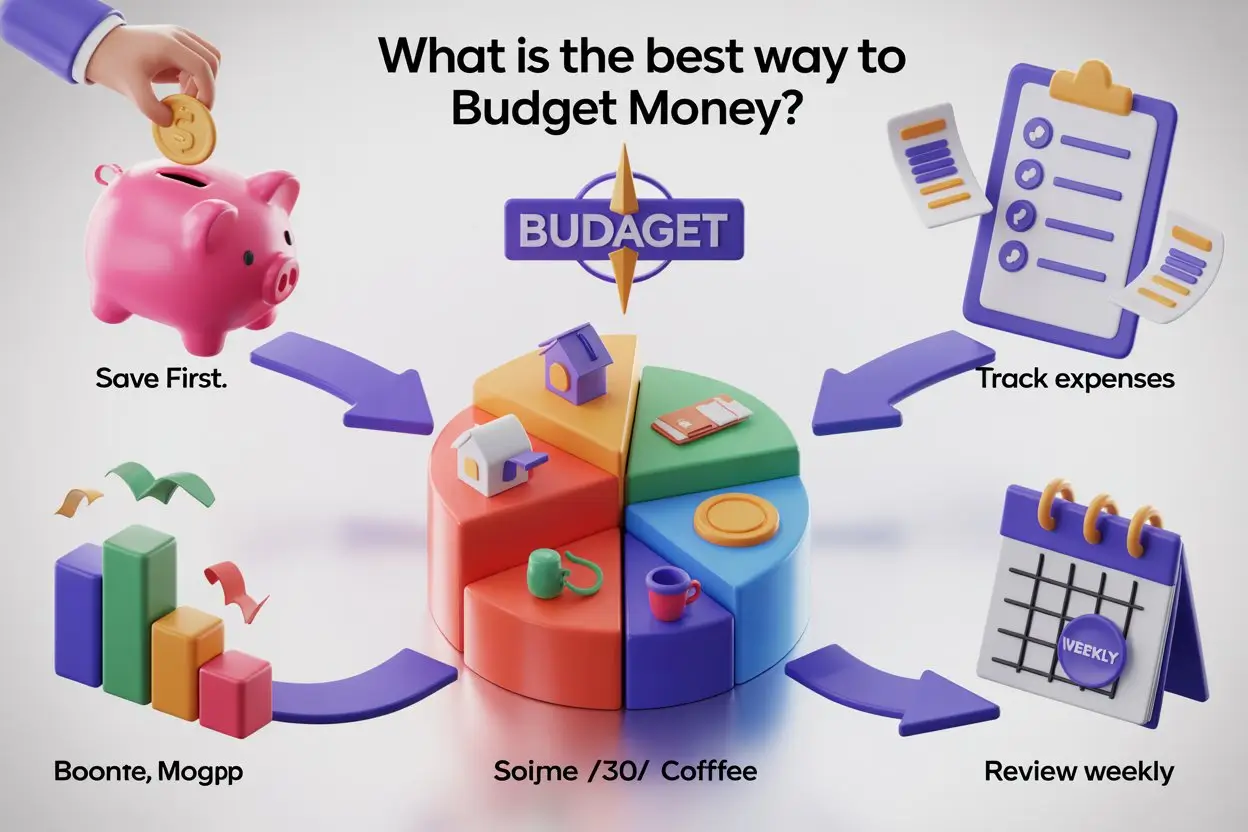
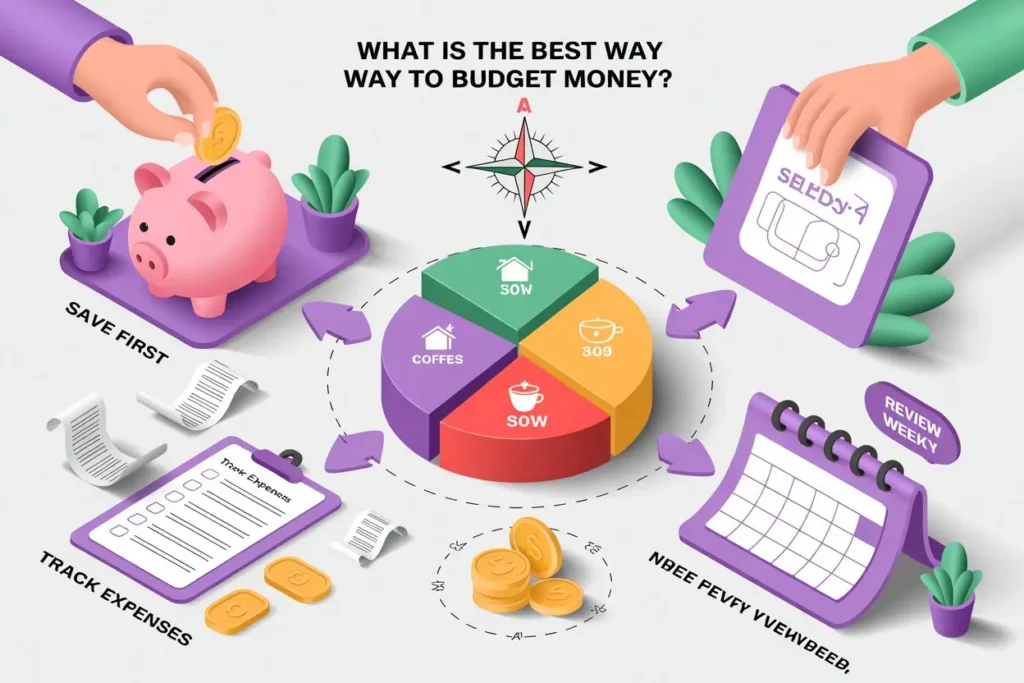
- The “Pay Yourself First” Method: If tracking every penny sounds exhausting, simply automate your savings/investments (the 20%) the moment you get paid, then live on whatever is left.
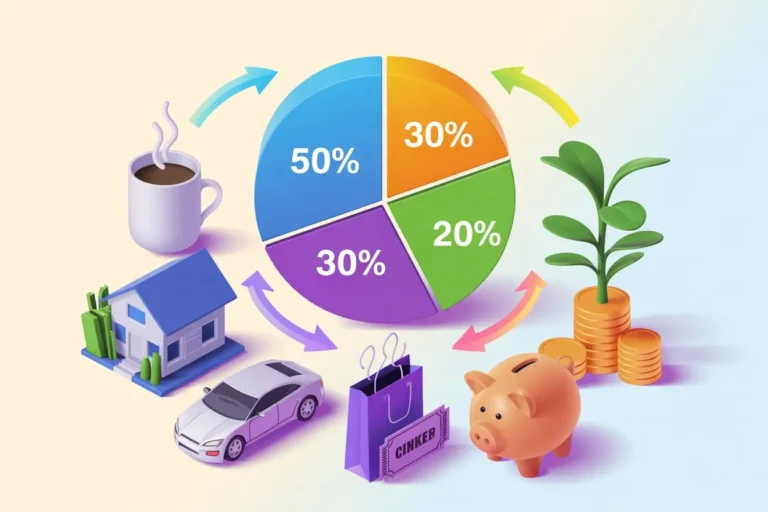
- The 50/30/20 Rule: Great for beginners who want a balanced lifestyle. 50% for Needs, 30% for Wants, 20% for Savings.
Best Practices & Optimization Tips
- Automate Your Savings: Set up automatic transfers to your brokerage or high-yield savings account. Treat your savings like a bill that must be paid.
- Review Your Subscriptions: Every quarter, use tools like Rocket Money to find and kill “zombie” subscriptions that drain your profit margins.
- Budget for Joy: If your budget is too restrictive, you will fail. Allocate a “Fun Money” category that you are allowed to spend guilt-free.
- Reinvest Your Side Hustle Profits: Instead of increasing your lifestyle when your online earnings grow, keep your “Needs” category the same and put 100% of the raise into your “Goals” category.
Common Mistakes to Avoid
- The “I’ll Start Next Month” Trap: Procrastination is the enemy of financial freedom. Start today, even if your budget isn’t “perfect.”
- Forgetting Irregular Expenses: Car registration, annual software renewals, and holiday gifts should be divided by 12 and saved for every month.
- Being Too Vague: “Groceries” is a category; “Stuff at the store” is not. Be specific to maintain accountability.
- Statistics on Failure: Studies show that 80% of budgets fail because they are either too complex or too restrictive. Keep it simple and allow for flexibility.
Long-Term Sustainability & Growth
Budgeting isn’t a one-time event; it’s a lifestyle for those serious about monetization strategies.
- Rebalance Often: As your revenue streams diversify, update your budget percentages.
- Inflation Protection: As the cost of living rises, use your budget to identify where you can cut back or where you need to increase your income potential.
- Future-Proofing: Use your budget to build an “Opportunity Fund”—cash sitting ready so you can jump on a new investment or business venture without hesitation.
Conclusion
Finding the best way to budget money is a personal journey, but the principles of tracking, categorizing, and intentionality remain universal. By mastering your cash flow, you aren’t just saving pennies; you are building the foundation for passive income and long-term financial freedom. Stop letting your money tell you what to do, and start telling your money where to go.
Ready to start your journey? Drop your questions in the comments! Subscribe for weekly money-making strategies and download our free budget starter guide below.
FAQs
How much money can I realistically save?
Most users discover an extra 10–15% of their income through an initial audit. For an average income of $4,000, that’s $400–$600 a month.
Do I need prior experience?
None. If you can use a smartphone, you can use modern budgeting tools.
What’s the initial investment?
Starting a budget is free. While some apps have monthly fees, Google Sheets or Excel are zero-cost alternatives.
How long until I see results?
You will feel the psychological relief of “knowing where your money is” immediately. You will see your bank balance grow within the first 60 days.
Is this method still working in 2026?
Yes. In fact, with the rise of the “subscription economy,” budgeting is more critical now than it was a decade ago.
What are the risks involved?
The only risk is “frugality burnout.” Ensure you are budgeting for things you enjoy to keep the habit sustainable.
Disclaimer: Earnings and savings amounts are projections and not guaranteed. Individual results will vary based on effort and market conditions.
Before you go, tap those stars!
Straightforward, no gimmicks, just solid banking advice
I clicked on this article expecting it to push some specific bank or financial product with referral links. I was pleasantly surprised. The advice was unbiased, focused on principles rather than promoting any particular institution, and gave me a clear framework to evaluate my own options. I appreciated that the article addressed the importance of FDIC insurance, automatic transfers, and goal-setting — things that seem obvious but that most people (including me) overlook. The writing was clear and concise, without the usual fluff or overly complex financial jargon. The only reason I’m giving four stars instead of five is that I would have liked even more detail on how to balance saving with paying down debt. Still, this was one of the most practical and trustworthy articles on saving I’ve read in a long time. Highly recommend.
Solid advice that cuts through the noise
I’ve been saving for years, but I kept wondering if my money was actually working as hard as it could be. There’s so much conflicting information out there — regular savings accounts, money market accounts, CDs, high-yield options — it gets confusing fast. This article did an excellent job comparing the options side by side, explaining the pros and cons of each, and helping me figure out which strategy made sense for my situation. I especially appreciated the section on the importance of emergency funds versus long-term savings, and the breakdown of how compound interest really adds up over time. I ended up moving my savings to a high-yield account and setting clearer goals. Practical, well-researched, and genuinely helpful.
Small changes, noticeable results
I’ll be honest — I clicked on this article expecting generic advice like “drive less” (thanks, captain obvious). But I was genuinely impressed. The article breaks down the actual science behind why certain habits affect fuel economy, with real numbers to back it up. I learned that my lead-foot acceleration and speeding were costing me way more than I realized. The section on vehicle maintenance was especially valuable — I didn’t know a dirty air filter could impact mileage that much. The tone was straightforward, no fluff, no upselling expensive products. Just solid, practical advice that actually works. My fuel expenses dropped by about 15% last month without me changing my overall driving needs.
Finally, practical advice that doesn’t require buying a new car
As someone who drives over 400 miles a week for work, gas expenses have been crushing my budget. I’ve read countless articles that basically just say “buy an electric vehicle” — which isn’t helpful when that’s not in my budget. This article was a game-changer. The tips were immediately actionable: combining trips, checking tire pressure (I didn’t realize how much that affects mileage!), and using gas price apps. I started implementing these suggestions last month, and I’ve already saved about $40. The writing was clear, well-organized, and respected that not everyone can just trade in their car. Highly recommend for anyone feeling the pain at the pump.
Perfect for renters who can’t install solar panels
As someone who rents an apartment, I often feel limited when it comes to making my home more energy-efficient. I can’t just install new appliances or add insulation to the walls. This article was a lifesaver because it focused on renter-friendly solutions—things like weatherstripping for doors, smart power strips, and optimizing how I use my existing appliances. The writing was straightforward and didn’t assume I owned a home. My only small critique is that I would have loved even more rent-specific examples, but overall, this was incredibly helpful. My electric bill dropped by about $15 last month!