Practical Apps That Save You Money on Everyday Purchases
Did you know that over 70% of aspiring online entrepreneurs fail to launch their side hustle simply because they lack the initial seed capital? When trying to build wealth, most people focus entirely on complex monetization strategies while completely ignoring the low-hanging fruit in their own pockets. If you want to achieve true financial freedom, you must first master your personal profit margins.
Using strategic apps that save you money on everyday purchases is the ultimate “life hack” to generate immediate capital. Every dollar you reclaim at the grocery store or gas pump is a dollar you can reinvest into your online earnings, dividend portfolios, or digital assets.
Quick Answer
The easiest way to optimize your personal finances is by leveraging cashback, automated budgeting, and digital coupon applications. These apps that save you money run quietly in the background on your smartphone, effortlessly turning your necessary daily expenses into a steady, reliable stream of foundational digital income.
What You’ll Need to Get Started
Optimizing your daily spending is the most accessible work from home task you can undertake. You do not need a business license, specialized coding skills, or an advertising budget.
Required Tools & Resources:
- A Smartphone: iOS or Android device to run the applications.
- A Dedicated Email Address: Create a separate email specifically for reward apps to keep your primary inbox free from promotional spam.
- A Primary Payment Method: A debit card or a rewards credit card to link to automated cashback platforms.
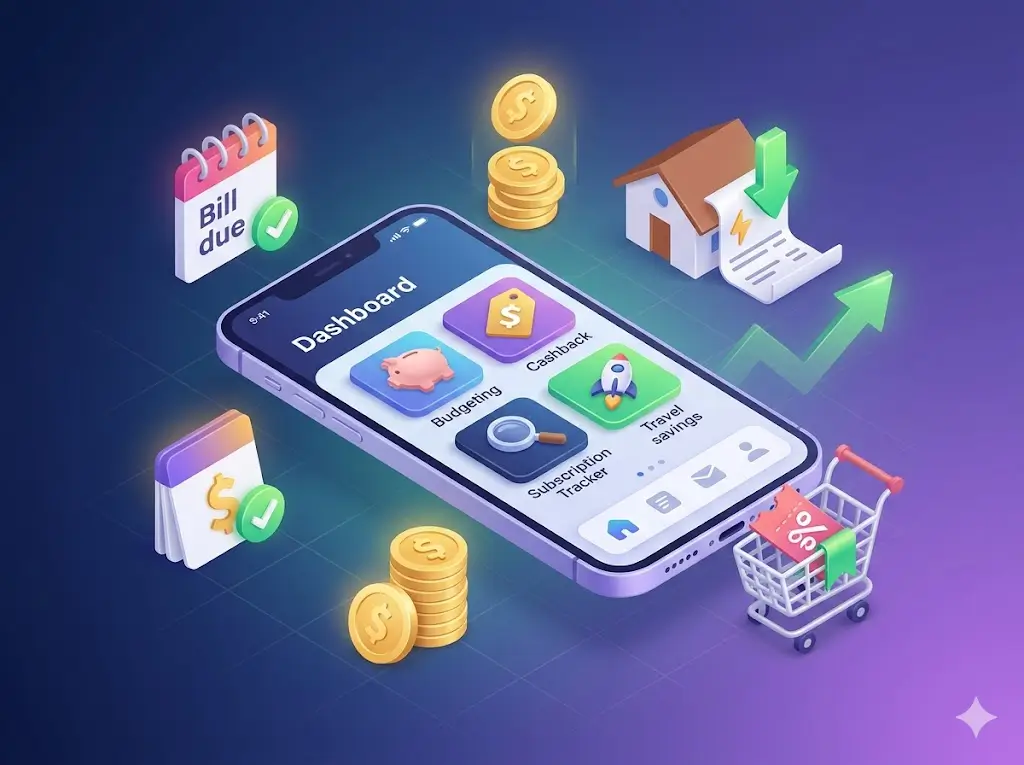
- The Core App Stack: Free accounts with platforms like Rakuten, Ibotta, Fetch Rewards, and Upside.
Initial Investment Breakdown:
- Estimated Cost: $0.00. The best cash-reclamation apps are 100% free to download and use.
- Skill Requirements: Beginner-friendly. If you can take a picture of a receipt or click a link before shopping online, you have the skills required.
Time Investment
Unlike building a blog, scaling an e-commerce store, or developing a digital product—which can take months to yield returns—optimizing your expenses provides instant gratification.
- Setup Time Required: 30 to 45 minutes to download your core apps, create accounts, and securely link your payment methods.
- Daily/Weekly Time Commitment: 5 to 10 minutes a week. This involves scanning receipts after a grocery run or activating offers before an online purchase.
- Timeline to First “Earnings”: Immediate. You will earn cashback or points on the very first optimized purchase you make. Most beginners are able to cash out their first $20 to $50 within 30 days.
- Comparison: Traditional side hustles take significant time to scale. Earning $50 a month through cashback requires a fraction of the time it takes to build $50 a month in ad revenue.
Step-by-Step Implementation Guide
Step 1: Install a Universal Browser Extension
Before you ever buy anything online, ensure you are getting a cut of the transaction. Install extensions like Rakuten or Honey on your desktop browser and mobile device.
- Pro Tip: Pin the extension to your toolbar. It will automatically pop up and apply the best coupon codes or activate 2% to 15% cashback whenever you browse a supported retailer.
Step 2: Download Grocery & Retail Scanners
Your largest variable expense is likely food. Download Ibotta and Fetch Rewards.
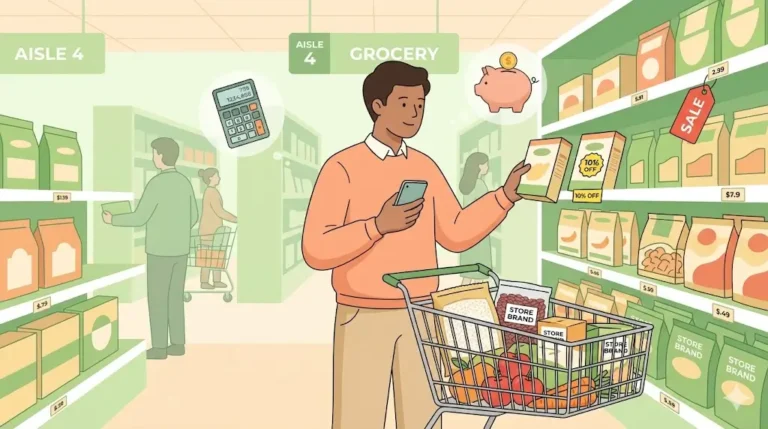
- Instructions: With Ibotta, you select cashback offers on specific items before you shop. With Fetch Rewards, you simply snap a photo of any receipt after shopping to earn points redeemable for gift cards.
Step 3: Connect an Automated “Round-Up” App
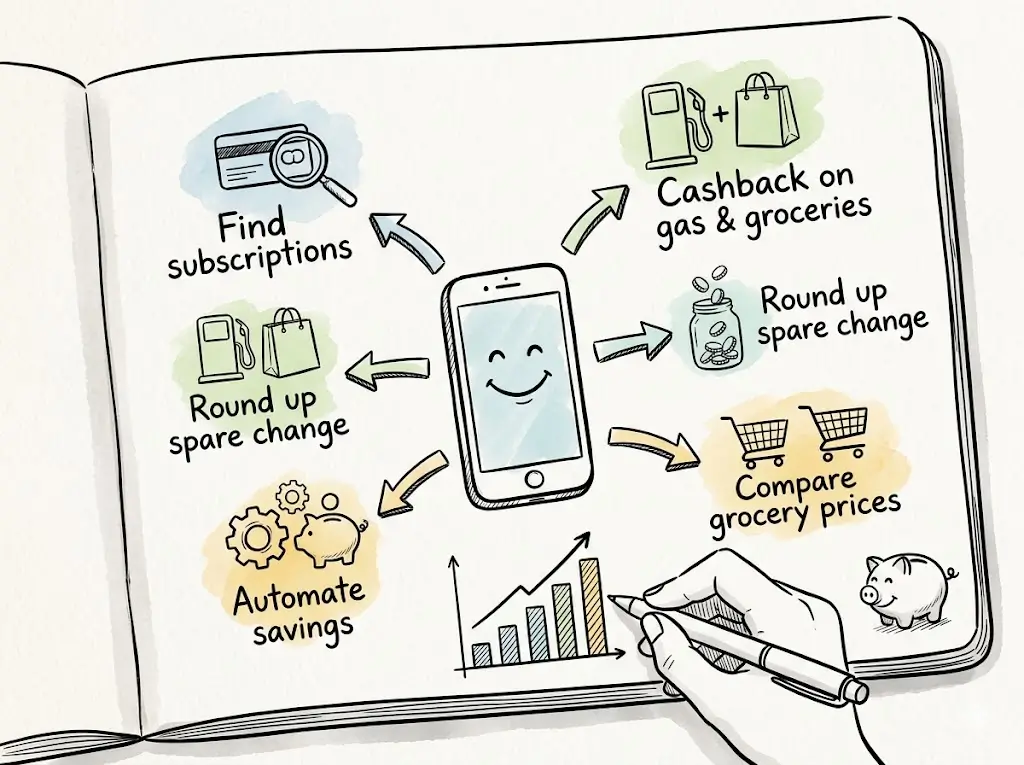
To build true passive income, use an app like Acorns. You securely link your debit or credit card, and every time you make a purchase, the app rounds up to the nearest dollar and invests the spare change into a diversified ETF portfolio.
Step 4: Optimize Your Commute
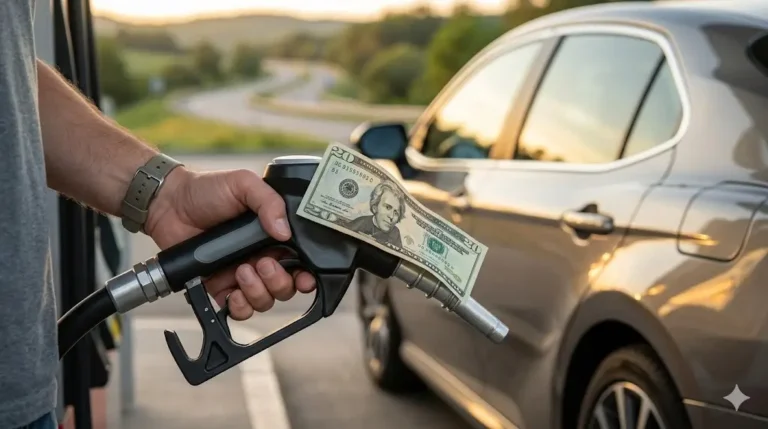
If you drive frequently, download Upside. This app shows you a map of local gas stations offering cashback per gallon. Claim the offer, pump your gas, and scan the receipt (or use a linked card) to get money deposited directly into your app wallet.
Income Potential & Earnings Breakdown
While using apps that save you money won’t make you a millionaire overnight, the financial impact is consistent and reliable. Think of these savings as tax-free revenue streams that pad your bottom line.
Here is a realistic look at your monthly income potential based on your level of dedication:
| User Level | App Strategy | Estimated Monthly “Earnings” | Best Used For… |
|---|---|---|---|
| Beginner | Scanning receipts (Fetch) + basic round-ups | $15 – $30 | Covering web hosting or software subscriptions |
| Intermediate | Online shopping portals (Rakuten) + Gas apps | $40 – $80 | Funding a small dividend investment portfolio |
| Advanced | Strategic offer stacking + strict app usage | $100 – $200+ | Seed capital for a high-ROI online business |
Note: Earnings are illustrative and depend heavily on your existing baseline spending habits and family size.
Alternative Methods & Variations
If managing multiple smartphone applications feels overwhelming, there are alternative, low-maintenance ways to optimize your spending:
- Bank-Level Offers: Most major banks (Chase, Bank of America, Amex) have built-in “Offers” portals inside their banking apps. You can click to activate 5-10% cashback at places like Starbucks or local restaurants directly on your debit/credit card.
- High-Yield Savings Automation: Instead of tracking pennies, set up an automated transfer that moves 10% of your paycheck into a High-Yield Savings Account (HYSA) earning 4-5% APY before you even see the money in your checking account.
- Credit Card Portals: If you are disciplined with credit, using a premium 2% flat-rate cash-back credit card for all purchases completely automates your savings without needing to scan a single receipt.
Best Practices & Optimization Tips
To maximize your results and accelerate your path to financial autonomy, you need to employ “Reward Stacking.” This is an advanced technique where you combine multiple revenue streams on a single purchase.
- The Ultimate Stack Example: You need to buy a $1,000 laptop for your new work from home setup.
- You click through the Rakuten portal to earn 5% cash back ($50).
- You pay with a rewards credit card earning 2% cash back ($20).
- You scan the final receipt into Fetch Rewards for bonus points. Result: You just generated over $70 in digital income on a purchase you had to make anyway.
Common Mistakes to Avoid
Even seasoned budgeters fall into common traps when using money-saving technology. Protect your profit margins by avoiding these pitfalls:
- The “Spend to Save” Trap: The absolute biggest mistake is buying an item you don’t need simply because an app offered you 20% cashback. Spending $80 to “save” $20 means you still lost $80.
- Letting Points Expire: Many apps have inactivity clauses. If you don’t log in or scan a receipt for 90 days, you might lose your accumulated balance. Set a calendar reminder to cash out to PayPal or your bank account on the 1st of every month.
- Paying Unnecessary Fees: True cashback and savings apps should pay you. Never pay a monthly subscription fee to access standard digital coupons.
Long-Term Sustainability & Growth
Finding the best apps that save you money is only phase one; what you do with the reclaimed capital dictates your long-term wealth. To future-proof your finances, you must adopt a reinvestment strategy.
When you cash out your $50 from Ibotta or your $100 from Rakuten, do not use it to buy more consumer goods. Instantly transfer those funds into income-generating assets. Use this app-generated capital to buy fractional shares of index funds, purchase domain names for niche sites, or fund an advertising campaign for your side hustle. By turning your daily expense reductions into investment capital, you create a sustainable, compounding loop of true passive income.
Conclusion
Securing your personal financial baseline is the absolute prerequisite to successfully building sustainable online earnings. By actively using apps that save you money, you plug the leaks in your personal budget and systematically buy back your own capital to fund your entrepreneurial goals.
Ready to start your journey? Let us know which cashback app is your favorite in the comments below! Don’t forget to subscribe for our weekly monetization strategies, and share your wealth-building progress in our community forums!
FAQs
1. How much money can I realistically make using these apps?
Depending on your baseline spending, most consistent users average between $300 to $1,000 a year in reclaimed cash and rewards, which serves as excellent seed capital for investments.
2. Do I need prior experience to use cashback apps?
No prior experience is necessary. These applications feature intuitive, beginner-friendly interfaces. If you can take a picture on your phone, you can use these tools.
3. What’s the initial investment to start?
Zero dollars. Legitimate reward, receipt scanning, and cashback portals are 100% free to download and use.
4. How long until I see results?
You will see pending rewards in your account within 24 to 48 hours of your first optimized purchase. Most apps have a minimum cash-out threshold (usually $10 or $20) which can easily be reached in your first month.
5. Are these apps still working in 2026?
Yes. As consumer data becomes more valuable to brands, companies are pouring more money into digital rebates and direct-to-consumer cashback platforms than ever before.
6. What are the risks involved?
The main risks involve data privacy and overspending. You are exchanging your purchasing data for cash. Additionally, you must be disciplined enough not to buy unnecessary items just to earn points.
Before you go, tap those stars!
Straightforward, no gimmicks, just solid banking advice
I clicked on this article expecting it to push some specific bank or financial product with referral links. I was pleasantly surprised. The advice was unbiased, focused on principles rather than promoting any particular institution, and gave me a clear framework to evaluate my own options. I appreciated that the article addressed the importance of FDIC insurance, automatic transfers, and goal-setting — things that seem obvious but that most people (including me) overlook. The writing was clear and concise, without the usual fluff or overly complex financial jargon. The only reason I’m giving four stars instead of five is that I would have liked even more detail on how to balance saving with paying down debt. Still, this was one of the most practical and trustworthy articles on saving I’ve read in a long time. Highly recommend.
Solid advice that cuts through the noise
I’ve been saving for years, but I kept wondering if my money was actually working as hard as it could be. There’s so much conflicting information out there — regular savings accounts, money market accounts, CDs, high-yield options — it gets confusing fast. This article did an excellent job comparing the options side by side, explaining the pros and cons of each, and helping me figure out which strategy made sense for my situation. I especially appreciated the section on the importance of emergency funds versus long-term savings, and the breakdown of how compound interest really adds up over time. I ended up moving my savings to a high-yield account and setting clearer goals. Practical, well-researched, and genuinely helpful.
Small changes, noticeable results
I’ll be honest — I clicked on this article expecting generic advice like “drive less” (thanks, captain obvious). But I was genuinely impressed. The article breaks down the actual science behind why certain habits affect fuel economy, with real numbers to back it up. I learned that my lead-foot acceleration and speeding were costing me way more than I realized. The section on vehicle maintenance was especially valuable — I didn’t know a dirty air filter could impact mileage that much. The tone was straightforward, no fluff, no upselling expensive products. Just solid, practical advice that actually works. My fuel expenses dropped by about 15% last month without me changing my overall driving needs.
Finally, practical advice that doesn’t require buying a new car
As someone who drives over 400 miles a week for work, gas expenses have been crushing my budget. I’ve read countless articles that basically just say “buy an electric vehicle” — which isn’t helpful when that’s not in my budget. This article was a game-changer. The tips were immediately actionable: combining trips, checking tire pressure (I didn’t realize how much that affects mileage!), and using gas price apps. I started implementing these suggestions last month, and I’ve already saved about $40. The writing was clear, well-organized, and respected that not everyone can just trade in their car. Highly recommend for anyone feeling the pain at the pump.
Perfect for renters who can’t install solar panels
As someone who rents an apartment, I often feel limited when it comes to making my home more energy-efficient. I can’t just install new appliances or add insulation to the walls. This article was a lifesaver because it focused on renter-friendly solutions—things like weatherstripping for doors, smart power strips, and optimizing how I use my existing appliances. The writing was straightforward and didn’t assume I owned a home. My only small critique is that I would have loved even more rent-specific examples, but overall, this was incredibly helpful. My electric bill dropped by about $15 last month!