
How to Start a Saving Money Budget for Beginners: The Ultimate Wealth-Building Foundation
Did you know that 67% of online entrepreneurs fail because they skip this ONE crucial step? It isn’t a lack of marketing skill or a bad product; it’s the absence of a sustainable financial foundation. While many chase high-ticket passive income or the next big side hustle, they often ignore the “leaky bucket” in their own bank accounts. If you want to achieve true financial freedom, you must first master the art of the saving money budget.
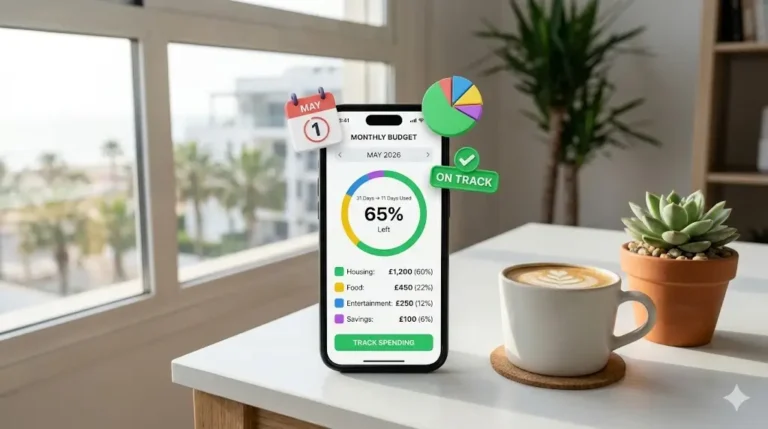
Starting a saving money budget for beginners isn’t about restriction or deprivation; it’s about establishing the profit margins of your life. Without a clear map of where your dollars are going, your dreams of work from home autonomy or building multiple revenue streams will remain just that—dreams. In this guide, we will break down the data-driven steps to reclaiming your cash flow so you can finally fund the digital income projects you’ve been planning.
What You’ll Need to Get Started
Building a budget is like setting up a new business. You need the right infrastructure to ensure your income potential isn’t wasted on hidden expenses.
- Tracking Tools: A free Google Sheets template, a dedicated budgeting app (like YNAB or EveryDollar), or even a simple physical ledger.
- Banking Infrastructure: A High-Yield Savings Account (HYSA) separate from your checking account to store your “seed capital.”
- Financial Records: Access to your last 3 months of bank statements and credit card bills.
- Initial Investment: $0. While some apps have monthly fees (~$10-$15), beginners can effectively start for free using manual spreadsheets.
- Skill Requirements: Basic addition and subtraction. If you can use a calculator, you can manage a budget.
Time Investment
Budgeting is a “front-loaded” activity. Once the system is built, it requires very little maintenance.
- Setup Time Required: 2 to 3 hours. This is the “deep dive” where you categorize past spending and set your initial targets.
- Daily/Weekly Commitment: 10 to 15 minutes per week. This is a quick check-in to log transactions and ensure you are staying within your limits.
- Timeline to Results: Most beginners see a significant psychological shift in 30 days and tangible cash buildup in 60-90 days with consistent effort.
- The “Work from Home” Comparison: Unlike a traditional job where you trade hours for a fixed salary, a budget acts as a multiplier for your existing income, creating “found money” that can be reinvested into monetization strategies.

Step-by-Step Implementation Guide
1. Audit Your Current Cash Flow
Before you can save, you must know where you are leaking. Review your statements and categorize every expense into “Needs” (Rent, Groceries), “Wants” (Dining out, Subscriptions), and “Obligations” (Debt).
- Pro Tip: Look for “ghost subscriptions”—those $9.99 charges for apps you haven’t used in months. Canceling these is the easiest way to increase your monthly profit margins.
2. Choose Your Budgeting Framework
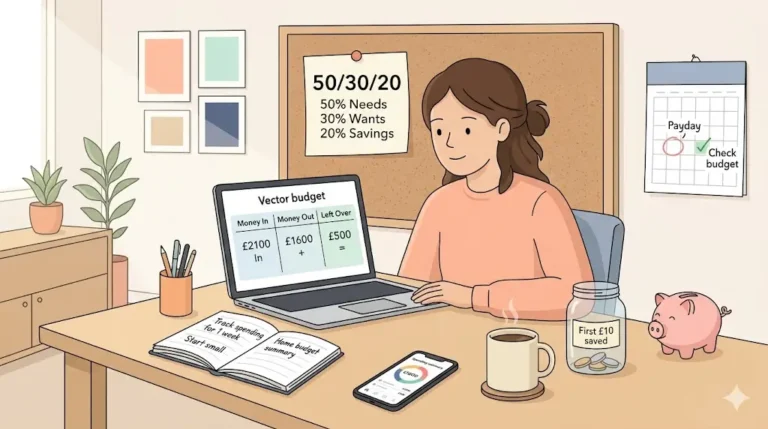
Don’t reinvent the wheel. Use a proven method like the 50/30/20 Rule:
- 50% for Needs.
- 30% for Wants.
- 20% for your saving money budget and debt repayment.
- Insider Trick: If your “Needs” are higher than 50%, don’t panic. Start where you are and aim to lower that percentage by 1% each month through negotiation and optimization.
3. Set “Sinking Funds” for Irregular Expenses
One of the biggest reasons budgets fail is the “surprise” expense (car repairs, annual insurance).
- Visual Description: Imagine your budget as a series of digital envelopes. Every month, put $50 into a “Car Repair” envelope. When the mechanic calls, you aren’t dipping into your online earnings; you’re just using the fund.
4. Automate Your Savings
Willpower is a finite resource. Set up an automatic transfer that moves your 20% savings into your HYSA the day after your paycheck hits. Treating your savings like a non-negotiable bill is the hallmark of those who reach financial freedom.

Income Potential & Savings Breakdown
While budgeting doesn’t “earn” you a salary in the traditional sense, it increases the capital you have available for monetization strategies. Here is a realistic breakdown of what a beginner can “earn” by optimizing their spending:
| Spending Category | Average Monthly Waste | 12-Month “Earnings” Potential |
|---|---|---|
| Unused Subscriptions | $45 | $540 |
| Impulse Dining/Takeout | $250 | $3,000 |
| Negotiable Bills (Phone/Net) | $60 | $720 |
| Total Potential Capital | $355 | $4,260 |
This $4,260 represents the “seed money” for a high-level side hustle. Imagine what that capital could do if invested into a Shopify store, a fleet of niche blogs, or high-dividend stocks.
Alternative Methods & Variations
Not every saving money budget looks the same. Depending on your goals, you might consider:
- Zero-Based Budgeting: Every single dollar is assigned a job before the month starts (Income – Expenses = $0). This is the most aggressive scaling strategy.
- The “Anti-Budget”: You simply take your 20% savings off the top and spend the rest however you want. This is excellent for those who hate tracking every coffee but still want to grow their revenue streams.
- Cash Envelope System: Using physical cash for “Want” categories. When the envelope is empty, the spending stops. This is the ultimate “beginner-friendly” way to break an impulse spending habit.
Best Practices & Optimization Tips
- The 48-Hour Rule: For any non-essential purchase over $50, wait 48 hours. Most impulse buys lose their “spark” after two days.
- Negotiate Your Fixed Costs: Call your internet and insurance providers once a year. Tell them you are considering switching. Often, they will find a “loyalty discount” that adds $20-$50 back to your profit margins.
- Use Cashback Portals: If you must buy something online, use Rakuten or Honey. It’s a passive way to subsidize your digital income efforts.
- Community Recommendations: Join “Frugal” subreddits or Facebook groups. The collective wisdom of thousands can help you find free alternatives to expensive hobbies.
Common Mistakes to Avoid
- Budget Burnout: Trying to cut 100% of your “Wants” in the first month. This is like a crash diet; it always leads to a binge. Allow yourself some “fun money” to stay sustainable.
- The “Income Trap”: Thinking that a higher salary will solve your problems. Statistics show that lifestyle creep (increasing spending as income rises) keeps even high-earners living paycheck to paycheck.
- Ignoring Small Leaks: A $5 daily latte is $1,825 a year. That is the cost of a high-end workstation for your work from home business.
- Lack of Transparency: If you have a partner, you must budget together. Financial secrets are the #1 killer of household budgets.
Long-Term Sustainability & Growth
The goal of a saving money budget isn’t just to have a pile of cash; it’s to create a launchpad for growth.
- Reinvestment Strategy: Once your emergency fund is full (3-6 months of expenses), pivot your savings into assets that generate passive income.
- Diversification: Use your “found money” to start a small side hustle. As that side hustle grows, keep your lifestyle the same and put 100% of the new online earnings into investments.
- Future-Proofing: Automation is your best friend. As your revenue streams multiply, your budgeting software should track all of them, ensuring your profit margins remain healthy even as your business scales.
Conclusion
Starting a saving money budget for beginners is the most significant step you can take toward financial freedom. It provides the clarity, discipline, and capital required to launch successful side hustles and build lasting passive income. Remember, wealth isn’t built by what you make; it’s built by what you keep.
Ready to start your journey? Drop your biggest budgeting challenge in the comments! Subscribe for weekly monetization strategies, share your progress in our community, and download our free starter budget guide below.
FAQs
How much money can I realistically save with a beginner budget?
Most beginners find an average of $200-$500 per month in “lost” money simply by auditing their subscriptions and dining habits. Over a year, this can easily reach $3,000-$6,000.
Do I need prior experience with math or finance?
No. Modern budgeting apps do all the math for you. You only need to be able to categorize your transactions and be honest with yourself about your spending habits.
What is the initial investment for a saving money budget?
The initial investment is zero. You can use free tools like Google Sheets or pen and paper. Premium apps are optional but can help automate the process for a small monthly fee.
How long until I see results?
You will see visual results in your bank account balance within the first 30 days. However, the true “habit-forming” results typically take about 90 days of consistent tracking.
Is this method still working in 2026?
Yes. Regardless of the economic climate, the principles of cash flow management remain the same. In fact, in high-inflation environments, a strict budget is even more critical for protecting your purchasing power.
What are the risks involved?
The only risk is “budget burnout.” If you make your budget too restrictive, you may give up entirely. The key is balance and allowing for small “wants” while prioritizing your long-term digital income goals.
Before you go, tap those stars!
Straightforward, no gimmicks, just solid banking advice
I clicked on this article expecting it to push some specific bank or financial product with referral links. I was pleasantly surprised. The advice was unbiased, focused on principles rather than promoting any particular institution, and gave me a clear framework to evaluate my own options. I appreciated that the article addressed the importance of FDIC insurance, automatic transfers, and goal-setting — things that seem obvious but that most people (including me) overlook. The writing was clear and concise, without the usual fluff or overly complex financial jargon. The only reason I’m giving four stars instead of five is that I would have liked even more detail on how to balance saving with paying down debt. Still, this was one of the most practical and trustworthy articles on saving I’ve read in a long time. Highly recommend.
Solid advice that cuts through the noise
I’ve been saving for years, but I kept wondering if my money was actually working as hard as it could be. There’s so much conflicting information out there — regular savings accounts, money market accounts, CDs, high-yield options — it gets confusing fast. This article did an excellent job comparing the options side by side, explaining the pros and cons of each, and helping me figure out which strategy made sense for my situation. I especially appreciated the section on the importance of emergency funds versus long-term savings, and the breakdown of how compound interest really adds up over time. I ended up moving my savings to a high-yield account and setting clearer goals. Practical, well-researched, and genuinely helpful.
Small changes, noticeable results
I’ll be honest — I clicked on this article expecting generic advice like “drive less” (thanks, captain obvious). But I was genuinely impressed. The article breaks down the actual science behind why certain habits affect fuel economy, with real numbers to back it up. I learned that my lead-foot acceleration and speeding were costing me way more than I realized. The section on vehicle maintenance was especially valuable — I didn’t know a dirty air filter could impact mileage that much. The tone was straightforward, no fluff, no upselling expensive products. Just solid, practical advice that actually works. My fuel expenses dropped by about 15% last month without me changing my overall driving needs.
Finally, practical advice that doesn’t require buying a new car
As someone who drives over 400 miles a week for work, gas expenses have been crushing my budget. I’ve read countless articles that basically just say “buy an electric vehicle” — which isn’t helpful when that’s not in my budget. This article was a game-changer. The tips were immediately actionable: combining trips, checking tire pressure (I didn’t realize how much that affects mileage!), and using gas price apps. I started implementing these suggestions last month, and I’ve already saved about $40. The writing was clear, well-organized, and respected that not everyone can just trade in their car. Highly recommend for anyone feeling the pain at the pump.
Perfect for renters who can’t install solar panels
As someone who rents an apartment, I often feel limited when it comes to making my home more energy-efficient. I can’t just install new appliances or add insulation to the walls. This article was a lifesaver because it focused on renter-friendly solutions—things like weatherstripping for doors, smart power strips, and optimizing how I use my existing appliances. The writing was straightforward and didn’t assume I owned a home. My only small critique is that I would have loved even more rent-specific examples, but overall, this was incredibly helpful. My electric bill dropped by about $15 last month!