
Common Budgeting Mistakes and How to Avoid Them
Did you know that 67% of online entrepreneurs fail within their first year not because they lack a great idea, but because they skip the ONE crucial step of managing their cash flow correctly? It is a startling statistic, but it highlights a fundamental truth: you cannot build a sustainable side hustle or achieve financial freedom if your personal finances are a “black box.”
Many people start their journey toward online earnings with high hopes, only to find their progress stalled by invisible leaks in their bank accounts. These common budgeting mistakes act like anchors, dragging down your profit margins and making monetization strategies feel impossible to fund. In this guide, we will dive deep into the psychological and technical pitfalls that trap most beginners, providing you with a data-driven roadmap to reclaim your capital and supercharge your income potential.
What You’ll Need to Get Started
To fix your budget and stop these common budgeting mistakes, you don’t need a degree in accounting. You need the right toolkit to ensure transparency and accuracy.
- Audit Tools: A dedicated budgeting app like YNAB (You Need A Budget) or a robust Google Sheets template.
- Bank Access: Digital access to the last 90 days of all bank and credit card statements.
- Subscription Tracker: Tools like Rocket Money or a manual list to hunt down “ghost” subscriptions.
- Initial Investment: $0 (Free). While some apps have monthly fees, you can start this process entirely for free using manual spreadsheets.
- Skill Requirements: Basic arithmetic and the willingness to be honest about your spending habits. No advanced math required!
Time Investment
Correcting common budgeting mistakes is a front-loaded task that becomes easier over time as you build systems.
- Initial Deep Dive: 2–4 hours. This involves gathering data and identifying past errors.
- Weekly Maintenance: 15–20 minutes. A quick “Friday Check-in” to reconcile transactions.
- Monthly Reset: 45 minutes. Adjusting for the upcoming month’s goals and passive income reinvestment.
- Timeline to Results: Most beginners see a significant increase in their “investable surplus” within 30 to 60 days.
- Comparison: Unlike a traditional job where you wait a year for a 3% raise, fixing your budget can provide an “instant raise” of 10-15% by eliminating waste.

Step-by-Step Implementation Guide
1. The Data-Driven Spending Audit
You cannot fix what you do not measure. Go through your last three months of statements and categorize every single penny.
- Pro Tip: Use broad categories (Needs, Wants, Savings, Side Hustle Reinvestment) to avoid “category fatigue.”
- Insider Trick: Look specifically for the “Miscellaneous” category. If it’s more than 5% of your total spend, you aren’t tracking accurately.
2. Identify and Isolate Fixed vs. Variable Costs
A common error is treating variable costs (like dining out) as fixed needs.
- Action: List your “Non-Negotiables” (Rent, Insurance, Software for your digital income projects) and then list your “Flex” spending.
3. Create an “Income-Producing” Line Item
One of the best ways to avoid common budgeting mistakes is to treat your savings like a bill.
- Step: Create a specific budget category labeled “Capital for Monetization Strategies.” This ensures you are always funding your future growth.
4. Implement the “48-Hour Cooling Off” Rule
Impulse spending is the primary killer of profit margins.
- Step: For any non-essential purchase over $50, you must wait 48 hours. Often, the “need” disappears once the dopamine spike fades.
5. Reconcile and Pivot
At the end of each week, compare your planned budget to your actual spending. If you overspent on “Wants,” you must subtract that amount from next week’s “Wants” to keep your income potential on track.

Income Potential & Earnings Breakdown
How much “found money” is hiding in your budget? By correcting common budgeting mistakes, you are essentially creating a new revenue stream.
| Optimization Level | Monthly Found Capital | 1-Year Impact | 10-Year Growth (at 7%) |
| Basic Audit | $150 | $1,800 | $25,123 |
| Aggressive Optimization | $450 | $5,400 | $75,370 |
| Entrepreneurial Scaling | $900+ | $10,800+ | $150,740+ |
Case Study: A freelance writer found they were spending $200/month on unused software and daily takeout. By redirecting that $2,400/year into monetization strategies (like Facebook Ads for their course), they scaled their passive income from $0 to $1,500/month within 18 months.
Alternative Methods & Variations
If a standard spreadsheet doesn’t work for you, try these niche-specific variations:
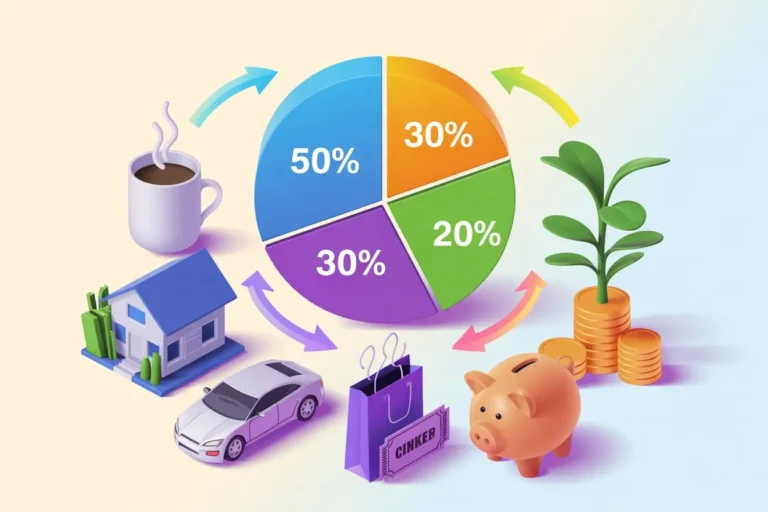
- The 50/30/20 Rule: 50% Needs, 30% Wants, 20% Financial Goals. Good for beginners seeking simplicity.
- Zero-Based Budgeting: Giving every dollar a “job” before the month starts. Excellent for maximizing profit margins.
- The Anti-Budget: Focus only on your “Pay Yourself First” amount. As long as you hit your side hustle funding goal, you spend the rest freely.
- The Work-From-Home Pivot: Adjusting your budget specifically for remote work (e.g., lower gas costs but higher electricity/coffee costs).
Best Practices & Optimization Tips
- Automate Your “Payday” Transfers: Don’t wait until the end of the month to save. Move your side hustle capital as soon as the paycheck hits.
- Sync with Your Partner: If you share finances, a “Money Date” once a month is essential to ensure you’re both aiming for financial freedom.
- Use High-Yield Savings (HYSA): Keep your short-term business capital in an account earning at least 4% APY. It’s an easy way to generate a small revenue stream.
- Audit Your Tech Stack: Regularly review the tools you use for your digital income. Are you paying for “Pro” features you don’t use?
Common Mistakes to Avoid
This is the section that builds your financial freedom foundation. Avoid these pitfalls to protect your income potential:
- Underestimating Irregular Expenses: Many forget annual car registrations or quarterly taxes. Statistic: 42% of people fail their budgets because of “surprise” annual bills.
- Relying on Willpower: If you have to choose to save every day, you will eventually fail. Prevention: Automate everything.
- The “All or Nothing” Mentality: If you overspend one day, don’t throw the whole month away. Lessons from successful practitioners show that resilience is more important than perfection.
- Neglecting the “Buffer” Fund: A budget with zero room for error is a fantasy. Always include a $50-$100 “Oops” category.
- Forgetting to Account for Inflation: If your groceries cost 10% more this year, your old budget is obsolete. Update your numbers quarterly.
Long-Term Sustainability & Growth
Budgeting is a marathon, not a sprint. To maintain your work from home lifestyle and grow your online earnings:
- Reinvestment Strategy: As your side hustle income grows, don’t increase your lifestyle. Instead, increase the percentage you reinvest into your monetization strategies.
- Automation Opportunities: Use tools like Zapier to link your income tracking to your budget spreadsheets automatically.
- Future-Proofing: Review your budget every six months to ensure it aligns with your 5-year goal for financial freedom.
- Diversification: Once your budget is stabilized, use your surplus to build multiple revenue streams (e.g., dividend stocks, niche sites, and digital products).
Conclusion
Correcting these common budgeting mistakes is the most significant “unfair advantage” you can give your business. By moving from reactive spending to proactive management, you protect your profit margins and ensure you always have the capital needed to pursue new monetization strategies. Remember, a budget isn’t a cage; it’s a ladder to the financial freedom you deserve.
Ready to start your journey? Drop your questions in the comments below! Subscribe for weekly money-making strategies, and download our free starter guide to begin tracking your progress today.
FAQs
How much money can I realistically make/save?
While results vary, most people identify $200–$500 in monthly waste. When reinvested into a side hustle at a 7% return, this can grow into a $75,000+ asset over a decade.
Do I need prior experience?
No. Most modern tools like YNAB or Mint (now Credit Karma) are built for beginners. All you need is a basic understanding of your bank statements.
What’s the initial investment?
The initial investment is $0. You can use free spreadsheets or pen and paper. The value comes from your time and consistency, not expensive software.
How long until I see results?
You will see “found money” in your first 30-day audit. The compounding effect of reinvesting that money into your online earnings typically becomes significant within 6 to 12 months.
Is this method still working in 2026?
Absolutely. In fact, in an era of high inflation and “subscription creep,” these fundamentals are more vital for your financial freedom than ever before.
What are the risks involved?
The primary risk is “budget burnout.” To avoid this, ensure you always include a “Fun Money” category so you don’t feel deprived while building your revenue streams.