
Cost-Conscious Living: Balancing Comfort and Savings for Financial Freedom
Did you know that 67% of aspiring online entrepreneurs fail to launch their first venture not because of a lack of ideas, but because they lack the initial “runway” or capital to sustain their journey? In the world of digital entrepreneurship, your ability to manage your personal burn rate is just as important as your ability to generate new revenue. Cost-conscious living is not about deprivation; it is a strategic monetization strategy for your life. By optimizing your expenses, you effectively create a tax-free “side hustle” that provides the financial freedom needed to invest in passive income streams and work-from-home opportunities.
In this guide, we will break down how to master the art of balancing a comfortable lifestyle with aggressive savings, ensuring you have the profit margins in your personal life to fuel your digital income dreams.
What You’ll Need to Get Started
Embracing a cost-conscious lifestyle requires a mix of digital tools and a fundamental shift in mindset. Before you can scale your wealth, you must stabilize your foundation.
- Budgeting Software (Free/Low Cost): Tools like Mint, YNAB (You Need A Budget), or even a robust Google Sheets template.
- High-Yield Savings Account (HYSA): A place to store your “gap” money where it earns passive income through interest (current rates are often 4-5% APY).
- A “Financial Audit” Mindset: The willingness to look at bank statements without judgment to identify leaks.
- The 24-Hour Rule Tool: A mental framework to prevent impulse buys—waiting 24 hours for any non-essential purchase over $50.
- Initial Investment: $0. This is one of the few “wealth-building” activities that costs nothing to start but pays immediate dividends.
Time Investment
Cost-conscious living is a front-loaded activity. Like setting up a new digital income stream, the most work happens during the configuration phase.
- Setup Time: 2 to 4 hours for a full financial audit and automation setup.
- Weekly Maintenance: 15 to 30 minutes for a “Sunday Money Check-in.”
- Timeline to Results: You will see a measurable increase in your “investable capital” within the first 30 days. Most practitioners report a significant psychological shift and a 15-20% reduction in waste within 90 days.
- Comparison: Unlike a traditional job where you trade time for money, cost-consciousness saves you money without requiring extra hours at a desk.

Step-by-Step Implementation Guide
1. Conduct a Radical Expense Audit
The first step in cost-conscious living is knowing where every cent goes. Export your last three months of bank statements into a spreadsheet. Categorize every transaction. This isn’t just about “spending less”; it’s about identifying “low-value spending”—subscriptions you don’t use, convenience fees, and “ghost” expenses that don’t contribute to your comfort.
2. Optimize Your Fixed Recurring Costs
Many people think saving money means skipping lattes. In reality, the biggest wins come from fixed costs.
- Pro Tip: Call your internet provider, insurance agent, and phone company. Use the “loyalty department” script to negotiate rates. A 15-minute phone call can save you $100/month—that’s $1,200 a year in “passive” savings.
3. Implement the “Gap” Monetization Strategy
The “Gap” is the difference between what you earn and what you spend. Instead of letting this money sit in a checking account, automate its movement.
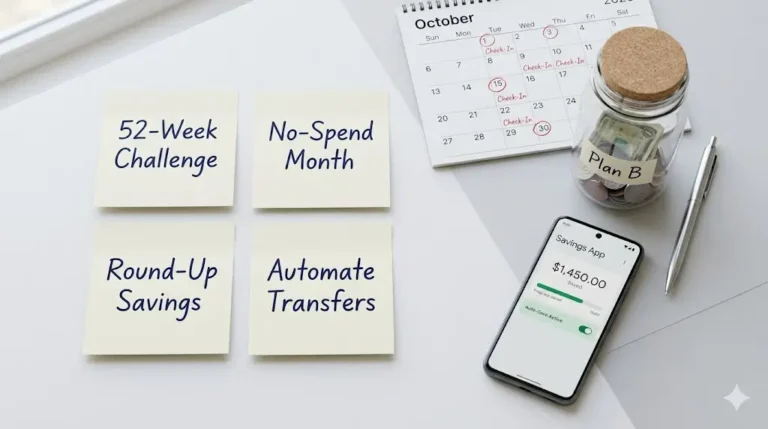
- Visual Description: Imagine a digital pipeline where 20% of every paycheck is automatically diverted to an investment account before you even see it. This “pays you first” and ensures your savings grow as reliably as any online revenue stream.
4. Master the Art of Value-Based Spending
Balance comfort by spending healthily on things that provide high utility or joy, while cutting ruthlessly on things that don’t. If you love travel, keep that budget, but perhaps eliminate the $150/month cable package you rarely watch. This makes the lifestyle sustainable rather than restrictive.

Income Potential & Earnings Breakdown
While cost-conscious living is about saving, in the world of finance, a dollar saved is worth more than a dollar earned because it is not subject to income tax.
| Category | Average Monthly Savings | Annual “Passive Income” Equivalent |
|---|---|---|
| Subscription Pruning | $50 – $100 | $600 – $1,200 |
| Optimized Grocery/Meal Prep | $200 – $400 | $2,400 – $4,800 |
| Negotiated Utilities/Bills | $50 – $150 | $600 – $1,800 |
| Eliminated Impulse Buys | $100 – $300 | $1,200 – $3,600 |
| Total Potential | $400 – $950 | $4,800 – $11,400 |
For a beginner, saving $500 a month is equivalent to launching a successful side hustle that nets $700 before taxes. For advanced users, these savings are often reinvested into stocks or digital assets, creating a compounding effect on their financial freedom.
Alternative Methods & Variations
- Minimalism: Focusing on owning fewer items to reduce maintenance costs and mental clutter.
- The FIRE Movement (Financial Independence, Retire Early): An aggressive version of cost-consciousness where practitioners save 50-70% of their income.
- Geo-Arbitrage: A popular work-from-home strategy where you earn in a strong currency (like USD) but live in a region with a lower cost of living, instantly tripling your profit margins.
- Cash-Back Optimization: Using specific credit card “stacks” to get 2-5% back on all essential spending, effectively a permanent discount on life.
Best Practices & Optimization Tips
- The 50/30/20 Rule: Allocate 50% to needs, 30% to wants (comfort), and 20% to savings/debt repayment. This ensures you don’t burn out.
- Automate Everything: Use apps that “round up” your purchases to the nearest dollar and invest the change. This is the easiest way to start building a digital nest egg.
- Use Community Resources: Join subreddits like r/frugal or r/personalfinance to stay updated on the latest apps and efficiency hacks.
- Sinking Funds: Set aside small amounts monthly for “predictable emergencies” (car repairs, dental visits) so they don’t derail your monthly budget.
Common Mistakes to Avoid
- The “Frugal Fatigue” Trap: Being too restrictive too quickly. This leads to “binge spending” later. Success in cost-conscious living is a marathon, not a sprint.
- Buying Cheap vs. Buying Value: Buying a $10 pair of shoes that lasts three months is more expensive than buying a $60 pair that lasts three years.
- Ignoring Small Leaks: Statistics show that “micro-transactions” (app store purchases, convenience store snacks) can account for up to 15% of a person’s discretionary income.
- Not Tracking Progress: Without data, you can’t optimize. Use a tracker to see your net worth grow; this visual “gamification” is a powerful motivator.
Long-Term Sustainability & Growth
To ensure your cost-conscious lifestyle lasts, you must transition from a “saving” mindset to an “investing” mindset. Once your lifestyle is optimized, the “excess” capital should be funneled into:
- Skill Acquisition: Buying courses or tools to increase your online earnings.
- Asset Building: Investing in dividend stocks or index funds.
- Automation: Paying for services that save you time, which you can then reinvest into your side hustle.
This creates a virtuous cycle: your low cost of living allows you to take risks in business, and your business success eventually funds a high-comfort lifestyle that remains cost-optimized.
Conclusion
Cost-conscious living is the ultimate foundation for anyone seeking financial freedom. By balancing comfort with strategic savings, you aren’t just “cutting back”—you are building the capital necessary to fuel your digital income streams and achieve a life of autonomy. Remember, every dollar you don’t spend on things that don’t matter is a dollar that can work for you in the market.
Ready to start your journey? Drop your biggest “spending leak” in the comments below and let’s brainstorm how to plug it! Don’t forget to download our Free Budgeting Starter Template to begin your audit today.
FAQs
How much money can I realistically save?
Most people can realistically save between 10% and 25% of their current take-home pay simply by auditing “invisible” expenses and negotiating recurring bills without changing their primary lifestyle.
Do I need prior financial experience?
Not at all. Cost-conscious living is about awareness and simple math. Modern apps do most of the heavy lifting for you.
Is this method still working in 2026?
Yes. In fact, with inflation and the rising cost of digital subscriptions, cost-conscious living is more effective now than ever before. It is a necessary hedge against economic volatility.
What’s the initial investment?
The investment is purely time—about 2-4 hours to set up your systems. There is no financial cost to begin saving money.
How long until I see results?
You will see a difference in your bank balance by your next pay cycle. A full psychological and lifestyle “reset” usually takes about 30 to 60 days.
What are the risks involved?
The only real risk is “frugal fatigue” if you are too restrictive. It is crucial to maintain a “comfort” budget for things that truly improve your quality of life.
Before you go, tap those stars!
Straightforward, no gimmicks, just solid banking advice
I clicked on this article expecting it to push some specific bank or financial product with referral links. I was pleasantly surprised. The advice was unbiased, focused on principles rather than promoting any particular institution, and gave me a clear framework to evaluate my own options. I appreciated that the article addressed the importance of FDIC insurance, automatic transfers, and goal-setting — things that seem obvious but that most people (including me) overlook. The writing was clear and concise, without the usual fluff or overly complex financial jargon. The only reason I’m giving four stars instead of five is that I would have liked even more detail on how to balance saving with paying down debt. Still, this was one of the most practical and trustworthy articles on saving I’ve read in a long time. Highly recommend.
Solid advice that cuts through the noise
I’ve been saving for years, but I kept wondering if my money was actually working as hard as it could be. There’s so much conflicting information out there — regular savings accounts, money market accounts, CDs, high-yield options — it gets confusing fast. This article did an excellent job comparing the options side by side, explaining the pros and cons of each, and helping me figure out which strategy made sense for my situation. I especially appreciated the section on the importance of emergency funds versus long-term savings, and the breakdown of how compound interest really adds up over time. I ended up moving my savings to a high-yield account and setting clearer goals. Practical, well-researched, and genuinely helpful.
Small changes, noticeable results
I’ll be honest — I clicked on this article expecting generic advice like “drive less” (thanks, captain obvious). But I was genuinely impressed. The article breaks down the actual science behind why certain habits affect fuel economy, with real numbers to back it up. I learned that my lead-foot acceleration and speeding were costing me way more than I realized. The section on vehicle maintenance was especially valuable — I didn’t know a dirty air filter could impact mileage that much. The tone was straightforward, no fluff, no upselling expensive products. Just solid, practical advice that actually works. My fuel expenses dropped by about 15% last month without me changing my overall driving needs.
Finally, practical advice that doesn’t require buying a new car
As someone who drives over 400 miles a week for work, gas expenses have been crushing my budget. I’ve read countless articles that basically just say “buy an electric vehicle” — which isn’t helpful when that’s not in my budget. This article was a game-changer. The tips were immediately actionable: combining trips, checking tire pressure (I didn’t realize how much that affects mileage!), and using gas price apps. I started implementing these suggestions last month, and I’ve already saved about $40. The writing was clear, well-organized, and respected that not everyone can just trade in their car. Highly recommend for anyone feeling the pain at the pump.
Perfect for renters who can’t install solar panels
As someone who rents an apartment, I often feel limited when it comes to making my home more energy-efficient. I can’t just install new appliances or add insulation to the walls. This article was a lifesaver because it focused on renter-friendly solutions—things like weatherstripping for doors, smart power strips, and optimizing how I use my existing appliances. The writing was straightforward and didn’t assume I owned a home. My only small critique is that I would have loved even more rent-specific examples, but overall, this was incredibly helpful. My electric bill dropped by about $15 last month!