
How to Cut Daily Expenses Without Feeling Restricted
Did you know that 82% of aspiring entrepreneurs fail to launch their dream business simply because they believe they lack the initial capital to get started? In reality, the funding they need is already sitting in their bank accounts—it’s just bleeding out through unnoticed, habitual spending. If your goal is to achieve absolute financial freedom, learning how to cut daily expenses is just as critical as finding new ways to generate income.
The biggest myth in personal finance is that saving money requires painful sacrifice and complete deprivation. The truth is, when you cut daily expenses effectively, you don’t feel restricted at all. Instead, you optimize your cash flow using value-based spending. By treating your personal finances like a business, you instantly increase your household profit margins. Every dollar you save is tax-free capital that can be directly routed into your online earnings ventures, funding your path to true independence. Let’s explore how to trim the fat without losing the flavor of your daily life.
2. What You’ll Need to Get Started
You don’t need to be a financial guru or a master accountant to begin optimizing your daily cash flow. Treating your expense audit like a legitimate side hustle requires just a few basic, beginner-friendly tools.
- A Digital Tracking Tool: A free spreadsheet (Google Sheets) or a budgeting app (like YNAB, EveryDollar, or Rocket Money) to monitor your outgoing cash.
- Your Last 30 Days of Transactions: Access to your bank and credit card statements to establish your current financial baseline.
- A “Value-Based” Mindset: A mental framework to separate spending that brings you genuine joy from spending born out of convenience or habit.
- Initial Investment: $0. The tools are completely free, and the process only requires your focus.
- Skill Requirements: Basic organization, simple math, and the willingness to honestly evaluate your daily habits.
3. The Time Investment
One of the greatest advantages of optimizing your daily spending is the immediate return on your time. Building a successful work from home business can take months, but plugging financial leaks pays you today.
- Setup Time Required: 1 to 2 hours for an initial review of your bank statements and setting up your tracking spreadsheet.
- Daily/Weekly Time Commitment: 5 to 10 minutes a day to log expenses and check your balances.
- Timeline to First Earnings: Immediate. The moment you skip an impulse purchase, you have successfully retained capital.
- Comparative ROI: Most beginners see results in 60-90 days with consistent effort in traditional monetization strategies. Conversely, deciding to optimize your daily spend yields a 100% return on your time investment within 24 hours.

4. Step-by-Step Implementation Guide to Cut Daily Expenses
Follow these actionable, sequential steps to reduce your financial outflow without feeling like you are punishing yourself.
Step 1: Conduct a “Joy Audit” of Your Spending
Print out your last month’s bank statement. Next to every transaction, draw either a smiley face (it brought you genuine joy or value) or a neutral/sad face (it was an impulse buy, a convenience fee, or something you barely remember).
- Pro Tip: To effectively cut daily expenses, never cut the smiley faces. Cut the neutral ones. If your daily $5 artisan coffee brings you massive joy, keep it! But cut the $15 takeout lunch you bought just because you forgot to meal prep.
Step 2: Implement the 48-Hour Rule for Non-Essentials
Impulse buying is the enemy of financial freedom. If you see something you want to buy that isn’t groceries or a basic utility, write it down on a list and force yourself to wait 48 hours.
- Insider Trick: In 90% of cases, the dopamine rush of “wanting” the item fades within two days, and you will comfortably decide not to buy it—saving you money with zero feelings of restriction.
Step 3: Swap Convenience for Intentionality
You can drastically cut costs by doing things yourself rather than paying for convenience. Pre-chop your own vegetables instead of buying them pre-cut. Brew your own iced tea. Wash your own car.
- Actionable Step: Calculate the “convenience tax” of an item. If a pre-made meal costs $12 and making it costs $3, ask yourself if saving 15 minutes of cooking is worth $9 of your future business capital.
Step 4: Automate the Difference
If you successfully cut $10 out of your daily spending, do not leave that money in your checking account. It will inevitably be spent on something else.
- Crucial Action: Set up an automatic daily or weekly transfer to move your estimated savings directly into an investment or business account.

5. Income Potential & Earnings Breakdown
How much capital can you realistically raise by trimming minor daily habits? Let’s look at the hidden income potential inside your current lifestyle:
| Daily Expense Cut | Monthly “Found” Capital | Annual “Earnings” Projection | Primary Tactics Used |
|---|---|---|---|
| $5 / Day | $150 | $1,800 | Packing lunch 2x a week, making coffee at home 3x a week. |
| **$10 / Day** | $300 | $3,600 | Canceling unused subscriptions, cutting out daily convenience snacks/drinks. |
| **$20+ / Day** | $600+ | $7,200+ | Meal prepping all lunches, utilizing cashback apps, adopting mindful shopping. |
Disclaimer: Savings vary based on individual starting budgets and geographic living costs. However, every dollar saved acts as a 100% tax-free profit margin increase.
6. Alternative Methods & Variations
If tracking every single penny causes you anxiety, consider these alternative approaches to achieve similar results:
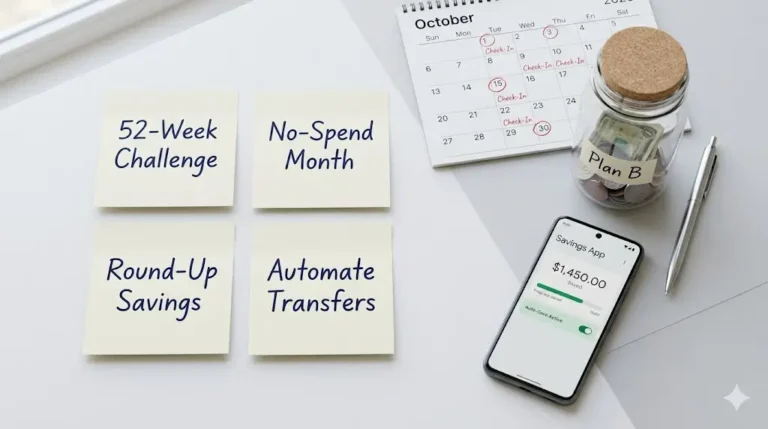
- The Cash Envelope System: At the beginning of the week, pull out your “fun money” in physical cash. When the cash is gone, you stop spending. It forces you to prioritize daily expenses without needing a spreadsheet.
- The “No-Spend” Challenge: Pick two days a week (e.g., Tuesdays and Thursdays) where you commit to spending exactly $0.00. You eat what’s in the pantry and find free entertainment.
- The 50/30/20 Rule: Automate your paycheck so 50% goes to needs, 20% to savings/business capital, and 30% to wants. As long as your daily expenses fit into that 30% bucket, you never have to feel guilty about spending it.
7. Best Practices & Optimization Tips
To transform this habit from a temporary diet into a long-term strategy for generating digital income, utilize these optimization hacks:
- Use Cashback Tools: If you must spend money daily, never pay full price. Install browser extensions like Rakuten or Honey, and use cashback credit cards (if you pay them off monthly) to reclaim 2% to 5% on everyday purchases.
- Gamify Your Savings: Treat your daily savings like a game. Can you beat last week’s grocery total by $15? Reward yourself with a small, free treat (like a movie night at home) when you hit your weekly savings goal.
- The “Treat Yo Self” Sinking Fund: To avoid feeling restricted, deliberately build a small “guilt-free” fund into your budget. Allocate $20 a week specifically for spontaneous, fun purchases.
8. Common Mistakes to Avoid
When attempting to restructure spending habits, many beginners fall into psychological traps. Avoid these costly pitfalls:
- The “Cold Turkey” Approach: Trying to cut all fun expenses at once is like going on a crash diet; you will eventually binge spend. Gradually reduce your daily expenses so your lifestyle adapts naturally.
- Cutting the “Joy” Items: As mentioned in Step 1, do not cut the small things that bring you immense happiness just because they are considered “frivolous” by financial gurus. Cut the things you don’t care about to fund the things you do.
- Forgetting to Reinvest: If you successfully cut $300 a month from your daily expenses but let it sit in a checking account, you lose it to inflation. You must proactively move it.
9. Long-Term Sustainability & Growth
Stopping the financial bleed of daily convenience spending is only step one. The true magic happens when you route those reclaimed funds toward establishing multiple revenue streams.
To maintain and grow this “found” money, view it as your business’s angel investment. Take the $300 a month you saved from cutting daily expenses and use it to buy web hosting for a blog, purchase inventory for an e-commerce store, or invest in a high-yield dividend ETF. By reinvesting your savings into scalable assets, you transition from simply “saving money” to actively building compounding passive income. Your optimized daily habits become the engine that drives your future wealth.
10. Conclusion
Learning how to cut daily expenses without feeling restricted is one of the most empowering financial skills you can develop. By auditing your spending for genuine joy, implementing the 48-hour rule, and eliminating convenience fees, you effortlessly generate the seed capital needed to fund your online business dreams.
Ready to start your journey and take back control of your cash flow? Drop a comment below telling us which daily expense you plan to optimize first! Don’t forget to subscribe for weekly money-making strategies, and share your progress in our community. Download our free side-hustle starter guide to learn how to invest your newfound savings today!
11. FAQs
How much money can I realistically make/save by cutting daily expenses?
Most individuals who conduct a mindful audit of their daily spending find between $150 and $300 a month in “leaked” capital. Annually, this translates to $1,800 to $3,600 in tax-free savings.
Do I need prior experience with budgeting to do this?
Not at all. The value-based spending method is highly beginner-friendly. It relies on your personal feelings toward your purchases rather than complex mathematical formulas.
What’s the initial investment to start tracking my expenses?
Zero dollars. You can use free tools like Google Sheets, free budgeting apps on your smartphone, or even just a pen and paper.
How long until I see results from cutting expenses?
You will see immediate results. The very first day you choose to swap a $10 convenience purchase for a free or low-cost alternative, your profit margin increases.
Is this method still effective in the current economy?
Yes, it is more important than ever. With inflation affecting the cost of goods, optimizing your daily spend is one of the few guaranteed ways to protect your purchasing power and fund your side hustles.
What are the risks involved with extreme budgeting?
The main risk is “budget burnout” or feeling so restricted that you eventually abandon the budget and binge-spend. This is why it is crucial to focus on cutting non-essential convenience items rather than things that bring you genuine joy.
Before you go, tap those stars!
Straightforward, no gimmicks, just solid banking advice
I clicked on this article expecting it to push some specific bank or financial product with referral links. I was pleasantly surprised. The advice was unbiased, focused on principles rather than promoting any particular institution, and gave me a clear framework to evaluate my own options. I appreciated that the article addressed the importance of FDIC insurance, automatic transfers, and goal-setting — things that seem obvious but that most people (including me) overlook. The writing was clear and concise, without the usual fluff or overly complex financial jargon. The only reason I’m giving four stars instead of five is that I would have liked even more detail on how to balance saving with paying down debt. Still, this was one of the most practical and trustworthy articles on saving I’ve read in a long time. Highly recommend.
Solid advice that cuts through the noise
I’ve been saving for years, but I kept wondering if my money was actually working as hard as it could be. There’s so much conflicting information out there — regular savings accounts, money market accounts, CDs, high-yield options — it gets confusing fast. This article did an excellent job comparing the options side by side, explaining the pros and cons of each, and helping me figure out which strategy made sense for my situation. I especially appreciated the section on the importance of emergency funds versus long-term savings, and the breakdown of how compound interest really adds up over time. I ended up moving my savings to a high-yield account and setting clearer goals. Practical, well-researched, and genuinely helpful.
Small changes, noticeable results
I’ll be honest — I clicked on this article expecting generic advice like “drive less” (thanks, captain obvious). But I was genuinely impressed. The article breaks down the actual science behind why certain habits affect fuel economy, with real numbers to back it up. I learned that my lead-foot acceleration and speeding were costing me way more than I realized. The section on vehicle maintenance was especially valuable — I didn’t know a dirty air filter could impact mileage that much. The tone was straightforward, no fluff, no upselling expensive products. Just solid, practical advice that actually works. My fuel expenses dropped by about 15% last month without me changing my overall driving needs.
Finally, practical advice that doesn’t require buying a new car
As someone who drives over 400 miles a week for work, gas expenses have been crushing my budget. I’ve read countless articles that basically just say “buy an electric vehicle” — which isn’t helpful when that’s not in my budget. This article was a game-changer. The tips were immediately actionable: combining trips, checking tire pressure (I didn’t realize how much that affects mileage!), and using gas price apps. I started implementing these suggestions last month, and I’ve already saved about $40. The writing was clear, well-organized, and respected that not everyone can just trade in their car. Highly recommend for anyone feeling the pain at the pump.
Perfect for renters who can’t install solar panels
As someone who rents an apartment, I often feel limited when it comes to making my home more energy-efficient. I can’t just install new appliances or add insulation to the walls. This article was a lifesaver because it focused on renter-friendly solutions—things like weatherstripping for doors, smart power strips, and optimizing how I use my existing appliances. The writing was straightforward and didn’t assume I owned a home. My only small critique is that I would have loved even more rent-specific examples, but overall, this was incredibly helpful. My electric bill dropped by about $15 last month!