
Zero-Based Budgeting: A Beginner’s Guide
Did you know that an estimated 78% of people trying to build passive income fail simply because they mismanage their existing cash flow? Many aspiring entrepreneurs spend countless hours researching the perfect side hustle, only to realize they lack the initial capital to pay for hosting, marketing, or inventory. They assume they need to earn more, but the reality is they just need to optimize what they already have.
If you are serious about achieving true financial freedom, mastering Zero-Based Budgeting is the non-negotiable first step. Unlike traditional budgeting where you loosely track your spending, zero-based budgeting forces you to give every single dollar a specific “job” before the month even begins. By making your income minus your expenses equal exactly zero, you eliminate financial leaks and uncover hidden seed money.
In this comprehensive Zero-Based Budgeting beginner’s guide, we will show you exactly how to take control of your finances, widen your personal profit margins, and redirect your cash flow to fund your future online earnings.

What You’ll Need to Get Started
Taking absolute control of your finances doesn’t require expensive accounting software or a degree in finance. To build a budget that funds your digital income, you only need a few basic tools:
- Financial Tracking Platform: A free digital spreadsheet (Google Sheets or Excel) or a dedicated budgeting app like YNAB (You Need A Budget) or EveryDollar.
- Initial Investment: $0. The primary goal of zero-based budgeting is to optimize your existing capital, not spend new money.
- Required Documents: Digital access to your last 30 to 60 days of bank statements and pay stubs.
- Skill Requirements: Basic addition and subtraction. If you can use a calculator, you can execute this strategy.
- A Revenue Mindset: Treat your personal bank account like a startup business, focusing on maximizing capital for your future revenue streams.
Time Investment
Unlike waiting 6 to 12 months for a new blog to rank or a YouTube channel to hit monetization requirements, optimizing your personal finances yields a remarkably fast return on your time.
- Setup Time Required: 1 to 2 hours for the initial setup to calculate your baseline income and list your expenses.
- Daily/Weekly Time Commitment: 10 to 15 minutes a week to log transactions and adjust your categories.
- Timeline to First “Earnings”: Most beginners see an immediate cash-flow surplus (often $100-$300) within the first 30 to 60 days of consistent zero-based tracking.
- The Advantage: Compared to traditional income methods where you trade hours for a fixed paycheck, this method gives you an instant, tax-free “pay raise” that you can immediately inject into a work from home business.
Step-by-Step Implementation Guide
1. Calculate Your Total Monthly Income
Before you can assign every dollar a job, you must know exactly how many dollars you have. List all sources of income for the upcoming month.
- Pro Tip: Use your net income (what actually hits your bank account after taxes). If you have an irregular income from a side hustle or freelancing, base your budget on your lowest earning month to play it safe.
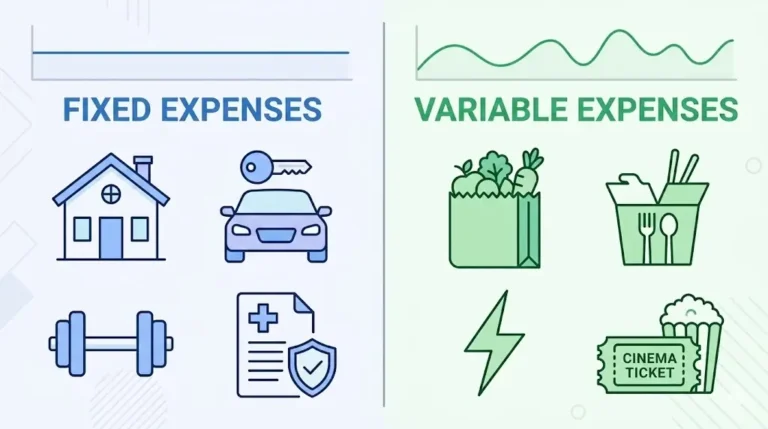
2. List Your Fixed Overhead Expenses
These are the predictable bills that must be paid to keep your life running.
- Examples: Rent/mortgage, utilities, insurance, internet, and debt minimum payments.
- Insider Trick: Audit this list quarterly. Can you negotiate your car insurance or downgrade your internet package? Lowering fixed overhead instantly boosts your available capital.
3. Estimate Your Variable Expenses
Variable expenses fluctuate based on your lifestyle and choices. This is where most aspiring entrepreneurs bleed the capital they need for monetization strategies.
- Examples: Groceries, dining out, gas, entertainment, and personal care.
- Action Step: Look at last month’s bank statements to estimate these costs realistically. Do not guess; use hard data.
4. Assign Every Dollar a Job (The Zero-Based Rule)
This is the core of Zero-Based Budgeting. Subtract your fixed and variable expenses from your total income. If you make $4,000 and your expenses total $3,200, you have $800 left over. Do not leave this $800 sitting idly in your checking account. Give it a job: $300 to an emergency fund, $200 to a retirement account, and $300 to fund your new online business. Income minus expenses (including savings/investments) must equal exactly zero.
5. Track and Reconcile Weekly
A zero-based budget is a living document. Schedule a 15-minute check-in every Sunday. If you overspent on groceries by $50, you must subtract $50 from another category (like entertainment) so your budget still balances to zero.

Income Potential & Earnings Breakdown
Why is a blog about making money online talking about budgeting? Because every dollar you stop wasting is a dollar you can invest in high-yield assets. Here is a realistic projection of how uncovering “lost” money through zero-based budgeting compounds:
- Beginner Level (Saving $200/month): By simply giving every dollar a job and cutting waste, you free up $2,400 a year. If invested in an online venture or index fund yielding an average 7% return, this grows to over $14,000 in 5 years.
- Intermediate Level (Saving $500/month): Frees up $6,000 a year. Over 5 years at 7%, this seed capital grows to nearly $35,000—providing massive leverage to scale a digital business.
- Advanced Level (Saving $1,000/month): Frees up $12,000 a year. In 5 years, this becomes over $71,000.
Disclaimer: Side hustle revenue and stock market returns are not guaranteed and will vary based on effort, strategy, and economic factors.
Alternative Methods & Variations
If strict zero-based budgeting feels too tedious after a few months, you can pivot to these alternative methods while maintaining the core principles:
- The Cash Envelope System: A physical variation of zero-based budgeting. You withdraw your variable spending limits in cash and place them in labeled envelopes. When the cash is gone, spending stops.
- The 50/30/20 Rule: A more relaxed approach where 50% of your income goes to Needs, 30% to Wants, and 20% to Savings/Investing.
- Reverse Budgeting (Pay Yourself First): The moment you get paid, immediately transfer your investment, savings, and side-hustle capital into a separate account. Then, spend whatever is left in your checking account naturally.
Best Practices & Optimization Tips
To ensure your zero-based budget actually helps you build financial freedom, implement these advanced optimization hacks:
- Build a “Buffer” Category: Always create a budget line item called “Miscellaneous” or “Buffer” and assign $50-$100 to it. This absorbs minor, unexpected expenses without ruining your zero-balance math.
- Automate Your Investments: Treat your vand side-hustle funding like a fixed bill. Set up auto-transfers so the money leaves your account before you can be tempted to spend it.
- Use Cash-Back Tools: While spending within your budget, use tools like Rakuten or cash-back credit cards (paid off in full monthly) to passively lower your expenses and increase your profit margins.
Common Mistakes to Avoid
Many beginners start zero-based budgeting with high energy but quit by month two. Avoid these major pitfalls:
- Being Too Restrictive: If you cut your “fun money” to zero, you will rebel and binge-spend. Always budget a reasonable amount for guilt-free entertainment.
- Forgetting Irregular Expenses: Annual software renewals, holiday gifts, and car registrations will destroy a monthly budget. Divide these annual costs by 12 and fund them monthly via “sinking funds.”
- Failing to Adjust: The biggest mistake is assuming your budget is set in stone. If you overspend in one area, simply adjust the math in another. Perfection is the enemy of progress.
Long-Term Sustainability & Growth
The ultimate goal of zero-based budgeting isn’t to live on rice and beans forever; it is to build a financial foundation robust enough to support serious entrepreneurial risks.
- Beware of Lifestyle Creep: As your side hustle takes off and your income potential scales, resist the urge to immediately upgrade your lifestyle. Keep your personal expenses locked in while your business revenue grows.
- Reinvest Your Profits: Treat your personal finances like a corporation. Reinvest your monthly surplus into scalable assets—whether that is hiring a virtual assistant, paying for ads, or buying digital real estate.
- Transition to Wealth Management: Once your online earnings replace your 9-to-5, your zero-based budget will transition from managing scarcity to managing wealth allocation and tax optimization.
Conclusion
Mastering zero-based budgeting is the ultimate cheat code for anyone looking to make money online. By identifying your financial leaks and intentionally directing every dollar, you transform your existing paycheck into the seed capital for your future passive income empire. You don’t always need to earn six figures to start a successful business; you just need to expertly manage the money you already have.
Ready to start your journey? What is the first expense you are going to assign a new “job” to this week? Drop your answers in the comments! Don’t forget to subscribe for weekly monetization strategies, and share your progress in our community!
FAQs
How much money can I realistically make or save using this method?
By actively assigning every dollar a job and identifying financial leaks, most beginners realistically free up $150 to $300 a month in “lost” capital, which can then be reinvested into digital income streams.
Do I need prior experience to start a zero-based budget?
Absolutely not. You do not need an accounting degree or prior experience. If you can use a basic calculator and are willing to honestly review your bank statements, you have everything you need to succeed.
What’s the initial investment?
The initial financial investment is $0. There are countless free templates, apps, and spreadsheets available online. The only investment required is 1 to 2 hours of your time for the initial setup.
How long until I see results?
You will gain immediate mental clarity on day one. Tangible financial results—like a surplus of cash in your checking account or the ability to fund a new side hustle—typically take 30 to 60 days of consistent tracking.
Is zero-based budgeting still effective in 2026?
Yes. Regardless of economic inflation, recessions, or the latest online business trends, spending less than you earn and intentionally directing your capital is the timeless, unbreakable law of building wealth.
What are the risks involved?
There is zero financial risk in budgeting your expenses. The only risk is psychological “budget burnout” caused by setting overly restrictive spending limits. Always ensure your budget allows for occasional, guilt-free enjoyment.
Before you go, tap those stars!
Straightforward, no gimmicks, just solid banking advice
I clicked on this article expecting it to push some specific bank or financial product with referral links. I was pleasantly surprised. The advice was unbiased, focused on principles rather than promoting any particular institution, and gave me a clear framework to evaluate my own options. I appreciated that the article addressed the importance of FDIC insurance, automatic transfers, and goal-setting — things that seem obvious but that most people (including me) overlook. The writing was clear and concise, without the usual fluff or overly complex financial jargon. The only reason I’m giving four stars instead of five is that I would have liked even more detail on how to balance saving with paying down debt. Still, this was one of the most practical and trustworthy articles on saving I’ve read in a long time. Highly recommend.
Solid advice that cuts through the noise
I’ve been saving for years, but I kept wondering if my money was actually working as hard as it could be. There’s so much conflicting information out there — regular savings accounts, money market accounts, CDs, high-yield options — it gets confusing fast. This article did an excellent job comparing the options side by side, explaining the pros and cons of each, and helping me figure out which strategy made sense for my situation. I especially appreciated the section on the importance of emergency funds versus long-term savings, and the breakdown of how compound interest really adds up over time. I ended up moving my savings to a high-yield account and setting clearer goals. Practical, well-researched, and genuinely helpful.
Small changes, noticeable results
I’ll be honest — I clicked on this article expecting generic advice like “drive less” (thanks, captain obvious). But I was genuinely impressed. The article breaks down the actual science behind why certain habits affect fuel economy, with real numbers to back it up. I learned that my lead-foot acceleration and speeding were costing me way more than I realized. The section on vehicle maintenance was especially valuable — I didn’t know a dirty air filter could impact mileage that much. The tone was straightforward, no fluff, no upselling expensive products. Just solid, practical advice that actually works. My fuel expenses dropped by about 15% last month without me changing my overall driving needs.
Finally, practical advice that doesn’t require buying a new car
As someone who drives over 400 miles a week for work, gas expenses have been crushing my budget. I’ve read countless articles that basically just say “buy an electric vehicle” — which isn’t helpful when that’s not in my budget. This article was a game-changer. The tips were immediately actionable: combining trips, checking tire pressure (I didn’t realize how much that affects mileage!), and using gas price apps. I started implementing these suggestions last month, and I’ve already saved about $40. The writing was clear, well-organized, and respected that not everyone can just trade in their car. Highly recommend for anyone feeling the pain at the pump.
Perfect for renters who can’t install solar panels
As someone who rents an apartment, I often feel limited when it comes to making my home more energy-efficient. I can’t just install new appliances or add insulation to the walls. This article was a lifesaver because it focused on renter-friendly solutions—things like weatherstripping for doors, smart power strips, and optimizing how I use my existing appliances. The writing was straightforward and didn’t assume I owned a home. My only small critique is that I would have loved even more rent-specific examples, but overall, this was incredibly helpful. My electric bill dropped by about $15 last month!