
How to Track Your Spending Accurately
Did you know that an estimated 73% of aspiring online entrepreneurs fail in their first year because they bleed capital without even realizing it? They spend hundreds of hours trying to build the perfect side hustle, only to abandon their dreams because they “ran out of money” to fund their hosting, ads, or inventory.
If you want to achieve true financial freedom, learning how to track your spending accurately is the undeniable first step. You cannot scale a digital income if your personal profit margins are entirely unknown. When you track your spending, you aren’t just penny-pinching; you are acting like a CFO, auditing your life to find the hidden seed capital needed to fund your future revenue streams.
In this comprehensive guide, we are going to break down exactly how to track your spending effectively, eliminating financial leaks so you can redirect your cash flow into high-yield monetization strategies.
What You’ll Need to Get Started
Taking control of your cash flow does not require expensive accountants or complex corporate software. In fact, you can map out your financial foundation using completely free tools. Here is what you need in your toolkit:
- Financial Tracking Platform: A free digital spreadsheet (Google Sheets or Excel) or a dedicated budgeting app like Monarch Money, YNAB (You Need A Budget), or EveryDollar.
- Initial Investment: $0. The goal here is to optimize your existing capital, not spend new money.
- Required Documents: Digital access to your last 30 to 90 days of bank and credit card statements.
- Skill Requirements: Basic data entry and addition. Beginner-friendly apps will do the heavy lifting and math for you!
- A Revenue Mindset: Treat your personal bank account like a business, focusing on increasing your personal profit margins.
Time Investment
Unlike waiting 6 to 12 months for a new blog to rank on Google or a YouTube channel to monetize, optimizing your personal finances yields a remarkably fast return on your time.
- Setup Time Required: 1 to 2 hours for the initial deep dive to link your accounts to an app or set up your spreadsheet categories.
- Daily/Weekly Time Commitment: 10 to 15 minutes a week to log new transactions and review your progress.
- Timeline to First “Earnings”: Most beginners see an immediate cash-flow surplus (often $100-$300) within the first 30 to 60 days of consistent tracking.
- The Advantage: Compared to traditional income methods where you trade 40 hours a week for a fixed paycheck, tracking your spending gives you an instant, tax-free “pay raise” for just a few minutes of weekly work.

Step-by-Step Implementation Guide
1. Choose Your Tracking Weapon
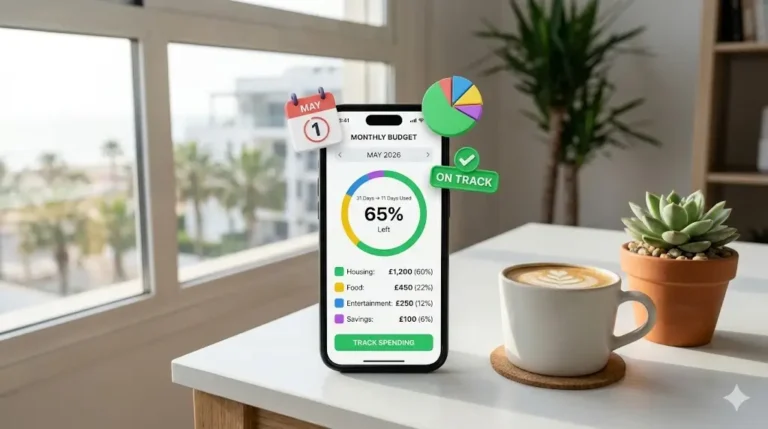
Decide whether you prefer automated apps or manual spreadsheets. If you want a hands-off approach, link your bank accounts to an app like Monarch Money, which uses AI to categorize your purchases. If you want hyper-awareness to curb bad spending habits, manually typing your expenses into a Google Sheet is highly effective.
2. Consolidate Your Financial Accounts
You cannot track your spending if your money is scattered across ten different obscure accounts. Consolidate your finances. Use one primary checking account for fixed bills, one credit card (that you pay off weekly) for variable spending, and one high-yield savings account (HYSA) for holding your side hustle capital.
3. Categorize with a Business Mindset
Do not create 50 different micro-categories (e.g., “Dog toys,” “Cat food,” “Fish food”). Keep it broad to prevent burnout. Group your spending into three main buckets:
- Fixed Overhead: Rent, utilities, car payments.
- Variable/Operating Expenses: Groceries, dining out, gas, entertainment.
- Growth/Capital: Money sent to savings, investments, or your online earnings ventures.
4. Conduct Weekly “Money Dates”
Do not wait until the end of the month to track your spending; by then, the money is already gone. Schedule a 15-minute “money date” every Sunday evening. Review your transactions, adjust your variable spending for the upcoming week, and ensure you are hitting your savings targets.
- Pro Tip: Pair this task with something enjoyable, like your favorite coffee or podcast, to build a positive psychological association with financial tracking.
5. Redirect Saved Capital to Revenue Streams
The ultimate step: When your tracking reveals that you just saved $200 this month by cutting out unused subscriptions, immediately transfer that $200 into a dedicated account for your online business or investment portfolio.

Income Potential & Earnings Breakdown
Why is a blog about making money online talking about tracking spending? Because every dollar you stop wasting is a dollar you can invest in income-producing assets. Here is a realistic projection of how optimizing your cash flow compounds over time:
- Beginner Level (Saving $150/month): By simply tracking where your money goes and cutting obvious waste, you free up $1,800 a year. If invested in a side hustle or index fund yielding an average 7% return, this grows to over $10,500 in 5 years.
- Intermediate Level (Saving $300/month): Frees up $3,600 a year. Over 5 years at 7%, this seed capital grows to over $21,000—providing massive leverage to scale a digital business.
- Advanced Level (Saving $600/month): Frees up $7,200 a year. In 5 years, this becomes over $42,000.
Disclaimer: Side hustle revenue and market returns are not guaranteed and will vary based on effort, market conditions, and economic factors.
Alternative Methods & Variations
If a standard spreadsheet doesn’t work for your brain, try these proven variations to track your spending:
- The Cash Envelope System: Withdraw your variable spending (groceries, fun money) in physical cash at the start of the month. Divide it into envelopes. When an envelope is empty, you stop spending. It is the ultimate foolproof tracking method.
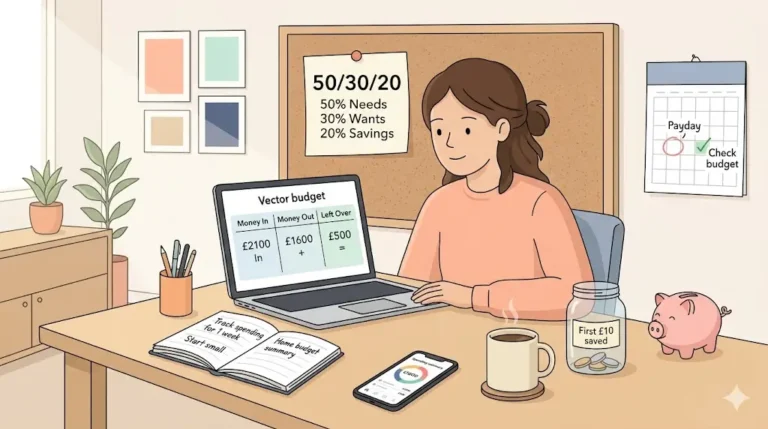
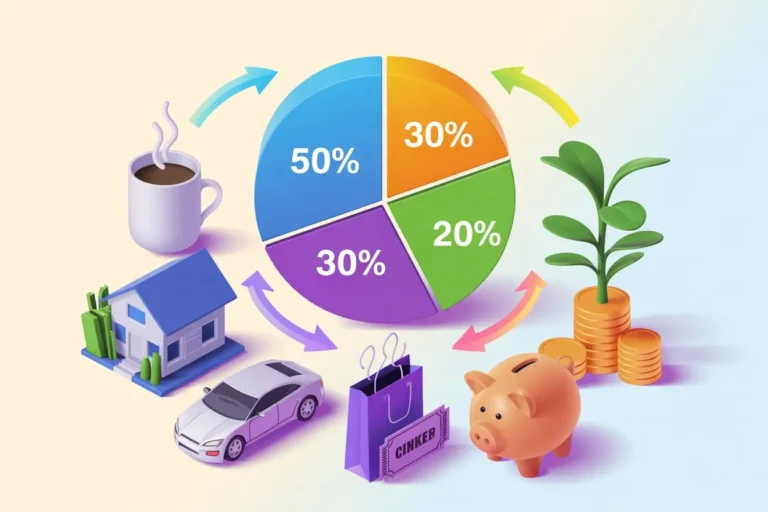
- The 50/30/20 Rule Tracking: Focus only on hitting overarching percentages. Ensure 50% of your income goes to needs, 30% to wants, and 20% to savings/investments. As long as you hit these ratios, you don’t need to track every single penny.
- Reverse Tracking (Pay Yourself First): The moment you get paid, immediately transfer your investment and side-hustle capital into a separate account. Then, spend whatever is left in your checking account guilt-free.
Best Practices & Optimization Tips
To ensure your tracking habits stick and actually help you build wealth, implement these optimization hacks:
- Automate Fixed Bills: Set all fixed expenses to auto-pay. You should only be actively tracking and worrying about your variable spending.
- Don’t Track Pennies, Track Dollars: If your spreadsheet is off by $1.43, do not spend three hours looking for the discrepancy. Track the macro trends, not the micro pennies.
- Use Cash-Back Tools: While tracking your spending, use browser extensions like Rakuten or Honey to automatically apply coupons and earn cash back, passively improving your profit margins.
- Community Accountability: Join communities like Reddit’s r/personalfinance or work from home Facebook groups to share your milestones and stay motivated.
Common Mistakes to Avoid
Many beginners start tracking their spending with high energy but quit by month two. Here are the major pitfalls to avoid:
- Passive Tracking (The Biggest Mistake): Merely writing down that you spent $800 on takeout last month does nothing if you don’t change your behavior this month. Tracking must be paired with action.
- Category Overwhelm: Creating a budget with 80 different sub-categories is exhausting. Stick to 10-15 broad categories to maintain your sanity.
- Ignoring Irregular Expenses: Forgetting to account for annual bills (like car registration or web hosting renewals) will inevitably blow up your monthly tracking. Divide these annual costs by 12 and track them as a monthly sinking fund.
- The Deprivation Trap: Do not cut your “fun money” to zero. Just like an extreme diet leads to binge eating, extreme budgeting leads to binge spending.
Long-Term Sustainability & Growth
The goal of tracking your spending isn’t to live on rice and beans forever; it is to build a financial fortress that allows you to take entrepreneurial risks.
- Beware of Lifestyle Creep: As your side hustle takes off and your digital income increases, resist the urge to immediately upgrade your lifestyle. Keep your expenses locked in while your income scales.
- Reinvest Your Profits: Treat your personal finances like a corporation. Reinvest your monthly surplus into scalable assets—whether that is dividend stocks, hiring a virtual assistant, or buying digital real estate.
- Scale to Business Tracking: Once your work from home business becomes profitable, apply these exact same tracking principles to your business using software like QuickBooks or Wave to monitor your ROI.
Conclusion
Learning how to track your spending accurately is the ultimate foundation for anyone looking to make money online. By identifying your financial leaks, categorizing your expenses, and intentionally redirecting your capital, you transform your existing paycheck into the seed money for your future passive income empire. You don’t always need to earn six figures to start a successful business; you just need to expertly manage what you already have.
Ready to start your journey? What is the one subscription or expense you are going to cut this week to fund your side hustle? Drop your answers in the comments! Don’t forget to subscribe for weekly monetization strategies, and share your progress in our community!
FAQs
How much money can I realistically save by tracking my spending?
By actively tracking your spending and identifying financial leaks, most beginners can realistically free up $150 to $300 a month in “lost” capital, which can then be reinvested into digital income streams.
Do I need prior experience to track my spending?
Absolutely not. You do not need an accounting degree or prior experience. If you can use a basic calculator and are willing to honestly review your bank statements, you have everything you need to succeed.
What’s the initial investment?
The initial financial is $0. There are countless free templates, apps, and spreadsheets available online. The only investment required is 1 to 2 hours of your time for the initial setup.
How long until I see results?
You will gain immediate mental clarity on day one. Tangible financial results—like a surplus of cash in your checking account or the ability to fund a new side hustle—typically take 30 to 60 days of consistent tracking.
Is this method still working in 2026?
Yes. Regardless of economic inflation, recessions, or the latest online business trend, spending less than you earn and tracking your capital is the timeless, unbreakable law of building wealth.
What are the risks involved?
There is zero financial risk in tracking your expenses. The only risk is psychological “budget burnout” caused by setting overly restrictive spending limits. Always ensure your tracking allows for occasional, guilt-free enjoyment.