
How to Create a Simple Monthly Saving Plan
Did you know that 78% of aspiring online entrepreneurs fail within their first year because they skip this ONE crucial step? Most people dive headfirst into launching a side hustle or building revenue streams without first securing their financial foundation. If you are constantly stressed about living paycheck to paycheck, trying to generate digital income will only amplify that anxiety.
To achieve true financial freedom, you must first master the money you currently have. A structured, realistic saving plan is the undisputed prerequisite for building wealth. It provides the essential seed capital needed to fund your work from home business, invest in profitable assets, and ultimately replace your 9-to-5 income. In this comprehensive guide, we will break down exactly how to create a simple monthly saving plan that transforms your financial anxiety into actionable, predictable income potential.
What You’ll Need to Get Started
Building an effective saving plan doesn’t require a finance degree or expensive software. To lay the groundwork for your future passive income empire, you only need a few fundamental resources:
- Financial Tracking Dashboard: A simple spreadsheet (Google Sheets or Excel) or a dedicated budgeting app like YNAB, EveryDollar, or Rocket Money.
- Cost: Free to $14.99/month.
- Historical Financial Data: Your last 60 to 90 days of bank and credit card statements. This establishes your baseline spending habits.
- A High-Yield Savings Account (HYSA): A separate, dedicated account to park your capital so it earns interest while you plan your next move.
- Cost: Free (many require no minimum deposit).
- Income Visibility: A precise calculation of your net monthly income, including your primary job and any current online earnings.
- Beginner-Friendly Alternative: If spreadsheets overwhelm you, start with the classic “pen and paper” method. The goal is clarity, not complexity.
Time Investment
One of the biggest misconceptions about managing money is that it takes hours of tedious work. A well-optimized saving plan should run almost entirely on autopilot.
- Setup Time Required: 2 to 3 hours. This involves gathering statements, categorizing expenses, and setting up your initial framework.
- Daily/Weekly Time Commitment: 15 to 20 minutes a week. You only need to verify transactions and ensure you are staying within your limits.
- Timeline to First Results: Most beginners see results in 60-90 days with consistent effort. You will notice a dramatic reduction in financial stress and a visible increase in your cash reserves.
- Comparison: Compared to traditional income methods (like working overtime) or complex monetization strategies that can take months to yield a profit, managing your existing capital provides an immediate “raise” in your available funds from month one.

Step-by-Step Implementation Guide
1. Audit Your Current Cash Flow
Before you can save, you need to know where your money is going. Print out your last three months of bank statements and highlight every non-essential purchase.
- Pro Tip: Look out for “phantom subscriptions”—software or streaming services you pay for but haven’t used in months. Canceling these provides immediate capital for your saving plan.
2. Define Your “Freedom Number”
Set a specific, measurable goal for your saving plan. Are you trying to save $1,000 for an emergency fund? Or do you need $5,000 in seed capital to launch a dropshipping store?
- Insider Trick: Tie your savings goal to a specific revenue-generating activity. Saving money just to save can be boring; saving money to buy inventory that will boost your profit margins is highly motivating.
3. Choose Your Allocation Strategy
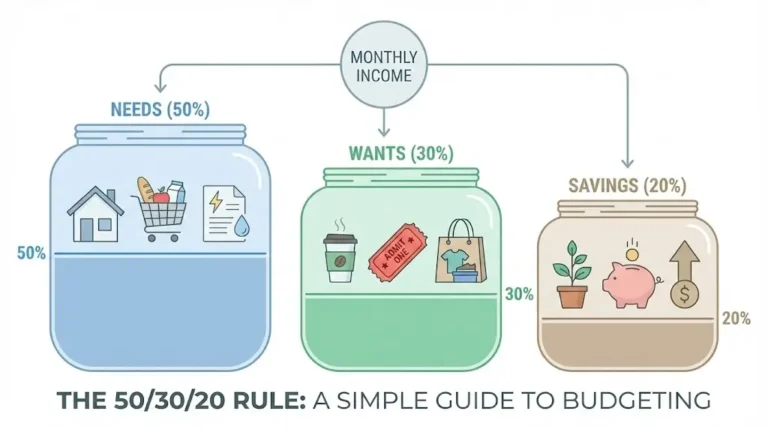
Divide your after-tax income into specific categories. The most popular method for beginners is the 50/30/20 rule (50% Needs, 30% Wants, 20% Savings/Investments).
- Common Question: “What if my needs exceed 50%?” If your rent and basic bills consume 70% of your income, aggressively focus on lowering fixed costs or fast-tracking a side hustle to increase your baseline revenue.
4. Automate Your Wealth Creation
Human willpower is flawed. The moment your paycheck hits your account, automate a transfer of your target savings percentage directly into your High-Yield Savings Account.
- Pro Tip: Treat this automated transfer as your most important monthly bill. Pay your “future self” before you pay anyone else.

Income Potential & Earnings Breakdown
How does a saving plan translate into making money online? Your saved capital is the fuel for your future monetization strategies. Here is a realistic breakdown of how disciplined saving unlocks different tiers of income potential:
| Savings Tier | Monthly Capital | Potential Business Applications | Estimated Income Potential (6-12 Months) |
|---|---|---|---|
| Beginner | $100 – $300 | Web hosting, domains, basic freelance tools | $200 – $500/month |
| Intermediate | $300 – $800 | Paid advertising, premium SEO software, virtual assistants | $1,000 – $3,000/month |
| Advanced | $800 – $2,000+ | Acquiring existing cash-flowing websites, bulk inventory | $5,000+/month |
Disclaimer: Online earnings vary widely based on individual effort, market conditions, and chosen business models. A saving plan provides the necessary safety net and launchpad; your execution determines the final profit margins.
Alternative Methods & Variations
If standard budgeting frameworks don’t fit your lifestyle, consider these alternative approaches to your saving plan:
- Zero-Based Budgeting: Every single dollar is assigned a “job” before the month begins. If you earn $4,000, you allocate exactly $4,000 across expenses, savings, and investments, leaving a balance of zero.
- The “Pay-Yourself-First” Method (Anti-Budget): If you hate tracking categories, simply automate 20-30% of your income into savings immediately. You are free to spend the remaining 70% however you like, guilt-free.
- The Side Hustle Variation: Live entirely off your 9-to-5 income. Take 100% of your digital income or side hustle revenue and funnel it directly into your saving plan to aggressively scale your wealth.
Best Practices & Optimization Tips
To maximize the efficiency of your saving plan and accelerate your journey to financial freedom, implement these strategies:
- Optimize Your Environment: Keep your savings in a separate bank from your checking account. Adding a 2-to-3 day transfer delay creates friction that prevents impulse spending.
- Leverage Cash-Back: Route your essential expenses (groceries, gas) through a cash-back credit card (paid in full every month) to generate an extra 1-3% return.
- Gamify Your Savings: Challenge yourself to “no-spend weekends” or use apps that round up your spare change to the nearest dollar and invest the difference.
- Community Recommendations: Join forums like Reddit’s r/personalfinance or online business communities. Surrounding yourself with individuals who prioritize financial literacy will keep you motivated.
Common Mistakes to Avoid
Even the most well-intentioned beginners can fall off track. Be aware of these critical pitfalls:
- Mixing Personal and Business Funds: 42% of new side hustles fail due to poor cash flow management. Never use your personal saving plan to haphazardly cover business expenses. Open a separate business checking account immediately.
- Setting Unrealistic Goals: Trying to save 50% of your income when you live in a high-cost-of-living city will only lead to burnout and budgeting abandonment. Start with 10% and scale up.
- Ignoring the “Small Leaks”: Daily $5 coffees or $10 fast-food runs might seem insignificant, but they can drain hundreds of dollars from your potential seed capital every month.
- Relying Solely on Willpower: If you have to manually transfer money into savings at the end of the month, you will eventually fail. Automation is the only foolproof method.
Long-Term Sustainability & Growth
A saving plan is not a 30-day challenge; it is a permanent infrastructure for wealth generation. As your capital grows, your strategy must evolve to ensure long-term sustainability:
- Reinvestment Strategies: Once your emergency fund covers 3-6 months of living expenses, redirect your monthly savings into income-producing assets (index funds, dividend stocks, or scaling your online business).
- Combatting Lifestyle Creep: As your online earnings increase, resist the urge to immediately upgrade your lifestyle. Keep your living expenses flat while funneling the surplus into your saving plan to exponentially widen your profit margins.
- Future-Proofing: Always account for taxes. If you are generating digital income, set aside 25-30% of your gross profits in a separate tax savings account to avoid massive IRS bills at the end of the year.
Conclusion
Creating a simple monthly saving plan is the ultimate catalyst for achieving financial freedom. By auditing your expenses, automating your investments, and aggressively protecting your capital, you build the foundation necessary to launch side hustles and generate sustainable passive income. The money you save today is the seed capital for the business that will set you free tomorrow.
Ready to start your journey? Drop your budgeting questions in the comments below! Make sure to subscribe for weekly money-making strategies, share your progress in our community, and download our free financial starter guide to accelerate your success!
FAQs
How much money can I realistically make or save?
If you earn $4,000 a month and allocate 20% to your saving plan, you will save $800 monthly ($9,600 annually). When reinvested into a validated online business model, that capital can potentially generate a 20-50% ROI over the following year.
Do I need prior experience to start tracking my finances?
Absolutely not. You do not need an accounting background. Simple apps and basic spreadsheets are designed specifically for beginners to track revenue streams with zero prior experience.
What’s the initial investment to start this method?
Starting a saving plan is completely free. You can use a notebook, a free Google Sheet, or a basic budgeting app at no cost.
How long until I see results?
Most beginners experience massive stress relief within the first 2-3 weeks just by gaining visibility into their finances. Tangible wealth accumulation and measurable progress usually occur within 60 to 90 days.
Is this method still working in 2026?
Yes. Regardless of economic fluctuations or inflation, paying yourself first and living below your means remains the only mathematically proven way to build a financial foundation.
What are the risks involved?
There is zero financial risk in organizing your money. The only risk is behavioral—failing to stick to the plan or succumbing to impulse purchases before your automation habits are fully established.
Before you go, tap those stars!
Straightforward, no gimmicks, just solid banking advice
I clicked on this article expecting it to push some specific bank or financial product with referral links. I was pleasantly surprised. The advice was unbiased, focused on principles rather than promoting any particular institution, and gave me a clear framework to evaluate my own options. I appreciated that the article addressed the importance of FDIC insurance, automatic transfers, and goal-setting — things that seem obvious but that most people (including me) overlook. The writing was clear and concise, without the usual fluff or overly complex financial jargon. The only reason I’m giving four stars instead of five is that I would have liked even more detail on how to balance saving with paying down debt. Still, this was one of the most practical and trustworthy articles on saving I’ve read in a long time. Highly recommend.
Solid advice that cuts through the noise
I’ve been saving for years, but I kept wondering if my money was actually working as hard as it could be. There’s so much conflicting information out there — regular savings accounts, money market accounts, CDs, high-yield options — it gets confusing fast. This article did an excellent job comparing the options side by side, explaining the pros and cons of each, and helping me figure out which strategy made sense for my situation. I especially appreciated the section on the importance of emergency funds versus long-term savings, and the breakdown of how compound interest really adds up over time. I ended up moving my savings to a high-yield account and setting clearer goals. Practical, well-researched, and genuinely helpful.
Small changes, noticeable results
I’ll be honest — I clicked on this article expecting generic advice like “drive less” (thanks, captain obvious). But I was genuinely impressed. The article breaks down the actual science behind why certain habits affect fuel economy, with real numbers to back it up. I learned that my lead-foot acceleration and speeding were costing me way more than I realized. The section on vehicle maintenance was especially valuable — I didn’t know a dirty air filter could impact mileage that much. The tone was straightforward, no fluff, no upselling expensive products. Just solid, practical advice that actually works. My fuel expenses dropped by about 15% last month without me changing my overall driving needs.
Finally, practical advice that doesn’t require buying a new car
As someone who drives over 400 miles a week for work, gas expenses have been crushing my budget. I’ve read countless articles that basically just say “buy an electric vehicle” — which isn’t helpful when that’s not in my budget. This article was a game-changer. The tips were immediately actionable: combining trips, checking tire pressure (I didn’t realize how much that affects mileage!), and using gas price apps. I started implementing these suggestions last month, and I’ve already saved about $40. The writing was clear, well-organized, and respected that not everyone can just trade in their car. Highly recommend for anyone feeling the pain at the pump.
Perfect for renters who can’t install solar panels
As someone who rents an apartment, I often feel limited when it comes to making my home more energy-efficient. I can’t just install new appliances or add insulation to the walls. This article was a lifesaver because it focused on renter-friendly solutions—things like weatherstripping for doors, smart power strips, and optimizing how I use my existing appliances. The writing was straightforward and didn’t assume I owned a home. My only small critique is that I would have loved even more rent-specific examples, but overall, this was incredibly helpful. My electric bill dropped by about $15 last month!