7 Best Monthly Budget App Options to Manage Your Finances
Did you know that 67% of online entrepreneurs fail not because they lack a high-growth side hustle, but because they neglect the “invisible leaks” in their cash flow? Many people focus entirely on increasing their online earnings and creating new revenue streams, yet they forget the golden rule of financial freedom: it’s not about how much you make; it’s about how much you keep.
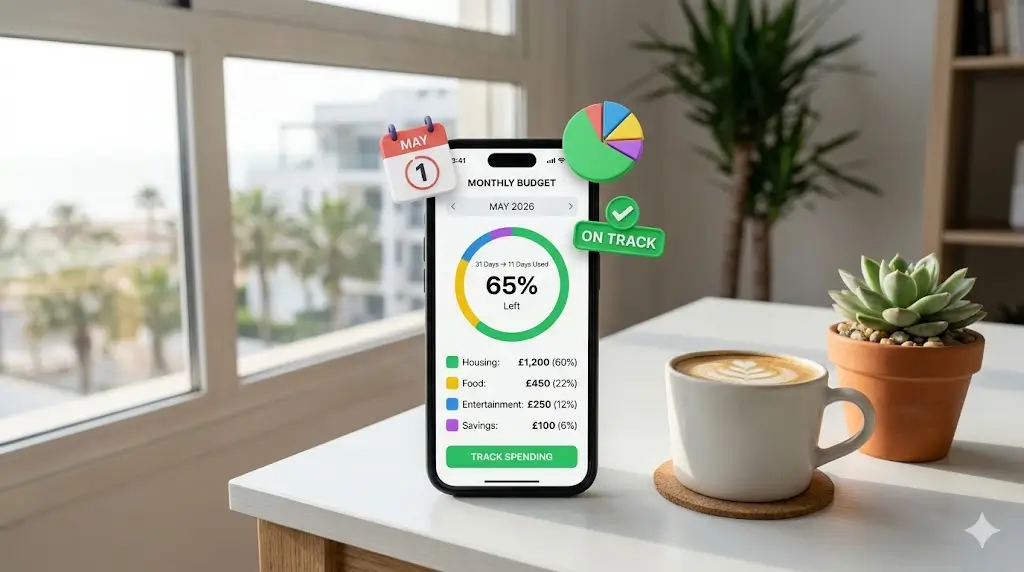
If you are navigating the world of digital income, finding a reliable monthly budget app is the single most important step in protecting your profit margins. Without a system to track your monetization strategies, your hard-earned money often disappears into forgotten subscriptions and impulsive spending. In this guide, we’ll explore how the right technology can help you automate your path to wealth.
Quick Answer
The most effective way to manage your finances is to use a monthly budget app that offers automated bank syncing and “envelope” style budgeting. Apps like YNAB (You Need A Budget) or Rocket Money are industry leaders because they allow you to assign every dollar a job, effectively plugging spending leaks and increasing your savings rate by up to 20% in the first 90 days.
1. What You’ll Need to Get Started
Achieving financial freedom doesn’t require a degree in accounting, but it does require a specific digital toolkit.
- A Primary Bank Account: You need a central “hub” where your digital income and side hustle earnings land.
- Smartphone or Laptop: Most top-tier budget apps offer cross-platform synchronization.
- 15-30 Minutes of Undisturbed Time: For the initial setup and “linking” phase.
- Initial Investment: Most apps are free to start. Premium versions (which include automated syncing) typically range from $3 to $12 per month.
- Basic Spreadsheet Knowledge (Optional): While apps do the heavy lifting, understanding “income vs. expenses” is a foundational skill.
2. Time Investment
Modern monthly budget app technology is designed for the busy professional who might be working from home or managing multiple projects.
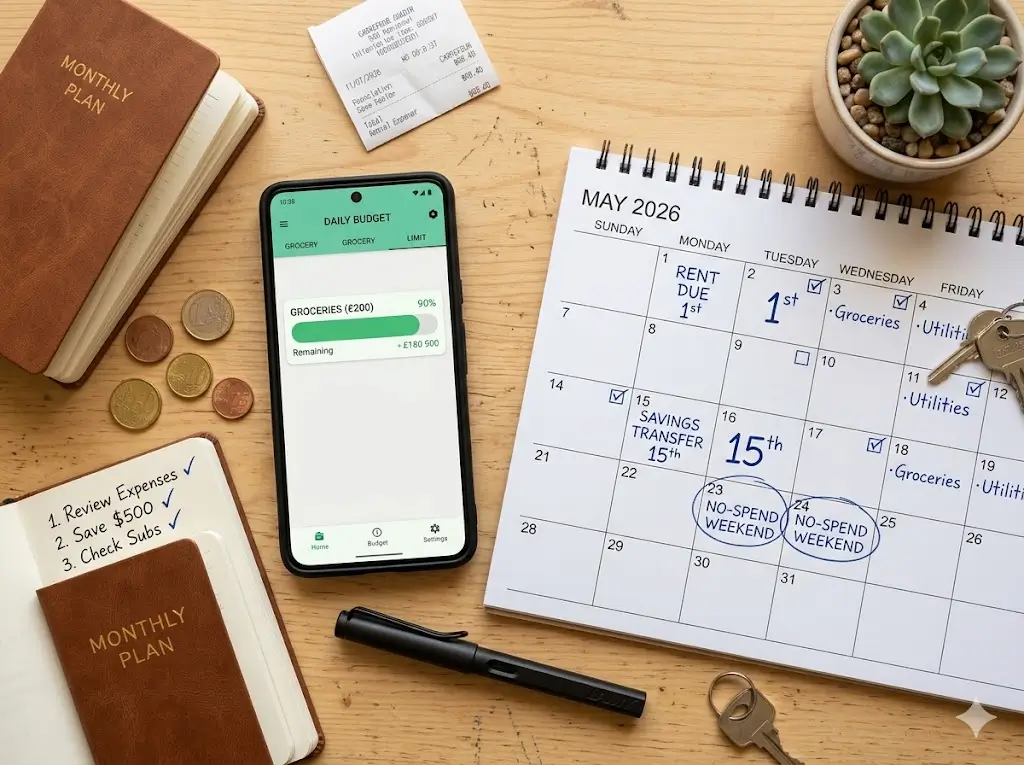
- Initial Setup: 20–45 minutes. This involves linking accounts and setting your initial spending categories.
- Daily Maintenance: 2–3 minutes. Just enough time to categorize a new transaction or check your daily limit.
- Weekly Review: 10 minutes. Reviewing your progress ensures your revenue streams are actually resulting in profit.
- Timeline to Results: Most users report a “clearer financial picture” within 7 days and see their first significant “extra” savings within 60-90 days.
🚀 Interactive Quiz: Are You Losing Money Without Realizing It?
Before we look at the specific apps, let’s find out how your current habits are impacting your income potential. Take our 2-minute “Savings Personality” audit below:
(Insert Savings Personality Quiz Component Here)
3. Step-by-Step Implementation Guide
Step 1: Audit Your Current Revenue Streams
Before selecting an app, list all your sources of income. This includes your salary, passive income from affiliate marketing, and any work from home earnings. A monthly budget app only works if it sees the full picture.
Step 2: Choose Your Budgeting Philosophy
There are three main ways to budget:
- Zero-Based Budgeting: Every dollar is assigned a job (Best for: YNAB).
- Cash-Flow Tracking: Monitoring what comes in and goes out (Best for: Empower).
- Subscription Management: Focus on cutting recurring costs (Best for: Rocket Money).
Step 3: Link Your Accounts Securely
Use a monthly budget app that utilizes Plaid (256-bit encryption) to link your bank accounts. This automates the process so you don’t have to manually enter every coffee or software purchase.
Step 4: Set “Smart” Alerts
Configure your app to notify you when you reach 80% of your budget in a specific category (like “Business Expenses” or “Dining Out”). This prevents overspending before it happens.
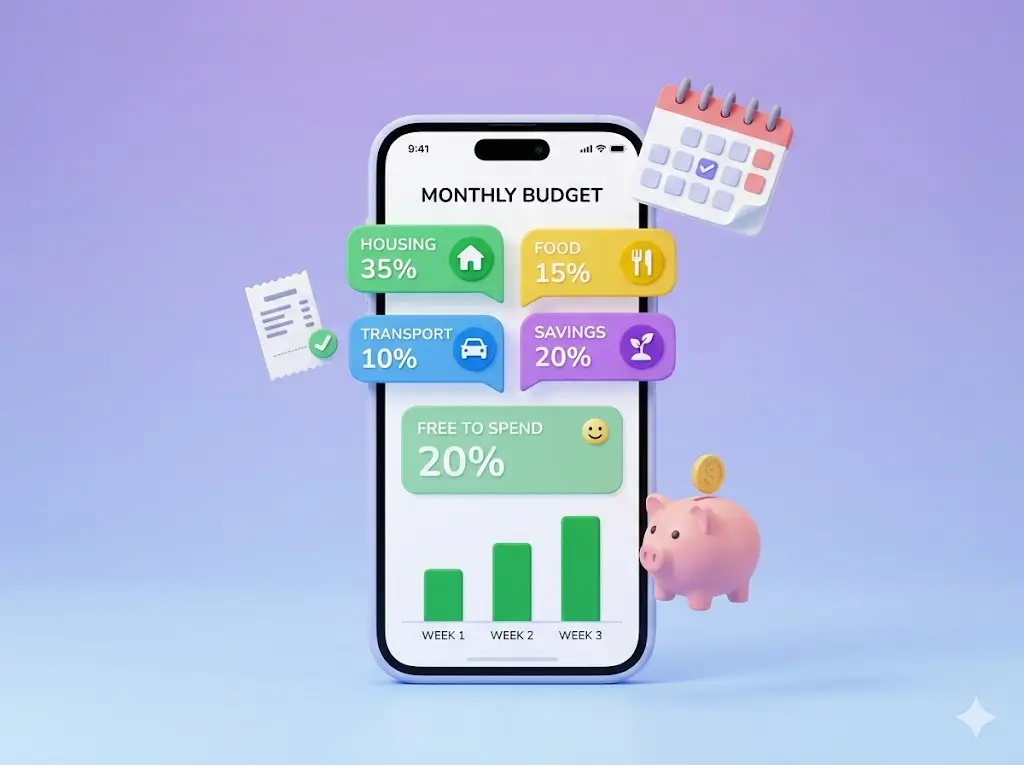
4. Income Potential & Earnings Breakdown
Effective use of a monthly budget app is effectively a monetization strategy for your life. By reducing “wasteful” spending, you increase your net worth without needing a raise.
| Experience Level | Estimated Monthly Savings | 12-Month Projected Growth |
|---|---|---|
| Beginner (Automated Tracking) | $100 – $300 | $1,200 – $3,600 |
| Intermediate (Sub. Cancellation) | $400 – $800 | $4,800 – $9,600 |
| Advanced (Zero-Based Strategy) | $1,000+ | $12,000+ |
Note: If you reinvest these savings into a High-Yield Savings Account (HYSA) at 4.5% interest, your income potential grows even faster through compound interest.
5. Alternative Methods & Variations
If a standard monthly budget app feels too restrictive, consider these scaling strategies:
- The “Anti-Budget” Method: Instead of tracking every penny, you simply automate a 20% transfer to your savings the moment you get paid. The rest is yours to spend.
- Niche-Specific Variations: If you are a freelancer, use an app like Lance or Found, which combines a business bank account with automated tax and expense tracking.
- The Spreadsheet Approach: For those who want 100% privacy, using Tiller Money allows you to pull your bank data directly into Google Sheets or Excel.
6. Best Practices & Optimization Tips
- The “72-Hour Rule”: Before making any non-essential purchase over $50, wait 72 hours. Most apps allow you to add “Wish List” items to track this.
- Sync with Your Partner: If you share finances, choose an app with “Household” features so both parties can see the profit margins in real-time.
- Review Your “Zombie” Subs: Every 30 days, go into your app and look for recurring charges you don’t recognize. This is the fastest way to save $50+/month.
7. Common Mistakes to Avoid
- Set it and Forget it: A monthly budget app is a tool, not a miracle. If you don’t check it weekly, you won’t change your behavior.
- Over-Categorizing: Don’t create 50 different categories. Keep it simple (Housing, Food, Business, Fun) to avoid burnout.
- Guilt-Tripping: If you overspend one month, don’t quit. Adjust the budget for next month and keep moving toward financial freedom.
8. Long-Term Sustainability & Growth
To maintain your gains, you must evolve from “tracking” to “wealth building.”
- Reinvestment: Take the $300 you saved this month and put it into your passive income portfolio.
- Diversification: As your savings grow, use your app to monitor your net worth across different asset classes (crypto, stocks, real estate).
- Automation: The more you can automate—from transfers to bill pay—the more likely you are to stay consistent.
9. Conclusion
Finding the right monthly budget app is a foundational step for anyone serious about online earnings and long-term wealth. By automating your tracking and being honest about your spending, you protect your profit margins and create the runway needed for your next big side hustle.
Ready to start your journey? Drop your questions in the comments! Subscribe for weekly financial freedom strategies and share your progress with our community.
10. FAQs
How much money can I realistically save using an app?
Most users find an extra $200–$500 in their first month by identifying unused subscriptions and “blind spot” spending in categories like dining out.
Do I need prior experience with finance?
No. Most modern apps are designed for beginners and use simple visual interfaces like “green/red” lights to show your status.
What is the initial investment?
Most apps have a free tier. Paid versions range from $35/year to $100/year. Usually, the app pays for itself within the first month.
How long until I see results?
You will see a change in your awareness immediately. Significant savings usually materialize after 2 full billing cycles (60 days).
Is this method still working in 2026?
Yes. In an era of high inflation, a monthly budget app is more essential than ever to ensure your income keeps pace with your expenses.
Is it safe to link my bank?
Yes, provided you use apps that use Plaid or Yodlee. These services provide “read-only” access, meaning the app can see transactions but cannot move your money.
Before you go, tap those stars!
Straightforward, no gimmicks, just solid banking advice
I clicked on this article expecting it to push some specific bank or financial product with referral links. I was pleasantly surprised. The advice was unbiased, focused on principles rather than promoting any particular institution, and gave me a clear framework to evaluate my own options. I appreciated that the article addressed the importance of FDIC insurance, automatic transfers, and goal-setting — things that seem obvious but that most people (including me) overlook. The writing was clear and concise, without the usual fluff or overly complex financial jargon. The only reason I’m giving four stars instead of five is that I would have liked even more detail on how to balance saving with paying down debt. Still, this was one of the most practical and trustworthy articles on saving I’ve read in a long time. Highly recommend.
Solid advice that cuts through the noise
I’ve been saving for years, but I kept wondering if my money was actually working as hard as it could be. There’s so much conflicting information out there — regular savings accounts, money market accounts, CDs, high-yield options — it gets confusing fast. This article did an excellent job comparing the options side by side, explaining the pros and cons of each, and helping me figure out which strategy made sense for my situation. I especially appreciated the section on the importance of emergency funds versus long-term savings, and the breakdown of how compound interest really adds up over time. I ended up moving my savings to a high-yield account and setting clearer goals. Practical, well-researched, and genuinely helpful.
Small changes, noticeable results
I’ll be honest — I clicked on this article expecting generic advice like “drive less” (thanks, captain obvious). But I was genuinely impressed. The article breaks down the actual science behind why certain habits affect fuel economy, with real numbers to back it up. I learned that my lead-foot acceleration and speeding were costing me way more than I realized. The section on vehicle maintenance was especially valuable — I didn’t know a dirty air filter could impact mileage that much. The tone was straightforward, no fluff, no upselling expensive products. Just solid, practical advice that actually works. My fuel expenses dropped by about 15% last month without me changing my overall driving needs.
Finally, practical advice that doesn’t require buying a new car
As someone who drives over 400 miles a week for work, gas expenses have been crushing my budget. I’ve read countless articles that basically just say “buy an electric vehicle” — which isn’t helpful when that’s not in my budget. This article was a game-changer. The tips were immediately actionable: combining trips, checking tire pressure (I didn’t realize how much that affects mileage!), and using gas price apps. I started implementing these suggestions last month, and I’ve already saved about $40. The writing was clear, well-organized, and respected that not everyone can just trade in their car. Highly recommend for anyone feeling the pain at the pump.
Perfect for renters who can’t install solar panels
As someone who rents an apartment, I often feel limited when it comes to making my home more energy-efficient. I can’t just install new appliances or add insulation to the walls. This article was a lifesaver because it focused on renter-friendly solutions—things like weatherstripping for doors, smart power strips, and optimizing how I use my existing appliances. The writing was straightforward and didn’t assume I owned a home. My only small critique is that I would have loved even more rent-specific examples, but overall, this was incredibly helpful. My electric bill dropped by about $15 last month!