
Delayed Gratification and Its Role in Personal Finance
Did you know that over 72% of aspiring online entrepreneurs fail to launch their first profitable business simply because they lack the seed capital—capital they easily could have saved? We live in an era of one-click shopping, instant streaming, and next-day delivery. But when it comes to personal finance, this addiction to instant rewards is the ultimate wealth-killer.
Before you can successfully scale a side hustle, optimize your profit margins, or achieve true financial freedom, you must master the psychological art of delayed gratification. It is the invisible engine behind every successful entrepreneur’s bank account. Personal finance is rarely about complex math; it is almost entirely about human behavior.
In this comprehensive guide, we will explore exactly how to rewire your brain to resist the temptation of immediate spending. You will learn how to weaponize delayed gratification to generate the initial capital needed to fund your online earnings and build lasting wealth.
What You’ll Need to Get Started
Mastering delayed gratification in your personal finance journey doesn’t require an MBA or thousands of dollars. Instead, it requires setting up an environment that actively protects you from your own impulsive habits.
Here is the toolkit you need to start building your financial discipline:
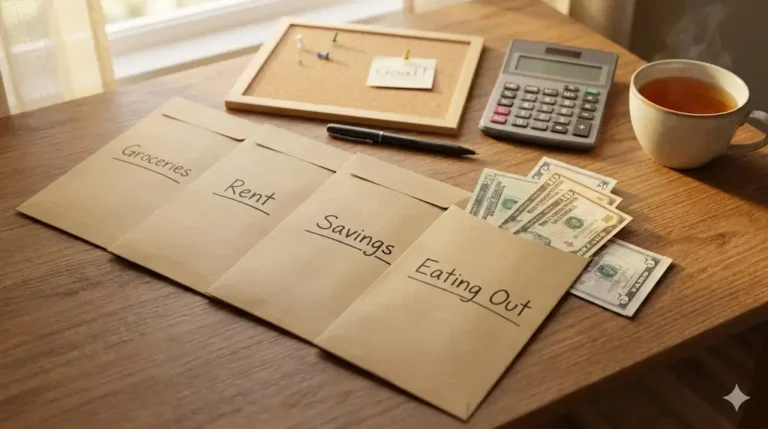
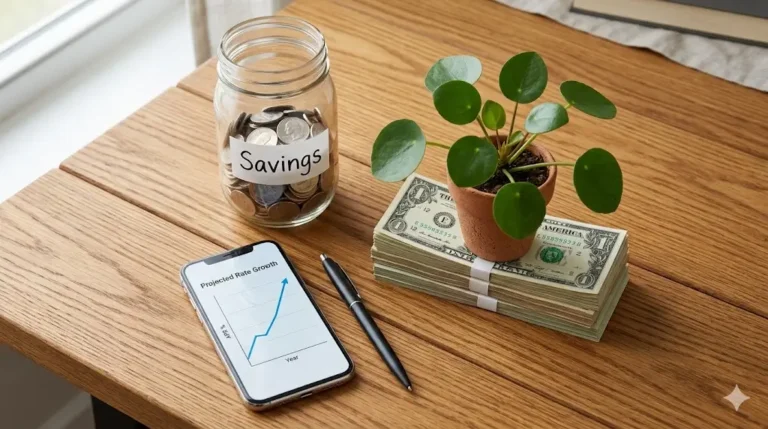
- A High-Yield Savings Account (HYSA): Cost: Free. You need a holding tank for the money you don’t spend. Storing it away from your checking account creates positive friction.
- Automated Budgeting Software: Cost: $0 – $15/month. Tools like YNAB, EveryDollar, or Monarch Money provide visual accountability for where your cash goes.
- A “Friction” Strategy: Cost: Free. Removing saved credit card information from your favorite online stores to make impulsive buying more difficult.
- A Defined “Why” (Vision Board): Cost: Mental Energy. Visualizing your ultimate goal—whether it’s the work from home lifestyle or quitting your 9-to-5—gives you a reason to say “no” to immediate temptations.
Time Investment
Changing your behavioral psychology around money takes time, but the financial dividends begin compounding almost immediately once the shift occurs.
- Setup Time Required: 1 to 2 hours to audit your current spending, clear your browser’s auto-fill data, and automate your bank transfers.
- Daily/Weekly Time Commitment: 5 minutes daily for a quick ledger review, plus a 15-minute weekly check-in.
- Timeline to First Results: Most beginners see a profound psychological shift in 60-90 days with consistent effort. By month three, the dopamine hit you used to get from buying shoes will be replaced by the thrill of watching your investment accounts grow.

Step-by-Step Implementation Guide
Step 1: Implement the “48-Hour Cart” Rule
The foundation of delayed gratification is creating a buffer between the stimulus (seeing an item) and the response (buying it). Whenever you want to purchase a non-essential item over $50, put it in your digital shopping cart, but close the tab. Force yourself to wait 48 hours. This allows your logical prefrontal cortex to override your emotional amygdala.
Step 2: Calculate Purchases in “Hours Worked”
To fundamentally change your personal finance perspective, stop looking at price tags in terms of dollars. Instead, calculate them in terms of your hourly wage. If you make $25 an hour after taxes, that $150 jacket doesn’t cost $150—it costs six hours of your life. Ask yourself: Is this item worth surrendering a full day of my freedom?
Step 3: Automate the “Pay Yourself First” System
Don’t rely on willpower to save money at the end of the month; willpower always depletes. Instead, set up an automated transfer on payday. The moment your paycheck or digital income hits your account, automatically route 15-20% into your investment accounts. If the money isn’t there to spend, you can’t be tempted by it.
Step 4: Reallocate Saved Capital into Assets
Delayed gratification only works if the delayed reward is actually greater. Do not let your saved money rot in a low-interest checking account. Whenever you successfully say “no” to a want, physically transfer that exact dollar amount into a fund designated for generating passive income or funding your next digital venture.
- Pro Tip: Name this account something motivating, like “Seed Capital for Side Hustle” or “Escape the Rat Race Fund.”

Income Potential & Earnings Breakdown
How exactly does saying “no” to a daily coffee or a new tech gadget translate to massive income potential? Through the dual engines of compound interest and business reinvestment.
Here is what happens when you apply delayed gratification to your personal finance strategy:
| Monthly Capital Saved (Through Delayed Gratification) | Primary Deployment Strategy | 10-Year Projected Portfolio (at 8% ROI) |
|---|---|---|
| **$200 / month** | Index funds / Dividend stocks | ~$36,000 |
| **$500 / month** | Funding an e-commerce or freelance business | ~$91,000 |
| **$1,000+ / month** | Scaling multiple revenue streams and digital assets | ~$183,000+ |
Disclaimer: Earnings, specific income amounts, and market returns are not guaranteed. Investing and entrepreneurship involve inherent risks.
Alternative Methods & Variations
Personal finance is inherently personal. If the strict “48-hour rule” doesn’t fit your psychology, try these alternative variations to build your delayed gratification muscle:
- The “No-Spend” Month Challenge: Gamify your discipline by committing to 30 days of zero discretionary spending. Buy only essential groceries and pay bills. Use the massive surplus to jumpstart your investments.
- The 50/30/20 Framework: Instead of micromanaging every purchase, allocate a strict 30% of your income to “Wants.” Once that specific pool of money is empty, you must delay any further gratification until next month.
- The “Match” Method: If you desperately want to buy a $200 luxury item, you are only allowed to buy it if you can concurrently transfer $200 into your passive income investment portfolio. This forces you to afford things twice before buying them once.
Best Practices & Optimization Tips
To maximize your results and accelerate your path to wealth, integrate these efficiency hacks into your life:
- Unsubscribe Ruthlessly: Your inbox is a minefield of immediate gratification triggers. Use a tool like Unroll.me to unsubscribe from all retail and marketing emails.
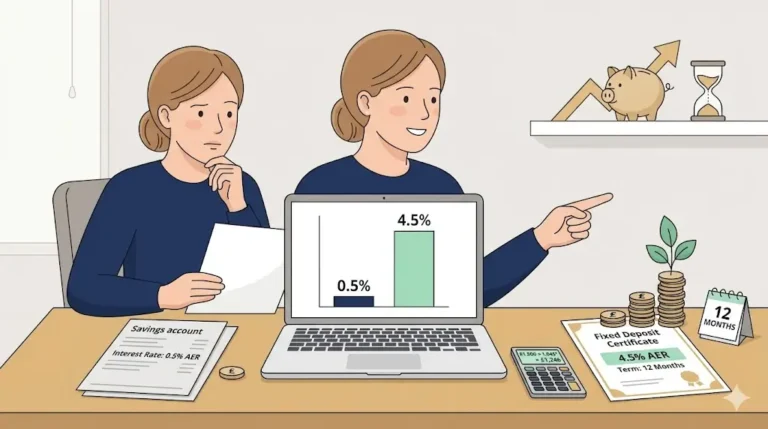
- Optimize Your Yield: The money you save by delaying purchases should be put to work. Ensure your emergency fund is in a high-yield account earning at least 4-5% APY, maximizing your baseline online earnings.
- Celebrate Milestones: Delayed gratification doesn’t mean infinite deprivation. Set milestones (e.g., “When my side hustle hits $5,000 in revenue, I will treat myself to a nice dinner”). Structured rewards reinforce good habits.
Common Mistakes to Avoid
Even the most dedicated individuals fall into psychological traps when trying to master their personal finance. Avoid these critical pitfalls:
- Extreme Frugality / Deprivation Fatigue: Trying to eliminate 100% of your discretionary spending overnight is like crash dieting. It inevitably leads to burnout and massive binge spending. Prevention: Always budget a small amount of “guilt-free” fun money.
- Saving Without Investing: Delaying gratification to pile up cash under a mattress is a losing game due to inflation. You must deploy that capital into effective monetization strategies or assets.
- Falling for Lifestyle Creep: As your business succeeds and your income rises, the temptation to immediately upgrade your car and house is immense. Prevention: Lock your living expenses in place and let the excess income accelerate your wealth building.
Long-Term Sustainability & Growth
Delayed gratification is not a temporary tactic; it is the permanent operating system for the wealthy.
To ensure long-term sustainability, you must view every dollar saved not as a restriction, but as a seed planted for your future. As you begin to generate real momentum, focus on reinvestment strategies. Don’t pull profits out of your business to buy luxury goods too early. Instead, consistently roll your revenue streams back into advertising, better software, or team expansion. Future-proofing your life means sacrificing a slightly better today for an exponentially better tomorrow.
Conclusion
Mastering delayed gratification is the unglamorous, behind-the-scenes secret to winning at personal finance. By implementing friction in your buying habits, automating your savings, and treating your capital with respect, you build the unshakeable foundation required to fund your entrepreneurial ambitions.
Ready to start your journey? Drop your biggest financial temptation in the comments below! Don’t forget to subscribe for our weekly money-making strategies, download our free financial starter guide, and share your progress in our community!
FAQs
How much money can I realistically make by practicing delayed gratification?
Delayed gratification itself preserves capital; it is what you do with that capital that generates wealth. A person who delays buying a $500 TV and instead invests that $500 monthly at an 8% return can generate over $90,000 in a decade.
Do I need prior experience in personal finance to do this?
No prior experience is necessary. Delayed gratification is entirely based on human psychology and habit-building. Anyone can start today by simply enforcing a 48-hour waiting period on all non-essential purchases.
What’s the initial investment required?
The monetary investment is zero. Practicing delayed gratification actually immediately increases your cash flow. The only requirement is the mental discipline to pause before clicking “buy.”
How long until I see results in my bank account?
You will gain immediate financial clarity within the first week. Most individuals see a significant increase in their retained capital and a notable decrease in financial anxiety within 60 to 90 days of consistent practice.
Is this method still working in 2026?
Yes. While algorithms and online marketing continue to evolve to trigger instant purchases, the psychological principle of delaying gratification remains the timeless, inflation-proof foundation of all wealth-building.
What are the risks involved?
The primary psychological risk is “frugality burnout”—depriving yourself so strictly that you eventually rebound with an impulsive spending spree. To mitigate this, always allocate a defined percentage of your budget to guilt-free spending.
Before you go, tap those stars!
Straightforward, no gimmicks, just solid banking advice
I clicked on this article expecting it to push some specific bank or financial product with referral links. I was pleasantly surprised. The advice was unbiased, focused on principles rather than promoting any particular institution, and gave me a clear framework to evaluate my own options. I appreciated that the article addressed the importance of FDIC insurance, automatic transfers, and goal-setting — things that seem obvious but that most people (including me) overlook. The writing was clear and concise, without the usual fluff or overly complex financial jargon. The only reason I’m giving four stars instead of five is that I would have liked even more detail on how to balance saving with paying down debt. Still, this was one of the most practical and trustworthy articles on saving I’ve read in a long time. Highly recommend.
Solid advice that cuts through the noise
I’ve been saving for years, but I kept wondering if my money was actually working as hard as it could be. There’s so much conflicting information out there — regular savings accounts, money market accounts, CDs, high-yield options — it gets confusing fast. This article did an excellent job comparing the options side by side, explaining the pros and cons of each, and helping me figure out which strategy made sense for my situation. I especially appreciated the section on the importance of emergency funds versus long-term savings, and the breakdown of how compound interest really adds up over time. I ended up moving my savings to a high-yield account and setting clearer goals. Practical, well-researched, and genuinely helpful.
Small changes, noticeable results
I’ll be honest — I clicked on this article expecting generic advice like “drive less” (thanks, captain obvious). But I was genuinely impressed. The article breaks down the actual science behind why certain habits affect fuel economy, with real numbers to back it up. I learned that my lead-foot acceleration and speeding were costing me way more than I realized. The section on vehicle maintenance was especially valuable — I didn’t know a dirty air filter could impact mileage that much. The tone was straightforward, no fluff, no upselling expensive products. Just solid, practical advice that actually works. My fuel expenses dropped by about 15% last month without me changing my overall driving needs.
Finally, practical advice that doesn’t require buying a new car
As someone who drives over 400 miles a week for work, gas expenses have been crushing my budget. I’ve read countless articles that basically just say “buy an electric vehicle” — which isn’t helpful when that’s not in my budget. This article was a game-changer. The tips were immediately actionable: combining trips, checking tire pressure (I didn’t realize how much that affects mileage!), and using gas price apps. I started implementing these suggestions last month, and I’ve already saved about $40. The writing was clear, well-organized, and respected that not everyone can just trade in their car. Highly recommend for anyone feeling the pain at the pump.
Perfect for renters who can’t install solar panels
As someone who rents an apartment, I often feel limited when it comes to making my home more energy-efficient. I can’t just install new appliances or add insulation to the walls. This article was a lifesaver because it focused on renter-friendly solutions—things like weatherstripping for doors, smart power strips, and optimizing how I use my existing appliances. The writing was straightforward and didn’t assume I owned a home. My only small critique is that I would have loved even more rent-specific examples, but overall, this was incredibly helpful. My electric bill dropped by about $15 last month!