Practical Ways to Save on Gas and Lower Your Fuel Expenses
Did you know that the average commuter loses nearly $2,000 every single year simply due to inefficient driving habits and poor maintenance? In the world of online business, we often talk about the importance of high profit margins, yet many entrepreneurs ignore the massive “tax” they pay at the pump every week. If you are looking for effective ways to save on gas, you aren’t just looking to lower a bill—you are actively reclaiming capital that could be used to fund your next side hustle or build your online earnings.
When you treat your household expenses like a business, every dollar saved is a dollar earned. Achieving financial freedom isn’t just about how much you make; it’s about how much you keep. By optimizing your fuel consumption, you effectively create a new revenue stream without needing to land a single new client or sell a single product. In this guide, we’ll explore data-driven strategies to lower your fuel expenses and redirect that money toward your digital income goals.
What You’ll Need to Get Started
To start seeing a reduction in your fuel costs, you don’t need to trade in your vehicle for a hybrid (though it helps). You just need the right tools to monitor and optimize your performance.
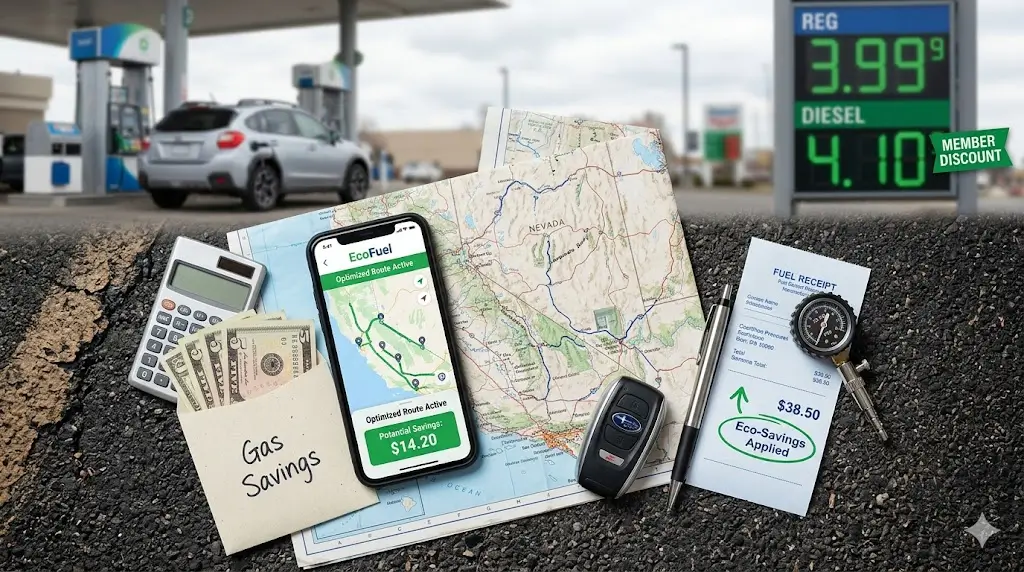
- Fuel Tracking Apps: Download GasBuddy or Upside to find the lowest local prices and earn cashback—this is a form of passive monetization strategy for your driving.
- A Tire Pressure Gauge: A simple $5 tool can save you 3% on fuel efficiency immediately.
- Maintenance Log: A digital or physical log to track oil changes and air filter replacements.
- Route Planning Software: Google Maps or Waze (Free) to avoid idle-heavy traffic jams.
- Initial Investment: $0 to $15 for basic maintenance tools.
- Estimated Costs: Most strategies are free; even premium maintenance pays for itself within 3 months.
Calculate your potential fuel “earnings” based on the steps in our guide and see how much capital you can reclaim for your next side hustle.
That’s pure capital you can reinvest into your online earnings!
Time Investment
Optimizing your fuel consumption is one of the most efficient “side hustles” you can start. Unlike a traditional work from home job that requires hours of labor, gas optimization takes minutes per week but offers compounding returns.
- Setup Time: 30 minutes to download apps and check your tire pressure.
- Daily Commitment: 2-5 minutes for route planning and checking your driving style.
- Timeline to Results: Most drivers see a 10-15% reduction in fuel spending within the first 30 days.
- Realistic Data: Beginners typically reclaim $40-$100 per month by simply altering their acceleration habits and using cashback rewards.
Step-by-Step Implementation Guide
1. Conduct a “Weight Audit”
Every extra 100 pounds in your vehicle reduces your MPG (miles per gallon) by about 1%.
- The Step: Clear out your trunk and backseat. Remove roof racks when not in use to reduce aerodynamic drag.
- Pro Tip: Treat your car like a lean startup—eliminate anything that doesn’t add value to the journey.
2. Implement the “5-Second Rule” for Acceleration
Aggressive driving (speeding, rapid acceleration, and braking) can lower your gas mileage by 15% to 30% on the highway.
- The Step: Imagine there is an egg under your gas pedal. Take 5 seconds to accelerate to 15 mph from a stop.
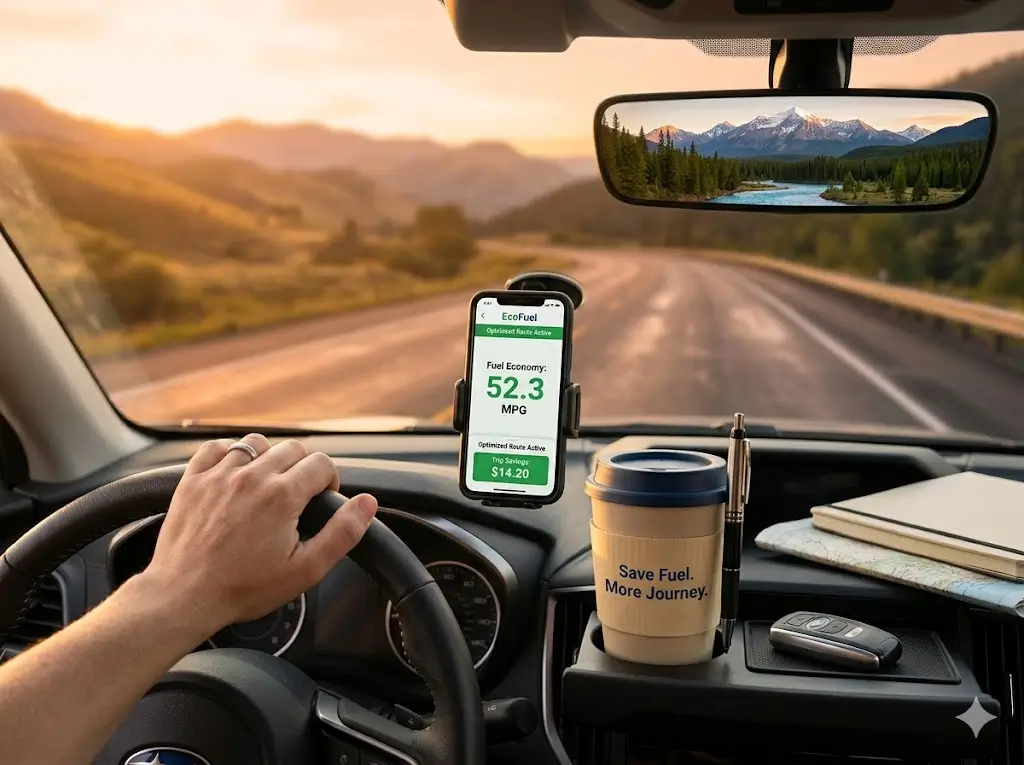
- Visual Description: Watch your car’s real-time MPG display. If it dips into the single digits during acceleration, you are being too aggressive.
3. Optimize Your “Route Monetization”
Idling gets 0 miles per gallon.
- The Step: Use Waze to find the “Most Fuel Efficient” route rather than just the “Fastest.” Often, a route with fewer stoplights is better for your profit margins even if it takes 2 minutes longer.
- Insider Trick: If you will be stopped for more than 10 seconds (except in traffic), turn off the engine.
4. Stack Loyalty Rewards and Cashback
Why pay full price when you can get paid to shop?
- The Step: Join a gas station loyalty program AND use a cashback app like Upside.
- Case Study: Stacking a $0.10/gallon loyalty discount with a 5% cashback credit card can lower your cost-per-gallon by nearly $0.30.
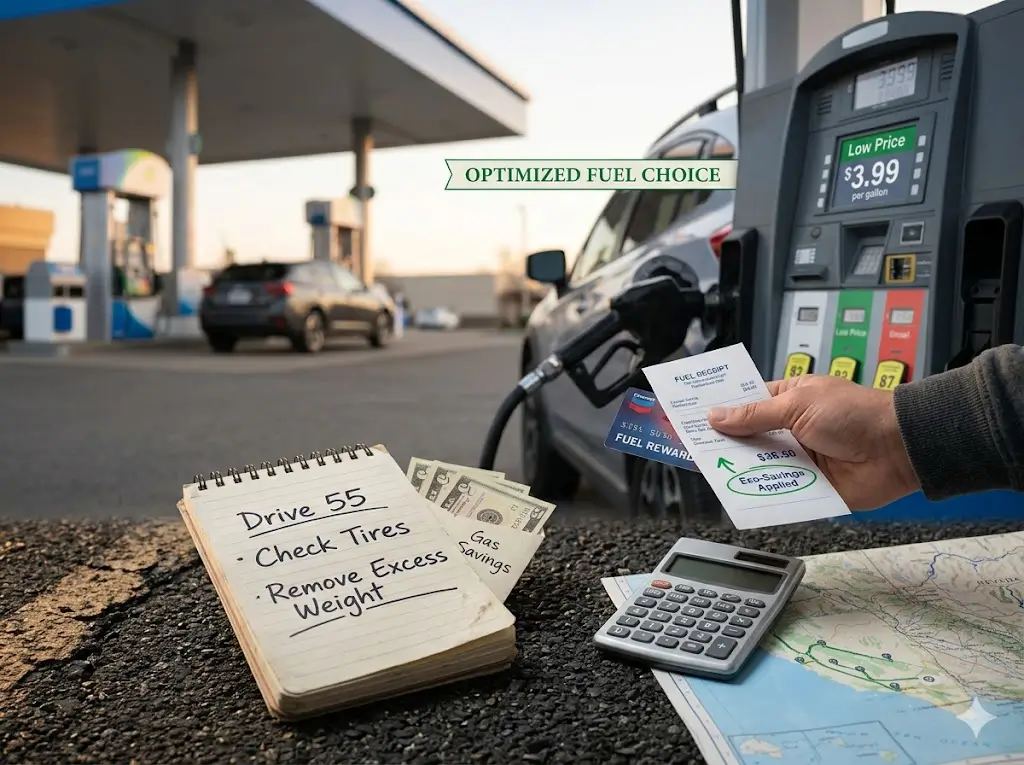
Income Potential & Earnings Breakdown
Let’s look at the numbers. If you drive 1,200 miles a month at 25 MPG and gas is $3.50, you spend $168. Here is the income potential of optimization:
| Strategy | Efficiency Gain | Monthly Savings | Annual “Earnings” |
|---|---|---|---|
| Smooth Driving Habits | 20% | $33.60 | $403.20 |
| Correct Tire Pressure | 3% | $5.04 | $60.48 |
| Cashback/Loyalty Apps | 5% | $8.40 | $100.80 |
| Maintenance (Air Filters/Oil) | 4% | $6.72 | $80.64 |
| Total Reclaimed Income | ~32% | $53.76 | $645.12 |
This $645 is pure profit. If you reinvest this into your online earnings ventures, it could cover your web hosting, email marketing tools, and a premium WordPress theme for the next three years.
Alternative Methods & Variations
- The “Remote Work” Leverage: The absolute best way to save on gas is to not drive. Transitioning to a work from home model can save the average person over $2,000 annually.
- Carpooling Apps: Use apps like Waze Carpool to turn your commute into a micro-revenue stream by sharing costs with others.
- Fuel Grade Myths: Unless your engine specifically requires premium (check your manual), using 91 octane instead of 87 is a waste of money that provides zero performance benefits for most standard cars.
Best Practices & Optimization Tips
- Use Cruise Control: On flat highways, cruise control helps maintain a constant speed, which is significantly more efficient than manual throttle control.
- Park in the Shade: In the summer, parking in the shade keeps your cabin cooler, reducing the amount of energy your AC uses when you restart the car.
- Fill Up on Monday or Tuesday: Gas prices historically rise toward the weekend. Use a tracking app to spot local price cycles.
Common Mistakes to Avoid
- Topping Off the Tank: Once the nozzle clicks off, stop. Topping off can damage your car’s vapor recovery system and leads to gas spillage.
- Driving on “E”: Running your tank low can pull sediment into the fuel pump, leading to a $500+ repair that wipes out months of savings.
- Neglecting the Gas Cap: A loose, cracked, or missing gas cap allows fuel to evaporate directly into the air. Millions of gallons are lost every year to this simple fix.
Long-Term Sustainability & Growth
As you master these habits, don’t let the savings disappear into your general checking account.
- Reinvestment: Set up a “Fuel Savings” bucket in your banking app.
- Automation: Every time you fill up, check your cashback app and move the saved amount into your side hustle fund.
- Future-Proofing: Consider your next vehicle purchase based on “Cost per Mile” rather than just the sticker price. A more efficient car is a long-term monetization strategy for your lifestyle.
Conclusion
Reclaiming your wealth doesn’t always require a new job; often, it just requires a better system. By implementing these practical ways to save on gas, you are building the financial discipline necessary for financial freedom. Stop viewing your fuel tank as a drain and start viewing it as an optimized component of your path to online earnings.
Ready to start your journey? Drop your current MPG in the comments and let’s see how much we can improve it! Subscribe for weekly money-making strategies.
FAQs
How much money can I realistically save on gas?
The average driver can save between $400 and $800 per year by combining maintenance, route planning, and behavioral changes.
Do I need prior mechanical experience?
No. Most of these steps, like checking tire pressure or using an app, require zero technical skill.
What’s the initial investment?
The initial investment is typically $0. The primary cost is the 5 minutes it takes to plan your route or check your tires.
How long until I see results?
You will see a higher MPG on your dashboard immediately, and more money in your bank account by the end of your first month.
Is this method still working in 2026?
As long as vehicles run on internal combustion engines, fuel efficiency will remain a top priority for protecting your income potential.
What are the risks involved?
There are no risks to your vehicle from driving efficiently. In fact, smooth driving and proper maintenance actually extend the life of your car.
Before you go, tap those stars!
Straightforward, no gimmicks, just solid banking advice
I clicked on this article expecting it to push some specific bank or financial product with referral links. I was pleasantly surprised. The advice was unbiased, focused on principles rather than promoting any particular institution, and gave me a clear framework to evaluate my own options. I appreciated that the article addressed the importance of FDIC insurance, automatic transfers, and goal-setting — things that seem obvious but that most people (including me) overlook. The writing was clear and concise, without the usual fluff or overly complex financial jargon. The only reason I’m giving four stars instead of five is that I would have liked even more detail on how to balance saving with paying down debt. Still, this was one of the most practical and trustworthy articles on saving I’ve read in a long time. Highly recommend.
Solid advice that cuts through the noise
I’ve been saving for years, but I kept wondering if my money was actually working as hard as it could be. There’s so much conflicting information out there — regular savings accounts, money market accounts, CDs, high-yield options — it gets confusing fast. This article did an excellent job comparing the options side by side, explaining the pros and cons of each, and helping me figure out which strategy made sense for my situation. I especially appreciated the section on the importance of emergency funds versus long-term savings, and the breakdown of how compound interest really adds up over time. I ended up moving my savings to a high-yield account and setting clearer goals. Practical, well-researched, and genuinely helpful.
Small changes, noticeable results
I’ll be honest — I clicked on this article expecting generic advice like “drive less” (thanks, captain obvious). But I was genuinely impressed. The article breaks down the actual science behind why certain habits affect fuel economy, with real numbers to back it up. I learned that my lead-foot acceleration and speeding were costing me way more than I realized. The section on vehicle maintenance was especially valuable — I didn’t know a dirty air filter could impact mileage that much. The tone was straightforward, no fluff, no upselling expensive products. Just solid, practical advice that actually works. My fuel expenses dropped by about 15% last month without me changing my overall driving needs.
Finally, practical advice that doesn’t require buying a new car
As someone who drives over 400 miles a week for work, gas expenses have been crushing my budget. I’ve read countless articles that basically just say “buy an electric vehicle” — which isn’t helpful when that’s not in my budget. This article was a game-changer. The tips were immediately actionable: combining trips, checking tire pressure (I didn’t realize how much that affects mileage!), and using gas price apps. I started implementing these suggestions last month, and I’ve already saved about $40. The writing was clear, well-organized, and respected that not everyone can just trade in their car. Highly recommend for anyone feeling the pain at the pump.
Perfect for renters who can’t install solar panels
As someone who rents an apartment, I often feel limited when it comes to making my home more energy-efficient. I can’t just install new appliances or add insulation to the walls. This article was a lifesaver because it focused on renter-friendly solutions—things like weatherstripping for doors, smart power strips, and optimizing how I use my existing appliances. The writing was straightforward and didn’t assume I owned a home. My only small critique is that I would have loved even more rent-specific examples, but overall, this was incredibly helpful. My electric bill dropped by about $15 last month!