

Practical Ways to Save on Electric Bill Costs at Home
Did you know that the average household wastes up to 30% of its energy consumption every single month, essentially throwing away capital that could be used to fund your next big venture? When most people think about achieving financial freedom, they focus entirely on generating new revenue streams. However, the easiest way to increase your personal profit margins right now is to save on electric bill costs at home.
If you are trying to build online earnings or fund a new side hustle, minimizing your baseline living expenses is your first crucial step. A dollar saved on utility waste is a dollar you can reinvest into your work from home business, domain hosting, or ad campaigns. In this comprehensive guide, we will break down exactly how to stop energy leaks, optimize your home, and redirect those reclaimed funds toward building true wealth.
What You’ll Need to Get Started
You don’t need a massive budget to start seeing a reduction in your energy costs. In fact, many of the best methods require zero initial capital. Here is a breakdown of what you need to start to save on electric bill expenses today:
- Zero-Cost Requirements:
- Awareness of your current utility usage (grab your last 3 months of bills).
- A willingness to change daily habits (turning off lights, unplugging devices).
- Basic knowledge of your home’s peak energy hours.
- Low-Cost Investment Tools ($15 – $50):
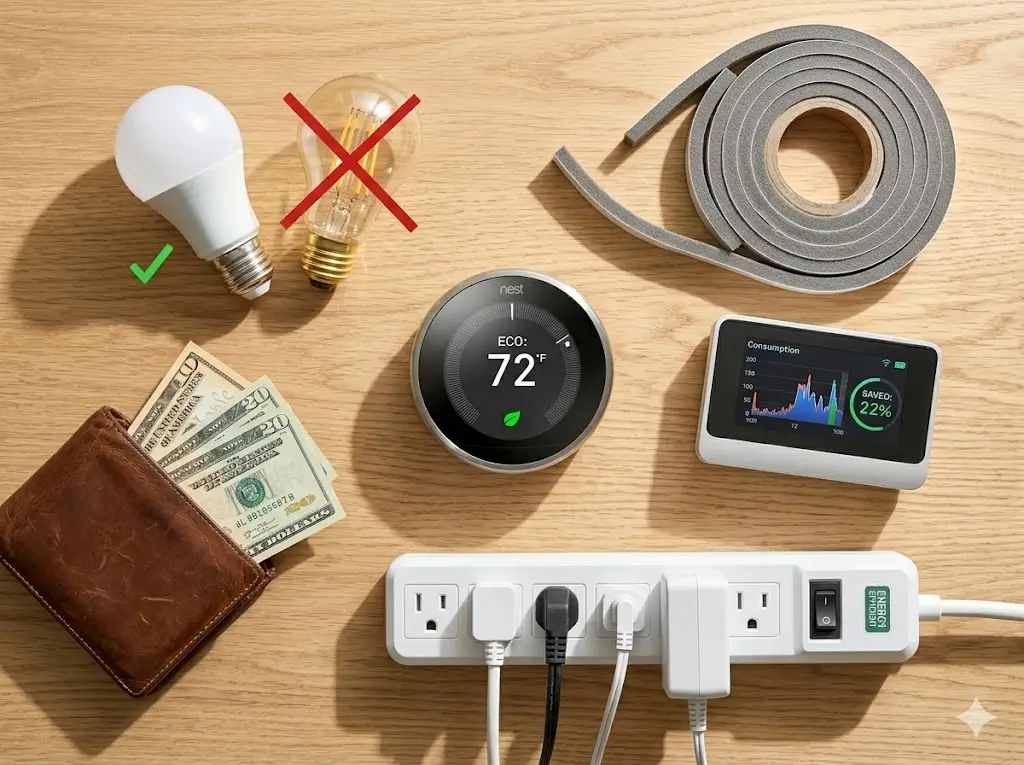
- Smart Plugs: To easily kill “vampire power” from electronics.
- LED Bulbs: Replacing incandescent bulbs offers an immediate ROI.
- Weatherstripping: To seal drafty doors and windows.
- Medium Investment Tools ($50 – $150):
- Programmable Smart Thermostat: Automates your heating and cooling.
- Home Energy Monitor: Plugs into your electrical panel to track real-time usage.
Free Alternative: If you cannot invest in a smart thermostat, simply setting a daily phone alarm to manually adjust your manual thermostat before you leave the house and before you sleep works just as well!
How Much Could YOU Save?
Calculate how much capital you could reclaim for your online business by following the steps in this guide.
Your Reclaimed Income
$0 / month
$0 / year
🚀 That’s pure profit margin you can reinvest directly into your domain hosting, ad campaigns, or dividend portfolio!
Time Investment
Treat optimizing your home’s energy exactly like setting up a new digital income stream—it takes a bit of upfront effort, but then it runs on autopilot.
- Initial Setup Time: 2 to 3 hours (for conducting a home energy audit, installing smart plugs, and changing bulbs).
- Daily Time Commitment: Less than 5 minutes (pressing a button to turn off power strips or adjusting the thermostat).
- Timeline to First "Earnings" (Savings): You will see tangible results in 30 to 45 days, precisely when your next utility bill arrives.
- Comparison: Unlike building a blog which might take 6 months to see AdSense revenue, reducing your energy consumption offers a guaranteed, immediate return on investment.
Step-by-Step Implementation Guide
Follow these actionable steps to drastically reduce your energy consumption and maximize the money you keep in your pocket.
Step 1: Conduct a DIY Home Energy Audit
Before you can fix the leaks, you need to find them. Walk through your home and identify where energy is being wasted. Feel around windows for drafts, check if your water heater is set too high (120°F is ideal), and note which appliances are constantly plugged in but rarely used.
- Pro Tip: Call your local utility provider. Many offer free professional energy audits to their customers.
Step 2: Slay the "Vampire Load"
Vampire power (or standby power) refers to electronics that drain energy simply by being plugged in, even when turned off. This can account for up to 10% of your total bill.
- Action: Plug your TV, gaming consoles, and computer setups into smart power strips. When you finish your work from home tasks, flip one switch to completely cut power to the entire desk setup.
Step 3: Master Your HVAC System
Heating and cooling account for roughly 47% of an average home's energy use.
- Action: In the winter, lower your thermostat by 7-10 degrees for the 8 hours you are asleep or at work. In the summer, raise it by the same amount. According to the Department of Energy, this simple habit can save you up to 10% a year on heating and cooling.
Step 4: Upgrade Your Lighting and Appliances
If you are still using older incandescent bulbs, you are burning money.
- Action: Swap your five most frequently used light fixtures to Energy Star-certified LED bulbs. They use up to 90% less energy and last 25 times longer. Furthermore, when it's time to replace large appliances (like a fridge or washer), always prioritize energy-efficient models.
Income Potential & Earnings Breakdown
While we usually talk about income potential in terms of course sales or affiliate marketing, let's look at the mathematics of saving on your electric bill. Money saved is non-taxable income—it goes straight to your bottom line.
| Optimization Strategy | Estimated Monthly Savings | Annual "Profit" Retained |
|---|---|---|
| Eliminating Vampire Power | $10 - $15 | $120 - $180 |
| Thermostat Optimization | $15 - $30 | $180 - $360 |
| Switching to LED Bulbs | $5 - $10 | $60 - $120 |
| Total Potential Savings | $30 - $55 / month | $360 - $660 / year |
Note: Results vary based on local energy rates, home size, and baseline consumption.
Imagine taking that $660 a year and investing it into dividend stocks for passive income, or using it to pay for web hosting and premium marketing tools to launch a profitable online business!
Alternative Methods & Variations
Depending on your living situation, you might need different approaches to lower your bill.
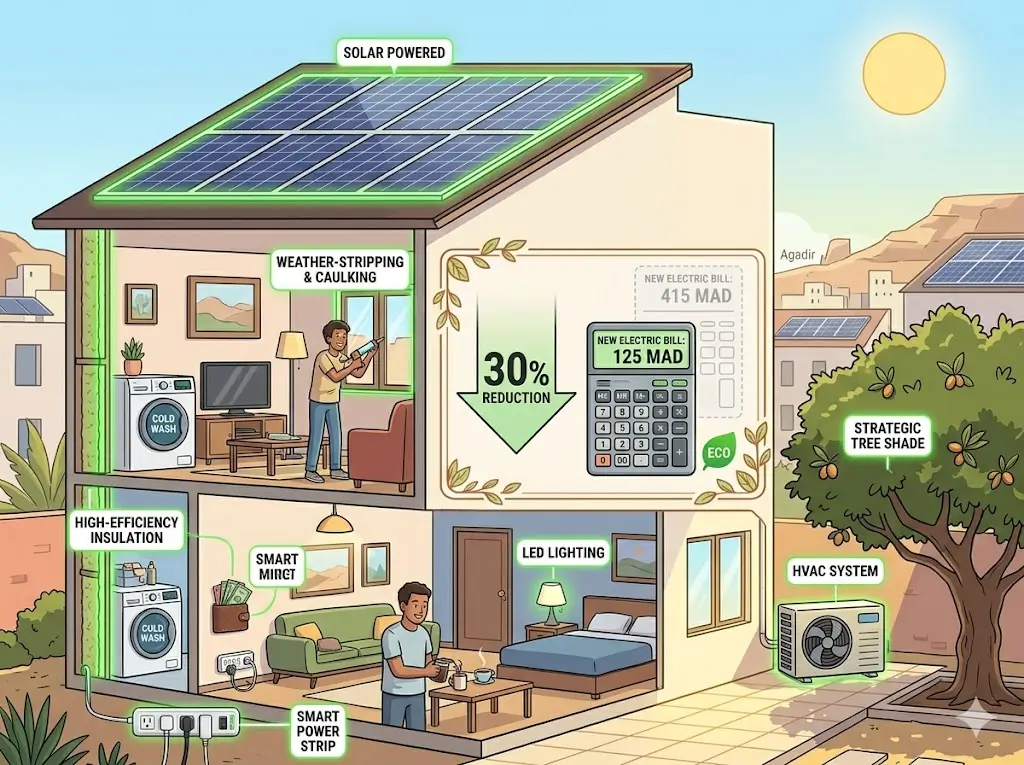
- The Renter’s Approach (Low Investment): You cannot install solar panels or change out appliances in an apartment. Focus entirely on behavioral changes, utilizing smart plugs, thick thermal curtains to insulate windows, and washing clothes in cold water.
- The Homeowner’s Approach (High Investment, High ROI): Look into adding attic insulation, upgrading to double-pane windows, or installing a solar panel array. While the upfront cost is high, these methods act as long-term monetization strategies for your property, drastically cutting bills and increasing home value.
Best Practices & Optimization Tips
To maximize your results and ensure you continue to save on electric bill expenses year-round, follow these best practices:
- Utilize Off-Peak Hours: Many utility companies charge a "Time of Use" rate, meaning electricity is more expensive during high-demand hours (usually 4 PM to 9 PM). Run your dishwasher, washing machine, and dryer late at night or early in the morning.
- Automate Everything: Relying on human memory fails. Use smart home tech to automate your lights and thermostat.
- Maintain Your Equipment: Change your HVAC filters every 30 to 90 days. A dirty filter forces your system to work harder, pulling more electricity and increasing your costs.
Common Mistakes to Avoid
Even well-meaning individuals fall into traps that cost them money. Avoid these common pitfalls:
- Closing Vents in Unused Rooms: Many people think closing vents saves money. In modern central air systems, this actually alters the pressure, forcing your HVAC to work harder and increasing your bill.
- Leaving the AC on "To Cool the House Faster": Cranking the AC down to 60°F won't cool the house any faster than setting it to 72°F; it simply forces the unit to run longer, wasting energy.
- Ignoring the Fridge Coils: If you don't vacuum the dust off the back of your refrigerator coils twice a year, the compressor runs continuously, spiking your energy usage.
Long-Term Sustainability & Growth
The ultimate goal of learning how to save on electric bill costs isn't just to hoard a few extra dollars—it's to leverage that capital.
Once you have optimized your home and established a lower baseline bill, set up an automatic bank transfer. Take the $50 you are saving each month and funnel it directly into an investment account or a high-yield savings account dedicated to your online business. This is how you use household efficiency as a stepping stone to building lasting passive income. By turning an unavoidable liability (utilities) into an optimized system, you fund your journey toward financial independence.
Conclusion
Mastering your personal finances starts at home. By eliminating vampire power, optimizing your heating and cooling, and automating your home's energy usage, you can realistically cut your utility costs by 10% to 30%. The strategies outlined above don't just help you save on electric bill expenses; they provide the seed capital you need to start investing in your future.
Are you ready to take control of your expenses and start building real wealth? Let us know which energy-saving trick you are implementing first by dropping a comment below! Don't forget to subscribe to our newsletter for weekly tips on building digital businesses and achieving financial freedom.
FAQs
1. How much money can I realistically save on my electric bill?
Depending on your starting point, most households can realistically reduce their energy consumption by 10% to 30% using behavioral changes and minor upgrades. This typically translates to $300 to $600+ in annual savings.
2. Do I need prior experience with home improvement to do this?
Not at all! Methods like unplugging devices, washing clothes in cold water, and swapping out lightbulbs require zero technical skills but yield immediate results.
3. What's the initial investment required?
You can start for $0 simply by changing your daily habits. If you wish to optimize further, a budget of $50 to $100 for smart plugs, LED bulbs, and weatherstripping will yield an excellent return on investment.
4. How long until I see results?
You will see the financial impact at the end of your current billing cycle (usually 30 to 45 days) after implementing these changes consistently.
5. Is replacing my old appliances worth the cost?
If your refrigerator or washer is over 10-15 years old, upgrading to an Energy Star appliance will pay for itself over time through energy savings. However, only upgrade if you have the budget; do not go into debt to save on electricity.
6. Can renters use these strategies?
Absolutely. Renters should focus on portable solutions like smart power strips, thermal curtains, window draft stoppers, and adjusting the thermostat, all of which can be taken with you when you move.
Before you go, tap those stars!
Straightforward, no gimmicks, just solid banking advice
I clicked on this article expecting it to push some specific bank or financial product with referral links. I was pleasantly surprised. The advice was unbiased, focused on principles rather than promoting any particular institution, and gave me a clear framework to evaluate my own options. I appreciated that the article addressed the importance of FDIC insurance, automatic transfers, and goal-setting — things that seem obvious but that most people (including me) overlook. The writing was clear and concise, without the usual fluff or overly complex financial jargon. The only reason I’m giving four stars instead of five is that I would have liked even more detail on how to balance saving with paying down debt. Still, this was one of the most practical and trustworthy articles on saving I’ve read in a long time. Highly recommend.
Solid advice that cuts through the noise
I’ve been saving for years, but I kept wondering if my money was actually working as hard as it could be. There’s so much conflicting information out there — regular savings accounts, money market accounts, CDs, high-yield options — it gets confusing fast. This article did an excellent job comparing the options side by side, explaining the pros and cons of each, and helping me figure out which strategy made sense for my situation. I especially appreciated the section on the importance of emergency funds versus long-term savings, and the breakdown of how compound interest really adds up over time. I ended up moving my savings to a high-yield account and setting clearer goals. Practical, well-researched, and genuinely helpful.
Small changes, noticeable results
I’ll be honest — I clicked on this article expecting generic advice like “drive less” (thanks, captain obvious). But I was genuinely impressed. The article breaks down the actual science behind why certain habits affect fuel economy, with real numbers to back it up. I learned that my lead-foot acceleration and speeding were costing me way more than I realized. The section on vehicle maintenance was especially valuable — I didn’t know a dirty air filter could impact mileage that much. The tone was straightforward, no fluff, no upselling expensive products. Just solid, practical advice that actually works. My fuel expenses dropped by about 15% last month without me changing my overall driving needs.
Finally, practical advice that doesn't require buying a new car
As someone who drives over 400 miles a week for work, gas expenses have been crushing my budget. I’ve read countless articles that basically just say “buy an electric vehicle” — which isn’t helpful when that’s not in my budget. This article was a game-changer. The tips were immediately actionable: combining trips, checking tire pressure (I didn’t realize how much that affects mileage!), and using gas price apps. I started implementing these suggestions last month, and I’ve already saved about $40. The writing was clear, well-organized, and respected that not everyone can just trade in their car. Highly recommend for anyone feeling the pain at the pump.
Perfect for renters who can't install solar panels
As someone who rents an apartment, I often feel limited when it comes to making my home more energy-efficient. I can’t just install new appliances or add insulation to the walls. This article was a lifesaver because it focused on renter-friendly solutions—things like weatherstripping for doors, smart power strips, and optimizing how I use my existing appliances. The writing was straightforward and didn’t assume I owned a home. My only small critique is that I would have loved even more rent-specific examples, but overall, this was incredibly helpful. My electric bill dropped by about $15 last month!