How to Reduce Subscription Costs Effectively
Did you know that the average American spends over $273 a month on subscriptions, and an astonishing 74% of people forget they are even paying for them? That is over $3,200 a year evaporating from bank accounts without a second thought. If you are serious about building passive income and achieving true financial freedom, ignoring these recurring leaks is the number one reason many online entrepreneurs struggle to fund their ventures.
Learning how to reduce subscription costs effectively is not just about pinching pennies; it is a foundational business strategy. By treating your personal finances like a business, auditing your recurring expenses instantly increases your overall profit margins. Every dollar you stop wasting on an unused streaming service or forgotten software trial is a dollar you can redirect into legitimate monetization strategies. Let’s dive into the step-by-step system for plugging these leaks and reclaiming your wealth.
2. What You’ll Need to Get Started
You do not need an accounting degree or expensive software to stop the monthly bleed. Treating your expense audit like a legitimate side hustle requires just a few basic tools and a bit of focus. Here is what you need to begin:
- Financial Statements: Access to your last 3-6 months of bank and credit card statements.
- An Expense Tracker: A simple spreadsheet (Google Sheets/Excel) or a free budgeting app to categorize your spending.
- Subscription Management Tools: Apps like Rocket Money (formerly Truebill) or Monarch Money (estimated cost: Free to $4.99/month, though manual tracking is completely free).
- Virtual Credit Card Provider: Platforms like Privacy.com (Free) to control future subscription charges automatically.
- Initial Investment: $0. Your only investment is your focus and willingness to make phone calls or click “cancel.”
Don’t miss an update. Join our newsletter.
3. The Time Investment
One of the best aspects of this financial strategy is the immediate return on your time. Unlike building a complex work from home business that might take months to show a profit, cutting subscriptions offers instant gratification.
- Setup Time Required: 1 to 2 hours for the initial comprehensive audit and mass cancellations.
- Daily/Weekly Time Commitment: 10 to 15 minutes per month for maintenance and reviewing new statements.
- Timeline to First Earnings: Immediate. You will “earn” back your money the moment your next billing cycle hits.
- Comparative ROI: Most beginners see results in 60-90 days with consistent effort in traditional online earnings. By contrast, reducing subscriptions guarantees a 100% return on your time investment on day one.

4. Step-by-Step Implementation Guide
Follow these sequential, actionable steps to audit your digital life and maximize your hidden revenue streams.
Step 1: The Master Subscription Audit
Before you can cut, you must know what you have. Print out your last 90 days of bank and credit card statements. Go through them with a highlighter and mark every single recurring charge.
- Pro Tip: Don’t forget annual subscriptions (like Amazon Prime or web hosting) that might not show up on a monthly statement. Search your email inbox for terms like “receipt,” “subscription,” and “renewal.”
Step 2: The Ruthless Purge
Categorize your highlighted list into three columns: “Keep,” “Downgrade,” and “Cancel.” If you haven’t used a service in the last 30 days, move it immediately to the “Cancel” list.
- Insider Trick: Don’t fall for the sunk-cost fallacy. Just because you paid for three months of a fitness app doesn’t mean you need to pay for a fourth if you aren’t using it.
Step 3: Negotiate and Downgrade
For the services in your “Downgrade” pile, it’s time to negotiate. Call your internet provider, cell phone company, or SaaS providers. Tell them you are considering canceling due to budget constraints and ask for their retention department.
- Actionable Script: “Hi, I love your service but I need to reduce subscription costs effectively this month. Are there any current promotions or loyalty discounts you can apply to my account to help me stay?”
Step 4: Implement Virtual Cards
Once your list is pruned, move your remaining “Keep” subscriptions to virtual credit cards using a service like Privacy.com. Set strict monthly spending limits on these cards. If a service tries to secretly raise its price, the card will decline, putting the power back in your hands.
5. Income Potential & Earnings Breakdown
When you reduce expenses, you directly increase your “found” income. Here is a realistic look at the income potential you unlock by treating subscription management as a recurring task:
| Strategy Level | Monthly “Found” Income | Annual “Earnings” Projection | Primary Tactics Used |
|---|---|---|---|
| Beginner | $30 – $50 | $360 – $600 | Canceling 2-3 unused streaming services, gym memberships, or app trials. |
| Intermediate | $75 – $150 | $900 – $1,800 | Negotiating internet bills, downgrading cell plans, utilizing family plans. |
| Advanced | $200 – $400+ | $2,400 – $4,800+ | Auditing SaaS business tools, churning subscriptions, aggressive retention negotiating. |
Disclaimer: Earnings and savings vary widely based on your starting expenses, lifestyle, and negotiation success.
6. Alternative Methods & Variations
There are multiple ways to approach the subscription problem. Here are some niche variations to consider:
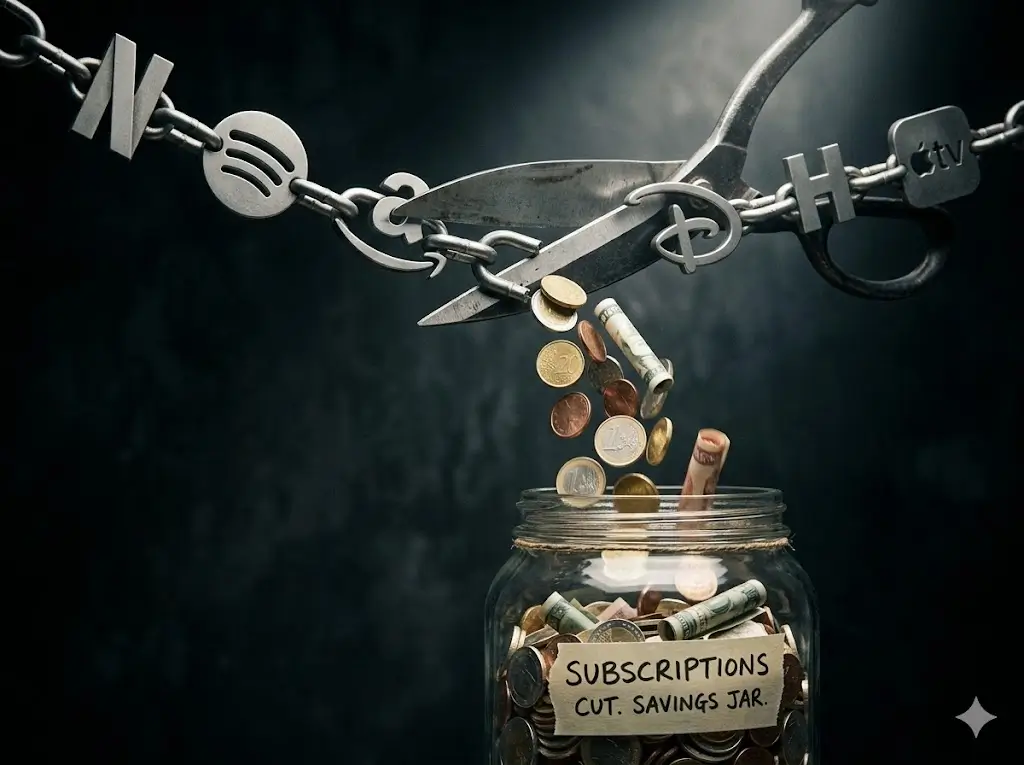
- The “Churning” Method: Instead of keeping three streaming services simultaneously, rotate them. Pay for Netflix in January, binge your shows, cancel it, and switch to Hulu in February.
- Account Sharing Networks: Legally consolidate your services by forming a “Family Plan” with trusted friends or relatives for services like Spotify, Apple One, or YouTube Premium.
- Annual Pre-payment Flips: If you absolutely must keep a service, check if they offer an annual billing option. Paying upfront often secures a 15% to 20% discount compared to monthly billing.
7. Best Practices & Optimization Tips
To transform this from a one-time chore into a well-oiled machine for digital income, utilize these optimization hacks:
- The 48-Hour Free Trial Rule: Whenever you sign up for a 7-day or 30-day free trial, immediately set a calendar reminder on your phone for 48 hours before the trial expires.
- Audit Your App Subscriptions: Go into your iPhone (Apple ID settings) or Android (Google Play subscriptions) right now. Many people have $3-$5 weekly app subscriptions hiding directly in their phone settings, completely bypassing their bank statements.
- Use Subscription Management Software: For experienced users with complex business expenses, integrating a tool like Rocket Money automates the negotiation process, taking a percentage of the savings as their fee.
8. Common Mistakes to Avoid
When attempting to streamline finances, many beginners fall into psychological traps. Avoid these common pitfalls:
- The “Pause” Trap: Many services will offer to “pause” your subscription for 30 to 60 days instead of canceling. If you forget to fully cancel, you will be automatically billed again. Always choose “Cancel.”
- Ignoring the “Small” Charges: Dismissing a $2.99/month charge because it is “cheap” is a mistake. Five of those add up to $180 a year. Treat small leaks with the same urgency as large ones.
- Failing to Confirm Cancellation: Never assume an email to customer service is enough. Always get a confirmation number or screenshot of the cancellation screen to dispute any future ghost charges.
9. Long-Term Sustainability & Growth
Stopping the financial bleed is only step one. The real magic happens when you route those reclaimed funds toward long-term wealth.
To maintain and grow this “found” money, set up an automated transfer. If you managed to shave $100 off your monthly subscription costs, do not leave that $100 in your checking account to be absorbed by other lifestyle inflations. Instead, automate a $100 monthly transfer into a high-yield savings account or an index fund. By doing this, your canceled Netflix account literally transforms into compounding passive income, actively funding your future.
10. Conclusion
Learning how to reduce subscription costs effectively is one of the quickest, highest-yielding strategies to boost your personal profit margins. By auditing your statements, ruthlessly purging unused services, and negotiating your essential bills, you instantly create new capital to fund your online business goals.
Ready to start your journey toward financial freedom? Drop your questions in the comments below—let me know which subscription you are canceling today! Subscribe for weekly money-making strategies, and be sure to share your progress in our community.
11. FAQs
How much money can I realistically make/save by doing this?
Most people who perform a deep audit of their recurring expenses find between $50 and $150 a month in hidden subscriptions. Annually, this translates to $600 to $1,800 in reclaimed income.
Do I need prior experience to negotiate my bills?
No prior experience is necessary. Customer retention departments are trained to offer discounts to customers who ask. A simple, polite phone call stating that you are looking to lower your monthly budget is usually enough to trigger a promotional rate.
What’s the initial investment to track my subscriptions?
The investment is absolutely zero. You can track everything manually using pen and paper or a free Google Spreadsheet.
How long until I see results?
You will see immediate results. The moment you click “cancel” on an unused service, you guarantee that money stays in your pocket during the next billing cycle.
Is this method still working in 2026/2027?
Yes, more than ever. The subscription economy has exploded, meaning the average consumer has more hidden recurring charges today than at any point in history.
What are the risks involved?
There is virtually zero financial risk. The only minor risk is accidentally canceling a service you actually use and having to spend five minutes signing up for it again.
Before you go, tap those stars!
Straightforward, no gimmicks, just solid banking advice
I clicked on this article expecting it to push some specific bank or financial product with referral links. I was pleasantly surprised. The advice was unbiased, focused on principles rather than promoting any particular institution, and gave me a clear framework to evaluate my own options. I appreciated that the article addressed the importance of FDIC insurance, automatic transfers, and goal-setting — things that seem obvious but that most people (including me) overlook. The writing was clear and concise, without the usual fluff or overly complex financial jargon. The only reason I’m giving four stars instead of five is that I would have liked even more detail on how to balance saving with paying down debt. Still, this was one of the most practical and trustworthy articles on saving I’ve read in a long time. Highly recommend.
Solid advice that cuts through the noise
I’ve been saving for years, but I kept wondering if my money was actually working as hard as it could be. There’s so much conflicting information out there — regular savings accounts, money market accounts, CDs, high-yield options — it gets confusing fast. This article did an excellent job comparing the options side by side, explaining the pros and cons of each, and helping me figure out which strategy made sense for my situation. I especially appreciated the section on the importance of emergency funds versus long-term savings, and the breakdown of how compound interest really adds up over time. I ended up moving my savings to a high-yield account and setting clearer goals. Practical, well-researched, and genuinely helpful.
Small changes, noticeable results
I’ll be honest — I clicked on this article expecting generic advice like “drive less” (thanks, captain obvious). But I was genuinely impressed. The article breaks down the actual science behind why certain habits affect fuel economy, with real numbers to back it up. I learned that my lead-foot acceleration and speeding were costing me way more than I realized. The section on vehicle maintenance was especially valuable — I didn’t know a dirty air filter could impact mileage that much. The tone was straightforward, no fluff, no upselling expensive products. Just solid, practical advice that actually works. My fuel expenses dropped by about 15% last month without me changing my overall driving needs.
Finally, practical advice that doesn’t require buying a new car
As someone who drives over 400 miles a week for work, gas expenses have been crushing my budget. I’ve read countless articles that basically just say “buy an electric vehicle” — which isn’t helpful when that’s not in my budget. This article was a game-changer. The tips were immediately actionable: combining trips, checking tire pressure (I didn’t realize how much that affects mileage!), and using gas price apps. I started implementing these suggestions last month, and I’ve already saved about $40. The writing was clear, well-organized, and respected that not everyone can just trade in their car. Highly recommend for anyone feeling the pain at the pump.
Perfect for renters who can’t install solar panels
As someone who rents an apartment, I often feel limited when it comes to making my home more energy-efficient. I can’t just install new appliances or add insulation to the walls. This article was a lifesaver because it focused on renter-friendly solutions—things like weatherstripping for doors, smart power strips, and optimizing how I use my existing appliances. The writing was straightforward and didn’t assume I owned a home. My only small critique is that I would have loved even more rent-specific examples, but overall, this was incredibly helpful. My electric bill dropped by about $15 last month!