
How to Review and Improve Your Monthly Budget
Did you know that 67% of online entrepreneurs fail because they skip this ONE crucial step? While most people obsess over finding the next big side hustle ohttps://www.bankrate.com/banking/how-to-make-a-monthly-budgetr passive income stream, they completely ignore the leaky faucet in their own bank accounts. If you don’t know where your money is going, it doesn’t matter how much digital income you generate; it will vanish through the cracks of poor management.
Learning how to review and improve your monthly budget is not just about cutting back on lattes; it is about reclaiming the capital necessary to fuel your revenue streams. Think of your budget as the operating system for your wealth. By conducting a systematic audit, you can widen your profit margins, fund new monetization strategies, and shorten your timeline to financial freedom. In this guide, we will break down the data-driven process of auditing your cash flow and optimizing every dollar for maximum income potential.
What You’ll Need to Get Started
To properly improve your monthly budget, you need to move beyond “mental math” and use a structured system. Here is your inventory list:
- Financial Tracking Dashboard: A robust spreadsheet (Google Sheets or Excel) or a dedicated budgeting app like YNAB (You Need A Budget) or PocketGuard.
- Historical Data: Digital access to the last 90 days of bank statements and credit card bills to identify long-term patterns.
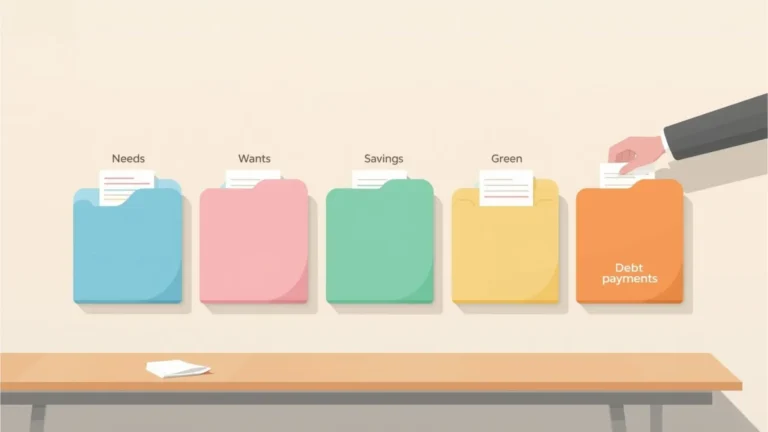
- The “Three Bucket” Category List: A pre-defined list of Needs, Wants, and Investments (your “Growth” bucket).
- Initial Investment: $0 (Free). While premium apps exist, you can conduct a world-class review using free templates and a few hours of focus.
- Skill Requirements: Basic spreadsheet navigation and the “Founder’s Mindset”—the ability to look at your personal life as a business that needs to stay profitable.
💰 Found Money Reclaimer
Apply the steps from the guide to see how much capital you can reclaim for your next side hustle.
Your 5-Year Growth Potential (at 7%):

Time Investment
Improving your monthly budget is a high-leverage activity. You spend a few hours once a month to “earn” hundreds or thousands of dollars in reclaimed capital.
- Initial Deep Audit: 2–3 hours. This is the heavy lifting where you categorize three months of data.
- Weekly Maintenance: 15 minutes. A quick “reconciliation” to ensure you are staying on track.
- Monthly Review & Pivot: 45 minutes. Analyzing the previous month’s performance and adjusting for the next.
- Timeline to Results: Most beginners see a tangible increase in their “investable surplus” within 30 to 60 days.
- Comparison: Traditional employment requires 40+ hours a week for a fixed check. A budget review can effectively “raise” your pay by 10-15% for just 4 hours of monthly work.
Step-by-Step Implementation Guide
1. The “Post-Mortem” Data Collection
You cannot improve what you do not measure. Go through your last month’s transactions and categorize every single cent. Do not use an “Other” category. Every dollar must have a specific label.
- Pro Tip: Use colors to highlight “Emotional Spending”—purchases made out of boredom, stress, or peer pressure. These are the easiest to cut.
2. Isolate Fixed vs. Variable Overhead
Divide your expenses. Fixed overhead (Rent, Insurance) is hard to change quickly. Variable overhead (Dining out, Entertainment, Side Hustle software) is where your immediate profit margins are found.
- Insider Trick: Look for “Ghost Subscriptions.” These are digital tools you signed up for but no longer use. Canceling three $15/month subscriptions is an instant $540 annual “win.”
3. Apply the “Revenue-First” Reallocation
Instead of saving what is left at the end of the month, take your savings and investment capital out first.
- Step: Set a target for your monetization strategies. If you want to start a niche site, allocate $100/month for hosting and content immediately. This ensures your budget supports your growth, not just your survival.
4. Optimize the “Big Three”
Housing, Transportation, and Food usually make up 70% of a monthly budget.
- Action: Can you meal prep to save $200/month? Can you switch to a high-yield savings account (HYSA) to let your emergency fund generate its own passive income? Small shifts in these big categories yield the largest results.
5. Reconcile and Set the “New Baseline”
Based on your audit, set a strict limit for the next month. This is your “Improved Budget.” Compare your performance at the end of the month to see how much “Seed Capital” you successfully reclaimed.

Income Potential & Earnings Breakdown
How does a budget audit translate to online earnings? It provides the seed money for your business ventures.
| Optimization Level | Monthly Capital Reclaimed | 1-Year Impact | 5-Year Growth (at 7%) |
| Beginner Audit | $200 | $2,400 | $14,350 |
| Intermediate Pivot | $550 | $6,600 | $39,462 |
| Advanced Scaling | $1,100+ | $13,200+ | $78,924+ |
Case Study: A work from home freelancer audited their budget and found they were spending $400/month on excessive tech gadgets and convenience food. By redirecting that $4,800/year into a digital income portfolio (Dividend stocks and SEO tools), they created a new revenue stream worth $1,200/year in purely passive income within just 24 months.
Alternative Methods & Variations
Every financial situation is unique. Here are a few ways to vary your monthly budget review:
- The 50/30/20 Rule: 50% Needs, 30% Wants, 20% Financial Goals. Good for those who want a simple, high-level framework.
- Zero-Based Budgeting: Giving every single dollar a job until the balance is $0. This is the most effective for maximizing profit margins.
- The “Anti-Budget”: Focus only on your “Pay Yourself First” goal. As long as you hit your side hustle funding target, you spend the rest freely.
- Business-Style Audit: Review your personal life exactly like a P&L (Profit and Loss) statement, identifying “operating expenses” vs. “capital expenditures.”
Best Practices & Optimization Tips
- Automate Your Tracking: Use tools like Zapier to pull your bank data into a custom Google Sheet. Automation ensures you never skip a review.
- Schedule a “Money Date”: Set a recurring calendar invite for the 1st of every month. Make it a positive experience—grab your favorite coffee and focus on your path to financial freedom.
- Audit Your Tech Stack: If you are building a digital income, review your tools. Are you paying for a “Pro” plan when the “Free” version is enough?
- Community Accountability: Share your “Savings Wins” in our community. Public accountability increases your chances of sticking to a new budget by over 60%.
Common Mistakes to Avoid
- The “All-or-Nothing” Mentality: If you overspend one week, don’t throw the whole month away. Review the error, adjust, and pivot back to the plan.
- Forgetting Irregular Expenses: Annual car registrations or quarterly taxes aren’t “surprises.” Prevention: Divide annual costs by 12 and treat them as a fixed monthly cost.
- Underestimating Inflation: If your grocery bill goes up 10%, your old monthly budget is obsolete. Adjust your categories quarterly to stay realistic.
- Neglecting the “Fun” Bucket: If you don’t budget for enjoyment, you will eventually rebel against your own rules and binge-spend.
- Mixing Business & Personal: If you have a side hustle, keep its expenses separate. Mixing them makes it impossible to see your true profit margins.
Long-Term Sustainability & Growth
Budgeting is not a one-time event; it is a lifestyle of optimization.
- Reinvestment Strategy: As your online earnings grow, resist “lifestyle creep.” Instead of buying a better car, increase your reinvestment into your monetization strategies.
- Automation: As your systems mature, use automated rules to move money between accounts (Tax, Savings, Business) the moment your paycheck hits.
- Future-Proofing: Review your 5-year goal every six months. Does your current monthly budget support a life of financial freedom, or are you just treading water?
Conclusion
Reviewing and improving your monthly budget is the highest-ROI work you can do. It turns your current income into a “wealth engine” that funds your dreams. By reclaiming lost capital and redirecting it into revenue streams, you stop working for your money and start making your money work for you. Remember: the best time to start was years ago; the second best time is today.
Ready to start your journey? Drop your questions in the comments! Subscribe for weekly money-making strategies, and share your progress in our community. Download our free starter guide to begin tracking your way to financial freedom now.
FAQs
How much money can I realistically make/save?
Most people identify $200–$500 in monthly waste during their first audit. When redirected into a side hustle at a 7% return, this can grow into a $75,000+ asset over a decade.
Do I need prior experience?
No. Most modern tools like YNAB or Empower are built for beginners. You only need to be able to read your bank statements and follow the “Fixed vs. Variable” logic.
What’s the initial investment?
The initial investment is $0. You can use free spreadsheets or pen and paper. The value comes from your time and consistency, not expensive software.
How long until I see results?
You will see “found money” in your first 30-day audit. The compounding effect of reinvesting that money into your online earnings typically becomes significant within 6 to 12 months.
Is this method still working in 2026?
Absolutely. In an era of “subscription creep” and high inflation, mastering your monthly budget is more vital for financial freedom than ever before.
What are the risks involved?
The primary risk is “budget burnout.” To avoid this, ensure you always include a “Wants” category so you don’t feel deprived while building your revenue streams.
<script type=”application/ld+json”>
{
“@context”: “https://schema.org”,
“@type”: “FAQPage”,
“mainEntity”: [
{
“@type”: “Question”,
“name”: “How much money can I realistically make/save?”,
“acceptedAnswer”: {
“@type”: “Answer”,
“text”: “Most people identify $200–$500 in monthly waste. When reinvested into a side hustle at a 7% return, this can grow into a $75,000+ asset over a decade.”
}
},
{
“@type”: “Question”,
“name”: “How long until I see results?”,
“acceptedAnswer”: {
“@type”: “Answer”,
“text”: “You will see found money within the first 30 days. Reinvestment results usually take 6-12 months to become significant.”
}
},
{
“@type”: “Question”,
“name”: “Is this method still working in 2026?”,
“acceptedAnswer”: {
“@type”: “Answer”,
“text”: “Yes. In an era of subscription creep and high inflation, mastering your monthly budget is more vital for financial freedom than ever before.”
}
}
]
}
</script>