30-Day Money Saving Challenge for Beginners: Kickstart Your Wealth
Did you know that nearly 78% of people attempting to build online earnings or start a side hustle give up simply because they lack the initial seed capital? They spend months researching monetization strategies but fail to realize that the easiest way to fund their dreams is already sitting in their current paycheck.
If you are tired of living month-to-month and want to build a bridge to true financial freedom, completing a structured money saving challenge is the perfect starting point. A targeted 30-day reset isn’t just about skipping your morning coffee; it’s a strategic boot camp designed to radically improve your household’s profit margins. By actively “gamifying” your finances for a single month, you can easily scrape together the necessary capital to launch a work from home venture, pay down high-interest debt, or build a rock-solid emergency fund.
What You’ll Need to Get Started
You don’t need a background in finance or expensive software to successfully complete this 30-day sprint. Here is the beginner-friendly toolkit required to get started:
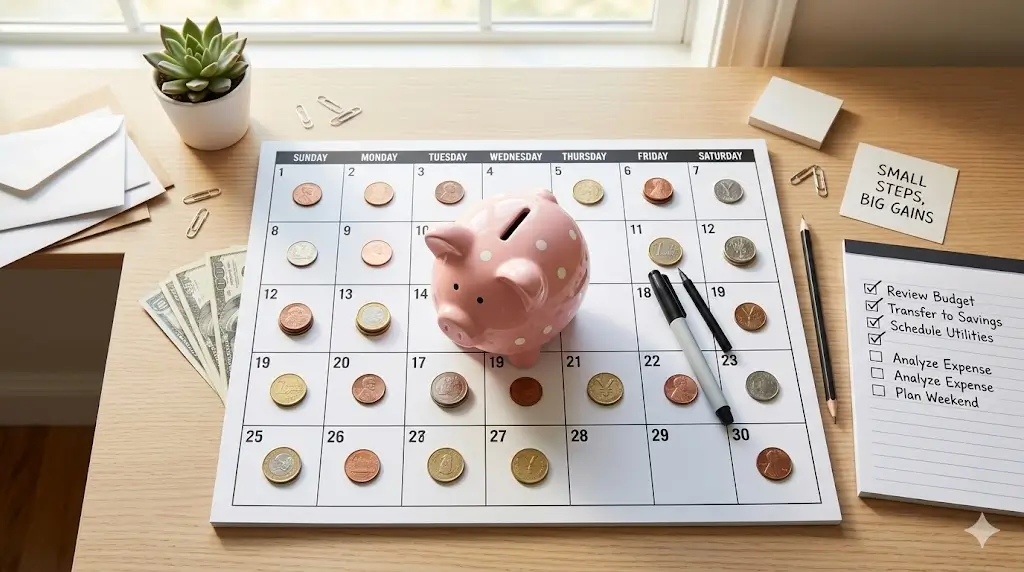
- A Visual Tracking Tool: You need a way to track your daily progress.
- Free alternative: A printable 30-day calendar or a dedicated Google Sheet.
- Digital alternative: Habit-tracking apps like Habitica or Strides.
- A Dedicated “Holding” Account: A High-Yield Savings Account (HYSA) where you will immediately transfer the money you “save” each day. (Cost: $0 to open).
- A Clear “Why”: A defined goal for the capital you save (e.g., “Seed money for my digital income project” or “Starting my emergency fund”).
- Skill Requirements: Basic discipline and roughly 5 minutes of daily attention.
Time Investment
One of the greatest benefits of a money saving challenge is its incredibly high return on time invested. Compare this to taking on a traditional part-time job:
- Initial Setup Time: 30 to 45 minutes to print your tracker, review your previous month’s spending, and set your baseline.
- Daily Time Commitment: 5 minutes. You only need a few minutes each evening to transfer your daily unspent funds into your savings account and mark off your calendar.
- Timeline to First “Earnings”: You will literally see the balance in your HYSA grow on Day 1. However, the compounding effect of these retained funds (and the behavioral changes they spark) typically solidify within 30 to 60 days.
- The Advantage: You are generating “tax-free” capital by optimizing your current lifestyle, taking a fraction of the time required to commute to a second job.
Step-by-Step Implementation Guide
Follow this beginner-friendly roadmap to maximize your success over the next 30 days.
Step 1: Define Your Baseline and Goal
Before Day 1, calculate your average discretionary spending (non-essentials like takeout, online shopping, entertainment) over a typical month. Divide that by 30. If you usually spend $600 a month on fun, your daily baseline is $20. Your goal for this challenge is to keep that daily spending as close to $0 as possible.
Step 2: The Daily Transfer Method
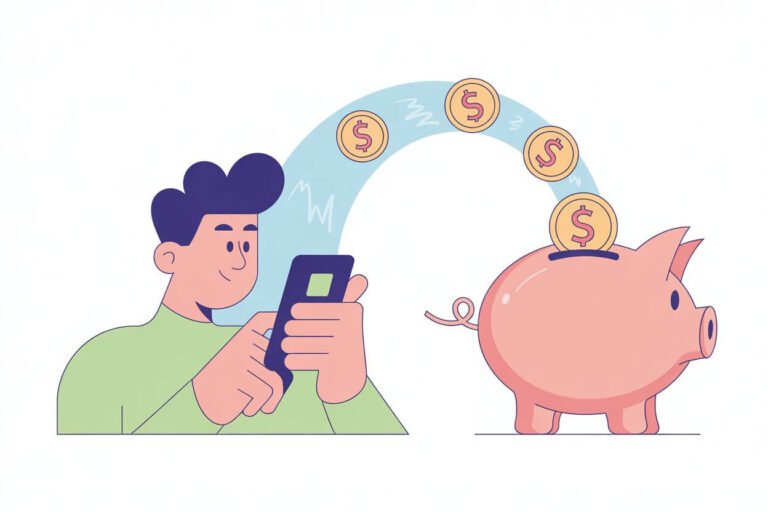
A money saving challenge only works if you actually save the money. If you skip a $15 lunch out, do not just leave that $15 in your checking account—it will get absorbed elsewhere.
- Insider Trick: The moment you decide to skip an impulse purchase, open your banking app and physically transfer that exact amount into your dedicated savings account.
Step 3: Implement “No-Spend” Days
Aim for at least 10 to 15 “No-Spend Days” during your 30-day challenge. On these days, you are only allowed to pay fixed, necessary bills (rent, utilities) and nothing else. Zero online shopping, zero gas station snacks.
Step 4: Gamify the Process
Put your tracking calendar on your refrigerator or bathroom mirror. Check off every successful day with a thick green marker. Psychological studies show that breaking the “chain” of visual success becomes painful, keeping you highly motivated.
Your 30-Day Potential 💰
Enter your current habits below to see exactly how much seed capital you could generate by completing this challenge.
30-Day Capital Freed
$0
1-Year Wealth Projection
$0
- No-Spend Days: Saving $0 by not spending on 0 days.
- Subscription Audit: Saving $0 from paused memberships.
- Pantry Cleanout: Saving $0 by eating what you already have for one week.
- Bill Negotiation: Saving an estimated $20 by making one phone call.
Take the First Step Today! 🚀
Don’t let these potential savings slip away. Download our free 30-Day Printable Tracker to lock in your commitment.
Download Free Tracking Calendar
Income Potential & Earnings Breakdown
What is the actual income potential of a 30-day reset? Let’s break down the realistic capital a beginner can generate and what happens when they transition that money into passive income vehicles.
| Saving Action During Challenge | Estimated 30-Day Capital Freed | 1-Year Projected Value (If repeated) |
|---|---|---|
| 12 “No-Spend” Days (Avg $20/day) | $240 | $2,880 |
| Pausing 2 Unused Subscriptions | $30 | $360 |
| Grocery/Pantry Cleanout Week | $100 | $1,200 |
| Negotiating 1 Major Bill (Internet) | $20 | $240 |
| Total Seed Capital Generated | **$390 in 30 Days** | $4,680/Year |
Note: Results vary based on income and starting habits. This table serves as an illustrative example of household profit margins.
If you take that $390 and use it to buy a website domain, hosting, and an online course, you have successfully funded a digital revenue stream without touching your core paycheck.
Alternative Methods & Variations
If a strict 30-day challenge feels too intimidating, try these highly popular variations:
- The 52-Week Challenge: A slower, scaling approach. Save $1 in Week 1, $2 in Week 2, up to $52 in Week 52. By the end of the year, you will have saved $1,378 effortlessly.
- The 100 Envelope Challenge: Number 100 physical envelopes from $1 to $100. Draw an envelope twice a week and stuff it with the corresponding cash amount.
- The Pantry Challenge: A niche-specific variation where you commit to spending $0 on groceries for two weeks, forcing yourself to eat only what is already in your freezer and pantry.
Best Practices & Optimization Tips
To squeeze every drop of value out of your challenge, leverage these optimization hacks:
- Buddy Up: Accountability is everything. Do the challenge with a spouse, friend, or online community. The shared struggle prevents you from giving up on Day 14.
- Delete Saved Credit Cards: Remove your credit card information from Amazon, Apple Pay, and Google Chrome auto-fill. Adding friction to the checkout process drastically reduces impulse spending.
- Unsubscribe from Retail Emails: You cannot be tempted by a 40% off sale if you don’t know it exists. Clear your inbox before Day 1.
Common Mistakes to Avoid
Many beginners fail their saving challenges because they fall into these predictable traps:
- The Deprivation Trap: Trying to cut essential, joy-bringing items completely (like your basic gym membership). This leads to financial burnout. Focus on cutting the waste, not the things that genuinely improve your health.
- Failing to Move the Money: As mentioned in Step 2, if you don’t physically move the “saved” cash into a separate account, you haven’t saved it. It’s just sitting in checking waiting to be spent on something else.
- Lacking a Post-Challenge Plan: Reaching Day 30, celebrating your $400 saved, and immediately blowing it on a celebratory dinner.
Long-Term Sustainability & Growth
The ultimate goal of a money saving challenge isn’t just to hoard cash for 30 days; it is to permanently reset your financial thermostat.
To achieve true long-term sustainability, you must use this capital as a launchpad. Move from a mindset of saving into a mindset of investing. Reinvest your newly freed cash into diversified revenue streams—whether that means opening a brokerage account to buy index funds, investing in equipment for a freelance side hustle, or paying off high-interest credit cards that are eating into your monthly margins. Automation is key: once the 30 days are up, permanently automate the transfer of your newly discovered “surplus” into your investments.
Conclusion
Completing a 30-day money saving challenge is a profound exercise in financial discipline. By tracking your spending, enforcing no-spend days, and physically moving your retained cash, you can generate the exact seed capital needed to kickstart your journey toward financial freedom. It is the ultimate first step for anyone looking to build serious wealth.
Ready to start your journey? Drop your Day 1 start date in the comments below! Be sure to subscribe for our weekly monetization strategies, share your challenge progress in our community, and download our free 30-day tracking printable to get started today.
FAQs
How much money can I realistically make or save in 30 days?
While it varies widely based on your starting income and habits, most beginners can realistically free up between $150 and $500 during a strict 30-day challenge simply by eliminating impulse buys and dining out.
Do I need prior experience to start this challenge?
Absolutely not. This is a beginner-friendly strategy that requires zero financial background. If you can track a daily habit on a calendar, you can succeed.
What’s the initial investment to start?
Zero dollars. You can start with a blank piece of paper to track your progress. The only investment is your willpower and discipline over the next month.
How long until I see results?
You will see mathematical results on Day 1 when you make your first transfer into savings. Behavioral and psychological shifts toward money typically become apparent by Week 3.
Is this method still working in the current economy?
Yes. In fact, in an era of inflation and rising costs, actively controlling your household profit margins and retaining your capital is more critical than ever.
What are the risks involved with aggressive saving?
The main risk is restricting yourself so severely that you experience “frugal fatigue,” leading to a binge-spending spree on Day 31. Mitigate this by keeping the challenge strict but realistic, and always having a clear purpose for the money you are saving.