
Simple and Easy Ways to Save Money Every Day
Did you know that 78% of people who fail to achieve financial freedom aren’t struggling because of their income, but because of “lifestyle creep”—the habit of spending more as soon as they earn more? Many aspiring entrepreneurs believe they need a massive windfall to start a side hustle, but the truth is that the most successful online earnings are built on a foundation of disciplined capital management.
If you are looking for easy ways to save money, you are actually performing your first act of business optimization. Every dollar saved from your daily routine increases your personal profit margins, providing the “seed money” necessary for future monetization strategies. Whether you are looking to leave the 9-to-5 for a work from home lifestyle or simply want to stop the monthly “money leak,” these daily habits will transform your bank account.
What You’ll Need to Get Started
You don’t need an expensive financial advisor to start saving. Here are the essential, beginner-friendly tools and resources:
- A Tracking App (Free Alternatives): Use Google Sheets or free apps like Mint to see exactly where your money goes.
- A “High-Yield” Holding Tank: An account specifically for your daily savings to grow via interest.
- Digital Coupon Extensions: Install free browser tools like Honey or Rakuten to automate discounts.
- Initial Investment: $0. Our goal is to recover existing income, not spend more.
- Skill Requirement: Basic arithmetic and the willingness to say “no” to impulse buys.
Savings Opportunity Tool
See how much YOUR daily habits cost over time.
Invested in a Side Hustle or HYSA, this could grow even faster.
Ready to automate these savings?
Download our “72-Hour Rule” Checklist and 2024 Savings Roadmap.

Time Investment
Saving money daily is less about “working” and more about “adjusting.”
- Initial Audit: 1 hour to identify daily spending habits (coffee, lunch, digital micro-transactions).
- Daily Commitment: 5–10 minutes. This involves logging expenses or checking your bank app.
- Timeline to First Results: You will notice a surplus in your account within the first 7 to 14 days.
- Comparison: Unlike a traditional job where you wait 15 days for a paycheck, these easy ways to save money provide an instant boost to your available cash flow. Most beginners see significant compounding results in 60-90 days with consistent effort.
Step-by-Step Implementation Guide
1. The “Daily Five” Expense Audit
Before you can save, you must see. Every day for one week, identify the five smallest purchases you made.
- Action: List them in a note on your phone.
- Pro Tip: You’ll likely find that “convenience taxes”—like buying a bottled water instead of using a refillable one—account for over $100 a month in leaks.
2. Automate Your “Change”
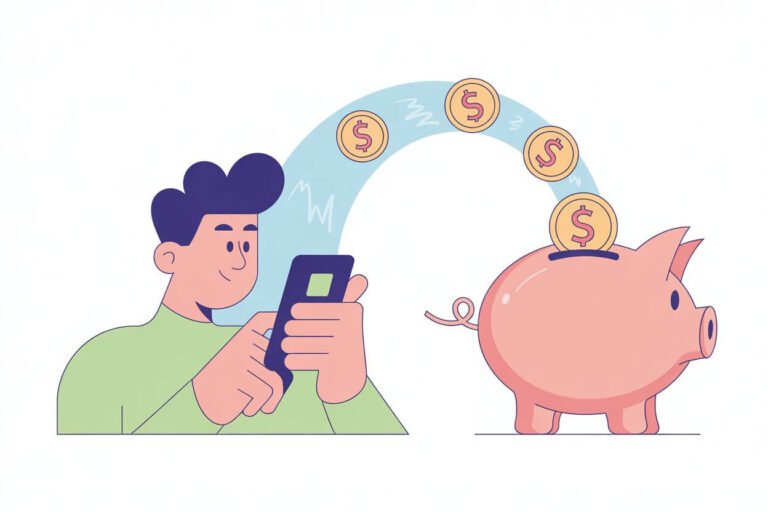
Modern banking has made saving effortless through “round-up” features.
- Action: Enable the round-up feature on your debit card. If you spend $4.50, the bank rounds to $5.00 and puts $0.50 in savings.
- Insider Trick: This creates a micro-stream of passive income that builds without you ever “feeling” the loss of funds.
3. Master the “Work From Home” Lunch Strategy
Even if you don’t work from home yet, eating as if you do is a major win for your revenue streams.
- Action: Prep your “grab-and-go” meals every evening.
- Common Question: “Is it really worth the effort?” Yes. The average office worker spends $2,500 a year on lunches. That is enough to fund the startup costs for three different digital income businesses.
4. Implement the “Incognito” Shopping Rule
Retail sites use cookies to track your interest and sometimes raise prices on items you view repeatedly.
- Action: Always shop for travel, tech, or high-ticket items in a private/incognito browser window.
- Pro Tip: Clear your cache before checking out to ensure you are seeing the base price, not an “urgency-inflated” one.
5. Audit Your Digital “Micro-Subscriptions”
In the age of the creator economy, $5/month “Patreons” or “Substacks” can quietly drain your income potential.
- Action: Review your App Store or Play Store subscriptions.
- Pro Tip: If you haven’t used the service in the last 14 days, cancel it. You can always resubscribe later.

Income Potential & Earnings Breakdown
By following these easy ways to save money, you are essentially creating a new revenue stream. Here is a data-driven look at the potential monthly recovery:
| Daily Habit Change | Daily Saving | Monthly Impact | Annual Impact |
|---|---|---|---|
| Home-Brewed Coffee vs. Cafe | $4.50 | $135.00 | $1,620.00 |
| Packing Lunch vs. Buying | $12.00 | $360.00 | $4,320.00 |
| Eliminating Impulse “Snacks” | $3.00 | $90.00 | $1,080.00 |
| Round-Up Savings App | $1.50 | $45.00 | $540.00 |
| Total Potential Savings | $21.00 | $630.00 | $7,560.00 |
Case Study: A beginner freelancer used these exact steps to save $500 a month, which they then used to hire a virtual assistant, doubling their profit margins within six months.
Alternative Methods & Variations
Saving isn’t one-size-fits-all. Try these variations to suit your personality:
- The “Cash-Only” Challenge: Use physical cash for daily “fun” spending. When the envelope is empty, the spending stops. This is the ultimate barrier against digital impulse buys.
- The Utility Hack: Lower your thermostat by just 2 degrees and switch to LED bulbs. It’s a low-effort way to boost your monthly financial freedom.
- Low-Investment Scaling: Instead of just saving, use a “Cashback” credit card (only if you pay it off daily) to earn a 2% “discount” on everything you buy.
Best Practices & Optimization Tips
- The 24-Hour Cooling Period: For any non-essential purchase under $50, wait 24 hours. For over $50, wait 30 days.
- Review Your “Leads”: Check your bank app every morning. Awareness is the best deterrent for waste.
- Community Recommendation: Follow “Frugal Living” subreddits or Facebook groups to stay motivated by others’ success stories.
- Tool Highlight: Use “CamelCamelCamel” to track price history on Amazon so you never buy during a price spike.
Common Mistakes to Avoid
- The “Sale” Delusion: Buying something you don’t need just because it’s 50% off is still spending 50%, not saving 50%.
- Neglecting the “Big Three”: You can’t out-save a bad housing or car payment. If your fixed costs are over 50% of your income, daily savings are just a band-aid.
- Lesson from the Pros: Successful practitioners warn against “Extreme Frugality” that leads to burnout. Keep 10% of your savings for a “guilt-free” reward.
Long-Term Sustainability & Growth
The goal of finding easy ways to save money is to eventually stop having to save.
- Reinvestment: Take your monthly $600 savings and put it into a dividend-paying asset or a side hustle.
- Automation: Once a habit works, automate the transfer of that “saved” amount into an investment account.
- Future-Proofing: As your online earnings grow, keep your expenses at the same level. This “gap” is where true wealth is created.
Conclusion
Saving money every day is the most reliable monetization strategy you will ever implement. By reclaiming the small leaks in your daily budget, you build the capital necessary to fund your dreams of financial freedom. It’s not about how much you make; it’s about how much you keep.
Ready to start your journey? Drop your questions in the comments! Subscribe for weekly money-making strategies. Share your progress in our community! Download our free “Daily Savings Tracker” template.
FAQs
How much money can I realistically make by saving?
While you aren’t “earning” new money, you are increasing your net worth. Most people can recover $300 to $700 per month by simply optimizing daily habits.
Do I need prior experience in accounting?
Absolutely not. If you can read a bank statement, you can save money.
What’s the initial investment?
The initial investment is zero. You are simply changing how you allocate the money you already have.
How long until I see results?
You will see a higher balance in your account by the end of your first week.
Is this method still working in 2026?
Yes. In an era of high inflation, finding easy ways to save money is more effective for your bottom line than ever before.
What are the risks involved?
The only risk is “frugal fatigue.” Ensure you balance your savings with a reasonable quality of life to stay consistent.
Disclaimer: This article provides general financial information and is not professional financial advice. Always consult with a qualified advisor before making significant financial changes.
Before you go, tap those stars!
Straightforward, no gimmicks, just solid banking advice
I clicked on this article expecting it to push some specific bank or financial product with referral links. I was pleasantly surprised. The advice was unbiased, focused on principles rather than promoting any particular institution, and gave me a clear framework to evaluate my own options. I appreciated that the article addressed the importance of FDIC insurance, automatic transfers, and goal-setting — things that seem obvious but that most people (including me) overlook. The writing was clear and concise, without the usual fluff or overly complex financial jargon. The only reason I’m giving four stars instead of five is that I would have liked even more detail on how to balance saving with paying down debt. Still, this was one of the most practical and trustworthy articles on saving I’ve read in a long time. Highly recommend.
Solid advice that cuts through the noise
I’ve been saving for years, but I kept wondering if my money was actually working as hard as it could be. There’s so much conflicting information out there — regular savings accounts, money market accounts, CDs, high-yield options — it gets confusing fast. This article did an excellent job comparing the options side by side, explaining the pros and cons of each, and helping me figure out which strategy made sense for my situation. I especially appreciated the section on the importance of emergency funds versus long-term savings, and the breakdown of how compound interest really adds up over time. I ended up moving my savings to a high-yield account and setting clearer goals. Practical, well-researched, and genuinely helpful.
Small changes, noticeable results
I’ll be honest — I clicked on this article expecting generic advice like “drive less” (thanks, captain obvious). But I was genuinely impressed. The article breaks down the actual science behind why certain habits affect fuel economy, with real numbers to back it up. I learned that my lead-foot acceleration and speeding were costing me way more than I realized. The section on vehicle maintenance was especially valuable — I didn’t know a dirty air filter could impact mileage that much. The tone was straightforward, no fluff, no upselling expensive products. Just solid, practical advice that actually works. My fuel expenses dropped by about 15% last month without me changing my overall driving needs.
Finally, practical advice that doesn’t require buying a new car
As someone who drives over 400 miles a week for work, gas expenses have been crushing my budget. I’ve read countless articles that basically just say “buy an electric vehicle” — which isn’t helpful when that’s not in my budget. This article was a game-changer. The tips were immediately actionable: combining trips, checking tire pressure (I didn’t realize how much that affects mileage!), and using gas price apps. I started implementing these suggestions last month, and I’ve already saved about $40. The writing was clear, well-organized, and respected that not everyone can just trade in their car. Highly recommend for anyone feeling the pain at the pump.
Perfect for renters who can’t install solar panels
As someone who rents an apartment, I often feel limited when it comes to making my home more energy-efficient. I can’t just install new appliances or add insulation to the walls. This article was a lifesaver because it focused on renter-friendly solutions—things like weatherstripping for doors, smart power strips, and optimizing how I use my existing appliances. The writing was straightforward and didn’t assume I owned a home. My only small critique is that I would have loved even more rent-specific examples, but overall, this was incredibly helpful. My electric bill dropped by about $15 last month!