Choosing the Best Household Budget App: A Complete Guide
Did you know that nearly 67% of online entrepreneurs fail simply because they run out of personal runway before their business can take off? When you are trying to build wealth, you naturally focus on how to generate more revenue. However, ignoring your personal cash flow is like pouring water into a leaky bucket. If you want to build lasting financial freedom, your first crucial step is treating your family’s finances like a profitable business. Finding the best household budget app is the most effective way to plug those financial leaks, instantly freeing up the seed money you need to fund a side hustle, invest, or launch a new venture.
Quick Answer
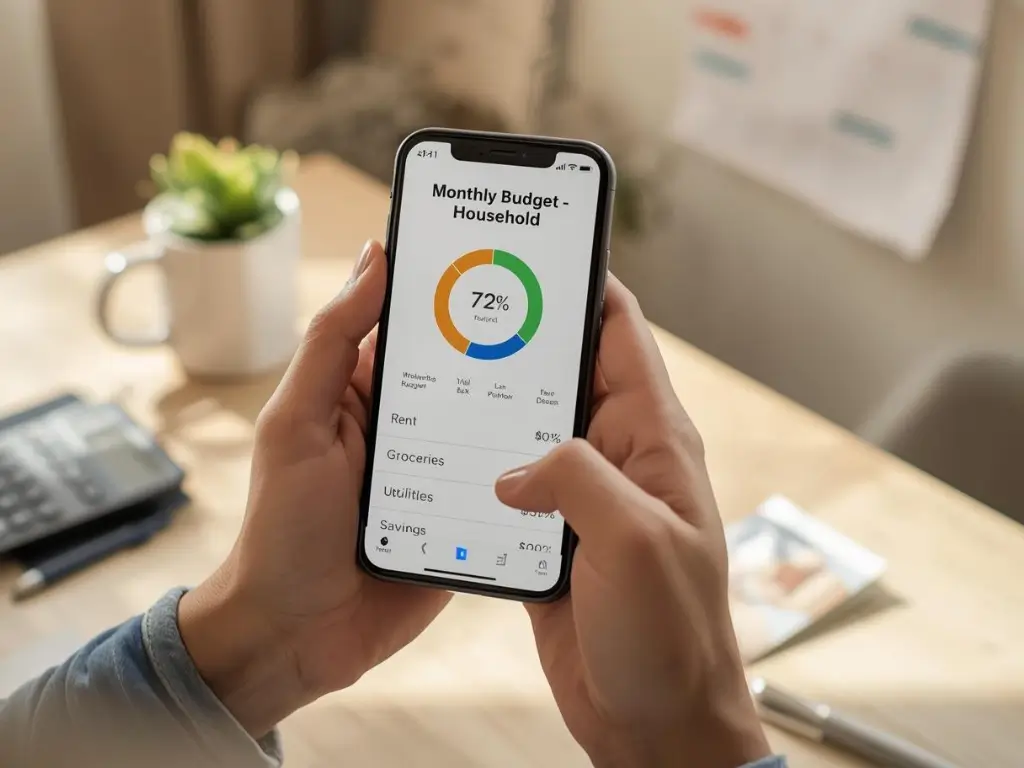
The best household budget app is a shared, zero-based budgeting tool—like YNAB, Monarch Money, or Goodbudget—that allows multiple family members to sync accounts and track spending in real-time. By providing complete visibility over your shared expenses, these tools instantly eliminate wasteful spending and free up capital to invest in your future.
How Much Could YOU Save?
Enter your household’s spending details to see how much cash a shared budget app could recover for you.
You could be saving an extra:
$0
every single month! (That’s $0 a year!)
Ready to stop guessing and start tracking?
A shared household budget doesn’t restrict your freedom; it funds your future. Visit our partner web app to easily sync your spending, manage your categories, and watch your savings grow.
What You’ll Need to Get Started
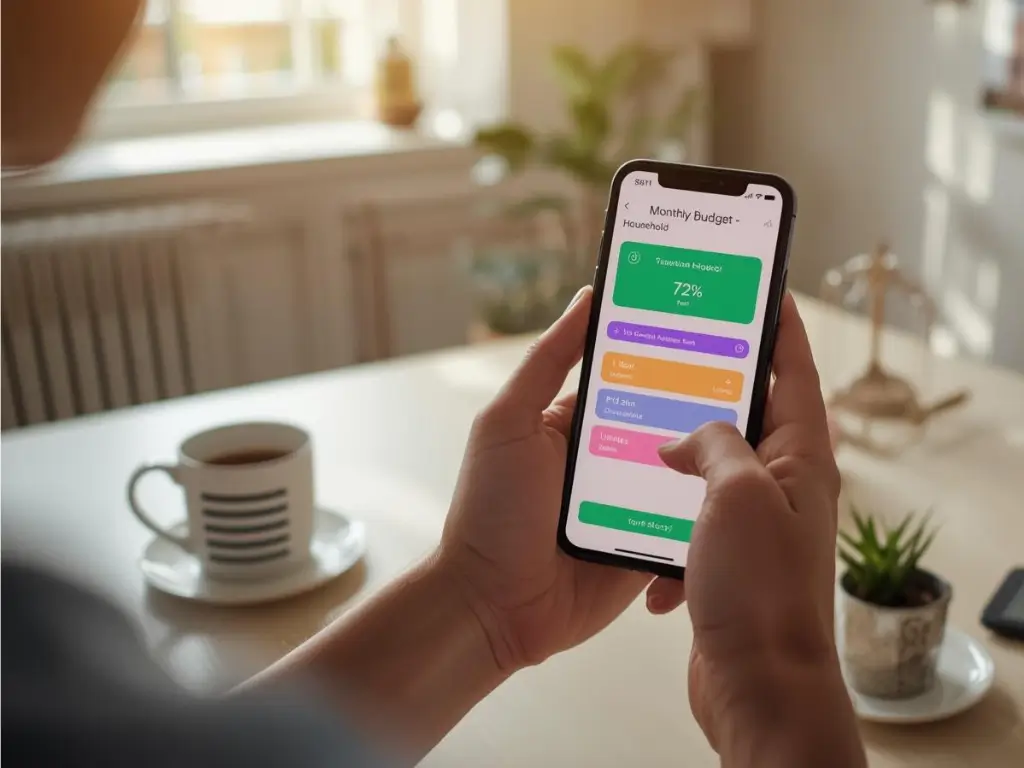
You do not need a degree in finance or accounting to take control of your family’s cash flow. Treating your household like a business with high profit margins requires only a few basic resources:
- A Smart Device & Shared Access: A smartphone or computer for each partner/household member. The chosen app must allow multi-user logins.
- Active Financial Accounts: Login credentials for your primary checking, savings, and any shared credit card accounts.
- A Dedicated Budgeting Tool: Options range from free tools like EveryDollar to premium apps like YNAB or Monarch Money.
- Initial Investment: $0 to start. Most premium household apps offer a 30-day free trial, allowing you to test them before committing to a $10–$15 monthly subscription.
- Skill Requirements: Basic financial communication skills and a willingness to sit down for a 20-minute weekly budget meeting with your household.
Time Investment
One of the biggest myths about budgeting is that it is a full-time job. With modern automation, tracking your money is faster than ever.
- Setup Time Required: 1 to 2 hours. This includes syncing your bank accounts, creating categories, and setting your baseline monthly limits.
- Daily/Weekly Time Commitment: 5 to 10 minutes a day to review and approve transactions, plus a 20-minute weekly family check-in.
- Timeline to First Earnings: Most beginners see a significant cash flow improvement in 60-90 days with consistent effort. You will spot duplicate subscriptions and hidden fees almost immediately.
- Comparison: Earning an extra $500 through a traditional part-time job takes dozens of hours and is subject to income tax. “Finding” $500 by optimizing your household budget using an app takes minutes and provides immediate, tax-free capital for your online earnings journey.
Step-by-Step Implementation Guide
Follow these sequential steps to select and deploy the best household budget app for your family’s unique financial goals.
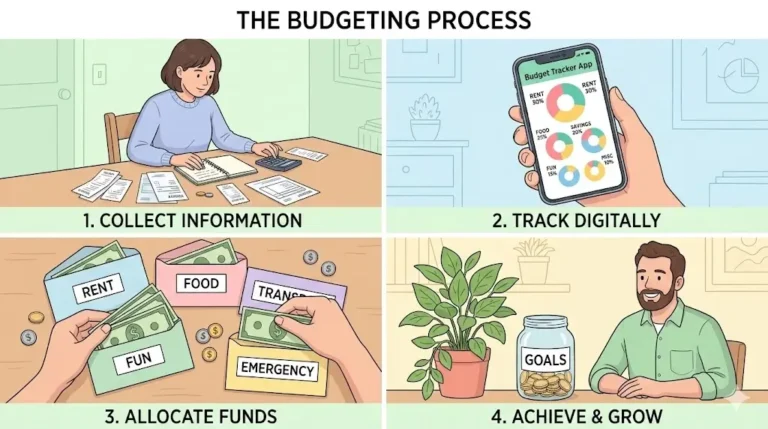
1. Identify Your Household’s Core Goal
Are you trying to aggressively pay off debt? Are you saving up $1,000 to fund a work from home business? Your goal dictates your tool. If you need strict cash-flow management, a zero-based app like YNAB is superior. If you want to track your overall net worth and passive income investments alongside your budget, Empower or Monarch Money are better fits.
2. Choose an App with Multi-User Syncing
The biggest point of failure in household budgeting is a lack of communication. Select an app that allows both partners to download the app on their individual phones and view the exact same, real-time data.
3. Link Accounts and Define Categories
Use the app’s secure portal to link your checking and credit accounts. Next, create realistic categories. Keep them broad to start: Housing, Utilities, Groceries, Transportation, and “Fun Money.”
- Pro Tip: Always create a specific category labeled “Digital Income” or “Business Capital” to ensure you are funding your future monetization strategies.
4. Schedule the “Weekly Money Date”
An app is just software; the habit is what builds wealth. Schedule a 20-minute meeting every Sunday evening with your partner or household to review the past week’s spending and adjust the app’s categories for the upcoming week.
Income Potential & Earnings Breakdown
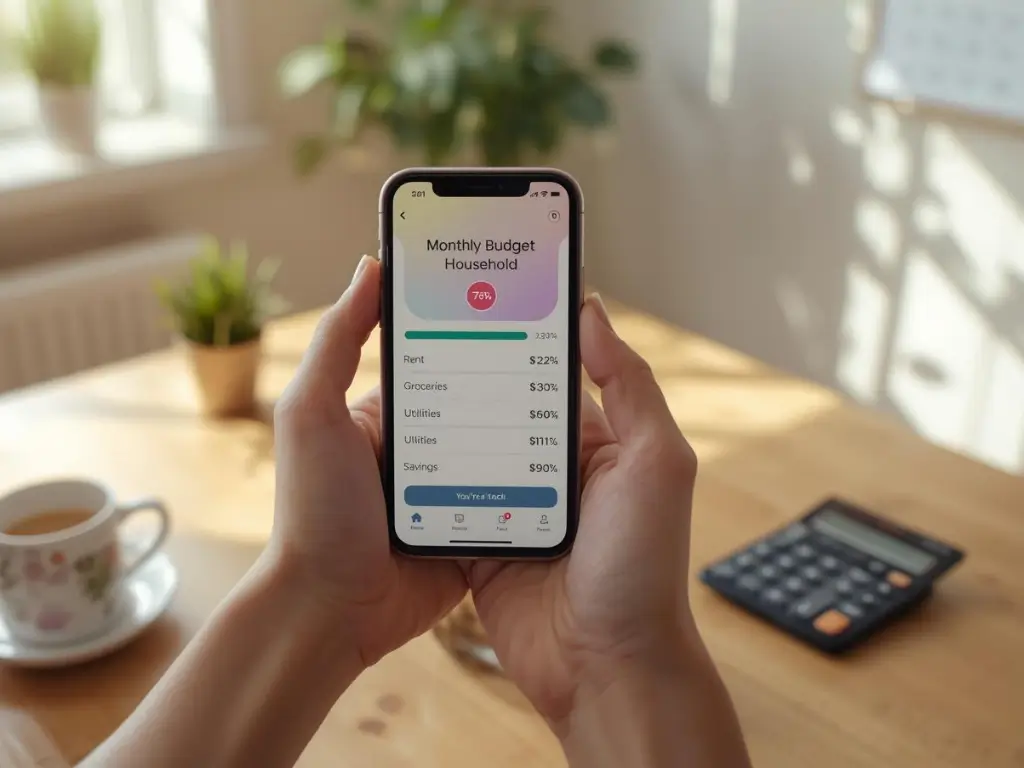
How does a household budget app actually “make” you money? In the world of business, capital retained is capital earned.
- Beginner Savings Range: $200 – $400 per month by simply eliminating “ghost” subscriptions, reducing duplicate spending by partners, and cutting down on convenience foods.
- Advanced Savings Range: $800+ per month as your household aligns its goals, optimizes recurring bills, and aggressively shifts discretionary income into savings.
- The Compounding Effect: If an app helps your family recover $400 a month in wasted spending, and you redirect that into a digital side hustle or index fund, that $4,800 a year becomes a massive accelerator for long-term wealth.
- Income Potential Reality: Budgeting apps provide an immediate boost to your personal profit margins. It is the highest-ROI activity you can perform before launching any external revenue streams.
Alternative Methods & Variations
If connecting your bank accounts to a third-party app makes you or your partner uncomfortable, there are powerful alternatives:
- The Shared Spreadsheet: Use Google Sheets to create a custom, shared household budget. Both partners can access it from their phones. It requires manual data entry, but offers 100% privacy and infinite customization.
- The Digital Envelope Method: Use a bank like Ally or SoFi that offers “buckets” or “vaults” within your main checking account. You physically separate the money at the bank level, requiring no external apps.
- The Hybrid Approach: Use a free, basic app just to track shared variable expenses (like groceries and dining out), while keeping your fixed bills and side hustle investments offline or on a spreadsheet.
Best Practices & Optimization Tips
To maximize your household savings and ensure your new software works flawlessly:
- Separate Business from Personal: If you are building revenue streams online, never run those expenses through your household budget app. Open a completely separate free business checking account to keep your household data clean and your taxes simple.
- Buffer Your Checking Account: Try to keep a one-month buffer of cash in your primary checking account. This allows you to budget with last month’s money, instantly removing the stress of timing your bills with your paychecks.
- Allow Guilt-Free Spending: The fastest way to ruin a household budget is to make it too restrictive. Give each partner a set amount of “no questions asked” fun money in the app every month.
Common Mistakes to Avoid
Household budgeting is a team sport, and it comes with unique pitfalls. Avoid these common traps:
- Micro-Managing Categories: Creating 50 different categories (e.g., separating “Coffee” from “Fast Food” from “Sit-down Restaurants”) leads to app fatigue. Keep categories broad.
- Using the App as a Weapon: The app is a tool for visibility, not a scoreboard to judge your partner’s spending. If a category goes over budget, adjust the math together without assigning blame.
- Setting Unrealistic Limits: Beginners often set their grocery budget to what they wish they spent, rather than what they actually spend. Base your first month’s budget on your previous 60 days of real bank data.
Long-Term Sustainability & Growth
Finding the best household budget app is just the launching pad. To maintain your momentum and grow your income over time:
- Reinvestment Strategies: Once your household budget is optimized and your emergency fund is full, automatically route your end-of-month surplus into passive income investments or side hustle tools (like web hosting, inventory, or courses).
- Automation Opportunities: Set up automatic transfers from your checking account to your savings or investment accounts the exact day your paycheck hits. Make saving a fixed bill, not an afterthought.
- Future-Proofing: As your online earnings increase, avoid “lifestyle creep.” Keep your household budget strictly maintained, and use the new digital income exclusively to build more wealth, rather than buying more expensive liabilities.
Conclusion
Choosing and implementing the best household budget app is the ultimate foundational step toward achieving your financial dreams. By working together to gain complete visibility over your shared expenses, you instantly cut waste, increase your personal profit margins, and secure the seed capital needed to fund your next big idea.
Ready to start your journey? Drop your favorite household budgeting app—or your biggest financial hurdle—in the comments below! Subscribe for our weekly money-making strategies, and share your progress in our community.
FAQs
What makes an app the “best household budget app”?
The best household app must feature real-time data syncing across multiple devices, allow for customizable categories, and ideally utilize the zero-based budgeting method so partners can allocate every dollar together.
How much money can my family realistically save?
Most households easily reclaim between $200 and $500 in their first few months simply by eliminating duplicate subscriptions, reducing dining out through better awareness, and stopping impulse buys.
Do we need prior experience to use financial software?
No prior experience is necessary. Apps like EveryDollar or Monarch Money are designed with highly intuitive interfaces that walk beginners through the setup process step-by-step.
Is it safe to link our joint bank accounts to an app?
Yes. Reputable budgeting apps use read-only, bank-level encryption (often powered by services like Plaid or Finicity). They cannot move your money; they can only read the transaction data to help you categorize it.
How long until we see results in our bank account?
You will gain immediate clarity on day one. However, tangible, compounding financial results—like a growing emergency fund or a fully funded side-hustle account—usually become highly visible within 60 to 90 days.
Can we use a household app to track a side hustle?
While you can use custom tags, it is highly recommended to keep your side hustle finances completely separate from your household budget to protect your personal profit margins and simplify your end-of-year taxes.
Before you go, tap those stars!
Straightforward, no gimmicks, just solid banking advice
I clicked on this article expecting it to push some specific bank or financial product with referral links. I was pleasantly surprised. The advice was unbiased, focused on principles rather than promoting any particular institution, and gave me a clear framework to evaluate my own options. I appreciated that the article addressed the importance of FDIC insurance, automatic transfers, and goal-setting — things that seem obvious but that most people (including me) overlook. The writing was clear and concise, without the usual fluff or overly complex financial jargon. The only reason I’m giving four stars instead of five is that I would have liked even more detail on how to balance saving with paying down debt. Still, this was one of the most practical and trustworthy articles on saving I’ve read in a long time. Highly recommend.
Solid advice that cuts through the noise
I’ve been saving for years, but I kept wondering if my money was actually working as hard as it could be. There’s so much conflicting information out there — regular savings accounts, money market accounts, CDs, high-yield options — it gets confusing fast. This article did an excellent job comparing the options side by side, explaining the pros and cons of each, and helping me figure out which strategy made sense for my situation. I especially appreciated the section on the importance of emergency funds versus long-term savings, and the breakdown of how compound interest really adds up over time. I ended up moving my savings to a high-yield account and setting clearer goals. Practical, well-researched, and genuinely helpful.
Small changes, noticeable results
I’ll be honest — I clicked on this article expecting generic advice like “drive less” (thanks, captain obvious). But I was genuinely impressed. The article breaks down the actual science behind why certain habits affect fuel economy, with real numbers to back it up. I learned that my lead-foot acceleration and speeding were costing me way more than I realized. The section on vehicle maintenance was especially valuable — I didn’t know a dirty air filter could impact mileage that much. The tone was straightforward, no fluff, no upselling expensive products. Just solid, practical advice that actually works. My fuel expenses dropped by about 15% last month without me changing my overall driving needs.
Finally, practical advice that doesn’t require buying a new car
As someone who drives over 400 miles a week for work, gas expenses have been crushing my budget. I’ve read countless articles that basically just say “buy an electric vehicle” — which isn’t helpful when that’s not in my budget. This article was a game-changer. The tips were immediately actionable: combining trips, checking tire pressure (I didn’t realize how much that affects mileage!), and using gas price apps. I started implementing these suggestions last month, and I’ve already saved about $40. The writing was clear, well-organized, and respected that not everyone can just trade in their car. Highly recommend for anyone feeling the pain at the pump.
Perfect for renters who can’t install solar panels
As someone who rents an apartment, I often feel limited when it comes to making my home more energy-efficient. I can’t just install new appliances or add insulation to the walls. This article was a lifesaver because it focused on renter-friendly solutions—things like weatherstripping for doors, smart power strips, and optimizing how I use my existing appliances. The writing was straightforward and didn’t assume I owned a home. My only small critique is that I would have loved even more rent-specific examples, but overall, this was incredibly helpful. My electric bill dropped by about $15 last month!