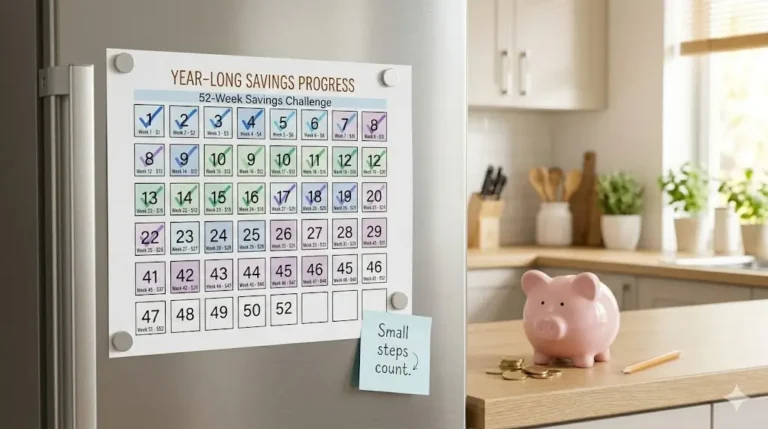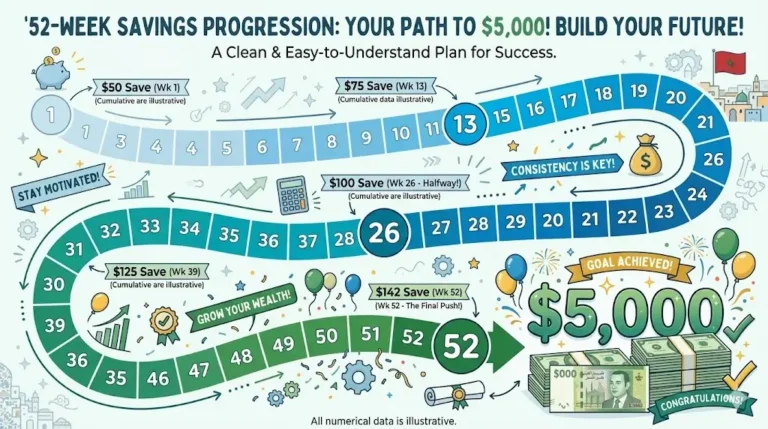

How to Create a Saving Money Vision Board
Did you know that according to behavioral psychology studies, people who vividly describe or picture their financial goals are 1.2 to 1.4 times more likely to successfully accomplish them than those who don’t? Despite this, a staggering number of online entrepreneurs fail simply because they lose sight of their ultimate goal when the daily grind gets tough. This is exactly where creating a saving money vision board becomes your secret weapon.
If you are tired of struggling to find the startup capital for your side hustle or feel like your dream of working from home is constantly delayed by unexpected expenses, you need visual alignment. A saving money vision board isn’t just a craft project; it is a strategic psychological tool that bridges the gap between your current habits and your future online earnings. In this comprehensive guide, we’ll show you exactly how to build a visual roadmap that protects your profit margins, curbs impulse spending, and accelerates your path to true financial freedom.
What You’ll Need to Get Started
Creating a powerful saving money vision board requires minimal financial investment but high intentionality. Depending on whether you prefer a tactile, physical board or a sleek digital interface, here is your breakdown of required resources:
- For a Digital Board (Cost: $0):
- A free Canva or Pinterest account.
- High-quality stock photos (Unsplash, Pexels) representing your goals.
- Screenshots of specific bank account balances or investment dashboards.
- For a Physical Board (Cost: $10 – $25):
- A corkboard, magnetic whiteboard, or heavy poster board.
- Push pins, magnets, or double-sided tape.
- Printed images, magazine clippings, and printed affirmation quotes.
- The Conceptual Ingredients (Required for both):
- Clear, measurable financial goals (e.g., “$5,000 for e-commerce inventory”).
- Visual representations of your desired revenue streams.
- Basic design skills (beginner-friendly templates are available on Canva).

Time Investment
Building a vision board is highly efficient. When compared to the hundreds of hours you will spend building digital income, this is a micro-commitment that yields massive behavioral dividends.
- Setup Time Required: 1 to 2 hours for gathering images and assembling the board.
- Daily Time Commitment: 3 to 5 minutes daily (active visualization and review).
- Timeline to First Results: While a vision board doesn’t print cash directly, most beginners see a tangible shift in their savings habits and a reduction in impulse spending within 30 to 60 days of consistent effort.
- The Reality Check: Unlike traditional income methods where you trade hours for dollars, this time investment rewires your brain to naturally prioritize long-term wealth over short-term gratification.
Step-by-Step Implementation Guide
1. Define Your “Why” and Specific Numbers
A vision board fails if it is vague. Don’t just put a picture of money; define exactly what that money will do for you.
- Action: Write down three specific financial goals. For example: “Save $3,000 to launch my dropshipping store,” or “Build a 6-month emergency fund to transition to work from home full-time.”
- Pro Tip: Include the exact date you want to achieve these numbers. Deadlines create urgency.
2. Gather High-Impact Visual Assets
Sourcing the right imagery is critical. Your brain responds to emotion, so find pictures that make you genuinely excited about your monetization strategies.
- Action: Find images that represent the result of saving money. If your goal is passive income through real estate, find a picture of your ideal rental property. If it’s a digital business, print out a mock-up of a high-converting Shopify dashboard.
- Insider Trick: Photoshop your name onto a blank check or a mock bank statement showing your target balance.
3. Assemble and Structure Your Board
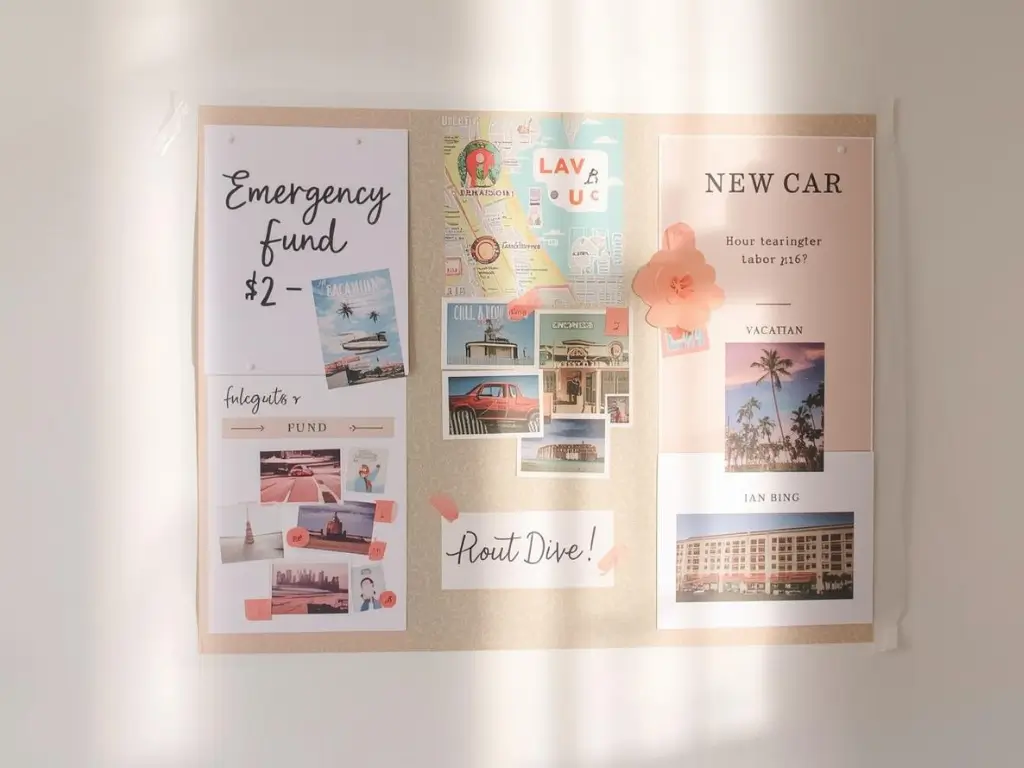
Organization dictates focus. Group your board into strategic zones.
- Action: Place your biggest, most audacious goal (like ultimate financial freedom) in the direct center. Surround it with smaller, stepping-stone savings goals.
- Action: Add bold text overlays. Use phrases like “10% Profit Margins” or “Debt-Free by December.”
4. Strategic Placement for Maximum Exposure
Your saving money vision board is useless if it lives in a closet or a buried digital folder.
- Action: If physical, place it next to your bedroom mirror or behind your home office monitor. If digital, set it as your phone lock screen or desktop wallpaper.
- Pro Tip: The goal is to ensure you see this board every single time you are tempted to make an unplanned online purchase.
Income Potential & Earnings Breakdown
While a vision board is technically a savings and mindset tool, the capital you retain directly funds your income potential. Here is a realistic breakdown of how visual goal-setting translates into funded revenue streams:
| Savings Goal Visualized | Capital Saved (6-12 Mo) | Reinvestment Strategy | Potential Monthly ROI |
|---|---|---|---|
| Cut Discretionary Spend | $1,200 – $3,000 | Niche Website / Blogging | $200 – $1,000+ |
| Automate 15% of Salary | $5,000 – $9,000 | E-commerce / Amazon FBA | $1,000 – $3,500+ |
| Downsize Living Costs | $10,000+ | Dividend Stocks / Real Estate | 5-8% Annual Yield |
Note: The income potential listed above reflects realistic projections for beginners reinvesting their saved capital into proven business models. Results vary based on execution and market conditions.
Alternative Methods & Variations
If a traditional collage isn’t your style, consider these highly effective variations of the saving money vision board:
- The Notion Financial Dashboard: For the highly analytical, use a workspace app like Notion. Combine visual inspiration boards with actual savings trackers and embedded spreadsheets.
- The “Anti-Vision” Board: A psychological twist where you visualize what you are trying to escape—like a photo of an alarm clock, a stressful commute, or a stack of bills. This pushes you away from bad habits while your goals pull you forward.
- Bullet Journaling: A low-investment alternative. Dedicate the first two pages of your notebook to a hand-drawn savings thermometer and daily financial affirmations.
- Digital Rotating Screensavers: Set your computer to cycle through 10-15 images of your goals, ensuring you get visual reminders without the static clutter of a physical board.
Best Practices & Optimization Tips
To maximize the psychological impact of your saving money vision board and enhance your overall results, implement these serving suggestions:
- The 90-Day Refresh: Your goals will evolve as your online earnings grow. Update your board every quarter to reflect your new income targets and monetization strategies.
- Involve Your Senses: If your goal is to work from a beach in Bali, don’t just look at a picture. Play ambient ocean sounds while you review your board and update your budget.
- Pair with Actionable Tracking: A vision board must be paired with a budget tracker (like YNAB or Mint). Visualization without tracking is just daydreaming.
Common Mistakes to Avoid
Even the most aesthetic saving money vision board will fail if you make these critical errors:
- Vague Ambitions: Pinning a picture of a Lamborghini when you haven’t yet saved your first $1,000. Prevention: Stick to the next logical step in your financial journey to avoid subconscious discouragement.
- Clutter Overload: Putting 50 different images on one board dilutes your focus. Prevention: Limit yourself to 5-7 core visual anchors.
- Set It and Forget It: Statistics show that 80% of New Year’s resolutions fail by February because people stop looking at their goals. Prevention: Build a daily 2-minute habit of staring at your board while drinking your morning coffee.
- Ignoring the “How”: Visualizing the end goal without visualizing the hard work required (like the late nights building your side hustle).
Long-Term Sustainability & Growth
As your financial situation improves, your saving money vision board should transition into a wealth-building board.
Once you have successfully saved your initial seed capital, shift the imagery to focus on scaling strategies. Replace pictures of “cutting coupons” with visuals of “diversified revenue streams” and outsourced automation. Future-proofing your finances means constantly expanding your vision. When you hit a savings milestone, celebrate it, take that picture off the board, and replace it with a larger, more ambitious target for your digital income.
Conclusion
Creating a saving money vision board is one of the most powerful, low-barrier steps you can take toward securing your financial future. By intentionally visualizing your goals, defining specific numbers, and placing your board in a high-visibility area, you actively reprogram your daily spending habits. This retained capital becomes the lifeblood of your future side hustles and ultimate financial freedom.
Ready to start your journey? Drop your biggest financial goal for this year in the comments below! Don’t forget to subscribe for weekly strategies on boosting your online earnings, and download our free Canva vision board templates to get started today.
FAQs
How much money can I realistically save using a vision board?
While a vision board itself doesn’t generate money, it actively reduces impulse spending. Users who pair a vision board with strict budgeting typically reduce their discretionary spending by 15% to 25% monthly, freeing up hundreds of dollars to invest in side hustles.
Do I need prior design experience to make one?
Absolutely not. You can use free, drag-and-drop tools like Canva, which offer pre-made vision board templates. If you prefer a physical board, all you need are scissors, magazines, and a glue stick.
What’s the initial investment to start?
The initial investment is incredibly low. A digital vision board is 100% free. A physical board will cost between $10 and $25 for a corkboard, pins, and printing costs.
How long until I see results?
You will likely notice a shift in your mindset and spending habits within the first 30 days. As you align your daily purchases with your visual goals, the actual financial savings will become measurable in your bank account within 60 to 90 days.
Is this method still working in 2026?
Yes. The psychology of visualization and visual cueing is timeless. In an era of digital distractions and one-click purchasing, having a strong visual anchor is more critical than ever to protect your profit margins.
What are the risks involved?
The only risk is complacency—creating the board but failing to take the actual real-world steps (like budgeting and launching your business) required to make those visual goals a reality.
Can I include my business goals on my savings board?
Highly recommended! Blending your savings targets with your digital income and monetization goals helps your brain connect the act of saving money with the reward of business growth.
Before you go, tap those stars!
Straightforward, no gimmicks, just solid banking advice
I clicked on this article expecting it to push some specific bank or financial product with referral links. I was pleasantly surprised. The advice was unbiased, focused on principles rather than promoting any particular institution, and gave me a clear framework to evaluate my own options. I appreciated that the article addressed the importance of FDIC insurance, automatic transfers, and goal-setting — things that seem obvious but that most people (including me) overlook. The writing was clear and concise, without the usual fluff or overly complex financial jargon. The only reason I’m giving four stars instead of five is that I would have liked even more detail on how to balance saving with paying down debt. Still, this was one of the most practical and trustworthy articles on saving I’ve read in a long time. Highly recommend.
Solid advice that cuts through the noise
I’ve been saving for years, but I kept wondering if my money was actually working as hard as it could be. There’s so much conflicting information out there — regular savings accounts, money market accounts, CDs, high-yield options — it gets confusing fast. This article did an excellent job comparing the options side by side, explaining the pros and cons of each, and helping me figure out which strategy made sense for my situation. I especially appreciated the section on the importance of emergency funds versus long-term savings, and the breakdown of how compound interest really adds up over time. I ended up moving my savings to a high-yield account and setting clearer goals. Practical, well-researched, and genuinely helpful.
Small changes, noticeable results
I’ll be honest — I clicked on this article expecting generic advice like “drive less” (thanks, captain obvious). But I was genuinely impressed. The article breaks down the actual science behind why certain habits affect fuel economy, with real numbers to back it up. I learned that my lead-foot acceleration and speeding were costing me way more than I realized. The section on vehicle maintenance was especially valuable — I didn’t know a dirty air filter could impact mileage that much. The tone was straightforward, no fluff, no upselling expensive products. Just solid, practical advice that actually works. My fuel expenses dropped by about 15% last month without me changing my overall driving needs.
Finally, practical advice that doesn’t require buying a new car
As someone who drives over 400 miles a week for work, gas expenses have been crushing my budget. I’ve read countless articles that basically just say “buy an electric vehicle” — which isn’t helpful when that’s not in my budget. This article was a game-changer. The tips were immediately actionable: combining trips, checking tire pressure (I didn’t realize how much that affects mileage!), and using gas price apps. I started implementing these suggestions last month, and I’ve already saved about $40. The writing was clear, well-organized, and respected that not everyone can just trade in their car. Highly recommend for anyone feeling the pain at the pump.
Perfect for renters who can’t install solar panels
As someone who rents an apartment, I often feel limited when it comes to making my home more energy-efficient. I can’t just install new appliances or add insulation to the walls. This article was a lifesaver because it focused on renter-friendly solutions—things like weatherstripping for doors, smart power strips, and optimizing how I use my existing appliances. The writing was straightforward and didn’t assume I owned a home. My only small critique is that I would have loved even more rent-specific examples, but overall, this was incredibly helpful. My electric bill dropped by about $15 last month!