The Best Place to Save Your Money for Growth and Security
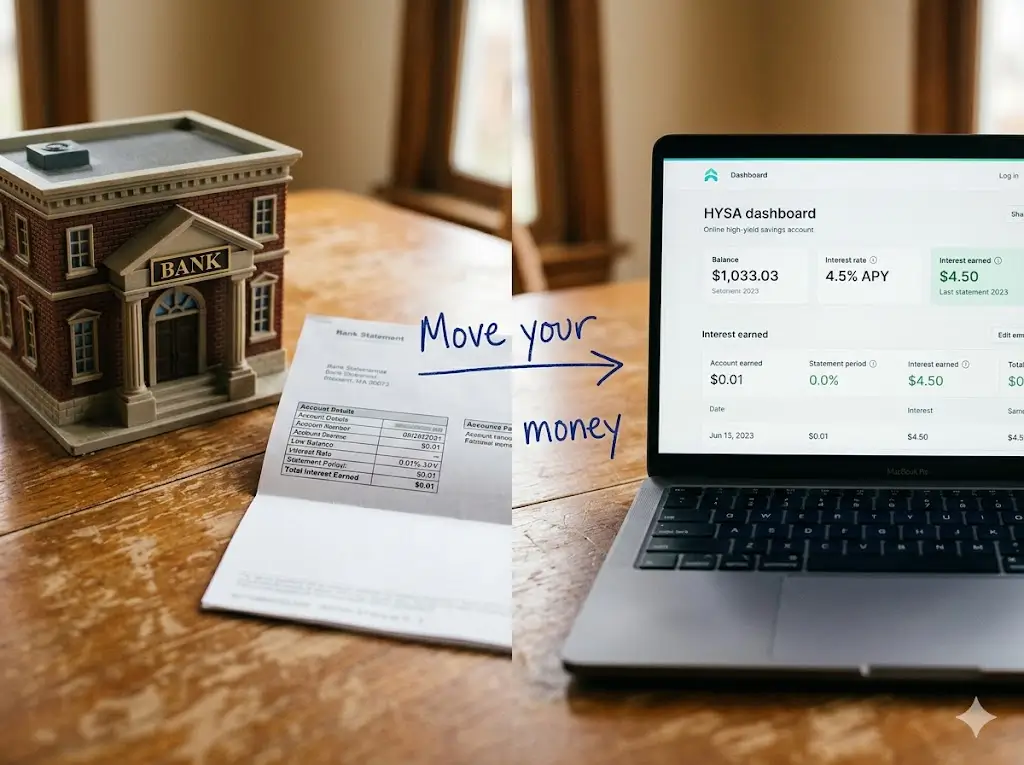
Did you know that 82% of aspiring digital entrepreneurs fail because they let their hard-earned online earnings sit in a traditional checking account that actively loses value to inflation? We spend hundreds of hours researching new monetization strategies, side hustles, and work from home opportunities, but we completely ignore how we store the cash we generate. If your money is sitting in a brick-and-mortar bank earning a microscopic 0.01%, your personal profit margins are essentially bleeding out.
If you want to achieve true financial freedom, finding the best place to save your money is just as important as how you make it. You need a vehicle that balances absolute security with consistent, compound growth. Earning reliable interest on your savings is the purest form of passive income, requiring zero customer service, no ad spend, and no daily grind. Let’s break down exactly where you should be parking your cash to force your money to work for you.
Quick Answer
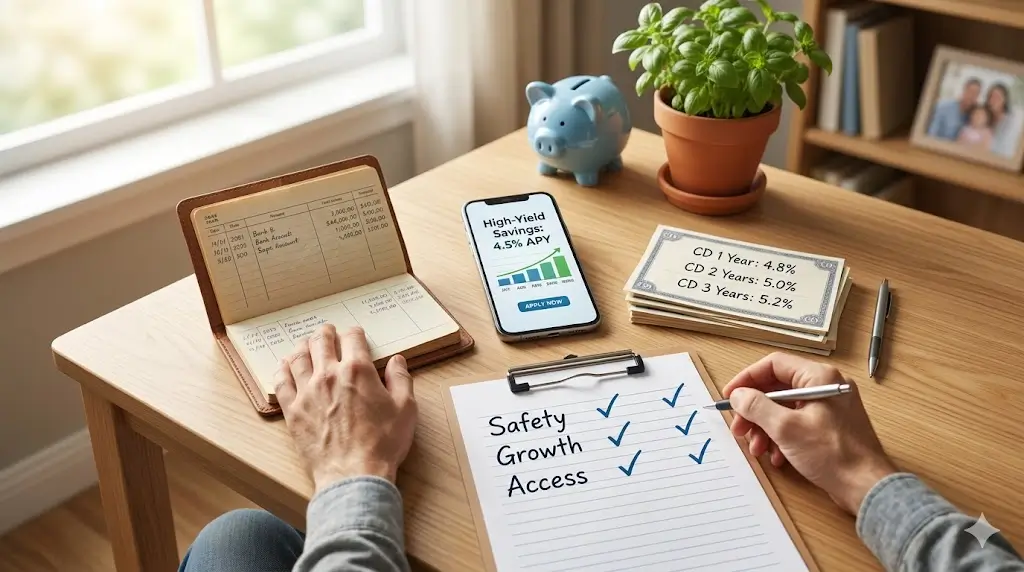
The absolute best place to save your money for short-to-medium-term goals is an online High-Yield Savings Account (HYSA). Because online banks have minimal overhead compared to traditional banks, they pass those savings onto you through high Annual Percentage Yields (APY), creating a completely secure and automated digital income stream.
What You’ll Need to Get Started
To establish this effortless revenue stream and secure your side hustle capital, you don’t need a background in Wall Street finance. You simply need the right digital tools:
- A Secure Online Bank: Institutions like Ally, Marcus by Goldman Sachs, or SoFi that offer top-tier HYSAs.
- A Financial Tracking Dashboard: We highly recommend using TrackThrift to monitor your cash flow, track your monthly savings goals, and watch your interest compound over time.
- Your Funding Source: The routing and account number of your primary checking account where your online earnings are deposited.
- Initial Investment: $0 to $100. Most premium online banks no longer require a minimum deposit to open an account.
- Skill Requirement: Complete Beginner. If you can set up a social media profile, you can open an HYSA.
Time Investment
Unlike launching a blog, managing an e-commerce store, or developing a complex software product, optimizing where you save your money requires almost zero ongoing maintenance once your systems are in place.
- Setup Time Required: 15 to 30 minutes to research a bank, complete the online application, and set up your initial transfer.
- Daily/Weekly Time Commitment: 0 minutes. This represents true passive income.
- Timeline to First Earnings: Most beginners see results in 30 days. Interest is calculated daily and paid out at the end of your monthly billing cycle.
- Reality Check: While month one might just yield a few dollars, the magic of compound interest accelerates aggressively over a 12 to 24 month period.
Step-by-Step Implementation Guide
Step 1: Audit Your Current Profit Margins
Before moving your money, you need to know exactly how much you can afford to save. Calculate your monthly income from your day job and your online earnings, subtract your mandatory living expenses, and determine your baseline surplus.
Step 2: Choose the Right High-Yield Account
Do not default to the bank where you hold your checking account. Search online for current HYSA rates. Your target should be an APY that is at least 10x to 15x higher than the national average.
- Pro Tip: Ensure the bank is FDIC-insured (in the US) or covered by your local equivalent. This guarantees your seed capital is safe up to $250,000, providing the “security” aspect of your financial strategy.
Step 3: Automate the “Digital Income” Loop
Willpower is a terrible financial strategy. Set up an automated, recurring transfer for the day after your primary income hits your account. If you make $5,000 a month, automatically route $500 (10%) straight into your new HYSA. By automating this, you guarantee your principal balance grows, which guarantees your passive income payouts grow.
Step 4: Reinvest and Track
When your first interest payment hits, leave it alone. This initiates compound interest—where your interest begins earning its own interest. Use a tool like TrackThrift to monitor this snowball effect without actively logging into your banking portal every day.
Calculate Your Passive Income Potential (Interactive Tool)
Editor’s Note: Add the HTML code below into a Custom HTML block or shortcode in your WordPress editor to display the interactive calculator to your readers.
Income Potential & Earnings Breakdown
When evaluating your income potential, remember that interest rates are variable and dependent on federal economic policies. However, compared to standard accounts, the profit margins are undeniable.
If you start with $1,500 from a side hustle and automatically save $300 a month for 5 years at a 4.5% APY:
- Total Out of Pocket: $19,500
- Total Free Passive Income Earned: ~$2,570
- Final Balance: ~$22,070
That is over $2,500 generated from thin air. You can use that “free” money to buy website hosting, invest in high-level SEO tools, or run Facebook ads for your digital products—making your business growth effectively free.
Alternative Methods & Variations
While an HYSA is generally the best place to save your money for accessibility, you can diversify your revenue streams with these secure alternatives:
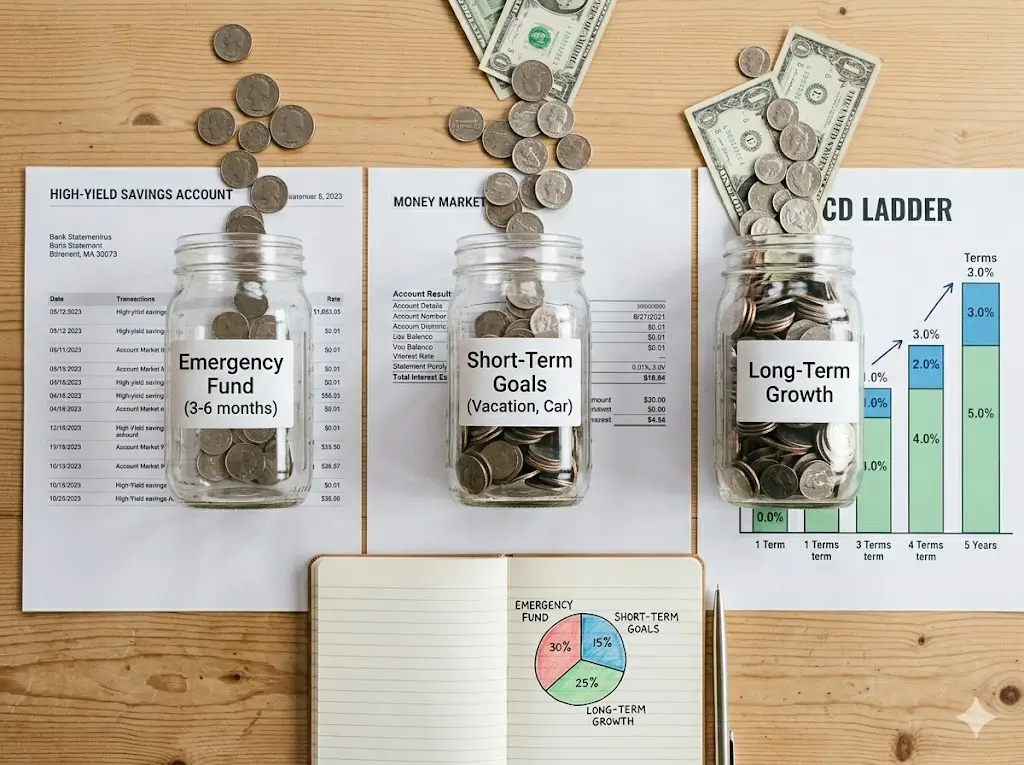
- Certificates of Deposit (CDs): Lock your money away for a specific term (e.g., 6, 12, or 24 months) in exchange for a fixed interest rate. This is ideal for money you absolutely know you will not need to touch.
- CD Laddering: Split your capital across multiple CDs with different maturity dates. As each one matures, reinvest it at the highest available tier, giving you both top-tier rates and rolling liquidity.
- Money Market Accounts (MMAs): Similar to an HYSA, but they often include debit cards and check-writing privileges, bridging the gap between a checking and savings account.
- Index Funds: For money you won’t need for 5+ years, broad market index funds offer the best historical protection against inflation, though they carry market risk that HYSAs do not.
Best Practices & Optimization Tips
To maximize your earnings and optimize this specific revenue stream, apply these advanced banking hacks:
- Chase Sign-Up Bonuses: Many premium online banks offer $100 to $300 cash bonuses simply for opening an account and setting up direct deposit. This is an instant ROI boost.
- Create a Psychological Barrier: Never link your debit card directly to your high-yield savings. The psychological friction of having to wait 1-2 business days to transfer money out of your high-yield account prevents impulse spending.
- Audit Your APY Quarterly: Bank rates fluctuate. Dedicate 10 minutes every quarter to ensure your bank is still offering a rate in the top 10% of the market.
Common Mistakes to Avoid
Even smart online earners make critical errors when managing their seed capital. Protect your financial freedom by avoiding these pitfalls:
- Loyalty to Traditional Banks: The biggest mistake you can make is keeping $10,000 in a legacy bank earning 0.01% because you “like the local branch.” You are voluntarily losing hundreds of dollars a year to inflation.
- Ignoring Account Fees: Ensure the institution you choose has $0 monthly maintenance fees. Paying $10 a month just to hold your money completely negates the interest you are trying to earn.
- Withdrawing Too Often: Compound interest requires time and momentum. If you constantly dip into your savings to fund non-essential purchases, the mathematical snowball effect breaks down.
Long-Term Sustainability & Growth
Securing your capital in a high-yield account is Phase 1 of building financial freedom. Phase 2 is using that growth to buy your time back.
As your account balance grows, it transitions from a simple emergency fund into a powerful “opportunity fund.” When you spot a lucrative monetization strategy—like a premium affiliate marketing course or purchasing wholesale inventory—you no longer have to stress your monthly budget to pay for it. You can reinvest the interest you’ve passively earned. By using your passive income to fund new active revenue streams, you effectively future-proof your digital career.
Conclusion
Finding the best place to save your money is the ultimate foundational step to building scalable, sustainable wealth. By moving your cash out of stagnant checking accounts and into a High-Yield Savings Account, you leverage compound interest to secure the seed capital required to dominate the online business space.
Ready to start your journey? Use the calculator above to project your exact passive income potential. Once you have your financial targets locked in, visit TrackThrift.com to track your daily spending, hit your monthly goals, and watch your side hustle profits multiply. Drop a comment below letting us know what APY your bank is currently offering, and subscribe to our newsletter for more weekly monetization strategies!
FAQs
What makes a High-Yield Savings Account the best place to save your money?
HYSAs offer a unique combination of zero market risk, FDIC insurance (up to $250,000), complete liquidity, and interest rates that are significantly higher than national average checking accounts.
Do I need prior investing experience to do this?
Not at all. Opening an HYSA is as simple as opening a standard checking account or creating a social media profile. No stock market or advanced financial knowledge is required.
What’s the initial investment to open an account?
Many of the top online banks today require a $0 minimum deposit to open an account. You can start with just $10 and automate your growth from there.
How long until I see results?
Interest is calculated on a daily basis and deposited directly into your account on the last day of your monthly billing cycle. You will see a physical return on your money in just 30 days.
Is this method still working in the current year?
What are the risks involved?
As long as you choose a reputable bank that is FDIC-insured (or your country’s equivalent), there is virtually zero risk of losing your principal balance. The only variable is that the APY rate may adjust over time based on the broader economy.
Before you go, tap those stars!
Straightforward, no gimmicks, just solid banking advice
I clicked on this article expecting it to push some specific bank or financial product with referral links. I was pleasantly surprised. The advice was unbiased, focused on principles rather than promoting any particular institution, and gave me a clear framework to evaluate my own options. I appreciated that the article addressed the importance of FDIC insurance, automatic transfers, and goal-setting — things that seem obvious but that most people (including me) overlook. The writing was clear and concise, without the usual fluff or overly complex financial jargon. The only reason I’m giving four stars instead of five is that I would have liked even more detail on how to balance saving with paying down debt. Still, this was one of the most practical and trustworthy articles on saving I’ve read in a long time. Highly recommend.
Solid advice that cuts through the noise
I’ve been saving for years, but I kept wondering if my money was actually working as hard as it could be. There’s so much conflicting information out there — regular savings accounts, money market accounts, CDs, high-yield options — it gets confusing fast. This article did an excellent job comparing the options side by side, explaining the pros and cons of each, and helping me figure out which strategy made sense for my situation. I especially appreciated the section on the importance of emergency funds versus long-term savings, and the breakdown of how compound interest really adds up over time. I ended up moving my savings to a high-yield account and setting clearer goals. Practical, well-researched, and genuinely helpful.
Small changes, noticeable results
I’ll be honest — I clicked on this article expecting generic advice like “drive less” (thanks, captain obvious). But I was genuinely impressed. The article breaks down the actual science behind why certain habits affect fuel economy, with real numbers to back it up. I learned that my lead-foot acceleration and speeding were costing me way more than I realized. The section on vehicle maintenance was especially valuable — I didn’t know a dirty air filter could impact mileage that much. The tone was straightforward, no fluff, no upselling expensive products. Just solid, practical advice that actually works. My fuel expenses dropped by about 15% last month without me changing my overall driving needs.
Finally, practical advice that doesn’t require buying a new car
As someone who drives over 400 miles a week for work, gas expenses have been crushing my budget. I’ve read countless articles that basically just say “buy an electric vehicle” — which isn’t helpful when that’s not in my budget. This article was a game-changer. The tips were immediately actionable: combining trips, checking tire pressure (I didn’t realize how much that affects mileage!), and using gas price apps. I started implementing these suggestions last month, and I’ve already saved about $40. The writing was clear, well-organized, and respected that not everyone can just trade in their car. Highly recommend for anyone feeling the pain at the pump.
Perfect for renters who can’t install solar panels
As someone who rents an apartment, I often feel limited when it comes to making my home more energy-efficient. I can’t just install new appliances or add insulation to the walls. This article was a lifesaver because it focused on renter-friendly solutions—things like weatherstripping for doors, smart power strips, and optimizing how I use my existing appliances. The writing was straightforward and didn’t assume I owned a home. My only small critique is that I would have loved even more rent-specific examples, but overall, this was incredibly helpful. My electric bill dropped by about $15 last month!