
Practical Ways to Save Money on Energy Bills at Home
Did you know that the average work from home entrepreneur bleeds up to $600 annually in completely avoidable utility costs? When pursuing financial freedom, we often obsess over discovering new monetization strategies and building complex passive income channels, while entirely ignoring our highest personal overheads. Before you can successfully scale an online business, you have to protect the money you already make.
If you are looking for practical ways to save money on energy bills, you are essentially looking for a guaranteed, tax-free revenue stream. Treating your household budget with the same ruthlessness as a business budget is the fastest way to increase your personal profit margins. Whether your goal is to fund a new digital income project, invest in dividend stocks, or simply stop overpaying utility companies, optimizing your home’s energy consumption is non-negotiable. Let’s explore how you can plug the electrical leaks in your home and turn those savings into seed capital.
Quick Answer
The fastest ways to save money on energy bills involve eliminating “phantom power” by unplugging idle electronics, upgrading your work-from-home office to LED lighting, and using a smart thermostat to automate your climate control. By treating energy conservation as a daily habit, you instantly retain capital that can be reinvested into your side hustle or savings account.
What You’ll Need to Get Started
To successfully slash your utility costs and boost your net income potential, you don’t need to be a certified electrician. Here is the toolkit required to start reclaiming your cash:
- Smart Power Strips: To automatically cut power to devices on standby. (Estimated cost: $15 – $25)
- LED Light Bulbs: For upgrading high-traffic rooms and your home office. (Estimated cost: $10 – $20 per multi-pack)
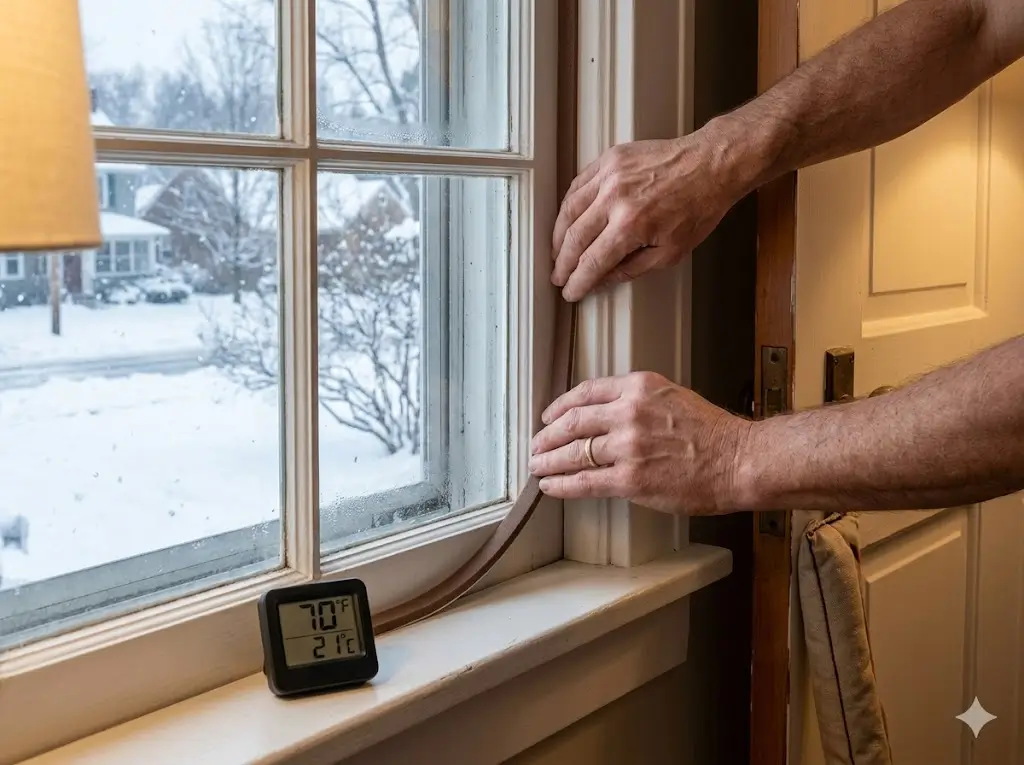
- Window Weatherstripping Tape: To seal drafts that cause your HVAC system to overwork. (Estimated cost: $5 – $15)
- Energy Monitoring App: Many local utility companies offer free apps to track your daily usage. (Free Alternative: Checking your physical meter or monthly statement).
- Skill Requirement: Complete Beginner. No technical expertise required.
Time Investment
Unlike building a blog or an e-commerce store, cutting your energy costs yields immediate financial returns with very little ongoing effort.
- Setup Time Required: 2 to 3 hours on a weekend to audit your home, change bulbs, and set up smart plugs.
- Weekly Time Commitment: 5 minutes to review your thermostat settings or usage app.
- Timeline to First Earnings (Savings): Immediate. Most beginners see a noticeable drop in their utility costs (effectively a cash return) within 30 to 45 days, coinciding with their next billing cycle.
Step-by-Step Implementation Guide
Step 1: Conduct a DIY Home Energy Audit
Before you can optimize, you must analyze. Walk through your home and identify the biggest energy drains. Check for drafty windows, feel the temperature of your refrigerator seals, and count the number of incandescent bulbs still in use.
- Pro Tip: Your local utility provider might offer free professional energy audits. Call them to see if you qualify.
Step 2: Slay the “Vampire” Electronics
Phantom loads (or vampire power) account for up to 10% of a home’s electricity use. These are devices that draw power even when turned off—like your TV, printer, and coffee maker.
- Identify appliances with digital clocks or standby lights.
- Plug clusters of devices (like your PC, monitor, and printer) into a single smart power strip.
- Switch the strip off completely when your workday ends.
Step 3: Optimize Your Work From Home Station
As an online earner, your home office is your command center, but it shouldn’t drain your profits.
- Adjust your computer’s power management settings to enter “sleep mode” after 15 minutes of inactivity.
- Lower the brightness of your external monitors by 20%.
- Rely on natural daylight whenever possible instead of overhead lighting.
Step 4: Automate Your Climate Control
Heating and cooling consume the lion’s share of residential energy.
- Install a programmable or smart thermostat.
- Set it to lower the temperature by 7-10 degrees for the 8 hours you are asleep or away from home.
- Insider Trick: According to the Department of Energy, this single step can save you up to 10% a year on heating and cooling.

Income Potential & Earnings Breakdown
When evaluating ways to save money on energy bills, it helps to view the savings as “pre-tax earnings.” If you are in a 25% tax bracket, saving $100 on electricity is the mathematical equivalent of earning $133 from an online side hustle.
| Experience Level | Strategy Applied | Monthly Savings Potential | Annual Capital Generated | Equivalent Pre-Tax Earnings Needed |
|---|---|---|---|---|
| Beginner | LED swaps, unplugging vampires | $20 – $40 | $240 – $480 | ~$640 |
| Intermediate | Smart thermostat, draft sealing | $40 – $80 | $480 – $960 | ~$1,280 |
| Advanced | Appliance upgrades, off-peak usage | $80 – $150+ | $960 – $1,800+ | ~$2,400+ |
Note: Realized savings depend heavily on your local climate, home size, and baseline energy rates.
Alternative Methods & Variations
Depending on your living situation, your approach to energy reduction will vary:
- The Renter’s Approach: If you cannot make structural changes, focus entirely on behavioral shifts. Wash clothes in cold water, utilize blackout curtains to regulate room temperature, and strictly manage phantom power.
- The Homeowner’s Approach (Scaling up): If you own your property, look into higher-investment, higher-return strategies like adding attic insulation, upgrading to a smart water heater, or installing solar panels to wipe out your bill entirely.
- Time-of-Use Arbitrage: Many utility companies offer cheaper rates during “off-peak” hours (usually late at night). Shift heavy energy tasks, like running the dishwasher or doing laundry, to these hours to slash costs without reducing usage.
Best Practices & Optimization Tips
To maximize your household profit margins, integrate these efficiency hacks into your routine:
- Routine Maintenance: Change your HVAC filters every 30 to 90 days. A clogged filter forces the system to work harder, increasing energy consumption by up to 15%.
- Optimize the Fridge: Keep your refrigerator at exactly 37°F (3°C) and the freezer at 0°F (-18°C). Keeping them any colder wastes money. Furthermore, a well-stocked fridge retains cold better than an empty one.
- Leverage Rebates: Before buying any smart home devices or appliances, check
EnergyStar.govfor state and local rebates. You can often get smart thermostats heavily discounted or entirely for free.
Common Mistakes to Avoid
Even well-intentioned savers make errors that kill their ROI. Avoid these common pitfalls:
- Leaving Computers on 24/7: A persistent myth in the tech world is that turning computers off damages them. Modern PCs are designed to handle tens of thousands of power cycles. Turn it off at night to save $30-$50 a year.
- Buying Expensive Gadgets with Low ROI: Spending $500 on “smart” home lighting that only saves you $5 a year is a bad business decision. Focus on the big wins (heating/cooling and vampire loads) before buying flashy eco-tech.
- Closing Vents in Unused Rooms: Closing HVAC vents disrupts the airflow and pressure balance in your home, often causing duct leaks and forcing your system to work harder, which actually increases your bill.
Long-Term Sustainability & Growth
Slashing your utility bill is an excellent first step, but what you do with that retained capital is what determines your financial freedom.
To future-proof your finances, treat the money saved on your energy bills as a mandatory business investment. If your bill drops from $200 to $140, immediately set up an automated transfer of that $60 into a separate account. Use this recurring, untaxed revenue stream to pay for your blog hosting, invest in ad campaigns for your digital products, or fund a dividend stock portfolio. By reinvesting your energy savings, you create a compounding effect on your wealth.
Conclusion
Mastering ways to save money on energy bills is one of the most practical, low-barrier methods to generate capital for your digital income ventures. By auditing your home, eliminating phantom power, and automating your climate control, you take control of your financial baseline. It’s time to stop letting your hard-earned money leak out of drafty windows and idle appliances.
Ready to start your journey? Drop your questions in the comments below, or let us know which “vampire” appliance you are unplugging today! Don’t forget to subscribe for more weekly strategies on optimizing your expenses and scaling your online earnings.
FAQs
How much money can I realistically make (save) by doing this?
Most households can reduce their energy bills by 10% to 20% by implementing basic behavioral changes and inexpensive upgrades like smart plugs and LEDs, resulting in $300 to $600 in annual savings.
Do I need prior experience or technical skills?
No. All the beginner and intermediate strategies (changing bulbs, applying weatherstripping, adjusting PC settings) require zero technical experience and can be done with basic household items.
What’s the initial investment?
You can start for $0 by simply unplugging devices and adjusting your thermostat. For maximum efficiency, a $50-$100 investment in LEDs, smart strips, and weather sealing will usually pay for itself within three to four months.
How long until I see results?
You will see the financial results on your very next utility billing cycle. The physical results of a more comfortable, draft-free home are immediate.
Are these methods still working in 2026?
Yes. In fact, as global utility rates continue to rise, these efficiency and conservation strategies offer a significantly higher return on investment today than they did a decade ago.
What are the risks involved?
The financial risk is practically zero. The only mistake to avoid is spending too much capital on “eco-friendly” gadgets that take decades to pay for themselves. Stick to the high-ROI steps outlined in this guide.
Before you go, tap those stars!
Straightforward, no gimmicks, just solid banking advice
I clicked on this article expecting it to push some specific bank or financial product with referral links. I was pleasantly surprised. The advice was unbiased, focused on principles rather than promoting any particular institution, and gave me a clear framework to evaluate my own options. I appreciated that the article addressed the importance of FDIC insurance, automatic transfers, and goal-setting — things that seem obvious but that most people (including me) overlook. The writing was clear and concise, without the usual fluff or overly complex financial jargon. The only reason I’m giving four stars instead of five is that I would have liked even more detail on how to balance saving with paying down debt. Still, this was one of the most practical and trustworthy articles on saving I’ve read in a long time. Highly recommend.
Solid advice that cuts through the noise
I’ve been saving for years, but I kept wondering if my money was actually working as hard as it could be. There’s so much conflicting information out there — regular savings accounts, money market accounts, CDs, high-yield options — it gets confusing fast. This article did an excellent job comparing the options side by side, explaining the pros and cons of each, and helping me figure out which strategy made sense for my situation. I especially appreciated the section on the importance of emergency funds versus long-term savings, and the breakdown of how compound interest really adds up over time. I ended up moving my savings to a high-yield account and setting clearer goals. Practical, well-researched, and genuinely helpful.
Small changes, noticeable results
I’ll be honest — I clicked on this article expecting generic advice like “drive less” (thanks, captain obvious). But I was genuinely impressed. The article breaks down the actual science behind why certain habits affect fuel economy, with real numbers to back it up. I learned that my lead-foot acceleration and speeding were costing me way more than I realized. The section on vehicle maintenance was especially valuable — I didn’t know a dirty air filter could impact mileage that much. The tone was straightforward, no fluff, no upselling expensive products. Just solid, practical advice that actually works. My fuel expenses dropped by about 15% last month without me changing my overall driving needs.
Finally, practical advice that doesn’t require buying a new car
As someone who drives over 400 miles a week for work, gas expenses have been crushing my budget. I’ve read countless articles that basically just say “buy an electric vehicle” — which isn’t helpful when that’s not in my budget. This article was a game-changer. The tips were immediately actionable: combining trips, checking tire pressure (I didn’t realize how much that affects mileage!), and using gas price apps. I started implementing these suggestions last month, and I’ve already saved about $40. The writing was clear, well-organized, and respected that not everyone can just trade in their car. Highly recommend for anyone feeling the pain at the pump.
Perfect for renters who can’t install solar panels
As someone who rents an apartment, I often feel limited when it comes to making my home more energy-efficient. I can’t just install new appliances or add insulation to the walls. This article was a lifesaver because it focused on renter-friendly solutions—things like weatherstripping for doors, smart power strips, and optimizing how I use my existing appliances. The writing was straightforward and didn’t assume I owned a home. My only small critique is that I would have loved even more rent-specific examples, but overall, this was incredibly helpful. My electric bill dropped by about $15 last month!