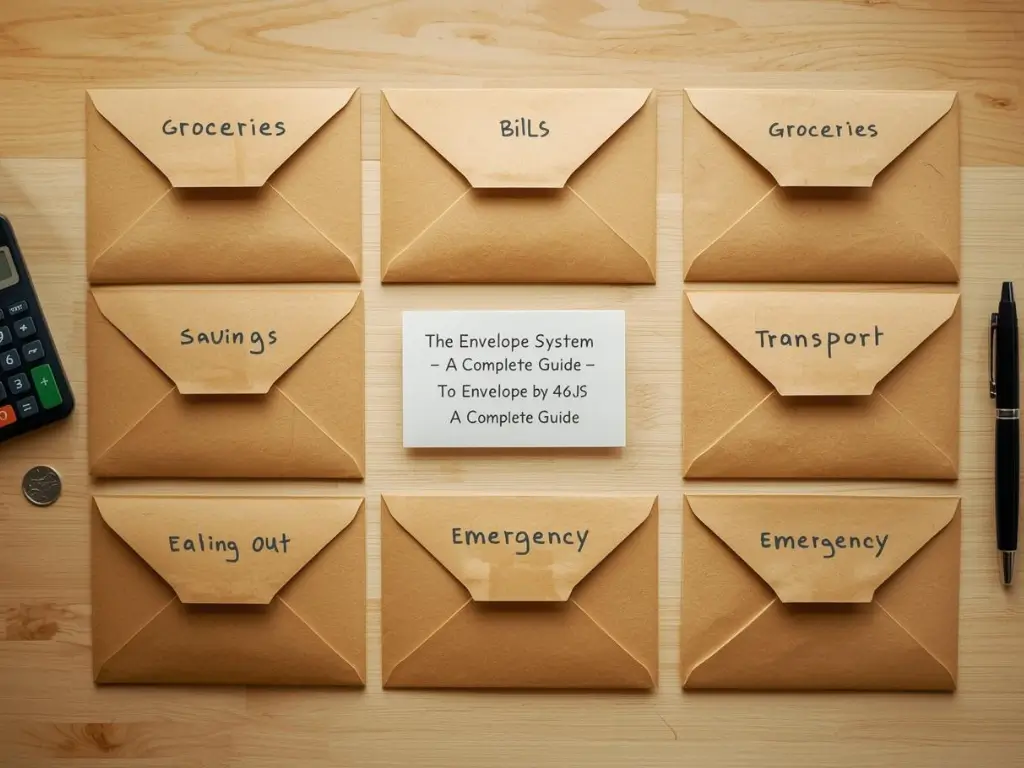
A Complete Guide to Budgeting With Money Saving Envelopes
Did you know that nearly 78% of people trying to build passive income fail simply because they mismanage their personal cash flow before their business even launches? Many aspiring digital entrepreneurs focus entirely on how to make more money, completely ignoring how much money they are letting slip through the cracks. If you are struggling to find the startup capital for your next side hustle, implementing a system of money saving envelopes is the ultimate first step. This classic, tactile budgeting strategy provides an immediate reality check on your spending, helping you secure the profit margins necessary to achieve true financial freedom.
Quick Answer
The cash envelope system is a budgeting method where you withdraw your discretionary monthly income in cash and divide it into labeled envelopes (e.g., groceries, entertainment, business funds). When an envelope is empty, you stop spending in that category for the month, instantly halting impulse buys and freeing up capital for online investments.
What You’ll Need to Get Started
You don’t need a background in accounting to take control of your revenue streams. Building your initial business capital requires just a few basic tools to get your envelope system off the ground:
- Physical Envelopes: A basic pack of standard paper envelopes, or a reusable budget binder with clear plastic sleeves.
- A Master Budget: A spreadsheet or written document detailing your monthly income and fixed expenses.
- Cash: Withdrawn directly from your checking account at the start of your pay period.
- Initial Investment: $0 to $15 (depending on if you use standard envelopes or buy a dedicated budget binder).
- Skill Requirements: Basic addition and subtraction, and the discipline to stop spending when the cash runs out.
Time Investment
Unlike complex monetization strategies that can take years to yield a return, this budgeting framework delivers immediate cash flow improvements.
- Setup Time Required: 1 to 2 hours to calculate your variable expenses and set up your categories.
- Daily/Weekly Time Commitment: 15 minutes per week to organize receipts and check envelope balances.
- Timeline to First Results: Most beginners see a significant reduction in wasted cash within 30 to 60 days of consistent effort.
- Comparison: Earning an extra $300 online through freelance work requires paying taxes on that income. “Finding” $300 by using physical envelopes provides you with immediate, tax-free capital to fund your work from home projects.
Step-by-Step Implementation Guide
Here is the exact blueprint for turning your leaky personal budget into a well-funded war chest for your online ventures.
1. Calculate Your Baseline Income and Fixed Expenses
Before you can stuff an envelope, you need to know what you are working with. Subtract your fixed monthly bills (rent, utilities, insurance) from your total monthly take-home pay. The remaining amount is your discretionary income—this is the money you will manage with envelopes.
2. Define Your Variable Categories
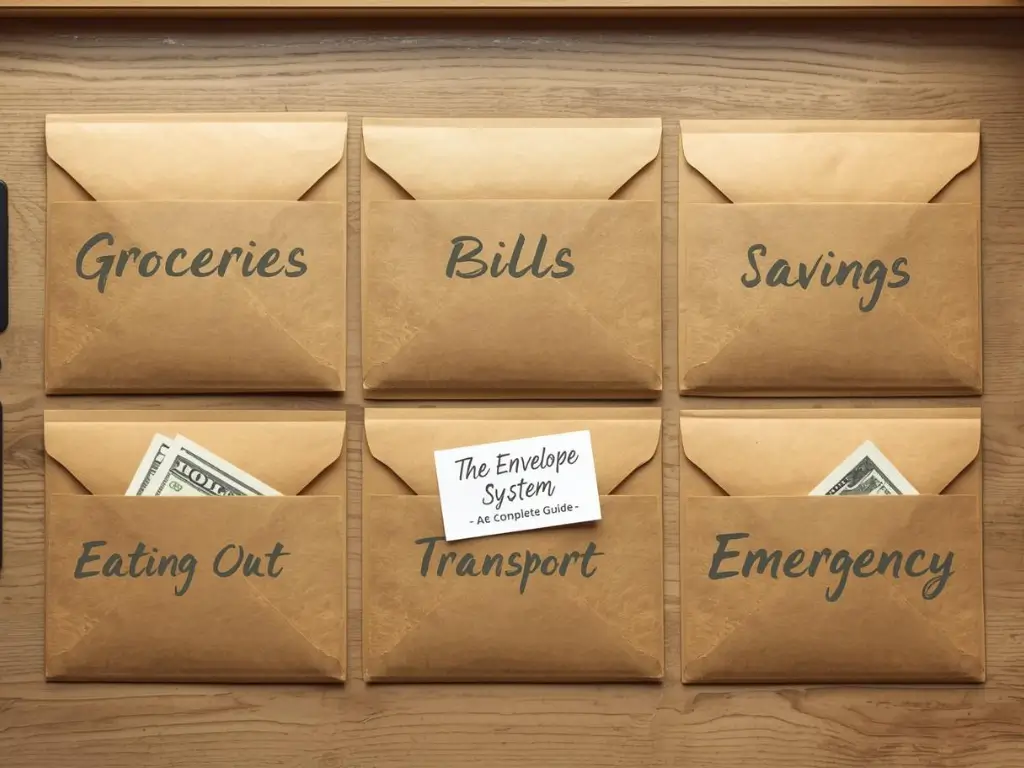
Group your discretionary spending into clear categories. Common categories include Groceries, Dining Out, Gas, and Entertainment.
- Pro Tip: Always include a specific envelope labeled “Side Hustle Capital” or “Digital Income Fund.” Pay this envelope first to ensure your online earnings journey is properly funded.
3. Withdraw and Stuff the Envelopes
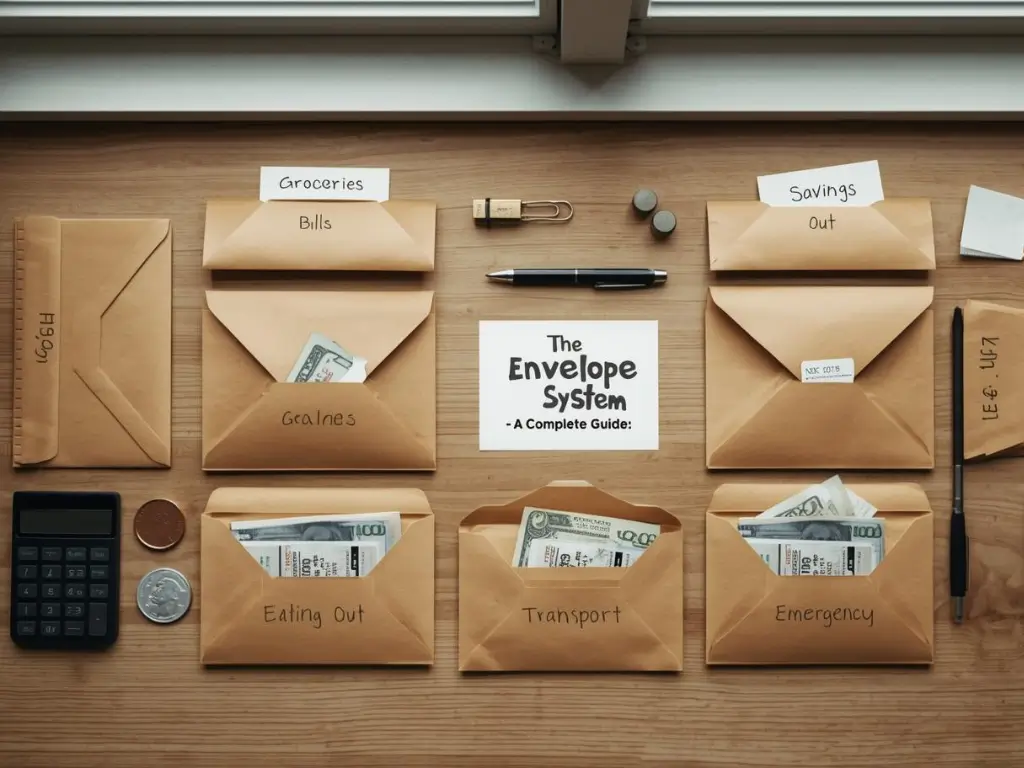
Go to the bank and withdraw your total discretionary amount in cash. Divide the physical cash into the corresponding envelopes based on your budget.
4. Spend Only What You Have
This is where the magic happens. When you go to the grocery store, you only take the “Groceries” envelope. If your total is $105 but you only have $100 in the envelope, you must put an item back. The psychological friction of handing over physical cash is scientifically proven to reduce spending.
5. Reinvest the Monthly Surplus
At the end of the month, gather any leftover cash from your envelopes. Do not roll it over into next month’s entertainment budget. Deposit this surplus straight into a high-yield savings account or use it to buy domain names, hosting, or courses to boost your online earnings potential.
Income Potential & Earnings Breakdown
How much “money” does this actually make you? In the world of personal finance and business, a dollar saved is exactly equal to a dollar earned.
- Beginner Savings Range: $150 – $300 per month by simply eliminating invisible digital impulse buys.
- Advanced Savings Range: $500+ per month as you refine your categories and aggressively cut back on discretionary waste.
- The Compounding Effect: Taking $300 a month in envelope savings and investing it into a digital asset (like a niche blog or e-commerce store) can turn “saved money” into thousands of dollars in recurring, passive income.
- Payment Structure: The payout is instant. Every time you leave a store without overspending, your personal profit margins increase.
Alternative Methods & Variations
If carrying large amounts of cash feels unsafe or inconvenient, you can adapt this system to fit a modern digital lifestyle:
- The Digital Envelope System: Use budgeting apps like YNAB (You Need A Budget) or Goodbudget, which replicate the envelope method using digital “buckets” connected to your debit card.
- The Hybrid Approach: Keep fixed bills and side hustle expenses digital, but use physical cash strictly for “danger categories” where you are prone to overspending (like restaurants and clothing).
- Multiple Bank Accounts: Open several free, no-fee checking accounts and name them after your envelope categories. Transfer the specific budgeted amount into each account on payday.
Best Practices & Optimization Tips
To maximize your savings efficiency and generate the highest possible income potential:
- Audit Your Categories Quarterly: Your spending habits change. If your “Gas” envelope always has a surplus but “Groceries” is always empty, adjust the allocations.
- Use Visual Trackers: Print a small ledger to keep inside each envelope. Write down every transaction so you know exactly where the leaks are happening.
- Create a Sinking Fund Envelope: Anticipate irregular expenses (like car maintenance or annual website hosting renewals) by putting a small amount of cash into a specific envelope every single month.
Common Mistakes to Avoid
Even highly motivated individuals fail at the cash envelope system if they fall into these common traps:
- “Borrowing” Between Envelopes: If you run out of restaurant money and steal from the grocery envelope, the entire system collapses. Prevention: Leave all non-essential envelopes at home when running specific errands.
- Quitting Too Early: Statistics show that it takes about 3 months for a new budget to feel natural. Do not quit if you mess up in month one.
- Leaving Credit Cards in Your Wallet: Carrying a credit card completely defeats the purpose of the physical cash barrier. Leave the plastic at home in a safe drawer.
Long-Term Sustainability & Growth
The ultimate goal of using money saving envelopes is not to carry cash forever, but to fundamentally rewire your brain’s relationship with money.
- Graduating to Digital: Once you have consistently stayed within budget for 6 to 12 months, you can transition to a high-yield rewards credit card (paid off in full weekly) to earn points while maintaining your newly established discipline.
- Scaling Your Income: As your side hustle begins to generate real digital income, apply the envelope methodology to your business. Create “envelopes” for taxes, software expenses, and owner’s pay to guarantee your new business remains profitable.
- Future-Proofing: Automate the transfer of your monthly envelope surplus directly into investments that yield passive income, moving you permanently from a saver to an investor.
Conclusion
Mastering the use of money saving envelopes is the most reliable way to take control of your financial destiny. By establishing a physical barrier against overspending, you instantly reclaim the cash flow required to fund your side hustles and digital ventures. Remember, every empire is built on a solid foundation of capital retention.
Ready to start your journey to financial freedom? Drop your biggest budgeting challenge in the comments below! Don’t forget to subscribe for our weekly monetization strategies, and share your envelope-stuffing progress in our community.
FAQs
How much money can I realistically save with this method?
Most beginners easily reclaim between $150 and $300 in their first month simply by eliminating the “invisible” impulse purchases associated with swiping a debit card.
Do I need prior experience with budgeting?
Not at all. The envelope method is widely considered the most beginner-friendly budgeting strategy because it relies on physical boundaries rather than complex spreadsheets or software.
What is the initial investment required?
The system is practically free. You can use standard white paper envelopes from your home office. Many users eventually choose to upgrade to a $10-$15 reusable budget binder for better organization.
How long until I see results?
You will feel the impact on your very first shopping trip when you are forced to make conscious purchasing decisions. Measurable, compounding financial results typically become highly visible within 30 to 60 days.
Is this method still working in 2026 with a cashless society?
Absolutely. In fact, as society becomes increasingly cashless and digital spending becomes dangerously frictionless, the physical, tactile resistance of cash envelopes is more effective—and necessary—than ever for breaking bad habits.
What are the risks involved?
The primary risk is the loss or theft of physical cash. To mitigate this, never carry all your envelopes at once. Only take the specific envelope you need for the errand you are currently running, and keep the rest in a secure location at home.
Before you go, tap those stars!
Straightforward, no gimmicks, just solid banking advice
I clicked on this article expecting it to push some specific bank or financial product with referral links. I was pleasantly surprised. The advice was unbiased, focused on principles rather than promoting any particular institution, and gave me a clear framework to evaluate my own options. I appreciated that the article addressed the importance of FDIC insurance, automatic transfers, and goal-setting — things that seem obvious but that most people (including me) overlook. The writing was clear and concise, without the usual fluff or overly complex financial jargon. The only reason I’m giving four stars instead of five is that I would have liked even more detail on how to balance saving with paying down debt. Still, this was one of the most practical and trustworthy articles on saving I’ve read in a long time. Highly recommend.
Solid advice that cuts through the noise
I’ve been saving for years, but I kept wondering if my money was actually working as hard as it could be. There’s so much conflicting information out there — regular savings accounts, money market accounts, CDs, high-yield options — it gets confusing fast. This article did an excellent job comparing the options side by side, explaining the pros and cons of each, and helping me figure out which strategy made sense for my situation. I especially appreciated the section on the importance of emergency funds versus long-term savings, and the breakdown of how compound interest really adds up over time. I ended up moving my savings to a high-yield account and setting clearer goals. Practical, well-researched, and genuinely helpful.
Small changes, noticeable results
I’ll be honest — I clicked on this article expecting generic advice like “drive less” (thanks, captain obvious). But I was genuinely impressed. The article breaks down the actual science behind why certain habits affect fuel economy, with real numbers to back it up. I learned that my lead-foot acceleration and speeding were costing me way more than I realized. The section on vehicle maintenance was especially valuable — I didn’t know a dirty air filter could impact mileage that much. The tone was straightforward, no fluff, no upselling expensive products. Just solid, practical advice that actually works. My fuel expenses dropped by about 15% last month without me changing my overall driving needs.
Finally, practical advice that doesn’t require buying a new car
As someone who drives over 400 miles a week for work, gas expenses have been crushing my budget. I’ve read countless articles that basically just say “buy an electric vehicle” — which isn’t helpful when that’s not in my budget. This article was a game-changer. The tips were immediately actionable: combining trips, checking tire pressure (I didn’t realize how much that affects mileage!), and using gas price apps. I started implementing these suggestions last month, and I’ve already saved about $40. The writing was clear, well-organized, and respected that not everyone can just trade in their car. Highly recommend for anyone feeling the pain at the pump.
Perfect for renters who can’t install solar panels
As someone who rents an apartment, I often feel limited when it comes to making my home more energy-efficient. I can’t just install new appliances or add insulation to the walls. This article was a lifesaver because it focused on renter-friendly solutions—things like weatherstripping for doors, smart power strips, and optimizing how I use my existing appliances. The writing was straightforward and didn’t assume I owned a home. My only small critique is that I would have loved even more rent-specific examples, but overall, this was incredibly helpful. My electric bill dropped by about $15 last month!