The Best Way to Save Money on Groceries: A Practical Guide
Did you know that the average household throws away over 30% of the groceries they purchase every single month? That is literally throwing the seed capital for your next business venture straight into the trash. Many aspiring entrepreneurs claim they lack the funds to start a work from home business, but the reality is that their potential startup capital is leaking out at the supermarket. Finding the best way to save money on groceries isn’t just about frugal living; it is a foundational step toward financial freedom. By treating your kitchen like a business and auditing your food expenses, you can instantly boost your personal profit margins and generate the cash flow needed to fund your side hustle.
Quick Answer
The ultimate grocery-saving strategy is a three-pillar system: rigorous digital meal planning, optimizing unit prices over brand names, and stacking cashback reward apps. By combining these tactics, the average household can slash their monthly food bill by 25% to 40%, freeing up hundreds of dollars to invest in online monetization strategies.
What You’ll Need to Get Started
You do not need to become an extreme couponer spending 20 hours a week clipping newspaper ads. Modern grocery optimization is digital, fast, and highly efficient.
- Digital Cashback Apps (Free): Download Ibotta, Fetch Rewards, and Rakuten on your smartphone to start monetizing your grocery receipts immediately.
- A List-Making Tool: A simple digital notes app or a shared family app like AnyList to ensure you never shop from memory.
- A Weekly Budget: A predetermined cash limit (tracked via spreadsheet or an app like EveryDollar).
- Initial Investment: $0. Saving money requires discipline and a smartphone, not upfront capital.
- Skill Requirements: Basic math (to calculate unit prices) and 30 minutes of weekly planning.
Time Investment
Optimizing your grocery spending is one of the highest ROI (Return on Investment) activities you can perform.
- Setup Time Required: 1 to 2 hours to download the apps, audit your pantry, and create your first master meal plan.
- Daily/Weekly Time Commitment: 30 minutes every Sunday to review store flyers, plan meals, and write your digital list.
- Timeline to First Earnings: Immediate. You will see a reduction in your grocery bill on your very first optimized shopping trip. Consistent, compounding results will become obvious within 30 to 60 days.
- Compared to Traditional Income: Earning an extra $300 online means paying income taxes on those earnings. Slashing your grocery bill by $300 gives you tax-free capital immediately available for reinvestment.
Step-by-Step Implementation Guide
Here is exactly how to implement the best way to save money on groceries and reclaim your hard-earned money.
1. The “Pantry First” Audit (Before You Shop)
Never write a grocery list based on what sounds good; base it on what you already have. Before looking at store flyers, open your pantry, fridge, and freezer. Write down the proteins and grains you already own. Base at least two of your weekly meals on these existing ingredients to instantly cut your list by 20%.
2. Plan Meals Around Loss Leaders
Grocery stores use “loss leaders”—heavily discounted items on the front page of their weekly ads—to lure you into the store. Build your weekly menu around these heavily discounted proteins and seasonal produce.
- Pro Tip: If chicken breasts are on a massive sale, buy bulk, portion them out, and freeze them. This is how you build long-term food equity.
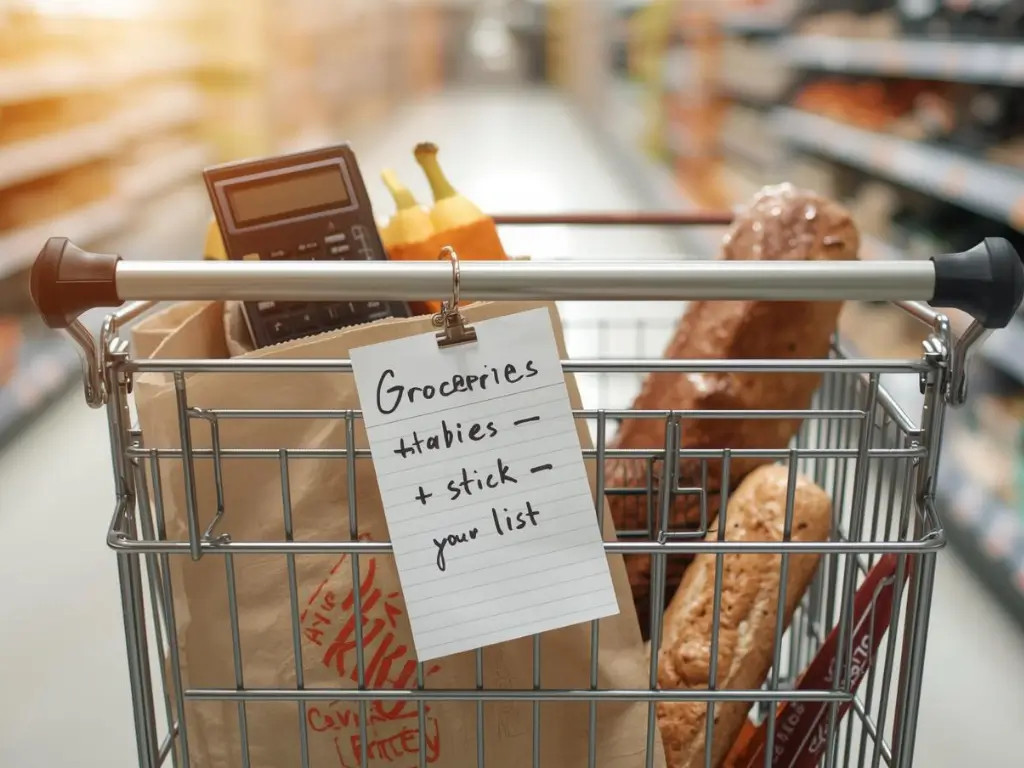
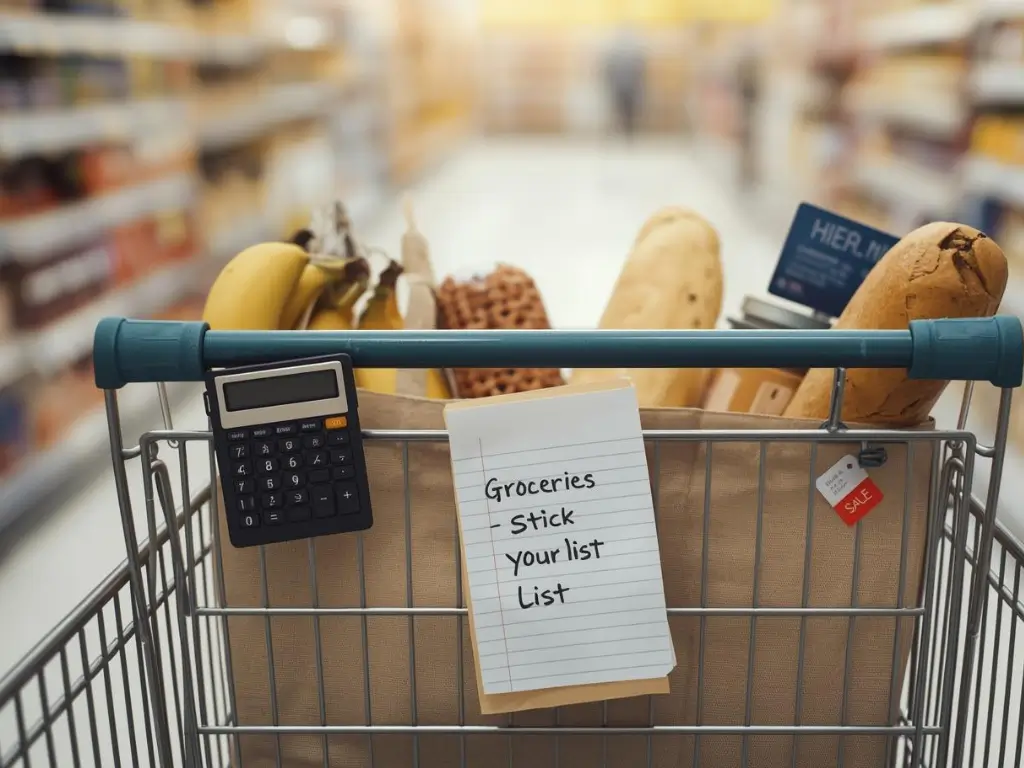
3. Stick Militantly to the List
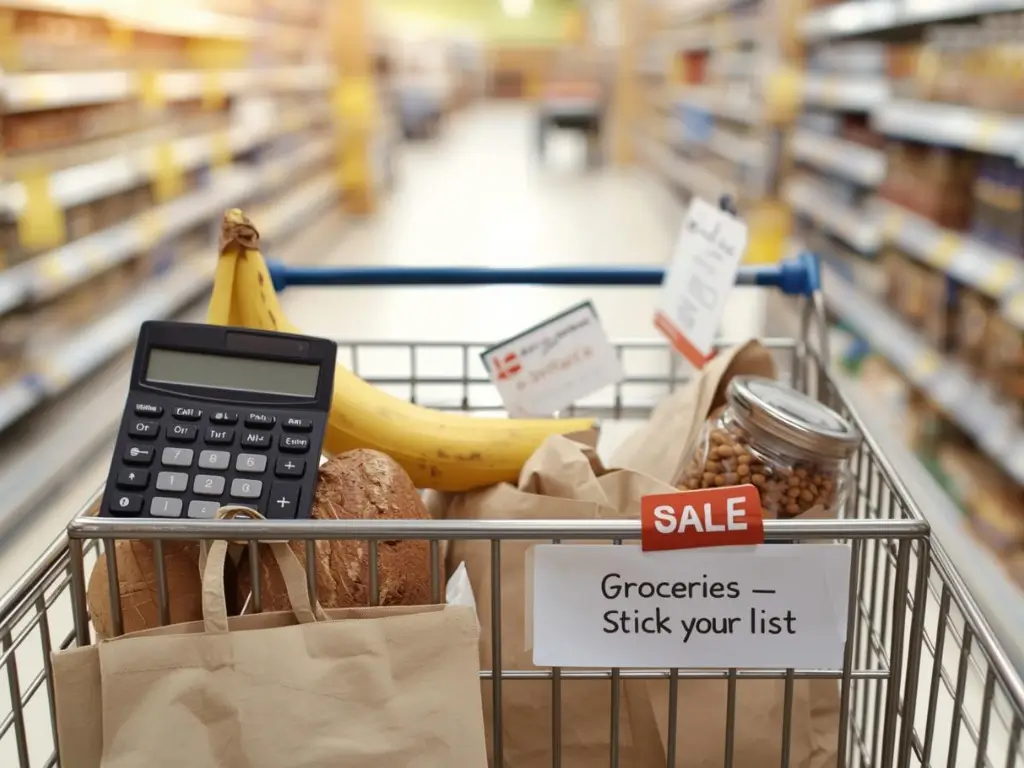
Stores are psychologically designed to make you overspend. The dairy is in the back so you walk past thousands of items; high-profit items are at eye level. If an item is not on your digital list, you do not buy it. No exceptions.
4. Stack Cashback and Rebate Apps
After you checkout, immediately scan your receipt using apps like Ibotta and Fetch Rewards. These apps give you points or direct cash back for purchasing everyday items. This is a brilliant, low-effort method of generating passive income from money you were already forced to spend.
Income Potential & Earnings Breakdown
How much “revenue” can you actually generate by optimizing your groceries? Think of your grocery savings as your initial digital income.
- Beginner Savings Range: $100 – $200/month by simply using a list, cutting out name brands, and meal planning.
- Advanced Savings Range: $300 – $500+/month for families who buy in bulk, utilize chest freezers, and religiously use cashback apps.
- The Compounding Effect: If you save $300 a month on groceries and invest that money into an index fund yielding 7%, you will have over $51,000 in ten years.
- Funding Digital Income: Redirecting a $250 monthly grocery surplus allows you to easily afford web hosting, premium software, and online courses to scale a profitable side hustle.
Alternative Methods & Variations
If standard weekly grocery runs aren’t working for your schedule, try these alternative variations:
- Online Grocery Pickup: While some stores charge a small fee, ordering online prevents you from stepping foot inside the store. This completely eliminates impulse buys and allows you to watch your cart total in real-time, often saving you far more than the pickup fee.
- CSA Boxes & Local Farms: Community Supported Agriculture (CSA) allows you to buy seasonal produce directly from local farmers, often yielding massive amounts of organic food for a fraction of supermarket prices.
- The “Meatless Monday” Variation: Meat is the most expensive item in a typical grocery budget. Substituting beans, lentils, or eggs for meat just two nights a week can shave $40-$60 off your monthly bill.
Best Practices & Optimization Tips
To maximize your grocery savings and ensure maximum efficiency:
- Master the Unit Price: Never look at the retail price. Look at the small tag underneath that shows the “price per ounce” or “price per pound.” Buying the bigger box isn’t always the better deal; the unit price tells the true story.
- Shop the Perimeter: 90% of a grocery store’s high-margin, ultra-processed, expensive junk food is located in the middle aisles. Stick to the perimeter (produce, meat, dairy) for cheaper, healthier options.
- Switch to Generic/Store Brands: Store brands (like Kirkland or Great Value) are often manufactured in the exact same facilities as name brands. Switching to generic options instantly saves you 15-30% on your cart total.
Common Mistakes to Avoid
Even with a good plan, shoppers frequently fall into these expensive traps:
- Shopping on an Empty Stomach: Studies show that shopping hungry increases your grocery bill by an average of 15-20%, primarily via high-calorie impulse buys.
- Brand Loyalty: Being fiercely loyal to a specific brand of cereal or pasta sauce destroys your profit margins. Be loyal to your financial freedom, not a corporate food brand.
- Ignoring the Freezer: Throwing away fresh produce because it spoiled is a massive waste of capital. Learn to freeze spinach, berries, and meats before they turn bad.
Long-Term Sustainability & Growth
Saving money on groceries shouldn’t be a one-month crash diet; it must become a sustainable lifestyle to fuel your long-term wealth.
- Reinvestment Strategies: The moment you realize your grocery bill is $200 lower than last month, physically transfer that $200 into a separate high-yield savings account or a business checking account. Do not let it absorb into your general checking account.
- Automation: Automate your staples. Use Amazon Subscribe & Save for non-perishables like toilet paper and dish soap to lock in 15% discounts and free up your mental bandwidth for your side hustle.
- Future-Proofing: Invest in a deep freezer and a vacuum sealer. This allows you to buy high-quality meats and produce when they hit rock-bottom prices and store them for up to a year, completely insulating your budget from market inflation.
Conclusion
Mastering the best way to save money on groceries is about much more than eating cheap meals; it is a fundamental exercise in managing your cash flow. By eliminating impulse buys, planning meals around sales, and leveraging technology, you instantly create a surplus of cash. Use this newfound capital to fund your digital income streams and build true wealth.
Ready to start your journey to financial freedom? Drop your favorite grocery-saving hack in the comments below! Don’t forget to subscribe for our weekly money-making strategies, and share your progress in our community.
FAQs
How much money can I realistically save by meal planning?
Most beginners easily save between $100 and $300 a month. By reducing food waste, preventing impulse buys, and avoiding last-minute takeout orders, meal planning provides an immediate and drastic reduction in food costs.
Do I need prior experience with couponing?
Not at all. Extreme couponing is outdated. Today, using simple, free smartphone apps like Ibotta and Fetch Rewards, combined with shopping store brands, provides massive savings without clipping a single piece of paper.
What’s the initial investment to start saving on groceries?
The initial investment is zero dollars. You only need the food you already have in your pantry, a piece of paper (or digital notes app) for a list, and the discipline to stick to your plan.
How long until I see results in my bank account?
You will see results immediately at the checkout register on your very first optimized shopping trip. Over the course of 30 days, the accumulated savings will make a noticeable difference in your monthly cash flow.
Is buying in bulk always the best way to save money on groceries?
Not always. While bulk buying usually lowers the unit price, it is only a good deal if you will actually consume the product before it expires. Buying bulk perishable items that end up in the trash is a net loss.
What are the risks involved with buying generic store brands?
The only risk is a slight difference in taste or texture preference. Nutritionally and safely, store brands are virtually identical to name brands, and they are often produced by the exact same manufacturers.
Before you go, tap those stars!
Straightforward, no gimmicks, just solid banking advice
I clicked on this article expecting it to push some specific bank or financial product with referral links. I was pleasantly surprised. The advice was unbiased, focused on principles rather than promoting any particular institution, and gave me a clear framework to evaluate my own options. I appreciated that the article addressed the importance of FDIC insurance, automatic transfers, and goal-setting — things that seem obvious but that most people (including me) overlook. The writing was clear and concise, without the usual fluff or overly complex financial jargon. The only reason I’m giving four stars instead of five is that I would have liked even more detail on how to balance saving with paying down debt. Still, this was one of the most practical and trustworthy articles on saving I’ve read in a long time. Highly recommend.
Solid advice that cuts through the noise
I’ve been saving for years, but I kept wondering if my money was actually working as hard as it could be. There’s so much conflicting information out there — regular savings accounts, money market accounts, CDs, high-yield options — it gets confusing fast. This article did an excellent job comparing the options side by side, explaining the pros and cons of each, and helping me figure out which strategy made sense for my situation. I especially appreciated the section on the importance of emergency funds versus long-term savings, and the breakdown of how compound interest really adds up over time. I ended up moving my savings to a high-yield account and setting clearer goals. Practical, well-researched, and genuinely helpful.
Small changes, noticeable results
I’ll be honest — I clicked on this article expecting generic advice like “drive less” (thanks, captain obvious). But I was genuinely impressed. The article breaks down the actual science behind why certain habits affect fuel economy, with real numbers to back it up. I learned that my lead-foot acceleration and speeding were costing me way more than I realized. The section on vehicle maintenance was especially valuable — I didn’t know a dirty air filter could impact mileage that much. The tone was straightforward, no fluff, no upselling expensive products. Just solid, practical advice that actually works. My fuel expenses dropped by about 15% last month without me changing my overall driving needs.
Finally, practical advice that doesn’t require buying a new car
As someone who drives over 400 miles a week for work, gas expenses have been crushing my budget. I’ve read countless articles that basically just say “buy an electric vehicle” — which isn’t helpful when that’s not in my budget. This article was a game-changer. The tips were immediately actionable: combining trips, checking tire pressure (I didn’t realize how much that affects mileage!), and using gas price apps. I started implementing these suggestions last month, and I’ve already saved about $40. The writing was clear, well-organized, and respected that not everyone can just trade in their car. Highly recommend for anyone feeling the pain at the pump.
Perfect for renters who can’t install solar panels
As someone who rents an apartment, I often feel limited when it comes to making my home more energy-efficient. I can’t just install new appliances or add insulation to the walls. This article was a lifesaver because it focused on renter-friendly solutions—things like weatherstripping for doors, smart power strips, and optimizing how I use my existing appliances. The writing was straightforward and didn’t assume I owned a home. My only small critique is that I would have loved even more rent-specific examples, but overall, this was incredibly helpful. My electric bill dropped by about $15 last month!