How to Use the 50 30 20 Budget Rule for Better Financial Health
Did you know that 60% of people who start a side hustle fail to reach their income goals not because of a lack of effort, but because they lack a structured system to manage their cash flow? Most people jump straight into seeking online earnings without first securing their financial foundation. This is where the 50 30 20 budget comes in—a simple yet powerful framework that can transform your financial life.
Whether you are aiming for financial freedom, looking to reinvest your passive income, or just trying to survive the current economy, managing your money shouldn’t feel like a second job. The 50 30 20 budget rule provides a clear path to balancing your needs, wants, and future goals. In this guide, we will break down exactly how to implement this strategy to optimize your revenue streams and ensure your profit margins in life stay in the green.
What You’ll Need to Get Started
You don’t need a degree in finance to master the 50 30 20 budget. However, having the right tools will help you track your digital income and expenses effectively.
- Income Documentation: Recent pay stubs, bank statements, or invoices if you have a work from home business.
- A Budgeting App or Spreadsheet: Tools like Tiller, Mint, or a simple Excel sheet are perfect for tracking your monetization strategies.
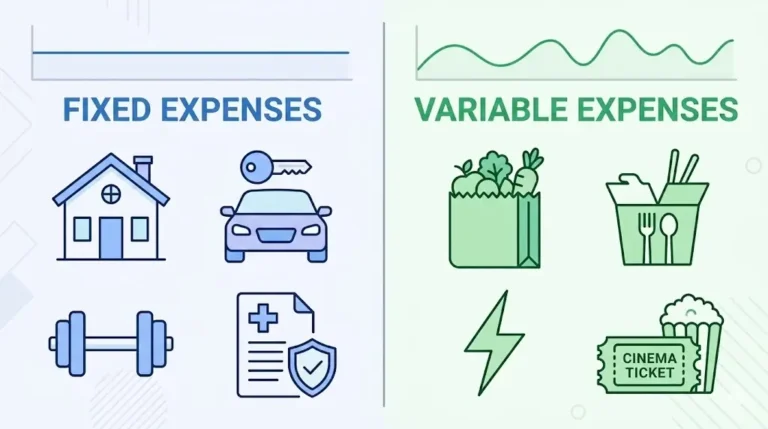
- Expense Categories: A list of your fixed costs (rent, utilities) and variable costs (dining out, hobbies).
- Initial Investment: $0 (Free tools like Google Sheets are excellent beginner-friendly alternatives).
- Skill Requirements: Basic addition and subtraction; the ability to be honest with yourself about your spending.
How much could YOU save?
Personalize the 50/30/20 rule to your income
Your Annual Wealth Potential
Follow this plan to save $0 this year!
Time Investment
Implementing a new financial structure requires a small upfront time commitment, but it yields long-term income potential.
- Setup Time: 1 to 2 hours to categorize your past month’s spending and calculate your “After-Tax Income.”
- Weekly Commitment: 15 minutes to review your transactions and ensure you are sticking to your percentages.
- Timeline to Results: Most beginners feel a sense of “financial relief” within the first 30 days. Significant debt reduction or savings growth typically becomes visible within 60–90 days of consistent effort.
- Comparison: Unlike traditional income methods that require 40+ hours a week, this “financial maintenance” takes less than 1% of your week but protects 100% of your earnings.

Step-by-Step Implementation Guide
Step 1: Calculate Your After-Tax Income
The 50 30 20 budget is based on what you actually take home.
- If you are an employee, look at your net pay.
- If you have a side hustle or are a freelancer, subtract your business expenses and estimated taxes first to find your true online earnings.
- Pro Tip: Automate your tax savings into a separate account so you never “accidentally” spend money that belongs to the government.
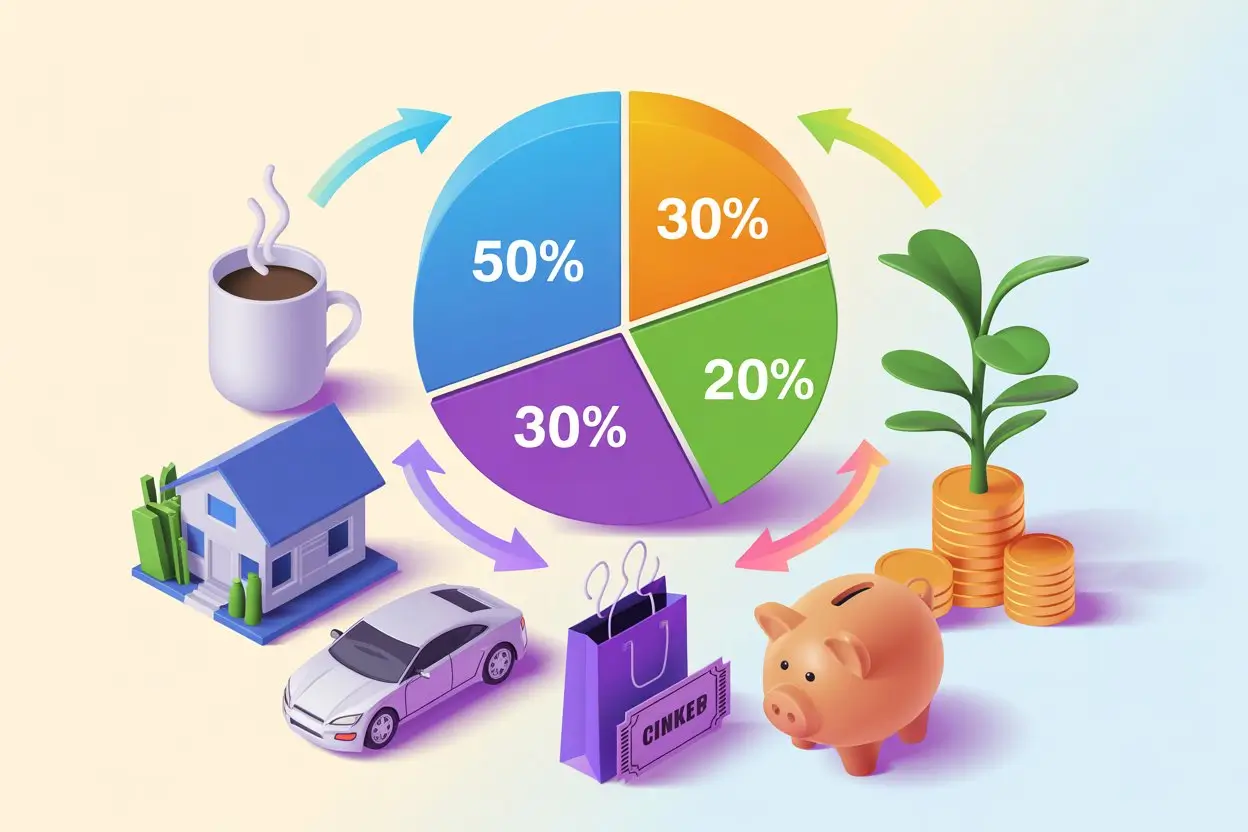
Step 2: Allocate 50% to “Needs”
These are the non-negotiables. If you don’t pay these, your life significantly changes for the worse.
- What’s included: Rent/Mortgage, Utilities, Basic Groceries, Insurance, and Minimum Debt Payments.
- Insider Trick: If your needs exceed 50%, don’t panic. Look for ways to lower fixed costs, such as switching insurance providers or meal prepping to reduce grocery waste.
Step 3: Allocate 30% to “Wants”
This is the “lifestyle” category. It’s what makes life enjoyable.
- What’s included: Dining out, Netflix subscriptions, hobbies, and that extra coffee.
- Key Distinction: Is it a need or a want? High-speed internet for a work from home job is a need; a premium gaming router is a want.
Step 4: Allocate 20% to “Financial Goals”
This is the most critical section for achieving financial freedom.
- What’s included: High-interest debt repayment (beyond minimums), Emergency fund, and Retirement contributions.
- Scaling Strategy: As your passive income grows, try to “invert” this. Eventually, you may want to live on 20% and save 80%!
Income Potential & Earnings Breakdown
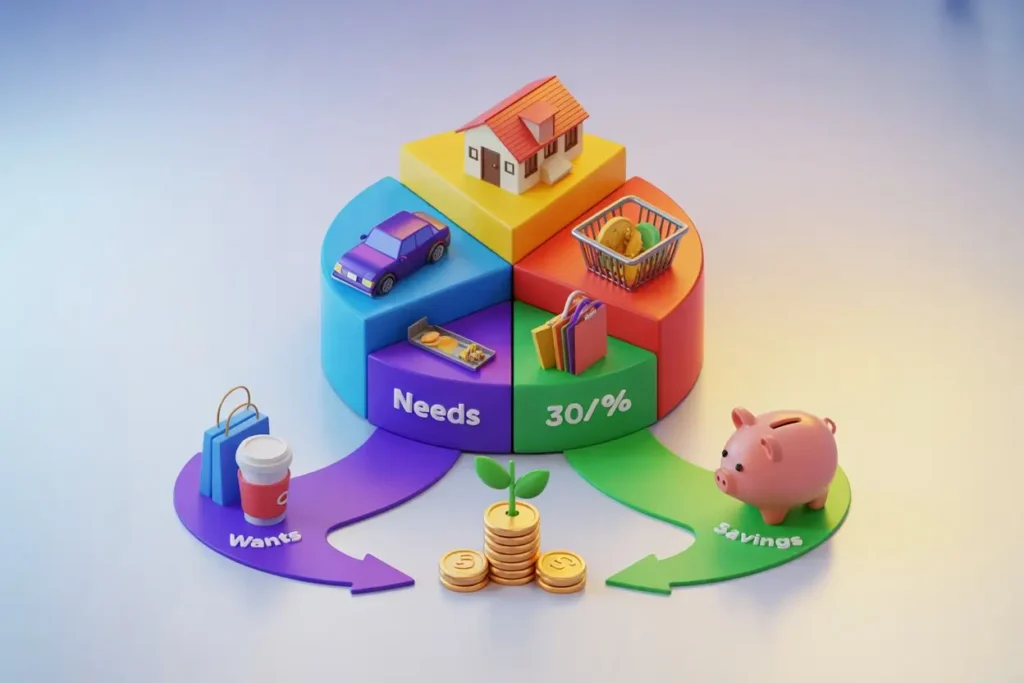
The 50 30 20 budget doesn’t just “save” money; it optimizes your income potential by ensuring your capital is working for you.
| Category | Percentage | Example ($4,000 Income) | Purpose |
|---|---|---|---|
| Needs | 50% | $2,000 | Survival & Stability |
| Wants | 30% | $1,200 | Quality of Life |
| Financial Goals | 20% | $800 | Wealth Building |
By following this breakdown, a person earning $4,000 a month would invest $9,600 annually into their future. Over 10 years, with a modest 7% return, that $800/month becomes over $130,000.
Alternative Methods & Variations
The 50 30 20 budget is a “gold standard,” but your situation might require a different approach:
- The 70-20-10 Rule: For those in high-cost-of-living areas. 70% for living, 20% for debt/savings, 10% for giving or wants.
- The 80/20 Rule: The simplest version. You take 20% off the top for savings and spend the remaining 80% however you like.
- The FIRE Variation: For those seeking early retirement, many strive for a 30/10/60 split, aggressively funneling digital income into investments.
Best Practices & Optimization Tips
- Automate Everything: Set up automatic transfers to your savings and investment accounts the day your revenue streams hit your bank.
- Use Separate Accounts: Have one bank account for “Needs” and another for “Wants.” This prevents “lifestyle creep.”
- Track Your Progress: Use visual charts. Seeing your debt decrease and your profit margins increase is a massive psychological boost.
- Community Insight: Join online forums focused on “Financial Independence, Retire Early” (FIRE) to see how others optimize their 20% category.
Common Mistakes to Avoid
- Misclassifying Wants as Needs: That $100 gym membership is likely a “Want” if there’s a $10 alternative or a free park nearby.
- Ignoring the 20% until the end of the month: If you wait to see “what’s left,” the answer is usually $0. Save first, spend later.
- Failure to Adjust: Life changes. If you get a raise in your online earnings, don’t just increase your “Wants”—increase your “Savings” proportionately.
- Neglecting the Emergency Fund: According to Federal Reserve data, many Americans can’t cover a $400 emergency. Your first 20% goal should be a $1,000 “starter” emergency fund.
Long-Term Sustainability & Growth
The 50 30 20 budget is a marathon, not a sprint. To ensure it lasts:
- Rebalance Quarterly: Every three months, sit down and see if your percentages are still accurate.
- Reinvest Windfalls: Tax refunds or bonuses shouldn’t go to “Wants”—apply the 50/30/20 rule to them, or better yet, put 100% toward your “Financial Goals.”
- Future-Proofing: As you build your passive income assets, your “Needs” percentage should naturally drop as a portion of your total wealth, allowing you to reach financial freedom faster.
Conclusion
The 50 30 20 budget is more than just a math equation; it’s a mindset shift. It allows you to enjoy your life today while systematically building the wealth you need for tomorrow. By categorizing your online earnings and being intentional with your spending, you pave the way for a stress-free financial future.
Ready to start your journey? Drop your questions in the comments! Subscribe for weekly money-making strategies and download our free 50/30/20 starter template below.
FAQs
How much money can I realistically make/save?
While this is a management tool, it typically helps users “discover” an extra 10–15% of their income that was previously wasted on “stealth” wants.
Do I need prior experience?
None. If you can use a calculator, you can use the 50 30 20 budget.
What’s the initial investment?
There is no cost to start. You can use pen and paper or free digital tools.
How long until I see results?
You will see a clearer picture of your finances immediately. Tangible growth in savings usually takes 2–3 billing cycles.
Is this method still working in 2026?
Absolutely. In high-inflation environments, having a structured percentage-based budget is more effective than fixed-dollar budgeting.
What are the risks involved?
The only risk is “budget fatigue.” Ensure your 30% “Wants” category is actually used for things you enjoy to prevent burnout.
Before you go, tap those stars!
Straightforward, no gimmicks, just solid banking advice
I clicked on this article expecting it to push some specific bank or financial product with referral links. I was pleasantly surprised. The advice was unbiased, focused on principles rather than promoting any particular institution, and gave me a clear framework to evaluate my own options. I appreciated that the article addressed the importance of FDIC insurance, automatic transfers, and goal-setting — things that seem obvious but that most people (including me) overlook. The writing was clear and concise, without the usual fluff or overly complex financial jargon. The only reason I’m giving four stars instead of five is that I would have liked even more detail on how to balance saving with paying down debt. Still, this was one of the most practical and trustworthy articles on saving I’ve read in a long time. Highly recommend.
Solid advice that cuts through the noise
I’ve been saving for years, but I kept wondering if my money was actually working as hard as it could be. There’s so much conflicting information out there — regular savings accounts, money market accounts, CDs, high-yield options — it gets confusing fast. This article did an excellent job comparing the options side by side, explaining the pros and cons of each, and helping me figure out which strategy made sense for my situation. I especially appreciated the section on the importance of emergency funds versus long-term savings, and the breakdown of how compound interest really adds up over time. I ended up moving my savings to a high-yield account and setting clearer goals. Practical, well-researched, and genuinely helpful.
Small changes, noticeable results
I’ll be honest — I clicked on this article expecting generic advice like “drive less” (thanks, captain obvious). But I was genuinely impressed. The article breaks down the actual science behind why certain habits affect fuel economy, with real numbers to back it up. I learned that my lead-foot acceleration and speeding were costing me way more than I realized. The section on vehicle maintenance was especially valuable — I didn’t know a dirty air filter could impact mileage that much. The tone was straightforward, no fluff, no upselling expensive products. Just solid, practical advice that actually works. My fuel expenses dropped by about 15% last month without me changing my overall driving needs.
Finally, practical advice that doesn’t require buying a new car
As someone who drives over 400 miles a week for work, gas expenses have been crushing my budget. I’ve read countless articles that basically just say “buy an electric vehicle” — which isn’t helpful when that’s not in my budget. This article was a game-changer. The tips were immediately actionable: combining trips, checking tire pressure (I didn’t realize how much that affects mileage!), and using gas price apps. I started implementing these suggestions last month, and I’ve already saved about $40. The writing was clear, well-organized, and respected that not everyone can just trade in their car. Highly recommend for anyone feeling the pain at the pump.
Perfect for renters who can’t install solar panels
As someone who rents an apartment, I often feel limited when it comes to making my home more energy-efficient. I can’t just install new appliances or add insulation to the walls. This article was a lifesaver because it focused on renter-friendly solutions—things like weatherstripping for doors, smart power strips, and optimizing how I use my existing appliances. The writing was straightforward and didn’t assume I owned a home. My only small critique is that I would have loved even more rent-specific examples, but overall, this was incredibly helpful. My electric bill dropped by about $15 last month!